

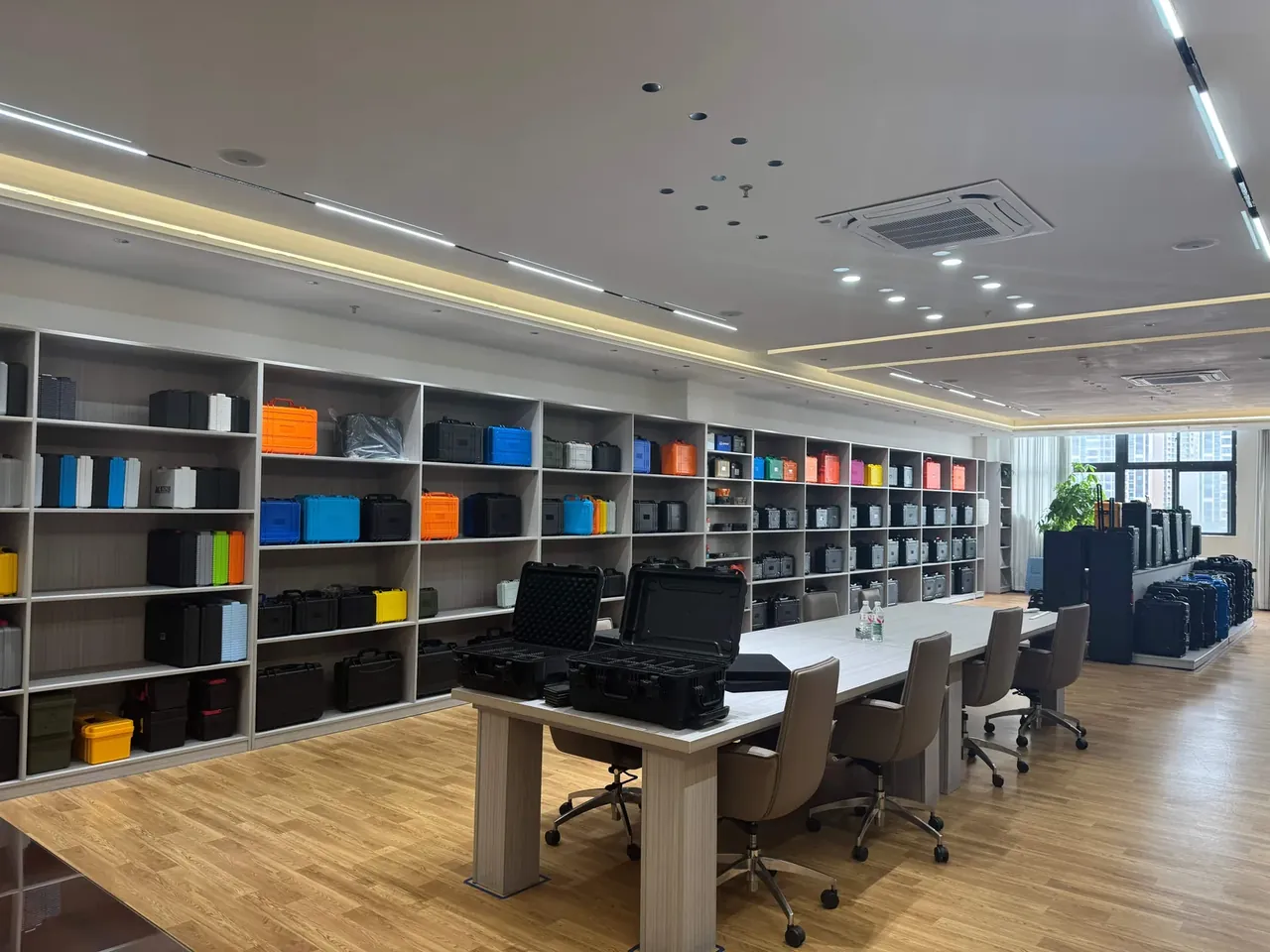
Quick answer: Trolley Makeup Case layer count comes from the tool list, not the drawing: measure the tallest item first, then set pan heights between 55 and 90 mm.
Table of contents
- Layer Count Comes From the Tool List
- Slide Travel and End Stops
- Load Per Layer and Base Ribbing
- Handle Tube Wall and Telescopic Sections
- Wheel Diameter and Floor Matching
- What the Aluminum Frame Does Under Daily Opening
- FAQ
1. Layer Count Comes From the Tool List
By the fourth layer of a Trolley Makeup Case, the body stops deciding whether the unit works; the travel of each slide and the one rib under each pan do.
Measure the tallest tool first. A curing lamp, a dust extractor and a brow machine take their own space, and a powder pan can reach 90 mm across. Anything under 55 mm drops into a shallow pan, anything over 90 mm takes its own layer, and the middle band merges in 15 mm steps. Three layers carry a starter kit, four is the studio compromise, and five costs height and empty weight.
Layer count and pull-out method pull against each other: three layers load one continuous side panel, while four cut three openings into that panel and leave width for only a 12 mm aluminum frame plus two ribs. The openings must be staggered.
| Layers | Pan height | Slide travel | Load per layer |
|---|---|---|---|
| 3 | 90 mm | 180 mm | 5 kg |
| 4 | 70 mm | 220 mm | 4 kg |
| 5 | 55 mm | 260 mm | 3 kg |
Before fixing the count, ask what sits on top: brushes need 55 mm of pan height, colour bottles need 90 mm and a base ribbed for 5 kg.
2. Slide Travel and End Stops
Longer travel is not automatically better. At 180 mm a third of the pan stays inside, so one hand can pull a tool without tipping the case. At 260 mm the pan is almost out, which is convenient until a 5 kg load shifts onto the front wheels and the case leans. Travel on a Trolley Makeup Case is set to the tallest bottle plus a margin, landing between 180 and 260 mm.
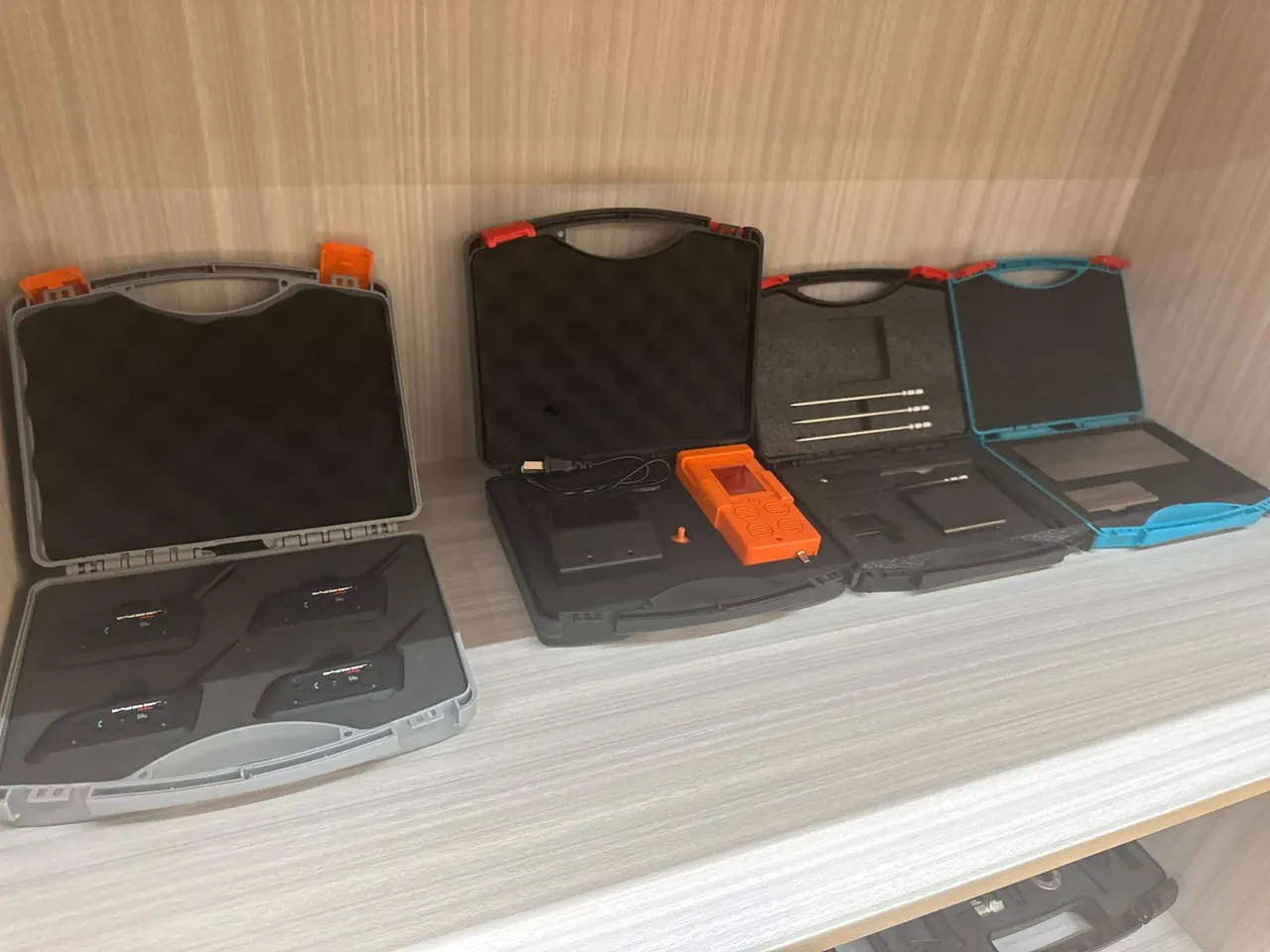
Stops are either a fixed tab or an end lock inside the rail. The tab bends under a hard pull at full load, so both are fitted and the lock takes the sudden yank.
Travel loss is the failure nobody sees on the line: a Trolley Makeup Case pan fails when a full 5 kg load, cycled 200 times, loses more than 10% of its travel.
3. Load Per Layer and Base Ribbing
A 3 kg pan and a 5 kg pan are two structures, not one drawing with a new label. At 3 kg a single centre rib spreads load into both slides; at 5 kg two crossed ribs run about a third of the pan depth and land their feet on the slide mounting surface.
Sag starts at the fastening: four screws per slide that bite thin wall go oval within months, and the pan front drops onto the layer below. A Trolley Makeup Case fits a stiffener strip so those screws pull against the 12 mm frame; past four layers the strip runs the full height.
| Load | Base ribbing | Slide fixing | Layer it suits |
|---|---|---|---|
| 3 kg | single centre rib | direct into the panel | fifth |
| 4 kg | single rib set back | short stiffener | third and fourth |
| 5 kg | two crossed ribs | full-length stiffener | second |
The second layer carries the most because it sits nearest the handle, where the pull is hardest. A Trolley Makeup Case that keeps its heaviest pan low and central also stays steady when wheeled.
4. Handle Tube Wall and Telescopic Sections
The difference between a 22 mm and a 25 mm tube shows up in the hand. A 22 mm tube suits a three-layer body and stays rigid with two sections out; 25 mm goes with four layers and up, where the wall thickens so a 5 kg case does not flex at a kerb. Pairing tube size with layer count is how a Trolley Makeup Case keeps handle stiffness in step with its own weight.
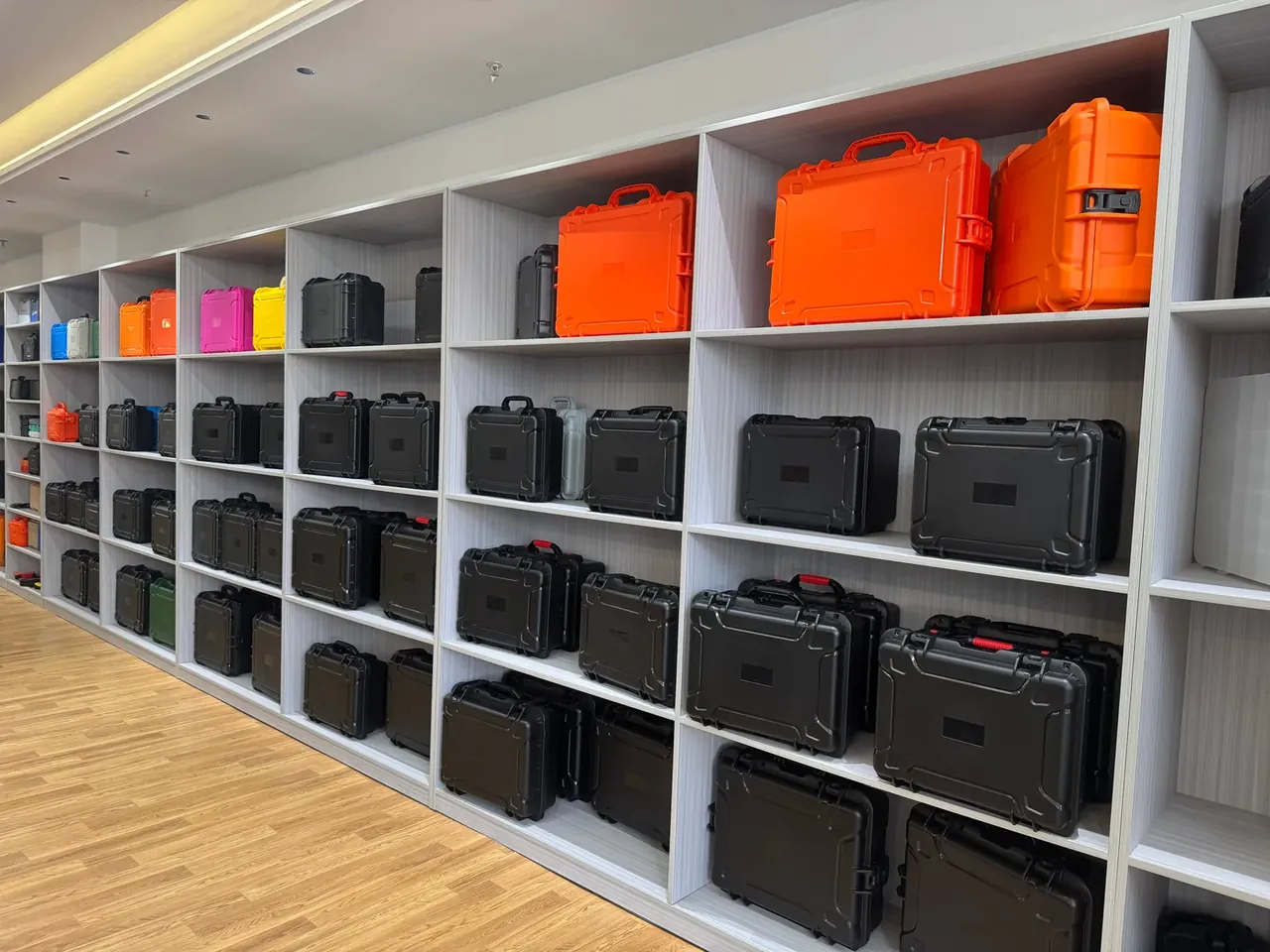
Section count follows height: two reach the waist, three put the grip between calf and waist so stairs do not catch the base, and every extra section adds play.
The load path ends at the back panel, not in the handle. A plate as wide as the handle base spreads the pull; without it the base tears four radial cracks that read as a small bulge. Above four layers a Trolley Makeup Case runs that plate the full back height.
5. Wheel Diameter and Floor Matching
The line between 50 mm and 60 mm wheels is drawn by the floor. On flat studio tile, 50 mm twin swivel castors steer easily and hold a full load steady; carpet, thresholds and tile joints call for 60 mm, which rolls over seams without snagging. A Trolley Makeup Case meets the flat floor eight hours in ten, so pick the wheel for that surface.
The price of 60 mm is ride height, and a five-layer body then needs one more handle section. Castor plates belong on the lower edge of the aluminum frame; bolted to the ABS base they tear four holes through the plastic. On the frame the load travels into the side panels.
6. What the Aluminum Frame Does Under Daily Opening
On a case opened dozens of times a day, the rim and the hinge line loosen first. A 12 mm aluminum frame hoops the opening, takes the torque of every open and close, and leaves the ABS wall to form the shape and block dust.
The corners are the weak point of that hoop. Die-cast pieces resist twisting better than folded ones, and the rim on a Trolley Makeup Case also needs working clearance against the lid: too much lets dust in, too little makes the lid drag.
| Part | Structure | Failure seen | Shop fix |
|---|---|---|---|
| Rim | 12 mm aluminum frame | edge rolls outward | straighten and re-rivet |
| Corner | die-cast piece | rattle and play | replace the corner |
| Hinge | metal pin | stiff opening | clean and wax |
| Pan opening | slot in the frame | frayed slot edge | trim and line |
The frame also shields the pan openings cut into the rim edge, which rub a pan every day.
Related Reading
- What to check when choosing a makeup case
- Matching a trolley handle to its wheels
- How to lay out internal dividers
- Lid depth and accessory space
JUNZHIJIA
Related Products
- 8 Series — Gun Cases; Military Equipment Cases; Camera Equipment Cases; Drone Cases; Watch Cases; Knife Cases; First Aid Cases; Electronics Equipment Cases
- WL8-2812 PP Gun Case — model WL8-2812
- All protective cases and toolboxes: 7 series, 158 models