

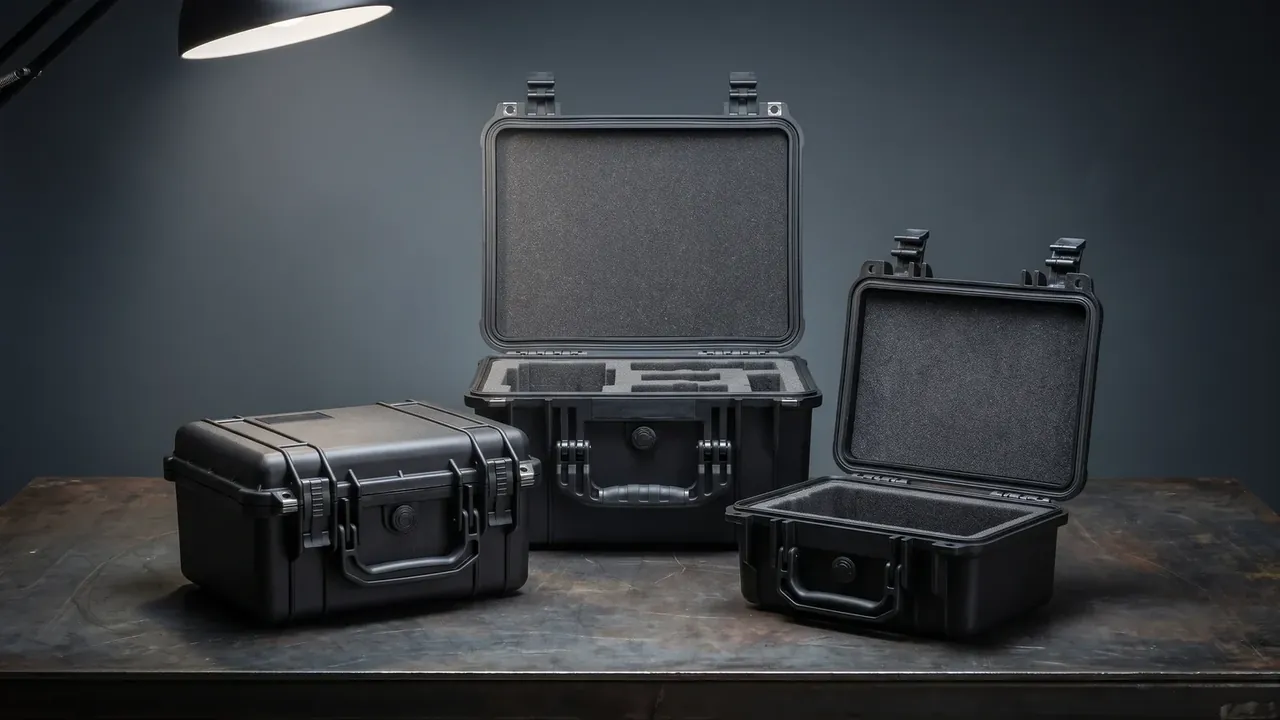
Quick answer: A munitions shipping and storage container is not the default for every move. On one-way shipments, on schedules under three round trips a year, and where a loaded case exceeds what two people can lift, one-way packaging, soft bags or split trays cost less. This article draws the four lines that mark those borders.
Table of contents
- Three Cases to Strike First
- Four Numbers: Weight, Wall, Sealing, Cycle Time
- Against Steel Cases: Salt Fog and Repair
- Against One-Way Packaging: Cost per Trip
- When to Switch: Soft Bags, Frames, Split Trays
- FAQ
1. Three Cases to Strike First
Strike off the tasks that should not use it first, or every later figure serves a job nobody has.
One-way shipment comes first. The case stays with the receiver, so its price lands on a single freight bill.
Second is a schedule under three round trips a year. Reuse pays by spreading cost, and such a case spends most of its life on a shelf.
Third is a munitions shipping and storage container loaded past what two people can lift. The case may comply while the loading action needs machinery.
2. Four Numbers: Weight, Wall, Sealing, Cycle Time
Read the four numbers of a munitions shipping and storage container together and the answer is clearer than any single figure: weight decides who lifts, wall decides stacking, sealing decides where it sits, cycle time decides how often it works.
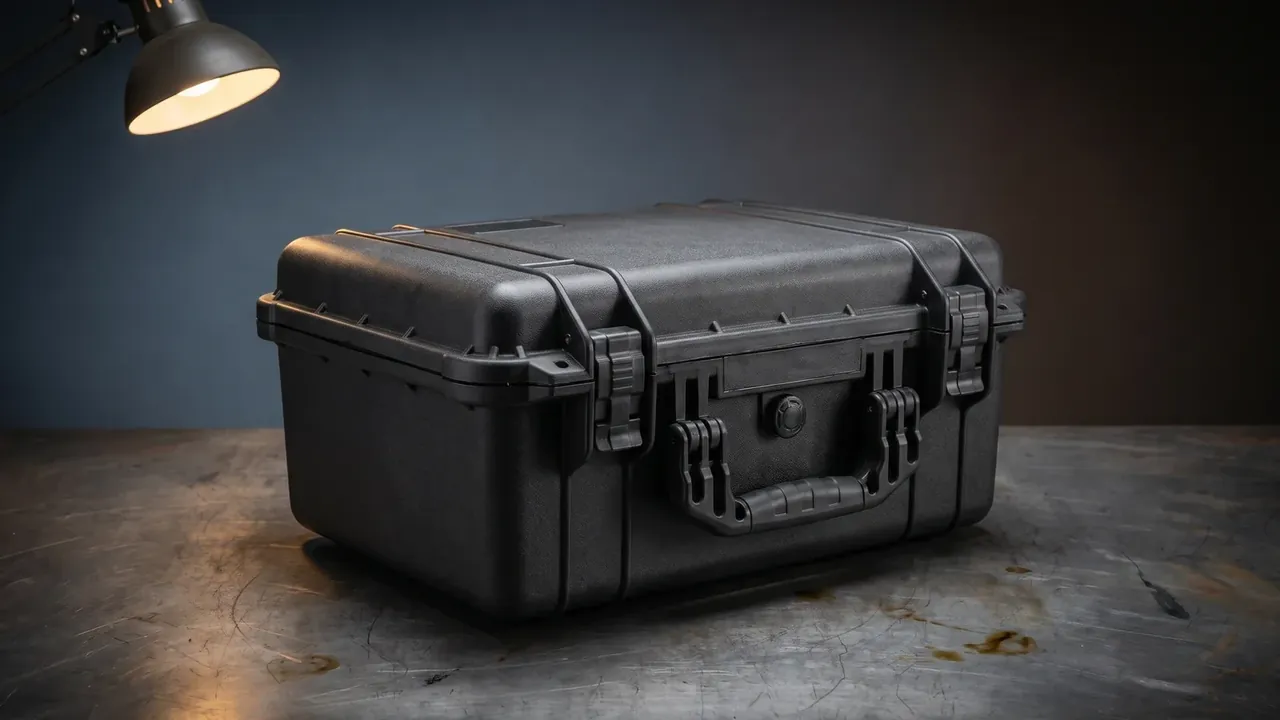
Weight is underestimated most. At equal internal volume a moulded case runs about 11 kg empty against roughly 19 kg for a 1.5 mm welded steel body, and that gap becomes a dozen extra handlings on a dock.
| Item | Roto-molded case | Welded steel case | Decision line |
|---|---|---|---|
| Empty weight | about 11 kg | about 19 kg | 25 kg single-person limit |
| Wall thickness | 6 mm moulded | 1.5 mm sheet plus frame | Five-high stack |
| Sealing | up to IP67 | usually IP65 | Short immersion yes or no |
| Closing time | about 6 seconds | about 22 seconds | Over ten opens a day |
Cycle time sits last in the table and first in complaints. A post opened twenty times a day shows five minutes of difference, past twenty hours over 250 working days. Rain widens it: a bolted lid comes off catch by catch while water runs in, whereas a moulded lid closes in one motion behind a drip lip.
3. Against Steel Cases: Salt Fog and Repair
Steel wins on puncture resistance and stiffness; the weaknesses sit in two places.
Salt fog over 240 hours attacks the weld. Rust starts at a seam, follows it, and shows through within six months, while a moulded body has no seam and corrodes only at catches and rivets.
| Item | Roto-molded case | Welded steel case | Field test |
|---|---|---|---|
| After 240 hours salt fog | Catches chalk, body sound | Rust starts at welds | Does rust form a line |
| Puncture repair | Hot-air patch, 15 minutes | Grind, prime, paint, 40 minutes | Can it be done on site |
| Seal replacement | Full gasket in a groove | Flange gasket and strip | Do rivets come out |
A punctured munitions shipping and storage container takes a hot-melt patch of the same compound and holds pressure again in fifteen minutes; a steel body needs grinding, priming and paint, forty minutes upward, and the repaired spot usually fails first next time.
Steel suits fixed sites and constant forklift handling. Move it often and open it in rain, and both weaknesses grow.
4. Against One-Way Packaging: Cost per Trip
A crate is billed once, while a munitions shipping and storage container is billed at purchase and amortized across trips.
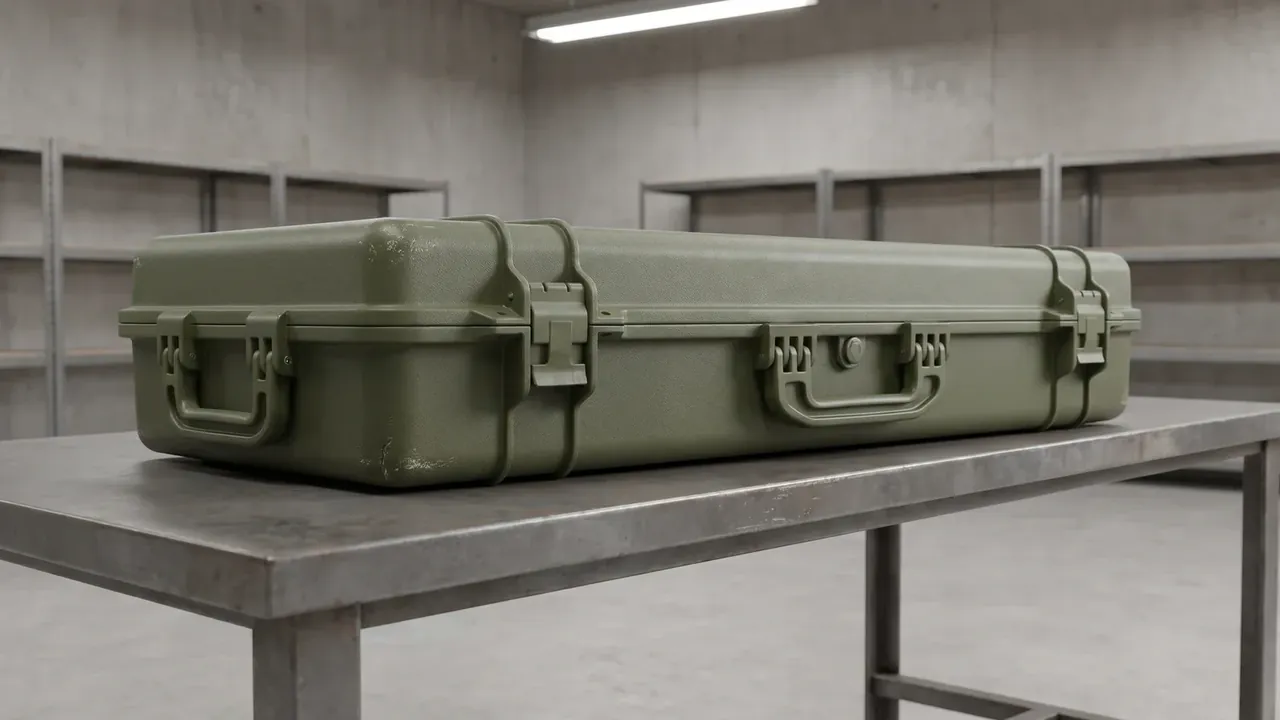
At 480 per case over 200 trips the unit cost falls to 2.4 per trip; a timber crate at 60 per trip breaks even after three and loses after ten. The arithmetic holds only if someone collects the case on the return leg, and without that loop 200 trips never happens.
Cleaning is the line left out. Fifteen minutes per return adds fifty hours across 200 trips, so a figure that ignores labour is fiction.
5. When to Switch: Soft Bags, Frames, Split Trays
Match the task to the list below before buying a munitions shipping and storage container:
- Contents already boxed and afraid of moisture rather than crushing: a framed soft bag saves weight
- Frequent crane or forklift handling: a steel frame trades weight for stiffness
- Above 45 kg with two handlers: split into two trays and halve the lift
- Air freight billed by volume: a collapsible case halves the return space
- Movement inside one yard: a tote is enough, with no rating to pay for
No line satisfies everything. The trade is always two of three: weight, volume, protection.
Conclusion
A munitions shipping and storage container buys reuse, sealing and one-piece rigidity with weight, price and cleaning labour, and the four lines price that trade. Long schedules with a closed return loop make it the sensible default; short ones make crates cheaper. Write down trips per year, handlers available and immersion requirement before ordering.
This article discusses only the container (case body) side of specifications and design intent, and does not cover any handling, loading or use of the contents.
Related Reading
- Inspection items and pass criteria for munitions cases
- Sizing, wall thickness and load derivation
- Reusable cases against the alternatives
- Specialized cases across niche working conditions
Related Products
- 8 Series — Gun Cases; Military Equipment Cases; Camera Equipment Cases; Drone Cases; Watch Cases; Knife Cases; First Aid Cases; Electronics Equipment Cases
- WL8-2812 PP Gun Case — model WL8-2812
- All protective cases and toolboxes: 7 series, 158 models