

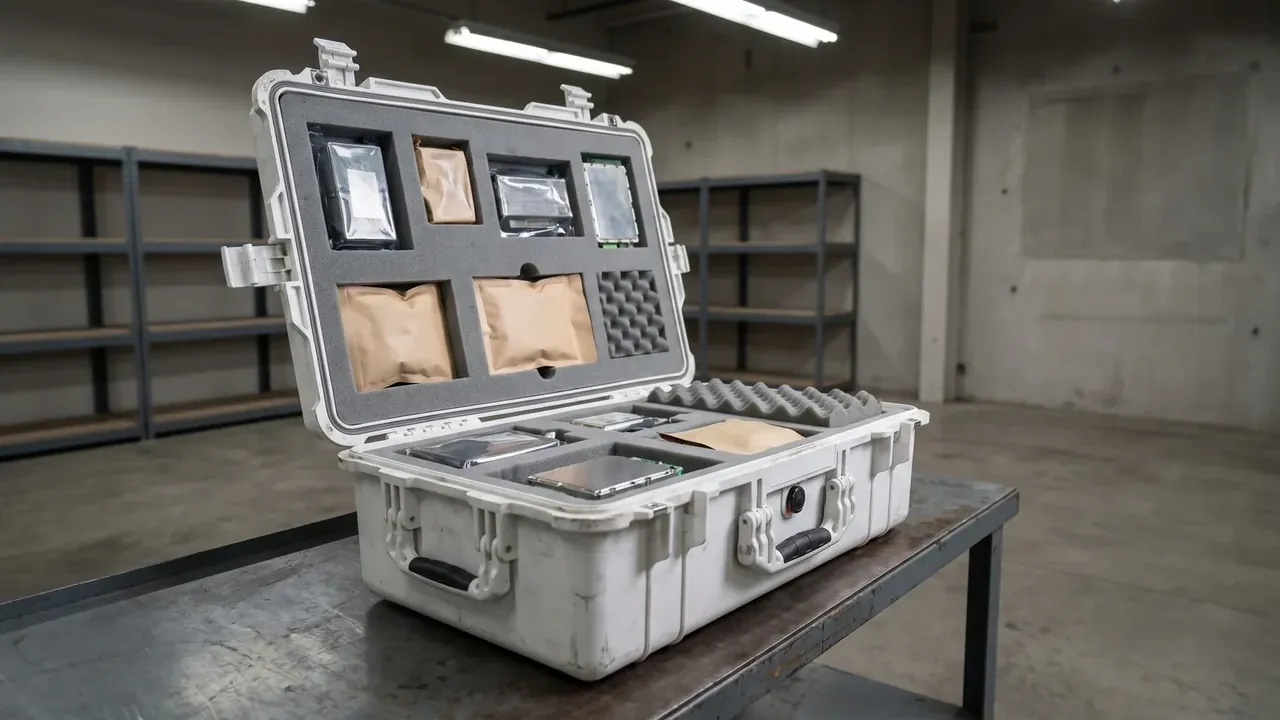
Quick answer: With an ODM custom protective case the factory brings the structure and the buyer brings the brand, so the quotation holds no mould cost but does hold a design fee. Score the proposal on four columns, accept the deliverables from a list, and run three prototype rounds before signing.
Table of contents
- The Four-Column Review Sheet for ODM Custom Protective Case
- What the DFM Report Must Answer
- Three Prototype Rounds: Hand Model, T1, Production Sample
- Splitting the Design Fee Into the Unit Price
- Where IP Ownership Belongs in the Contract
- FAQ
1. The Four-Column Review Sheet for ODM Custom Protective Case
What arrives is not a brochure. It is a proposal to be scored line by line: appearance, structure, process and cost, three criteria each, signed by the reviewer.
Appearance asks where the parting line sits, whether texture matches the signed plaque, and how much stock the logo area keeps. Structure asks for cavity size, 12 mm ribs and the load path through the hinge seats. Process asks which press and how many cavities. Cost is three rows: unit price, design fee, fixtures.
| Column | Three criteria | Pass line | Signs off |
|---|---|---|---|
| Appearance | Parting line, texture, logo stock | Hidden in a radius | Purchasing |
| Structure | Cavity size, 12 mm ribs, hinge path | No deflection at 25 kg | Engineering |
| Process | 380-tonne press, 68-second cycle | 4.5 mm wall in one shot | Quality |
| Cost | Unit price, design fee, fixtures | Three rows, no lump sum | Purchasing |
Hold the review before the mould is cut, with purchasing, engineering, quality and production in the room. Miss one and a column has no owner.
2. What the DFM Report Must Answer
The DFM report for an ODM custom protective case is the factory's first technical document, and the last chance to overturn a proposal before steel is cut. Three pages carry the decision.
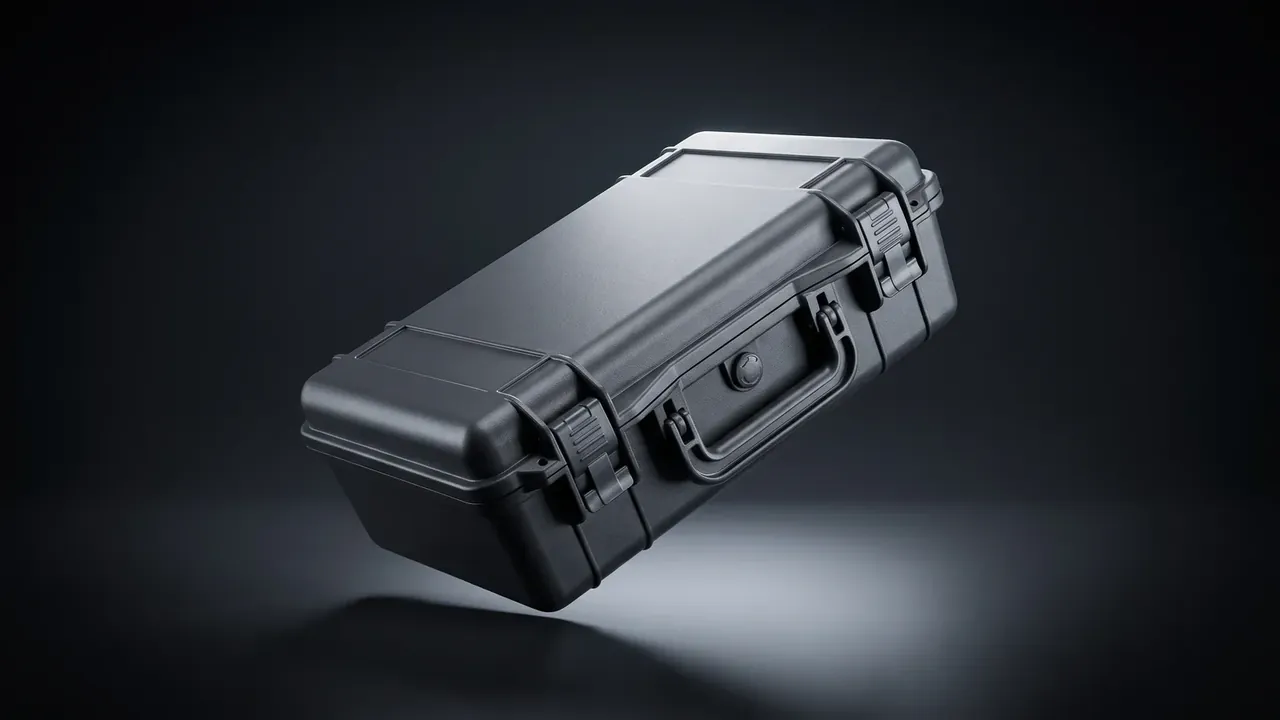
Page one is the wall-thickness map: 4.5 mm on the main wall, 2.2 mm at rib roots. Red or yellow patches mean trapped heat, and sink marks follow. Page two is the draft table: one degree outside, 1.5 inside, three on textured faces; below that, ejector pins leave white marks. Page three is gate position and weld-line travel, and a weld line across a load-bearing rib is where a drop test fails.
It should also carry the factory's risk list: where it expects sink, where a slider is needed, where the structure should change. A report without one was not really written.
3. Three Prototype Rounds: Hand Model, T1, Production Sample
Three rounds cannot collapse into two; each tests something different.
- Hand model: six working days, CNC or printed, checking proportion and fit only
- T1: twenty days, first parts from the steel mould, checking tooling, tolerances and latch feel
- Production sample: fifteen days, with print, foam and hardware, checking colour and batch consistency
Structure changes are cheapest at the hand model, where moving a rib is a redraw. At T1 the same change touches the cavity: an insert starts at 8,000 yuan. Found at the production sample, both rounds were wasted.
Keep three signed parts per round, one each side and one sealed with date, drawing number and colour code. Later arguments about colour or latch feel settle against that part.
4. Splitting the Design Fee Into the Unit Price
The design fee is not a lump sum. Quote it in four parts: structural design, hand model, tooling follow-up and certification support. Split that way, the buyer sees which part is negotiable.
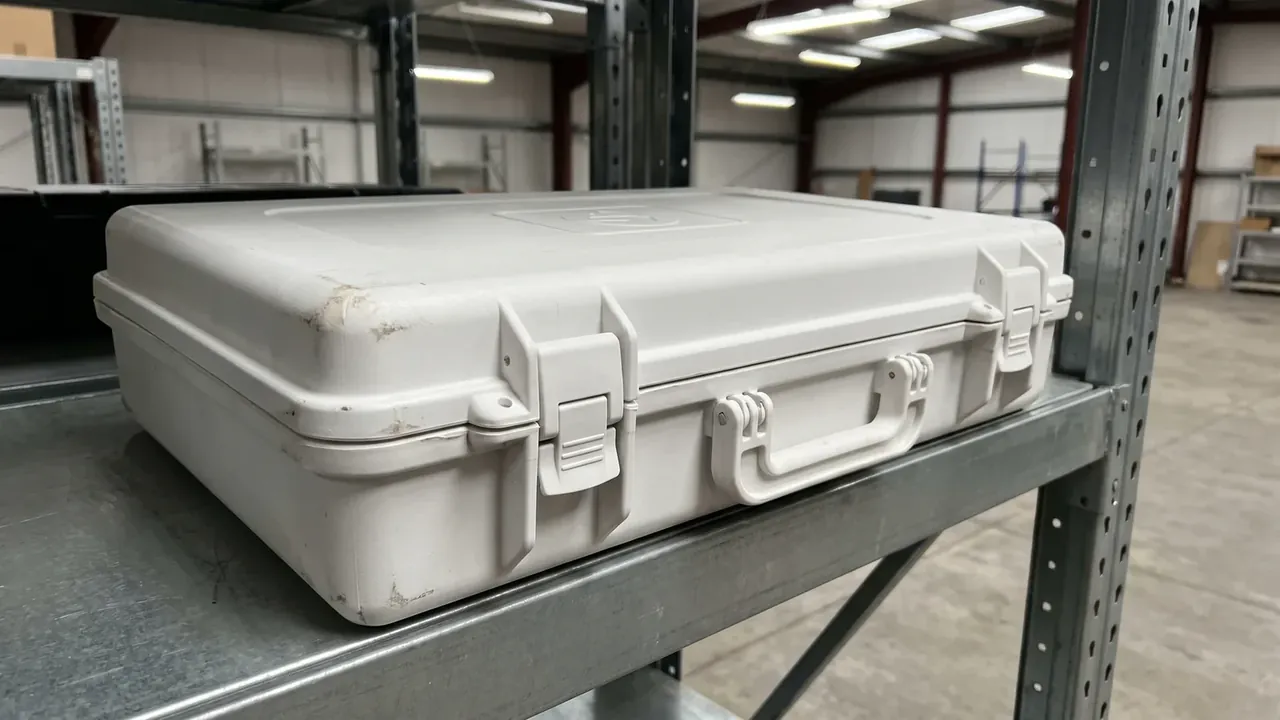
A 50,000 yuan design fee usually pays in three instalments: forty percent on sign-off, forty on T1 approval, twenty on the production sample.
The common trap is a waived design fee. It reappears in the unit price: over 2,000 pieces, 50,000 yuan is 25 yuan per case, so the buyer pays in instalments and loses the freedom to move. A waiver should state its condition and the cost of leaving.
5. Where IP Ownership Belongs in the Contract
On an ODM custom protective case, copyright in the structure defaults to the designer. Unless that line changes, the buyer holds a right to use and nothing to hand a second factory.
| Deliverable | Format | Accepted at | Ownership |
|---|---|---|---|
| Structure drawings | 3D solid and 2D sheet | Sign-off | Buyer, on payment |
| DFM report | Written report and maps | Before tooling | Shared |
| Mould and fixtures | List and drawings | First article | Whoever pays |
Three clauses matter. Copyright and use rights transfer together, including revisions. An exclusivity window keeps the design from same-region, same-category buyers. An indemnity clause makes the factory defend third-party patent claims.
Drop any one of the three and the design was never really bought.
Conclusion
An ODM custom protective case buys a design, not a box. The four columns decide whether the proposal works, the DFM report whether it can be built, three rounds whether it was built right, and the deliverable list who owns it. Settle all four before the mould is cut, and confirm the ODM custom protective case you pay for can leave with you.
This article discusses only the container (case body) side of specifications and design intent, and does not cover any handling, loading or use of the contents.
Related Reading
- Where ODM protective cases are deployed in the field
- Sizing, wall thickness and load ratings for protective cases
- Six signals inside a protective case quotation reply
- Which processes a protective case factory actually runs
Related Products
- 8 Series — Gun Cases; Military Equipment Cases; Camera Equipment Cases; Drone Cases; Watch Cases; Knife Cases; First Aid Cases; Electronics Equipment Cases
- WL8-2812 PP Gun Case — model WL8-2812
- All protective cases and toolboxes: 7 series, 158 models