

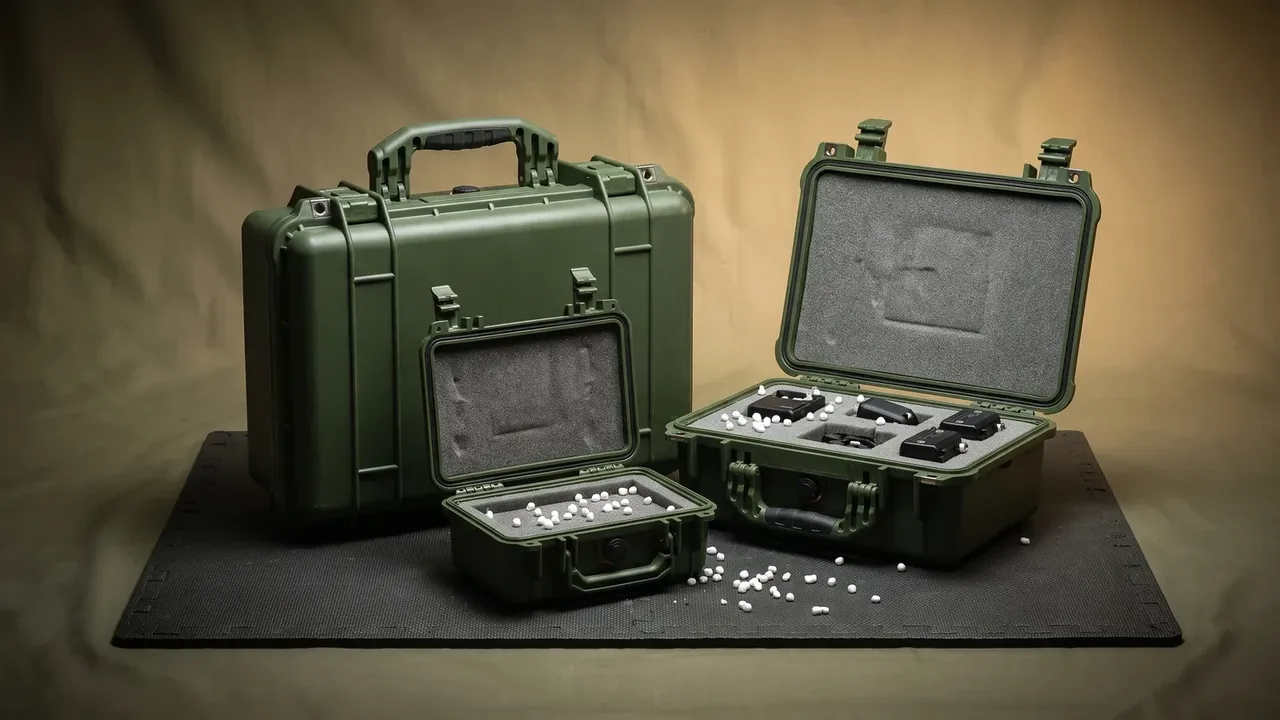
Quick answer: An OEM plastic molded protective case quote is only useful if it is broken down. Split it into shell, insert, hardware, packaging, tooling amortisation, sampling and freight, then require the supplier to name the IEC 60529 rating and the MIL-STD-810H method numbers on the acceptance sheet.
Table of contents
- Breaking the quote into seven lines
- MOQ, mould ownership and trial shot fees
- Putting ratings and test clauses into acceptance
- Lead time, factory audit and payment terms
- FAQ
1. Breaking the quote into seven lines
A single-line price leaves nothing to negotiate. The cost structure of an OEM plastic molded protective case is predictable: shell, insert, hardware, packaging, tooling amortisation, sampling, freight and duty. Split the quote along those seven lines and each can be compared, which later tells you whether cheaper is cheaper for a reason.
| Quote line | Usual wording | What to ask |
|---|---|---|
| Shell | Per unit, colour masterbatch included | Wall tolerance and shrink allowance |
| Insert | Optional, priced separately | EVA density and cutting method |
| Hardware | Bundled with the shell | Latch material and salt spray hours |
| Packaging | Often excluded | Inner carton or pallet wrap |
| Tooling amortisation | Added per unit | How many units it is spread over |
| Sampling | One-off | Trial shots included, who keeps samples |
| Freight and duty | Ex-works or FOB | Who files the export declaration |
Take a shell with 3.5 mm walls and a 420 by 300 by 180 mm interior. One supplier quotes 42 with packaging and insert included; another quotes 38 without them, which lands at 46 once completed. Without the split, the second looks four cheaper and is four dearer.
2. MOQ, mould ownership and trial shot fees
Order quantities usually come in three steps, 300, 500 and 1000 units, with eight to twelve percent between them. Tooling is quoted separately: a two-cavity mould running on a 650 tonne press costs around 8,600 USD and includes three trial shots.
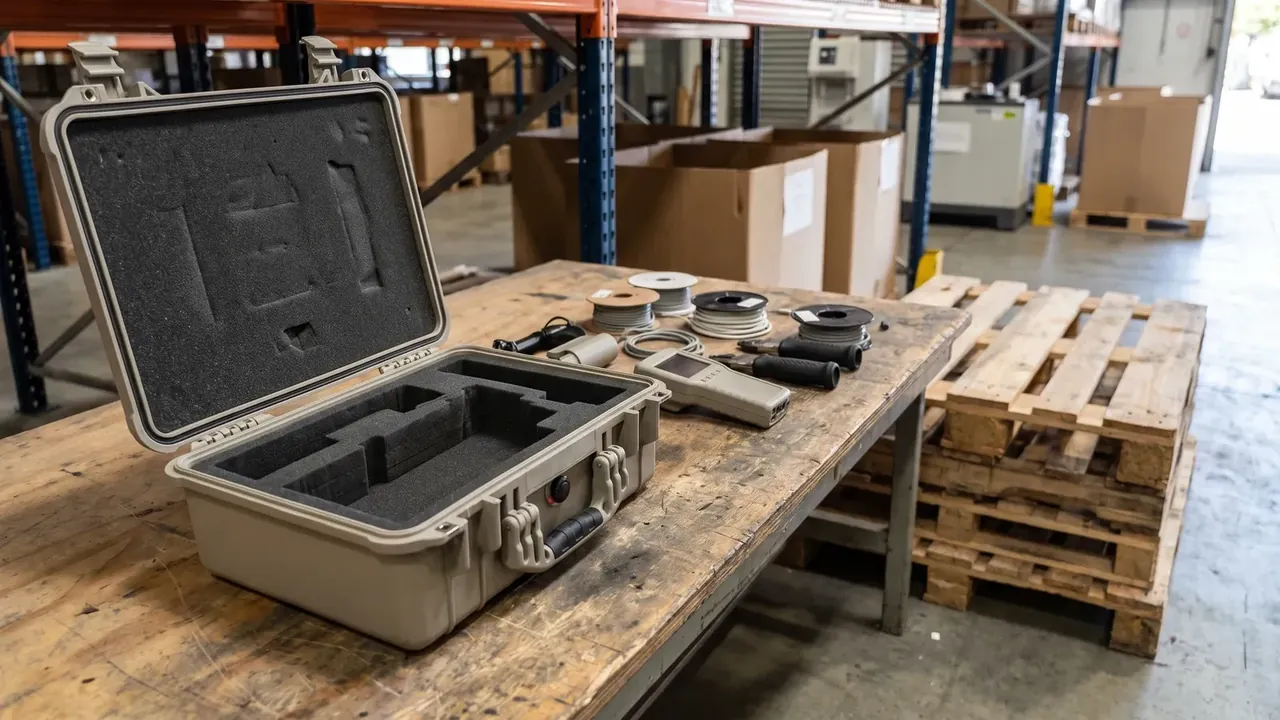
Mould ownership is written three ways, and the difference is not price but whether you can move suppliers in three years.
- Customer buyout: pay once, own the tool and the right to move it, with a storage agreement
- Amortised: three dollars per case over 30,000 units, title stays with the supplier until the last unit
- Shared: half each, joint title, movement by written consent
Trial shots need their own clause: three shots inside the tooling fee, then 2,800 USD per shot, plus who keeps the samples, otherwise nothing is left to compare after a mould change.
Tool life is estimated at 300,000 shots. Past that, flash and dimensional drift arrive together and the mould needs rebuilding, so put the number in the contract, not in a conversation.
3. Putting ratings and test clauses into acceptance
An acceptance sheet saying the case passed 810H says nothing. IP ratings have to cite IEC 60529 with the condition, one metre for thirty minutes, and environmental or mechanical tests have to carry the MIL-STD-810H method number.
| Item | Clause | Condition | Pass criteria |
|---|---|---|---|
| Dust and water | IEC 60529 IP6X and IPX7 | One metre, 30 minutes | No water inside |
| High temperature | MIL-STD-810H method 501.7 | 71 C for 24 hours | No deformation |
| Low temperature | Method 502.7 | Minus 51 C for 24 hours | Latches still operate |
| Shock | Method 516.8 | 26 drops from 1.2 m | No through cracks |
| Vibration | Method 514.8 | One hour on each axis | Hardware stays tight |
The first article report should carry curves, sample photos and equipment IDs beside the verdict. The curve has to match the ID. Photos should show the batch mark. If the condition column only says per customer request, the report came off a template. Ask for one more seal and shock run before price. A repeat costs little and filters out traders without a bench. A supplier returning one page marked pass does not belong on the shortlist.
Seal testing has its own trap. Put the pressure drop and hold time on one line: 10 kPa for 60 seconds, no more than 0.5 kPa loss. Leave either out and the report cannot be checked.
4. Lead time, factory audit and payment terms
Negotiate lead time by node, not by total. In a 35 day schedule T1 takes 18 days, mould changes 5, production 8, packing 4. A supplier offering 30 days has usually dropped the change allowance.
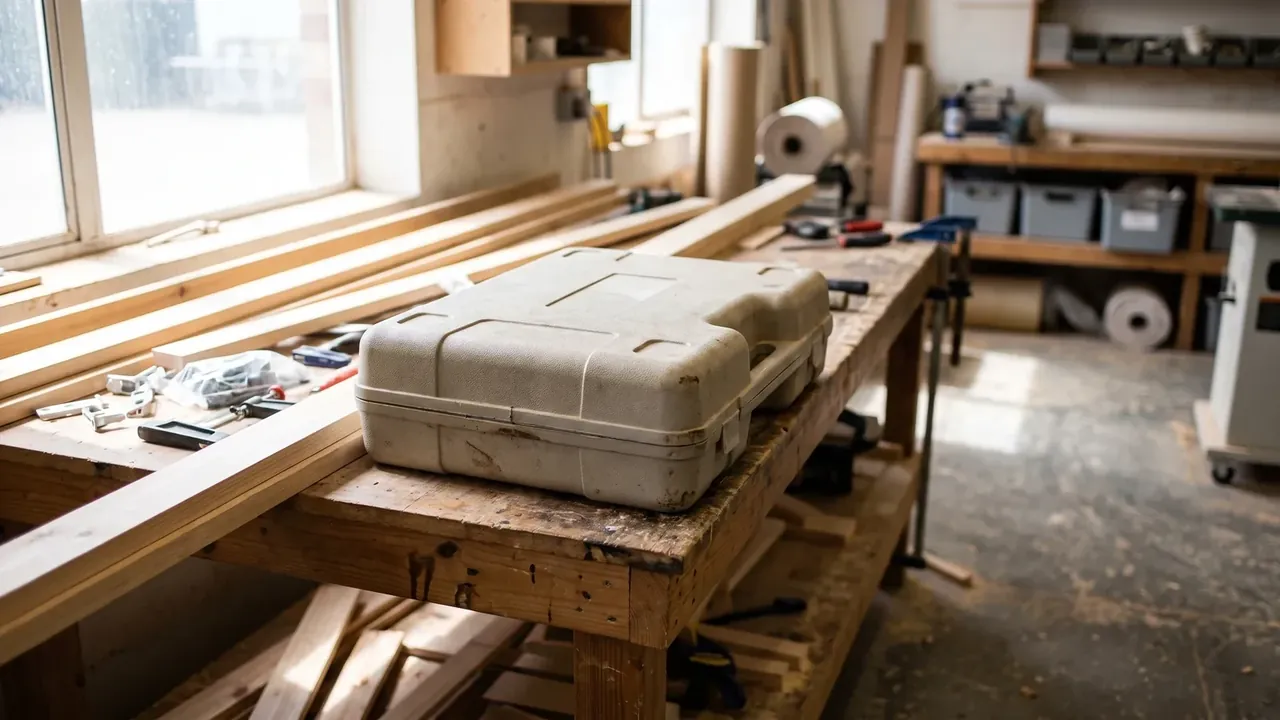
Nine audit items suffice: press tonnage and count, mould maintenance records, regrind ratio, colour spectrophotometer, seal test bench, salt spray chamber, force gauge, batch traceability, and environmental permits. A regrind ratio above twenty percent cuts impact strength noticeably while the surface still looks right, so read the mixing record, not the brochure.
Payment terms come in two shapes: thirty percent deposit with the balance at 60 days, or full monthly settlement with a two percent unit discount. Quotes hold for 30 days; when polypropylene moves, the contract needs a monthly index clause.
Conclusion
Before comparing prices on an OEM plastic molded protective case, compare the quote structure, and whether the acceptance sheet names its clauses. Seven quote lines, mould title, method numbers and staged lead times settle the next three years of supply. An OEM plastic molded protective case with the method numbers written into the contract is the only kind that can actually be inspected.
This article discusses only the container (case body) side of specifications and design intent, and does not cover any handling, loading or use of the contents.
Related Reading
- Running an OEM procurement project for custom moulded cases
- Where injection molded protective cases are used
- How an injection molded protective case is built
- Comparing injection molded protective case options
- OEM protective case applications
Related Products
- 8 Series — Gun Cases; Military Equipment Cases; Camera Equipment Cases; Drone Cases; Watch Cases; Knife Cases; First Aid Cases; Electronics Equipment Cases
- WL8-2812 PP Gun Case — model WL8-2812
- All protective cases and toolboxes: 7 series, 158 models