

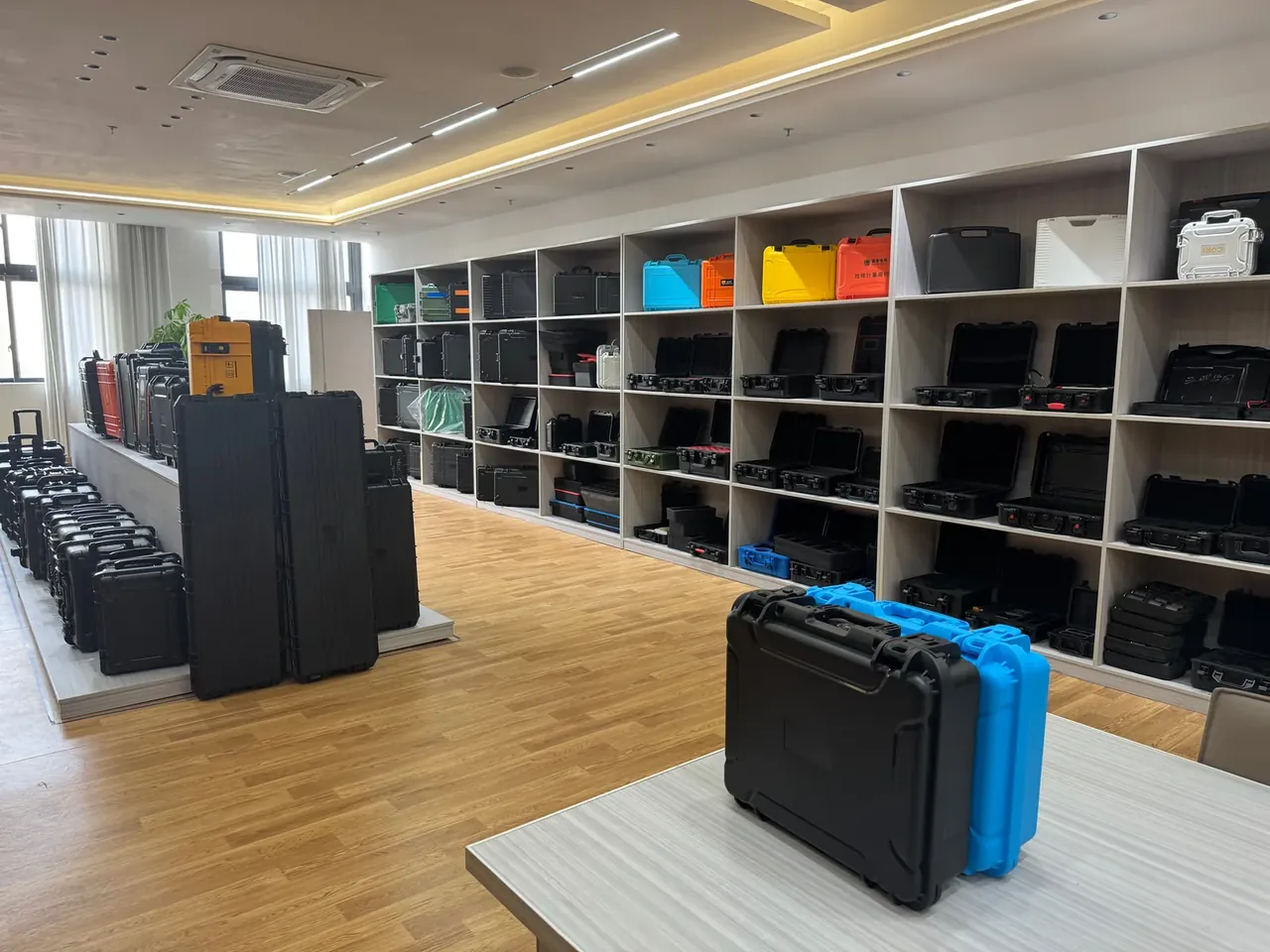
Quick answer: An Outdoor beach waterproof sealed mini safety box keeps latch sand below 0.03 g after 8 h of IP6X blowing with a 2.6 mm lip and 3.4 mm gasket section.
Table of contents
- Dust Lip of the Outdoor Beach Waterproof Sealed Mini Safety Box
- Gasket Cross-Section Diameter
- Latch Sand Ingress After Eight Hours of IP6X Blowing
- Opening Resistance After Cleaning and Retest
- Lip Setting for Small-Box Batches
- FAQ
1. Dust Lip of the Outdoor Beach Waterproof Sealed Mini Safety Box
Fine sand works in along the latch seam, and a taller lip with a fuller gasket section decides the effort the lid needs after eight hours. The dust lip is an upstand along the case mouth that leads angled sand outside; shaved down, grains slip under the latch tongue, raised too far, the lid is propped before it seats. An Outdoor beach waterproof sealed mini safety box lists this height as a fixed table row. At 215 x 145 x 68 mm outside, 188 x 118 x 46 mm inside and 2.9 mm wall, one case in 40 shots is pulled for a lip check.
Low, middle and high lip tiers each take one gasket section, and the drum weighs sand mass with opening force together.
| Dust lip tier | Lip height | Weighed result |
|---|---|---|
| Low | 1.8 mm | Sand passes 0.03 g early |
| Middle | 2.6 mm | Sand and resistance both hold |
| High | 3.4 mm | Resistance margin too large |
Watch the low tier for the hour its mass crosses the threshold. The shot card also carries upstand draft; a rise at 1.8 mm sends the shot back for remoulding, since uneven draft splits the two latches' readings. An Outdoor beach waterproof sealed mini safety box is weighed on that tier alone.
2. Gasket Cross-Section Diameter
The gasket section is the second barrier: as the lid presses down it fills the seal line and narrows the gap. Sections run 2.8 mm, 3.4 mm and 4.0 mm tied to the lip tiers; a thin one misses 15% compression, a thick one fouls the lid corner.
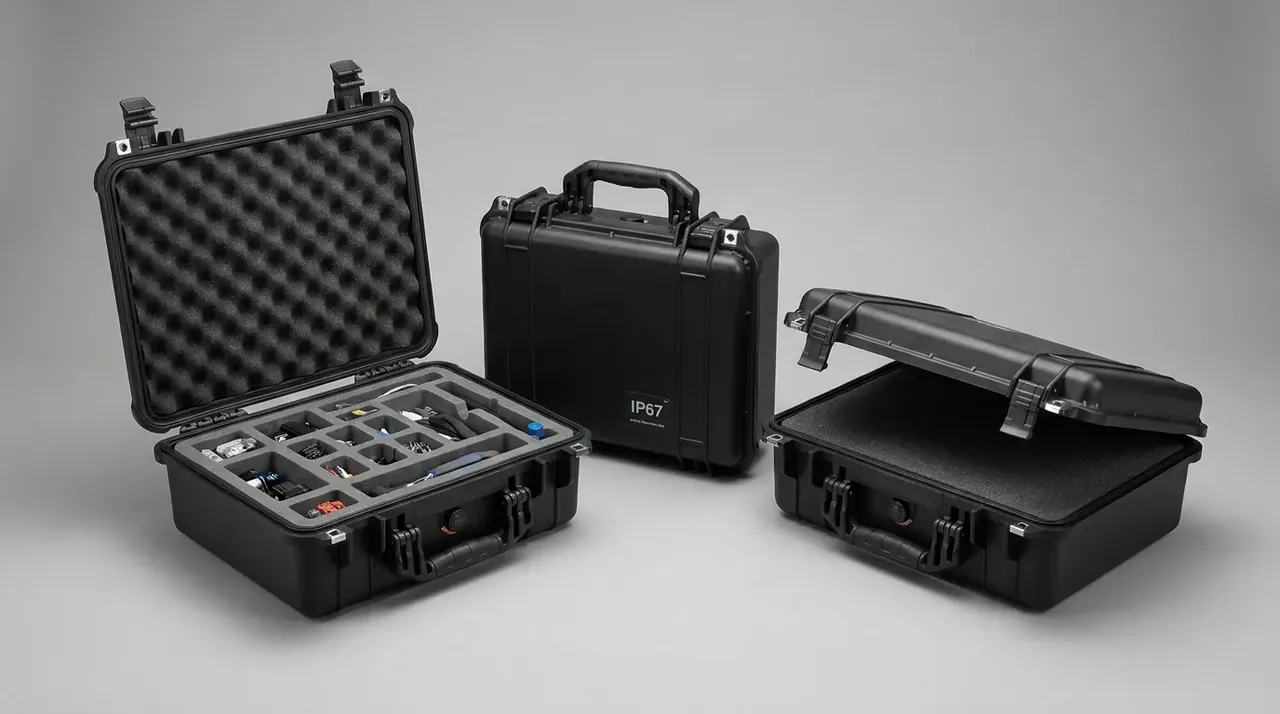
One gasket seat at 15% compression and 2 latches at 160 N each sit with the section in one table row. An Outdoor beach waterproof sealed mini safety box ties 3.4 mm to the 2.6 mm lip, and a revision moves both; pushing the section to 4.0 mm alone tightens the barrier but makes the lid harder to open. Eight cases ride each drum, each seam swept once, 8 sand samples read as one set.
3. Latch Sand Ingress After Eight Hours of IP6X Blowing
The drum is benchmarked against the IP6X method, stopped every 2 h so sand in the seam is brushed into a dish and weighed on a 0.001 g balance. The 0.03 g cap covers the whole run, not the single eighth-hour weighing; a tier climbing mid-run is out even if the last weighing falls back. An Outdoor beach waterproof sealed mini safety box is logged that way.
| Blowing segment | Elapsed time | Sand threshold |
|---|---|---|
| 2 h | Segment 1 | 0.01 g |
| 5 h | Segment 3 | 0.02 g |
| 8 h | Segment 4 | 0.03 g |
The last weighing is read against the earlier ones to show which stretch let sand through. A jump from 0.02 g to 0.029 g between 5 h and 8 h bends the slope, so the batch returns to its tool record as unstable draft. One standard sand sample calibrates the balance, both latches, four mouth corners and two lip ends are swept, and the 8-figure mean goes on the sheet.
4. Opening Resistance After Cleaning and Retest
Once sand is weighed the cases stay on the drum, seams are brushed clean, and the run moves to the open-close rig. Opening resistance is benchmarked against an open-close force method, 28 N or less to pass; a pre-blowing blank runs on the same rig, and the increment is cleaned minus blank.
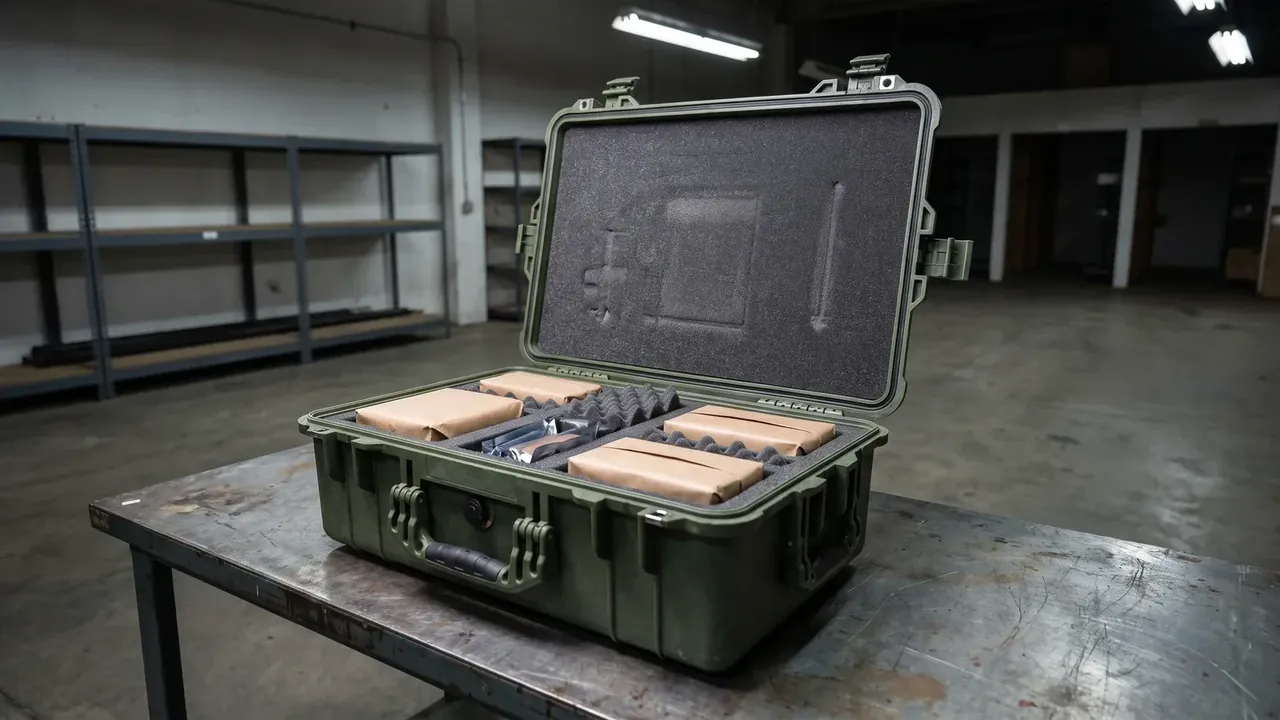
The temperature swing belongs here too: after -10 °C to 50 °C the expansion gap grows at the latch, so an Outdoor beach waterproof sealed mini safety box takes one more resistance group after conditioning and passes only when both increments sit at or below 28 N. The 0.44 kg shell loaded to 0.85 kg also runs 5100 cycles, 2 latches at 160 N, 1 seat at 15%, measured against an IP68 dust and water rating.
| Sand-ingress reading | Paired lip | Opening resistance |
|---|---|---|
| 0.02 g | 2.6 mm | 24 N |
| 0.03 g | 2.2 mm | 27 N |
| 0.05 g | 1.8 mm | 33 N |
5. Lip Setting for Small-Box Batches
The fixed lip is the shortest tier whose eighth-hour sand stays below 0.03 g; anything shorter stays out of the small-box table. That circles 2.6 mm, with 1.8 mm and 2.2 mm as sample records only; section, temperature window and latch count then follow that tier, and changing one sends the row back for review.
JUNZHIJIA checks sand mass and opening increment on small-box batches of the Outdoor beach waterproof sealed mini safety box against the IP6X method alone, with no certification-as-granted wording on the sheet. Each shot's lip height, drum stops and resistance figures are bound into one book, compared with the previous eighth-hour mass. Compression still at 15% after 5100 cycles decides whether the value carries forward; shot cards and sample IDs follow one sequence, and a broken ID voids that drum.
Conclusion
Keeping sand out of an Outdoor beach waterproof sealed mini safety box falls on the 2.6 mm upstand and the 3.4 mm section together; only when both clear do the eight-hour IP6X mass and opening resistance pass as a pair. Figures are read in drum-stop order, since one end-point weighing says little about draft stability; the table splits small-box batches from ordinary turnover on that basis. An Outdoor beach waterproof sealed mini safety box puts lip, section, latches and gasket on one sheet, and no single item moves once the fixed row is circled.
Related Reading
- Why Do Outdoor Waterproof Boxes Leak: Five Seal Failure Causes and Fixes
- Outdoor IP68 waterproof dustproof small hard box
- How Outdoor Low-Voltage Boxes Achieve IP67: Four Core Elements of System-Level Protection
- Hidden cost of a small portable box: one size up, two bills up
Related Products
- 8 Series — Gun Cases; Military Equipment Cases; Camera Equipment Cases; Drone Cases; Watch Cases; Knife Cases; First Aid Cases; Electronics Equipment Cases
- WL8-2812 PP Gun Case — model WL8-2812
- All protective cases and toolboxes: 7 series, 158 models