

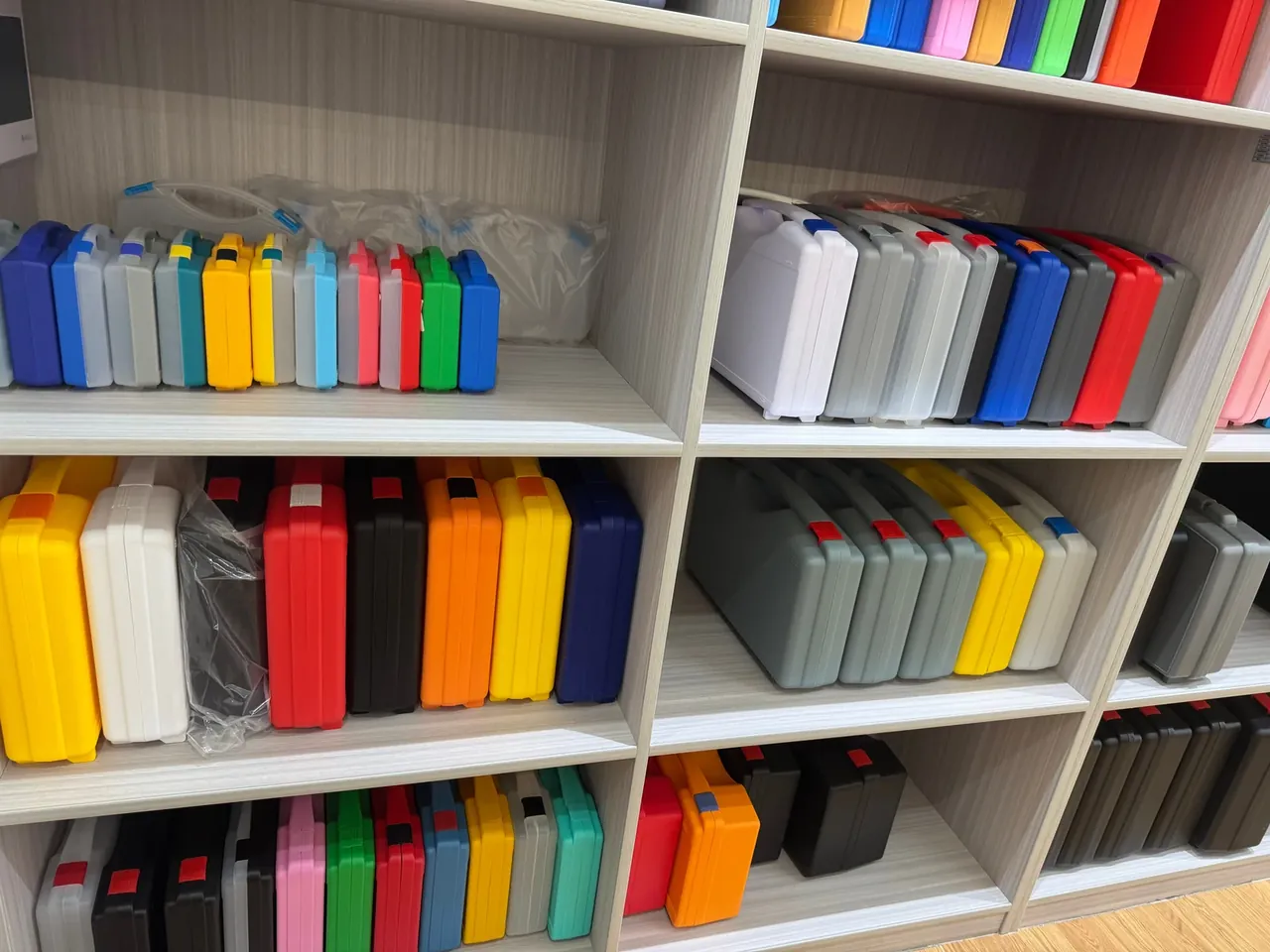
Quick answer: An outdoor camping box custom logo manufacturer controls three marking routes, where film thickness, artwork cost and re-tooling risk set the date.
Table of contents
- How the three marking methods differ
- Colour matching and shade control
- Tooling and re-tooling milestones
- MOQ and mixed-colour consolidation
- What the sample approval sheet must state
- FAQ
1. How the three marking methods differ
Custom work opens as a conversation about artwork and ends as a schedule question about the cavity. Ask an outdoor camping box custom logo manufacturer when the mould goes on the machine and you learn more than any quotation shows.
Screen printing is the default route. A mesh screen pushes ink onto the case body and the cured film sits 10–15 microns thick, almost flush with the surface. Screens are cheap, so a few hundred units is viable. Dark boxes need a white base coat, and ink breaks at tight corner radii.
In-mould labelling works the other way round. The label is printed first, placed in the cavity, and bonded to the case body while the resin is still fluid. The graphic sits under a skin of polymer and cannot peel. The trade-off is a cutting die, cavity locating features, and a minimum roll small orders cannot absorb.
Cavity engraving is the third route an outdoor camping box custom logo manufacturer can offer. Artwork is cut into the tool, so every case leaves the mould with raised or recessed lettering and no secondary step. The catch is revision: change the graphic and the cavity changes with it.
| Route | How the mark is formed | Cost behaviour | Cost of a revision |
|---|---|---|---|
| Screen printing | Ink through mesh, cured film 10–15 microns | Falls with volume, screen charged once | New screen, same-day change |
| In-mould label | Label bonded while resin is fluid | Die and locating jig spread over units | New die, jig reworked |
| Cavity engraving | Artwork cut into the steel | No secondary step at all | Insert swap or full recut |
An outdoor camping box custom logo manufacturer will usually recommend the route only after the volume is known. Doing it the other way round burns a tooling budget.
2. Colour matching and shade control
A colour has to leave the conversation as a code. Pantone and RAL both work; olive green and khaki do not, because two suppliers read them two shades apart. Once the code is fixed the masterbatch is dosed by ratio, and uneven dispersion shows as flow lines.
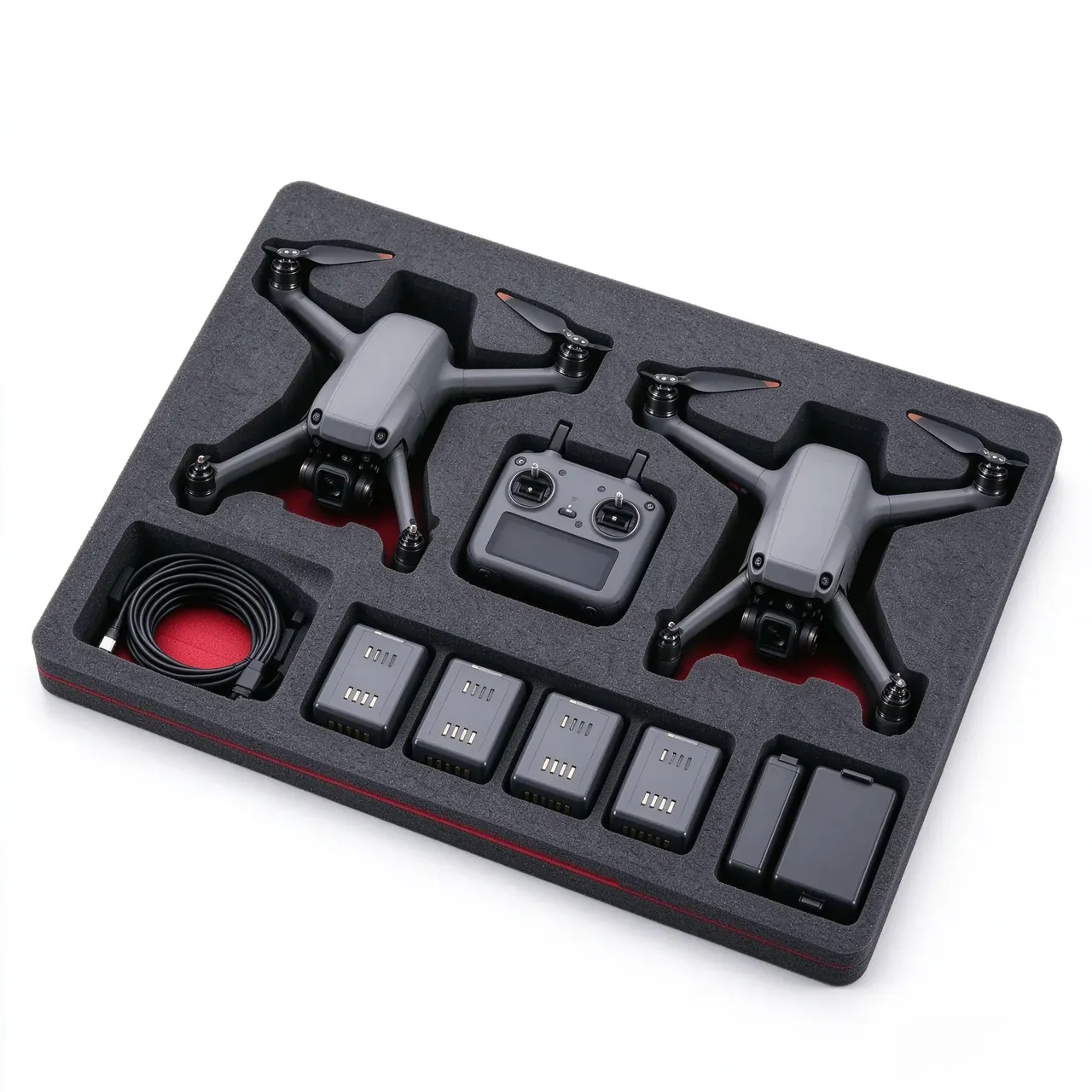
Shade control is where an outdoor camping box custom logo manufacturer earns or loses a repeat order. Judge it with ΔE. Lay the batch out in daylight and a spread within 2 is a difference you sense but cannot name; past 3 it is obvious at arm's length. Write ΔE ≤2 into the acceptance clause instead of the phrase colour match, which nobody can measure.
Shrinkage widens that spread. PP moves 1.0%–2.5% while ABS moves 0.4%–0.7%, and the gap does not change the code but does change consistency. A long flow path lets colour separate along the direction of fill, so thin walls read lighter and thick bosses darker on the same box.
Changing colour means purging the machine. Resin left from the previous shade tints the next batch. When several colours share one purchase order, an outdoor camping box custom logo manufacturer will run dark before light and skip a purge.
3. Tooling and re-tooling milestones
Tooling runs 25–35 days, and the milestone list matters more than the total. Cavity layout and gate position, roughing, heat treatment, finishing, polishing, trial shot, correction: sign each one off, because a two-day slip anywhere pushes the whole date.
Shrinkage compensation is the step most often skipped. Choosing the low or the high end of the range decides how far the cavity is scaled up. Too little and the box comes out undersized, so the latches will not close; too much and the seal groove stops lining up and the lid rocks. One window remains: after the trial shot, before the steel is touched.
Re-tooling splits in two. A new graphic swaps an insert and leaves the frame alone; a structural change moves the cavity and costs half a new tool. An outdoor camping box custom logo manufacturer who builds for inserts from the start spends far less on the second revision.
Material sets its own limit. ABS holds 80–105 °C at 1.82 MPa, a level a case left in summer sun can approach, so leave margin. PP is tougher but softer, and lid ribs have to grow to keep the box from collapsing under a stack.
4. MOQ and mixed-colour consolidation
An outdoor camping box custom logo manufacturer usually lands MOQ between 300 and 500 units, set by cavity count and mould changes. More cavities lower the unit cost but raise the minimum shot weight, and the minimum order climbs with it.
Mixing colours on one order is how small buyers get under the threshold. Several shades of the same case body combine into a single run, so the per-colour quantity drops. The condition is that only the masterbatch changes, and purge losses still have to be priced in.
Choosing 300 or 500 is a scheduling question more than a pricing one. A small run slots between large ones and waits for the tool, the resin and the purge, so it often ships later than a big order.
5. What the sample approval sheet must state
Samples from an outdoor camping box custom logo manufacturer take 5–7 days, and a loose approval sheet guarantees an argument when they arrive. The sheet records criteria, not adjectives.
Write the code, not light grey. Supply vector artwork with dimensions and a datum corner on the case body. State the film at 10–15 microns and name the inspection point. Cap the flash at 0.2 mm.
| Field | What to write | What happens if it is missing |
|---|---|---|
| Shade | Pantone or RAL code plus viewing light | Next batch drifts |
| Artwork | Vector file, size, datum corner | Position shifts, reprint |
| Film | 10–15 microns, named inspection point | Thin spots show through |
| Flash | Not over 0.2 mm | Sharp edge, cosmetic reject |
| Packing | Sleeve per unit or bulk | Scuffs in transit, disputed |
Acceptance belongs in the contract: if the shade of a batch exceeds ΔE 2, or the edge of the mark shows flash above 0.2 mm, the batch goes back for rework.
Add the packing method as the final line, because more disputes start there than anywhere else.
Related Reading
- Stackable camping storage box with lid
- Hard case or carton for e-commerce
- Anti-collision camping tableware box
- Outdoor case selection guide
JUNZHIJIA
Related Products
- 8 Series — Gun Cases; Military Equipment Cases; Camera Equipment Cases; Drone Cases; Watch Cases; Knife Cases; First Aid Cases; Electronics Equipment Cases
- WL8-2812 PP Gun Case — model WL8-2812
- All protective cases and toolboxes: 7 series, 158 models