

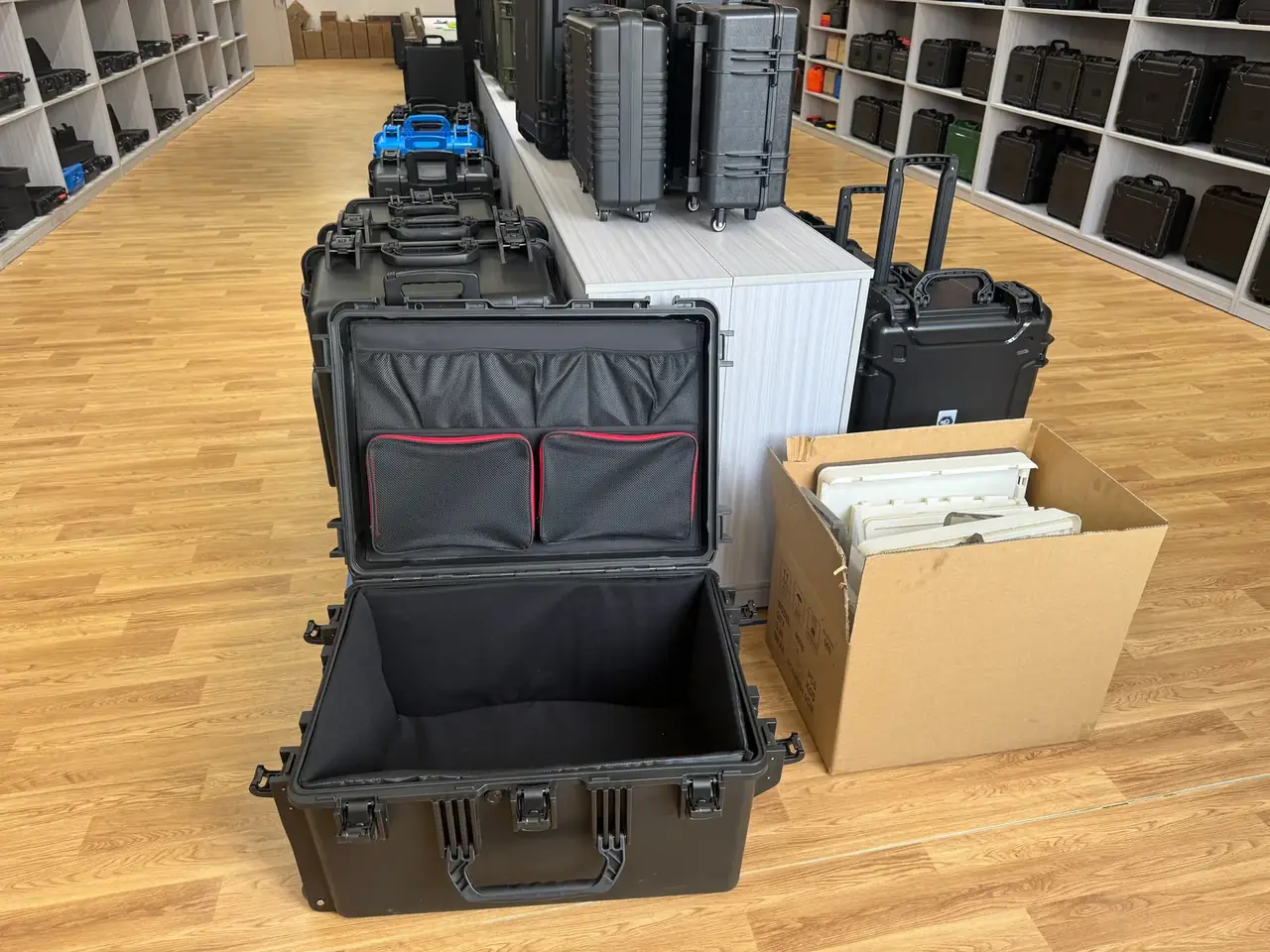
Quick answer: An outdoor camping water purifier protective case splits into a wet zone and a dry zone, so a dripping filter never soaks the spare cartridges.
Table of contents
- [Dry and Wet Zones in an Outdoor Camping Water Purifier Protective Case](#dry-and-wet-zones-in-an-outdoor-camping-water-purifier-protective-case)
- [Where the Residual Water Goes](#where-the-residual-water-goes)
- [Hydrophilic and Hydrophobic Liners](#hydrophilic-and-hydrophobic-liners)
- [Coil Radius for the Pump Head and Hose](#coil-radius-for-the-pump-head-and-hose)
- [The Drying Routine After the Trip](#the-drying-routine-after-the-trip)
- [FAQ](#6-faq)
Dry and Wet Zones in an Outdoor Camping Water Purifier Protective Case
The filter is still dripping when camp comes down. On a flat floor the puddle soaks into the liner over a three-hour drive, and no cloth reaches the fibre bottoms. An outdoor camping water purifier protective case draws its line first: dripping parts one side, dry parts the other.
The divider edge sits 45 mm above the sump: lower and gravel-road sloshing carries water over, higher and it eats dry volume. Mould it in one piece with the floor, since a glued strip creeps at 35 °C and an open seam ends the zone.
Wet volume is sized for the worst case. A 0.1 μm hollow-fibre membrane keeps water in its lumens after the pump stops, and a 2000 mL filter left standing for 10 min sheds 20–30 mL. The bay is built to 60 mL, so a 15° tilt stays inside.
The dry side carries spare cartridges and tablets behind a 0.8 mm hydrophobic liner turned up 20 mm, which turns the floor into a shallow tray.
| Item | Wet zone | Dry zone |
|---|---|---|
| Floor area | 35% | 65% |
| Divider height | 45 mm | same |
| Sump capacity | 60 mL | 0 |
| Liner | removable hydrophobic | hydrophobic, 20 mm lip |
Where the Residual Water Goes
The floor of an outdoor camping water purifier protective case is moulded with a 3° slope toward an 8 mm drain, and the hole carries a 1 mm lip against grit. The drain faces the short side so a turn of the wrist empties it; 15 mm below centre on that side drains both flat and carried.
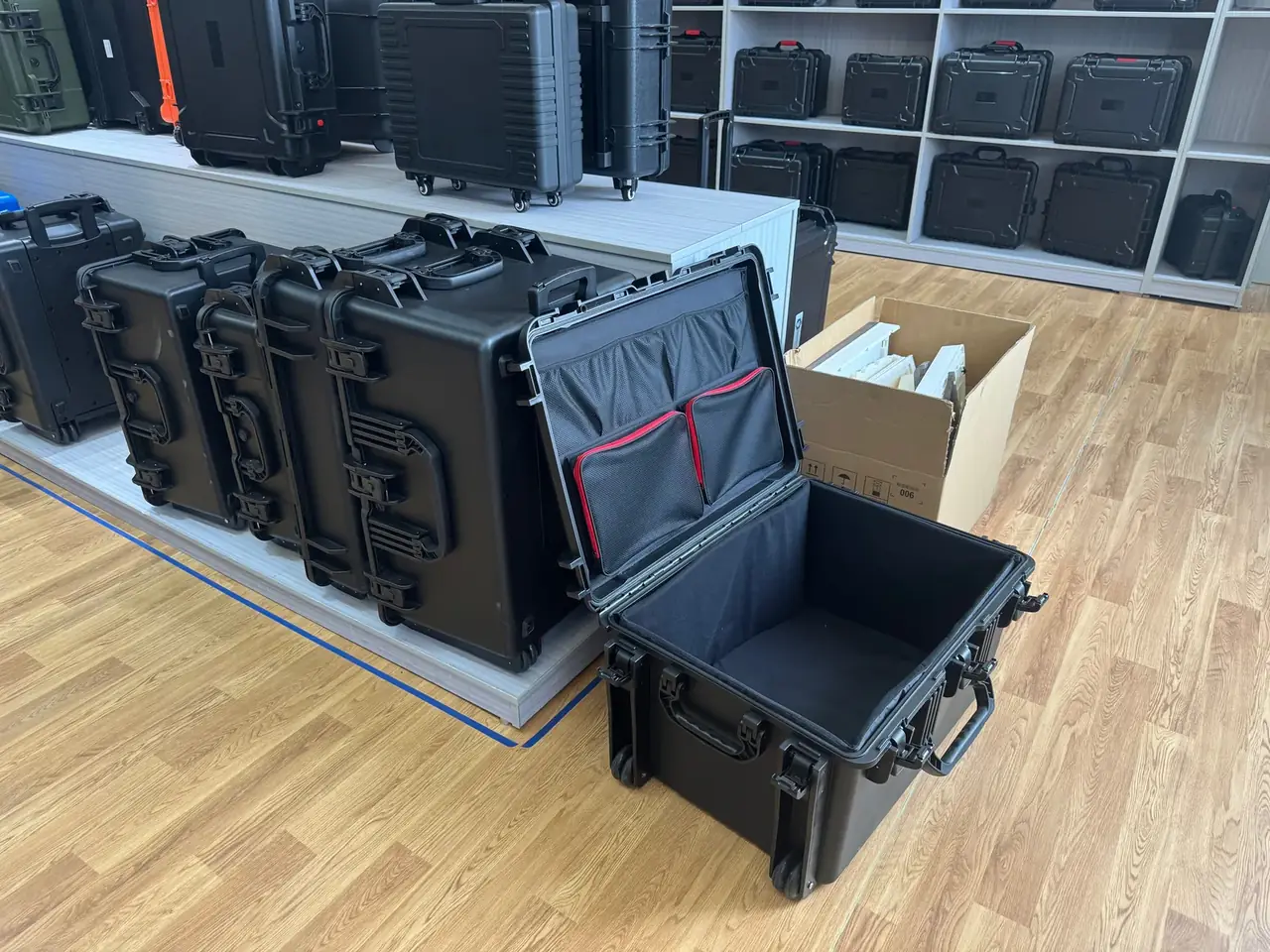
The filter drains on its own: stand it upright for 5 min, pour through the inlet, and residual water falls from 30 mL to under 10 mL. Shaking or blowing air levers the potting, so skip it.
A 1.2 m hose holds about 15 mL: lift one end 200 mm, hang the other, wait 2 min, strip it from high to low.
| Location | Residual water | Action | Time |
|---|---|---|---|
| Fibre lumens | 30 mL | stand upright | 5 min |
| Hose | 15 mL | raise and strip | 2 min |
| Pump head | 5 mL | three dry strokes | 1 min |
| Floor sump | 60 mL | tip out | 30 s |
What stays behind becomes mould. The lumens and the sump are damp and dark, and at 25–30 °C with relative humidity above 80%, growth starts. The International Energy Agency uses 80% as the material threshold, and most species germinate above 75%, so a desiccant is only a backup.
Hydrophilic and Hydrophobic Liners
In an outdoor camping water purifier protective case, a hydrophilic liner is microfibre or nylon: a drop spreads into the weave and the surface reads damp rather than wet. A hydrophobic liner is TPU-coated or PE-laminated, where water beads and flicks off.
The hydrophilic face handles condensation. As the interior cools from 30 °C to 18 °C, vapour condenses on the coldest surface; a hydrophilic face spreads those droplets into a film so they cannot roll into the dry side. It holds 8%–12% water itself, so it must lift out whole and be washed.
The hydrophobic face separates. A 0.8 mm TPU film blocks liquid and lines the wet floor and walls, keeping water off the ABS shell. The shell survives a soaking; the seam adhesive does not, so a removable layer dries in 2 h instead of 6 h.
| Property | Hydrophilic | Hydrophobic |
|---|---|---|
| Material | microfibre, nylon | TPU, PE laminate |
| Water content | 8%–12% | under 1% |
| Drying time | 6 h | 2 h |
| Main job | spread condensate | block liquid |
Both liners pass one check: 24 h at 28 °C and 85% RH, no mould spots on the back, no lifted seam.
Coil Radius for the Pump Head and Hose
The pump head takes load badly: with the handle pressed down, the piston rod sees a side load, the seal wears an off-centre groove, and suction lift drops within a few trips. Cut that bay from the handle height.
Coil radius inside an outdoor camping water purifier protective case sets hose life. Coiled into a ring, a 1.2 m hose creases inside once the radius drops below 80 mm, and a repeated crease becomes a hard fold where the walls touch and flow halves. At 80 mm the coil sits near eight times the 10 mm bore, still inside the 15x minimum bend radius hose makers quote.
Route the hose around the wall, fittings up, 100 mm free at each end, with 5 mm of foam against the filter.
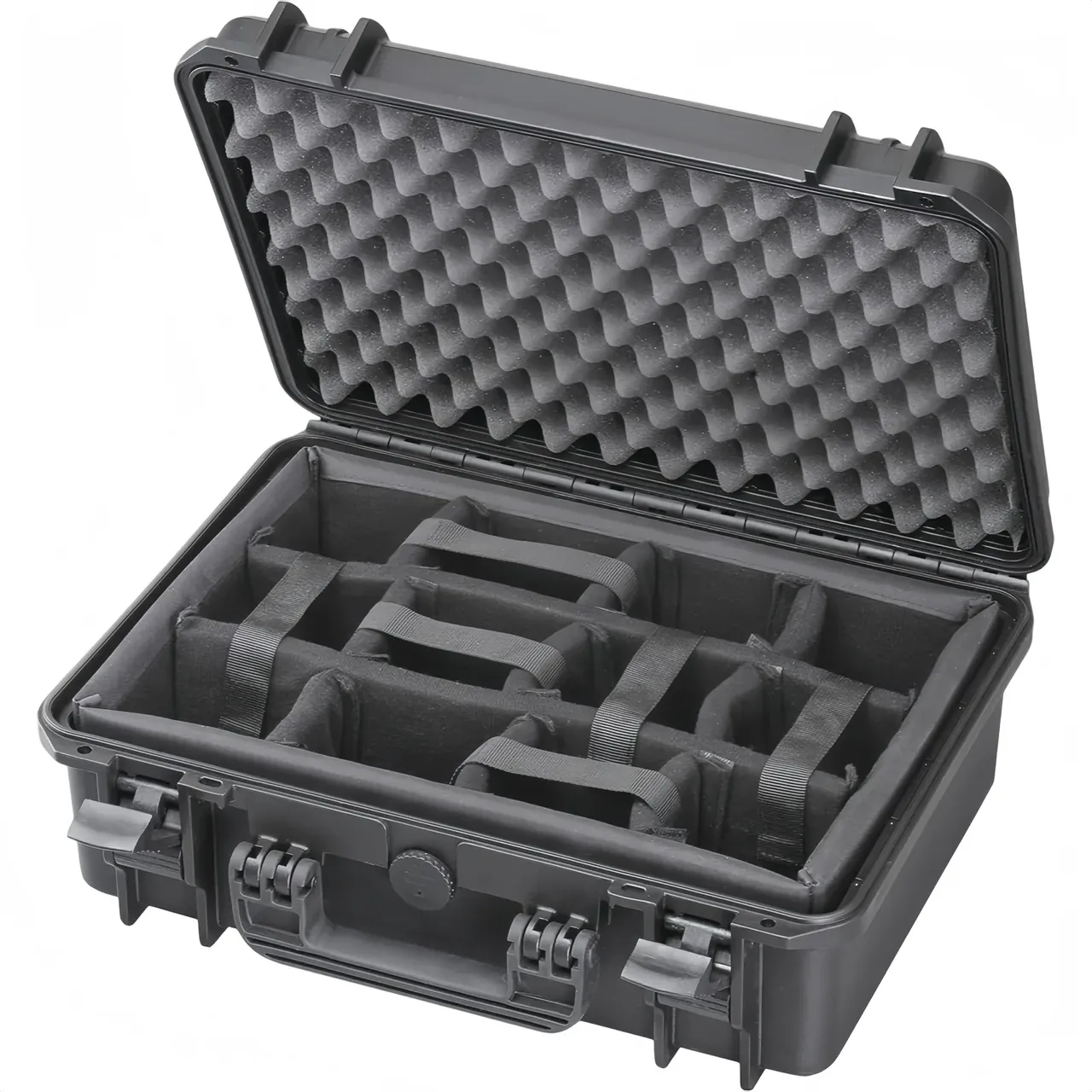
Egg-crate foam in the lid should hold, not stuff. Peaks stop the coil wandering; too thick a foam flattens the hose at every closure. Keep compression near 20%.
The Drying Routine After the Trip
Drying an outdoor camping water purifier protective case starts with the lid open. Take out filter, hose and liner; what remains is an empty shell, propped at 45° so air enters the drain and leaves the lid gap.
Filter first: upright in moving air, inlet down, weigh after 6 h. A gain of 2 g or less counts as dry; a damp filter seals water inside until the next opening smells of it.
Hose second: hang both ends with no kink, and after 6 h a fingertip along the bore should come away clean.
Liners last: hand-wash the hydrophilic one at 40 °C or less, no softener, shade dry 6 h; the hydrophobic one takes a damp cloth and 2 h. Refit only when both are dry.
| Part | Method | Time | Pass mark |
|---|---|---|---|
| Filter | upright, moving air | 6 h | gain 2 g or less |
| Hose | hung both ends | 6 h | no beads in bore |
| Hydrophilic liner | shade dry | 6 h | dry to touch |
| Hydrophobic liner | wipe | 2 h | no water marks |
The routine lands near 6 h, a working day. Miss a number on sealing, residual water or drying time and the insert is revised: divider first, liner second, drain last.
Conclusion
An outdoor camping water purifier protective case needs three checks: the divider is one moulding, the drain has a lip and a plug, and the liners lift out whole. Those three decide residual water and drying time.
This article discusses only the container (case) side of the specification and design intent, and does not cover any handling, loading or use of the items inside.
Related Reading
- Plastic case versus wooden crate
- Case or carton for e-commerce shipping
- Anti-collision storage box for camping tableware
- Stackable camping storage box with lid
Related Products
- 8 Series — Gun Cases; Military Equipment Cases; Camera Equipment Cases; Drone Cases; Watch Cases; Knife Cases; First Aid Cases; Electronics Equipment Cases
- WL8-2812 PP Gun Case — model WL8-2812
- All protective cases and toolboxes: 7 series, 158 models