

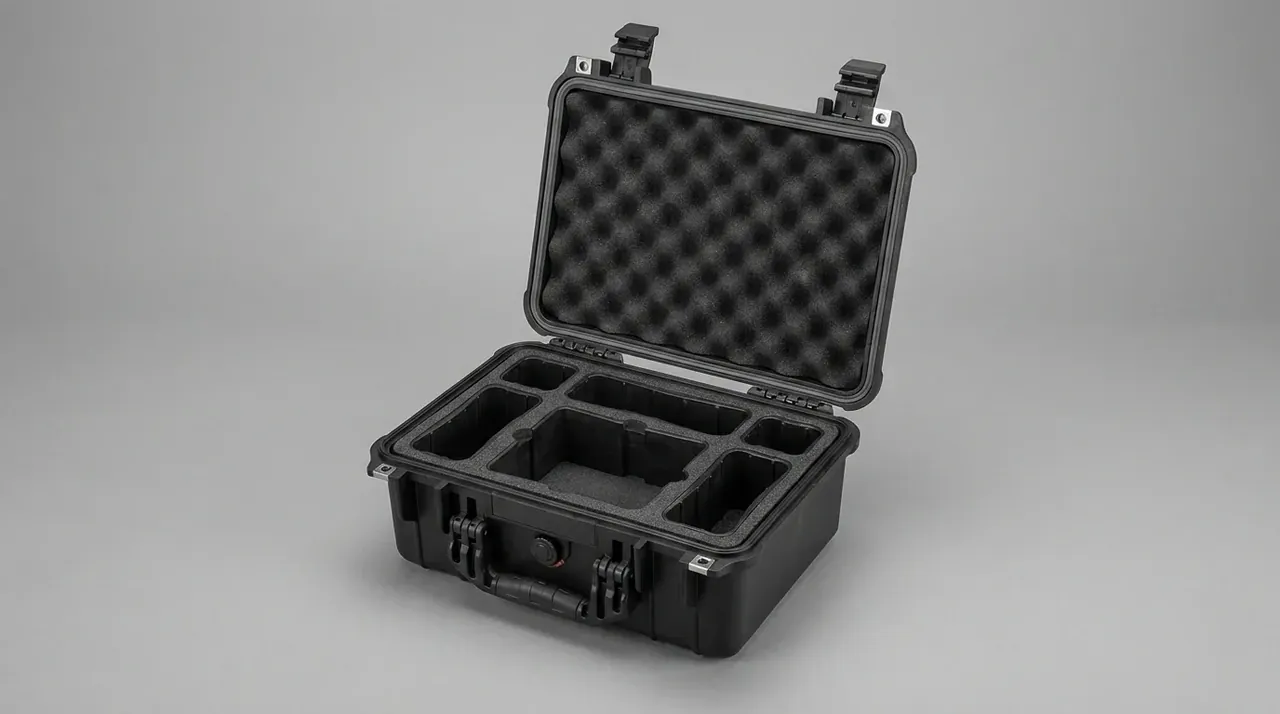
Quick answer: An outdoor expedition team gear color-coded case assigns four role colours, a 50×30 mm batch label and two label faces, so 12 cases pass handover in 90 s.
Table of contents
- [Coding Rules for an Outdoor Expedition Team Gear Color-Coded Case](#coding-rules-for-an-outdoor-expedition-team-gear-color-coded-case)
- [Durability of Colour Cards and Batch Labels](#durability-of-colour-cards-and-batch-labels)
- [Label Placement on Curved Case Surfaces](#label-placement-on-curved-case-surfaces)
- [Role Colours and the Count Sheet](#role-colours-and-the-count-sheet)
- [Checking Actions at Handover](#checking-actions-at-handover)
- [FAQ](#6-faq)
Coding Rules for an Outdoor Expedition Team Gear Color-Coded Case
Twelve identical black cases sit on the ground and nobody dares open the first. The fault is not in the cases but in the missing rule that pairs a person with gear without lifting a lid. An outdoor expedition team gear color-coded case splits that rule into three layers: colour for the person, label for the batch, position for which face looks outward.
Colour sorts coarsely. In an outdoor expedition team gear color-coded case, four colours map to four functions, orange for communications, yellow for medical, blue for technical work, pink for logistics, with black left for unassigned and shared spares. Four rather than six matters: beyond six hues, neighbours blur at dusk and the team starts asking each other instead of reading the shell.
The label carries the detail. At 50×30 mm it holds a two-letter group along the top, a three-digit serial beneath, and a four-digit batch in the lower corner. Character height stays above 8 mm so group and serial read at 3 m.
Labels sit on two faces, the top and one short side, so a scuffed label always has a backup.
| Layer | Carrier | What it encodes | Read at |
|---|---|---|---|
| Colour | shell body colour | role group | 10 m |
| Label, upper line | 50×30 mm label | group letters | 3 m |
| Label, lower line | same label | three-digit serial | 1.5 m |
| Batch | label corner | four-digit batch | 0.5 m |
Durability of Colour Cards and Batch Labels
Colour drifts, and a drifted colour is a different code. The standard is a sealed sample kept out of light; each batch is measured against it and a ΔE above 3 counts as a new colour that cannot enter the count sheet.
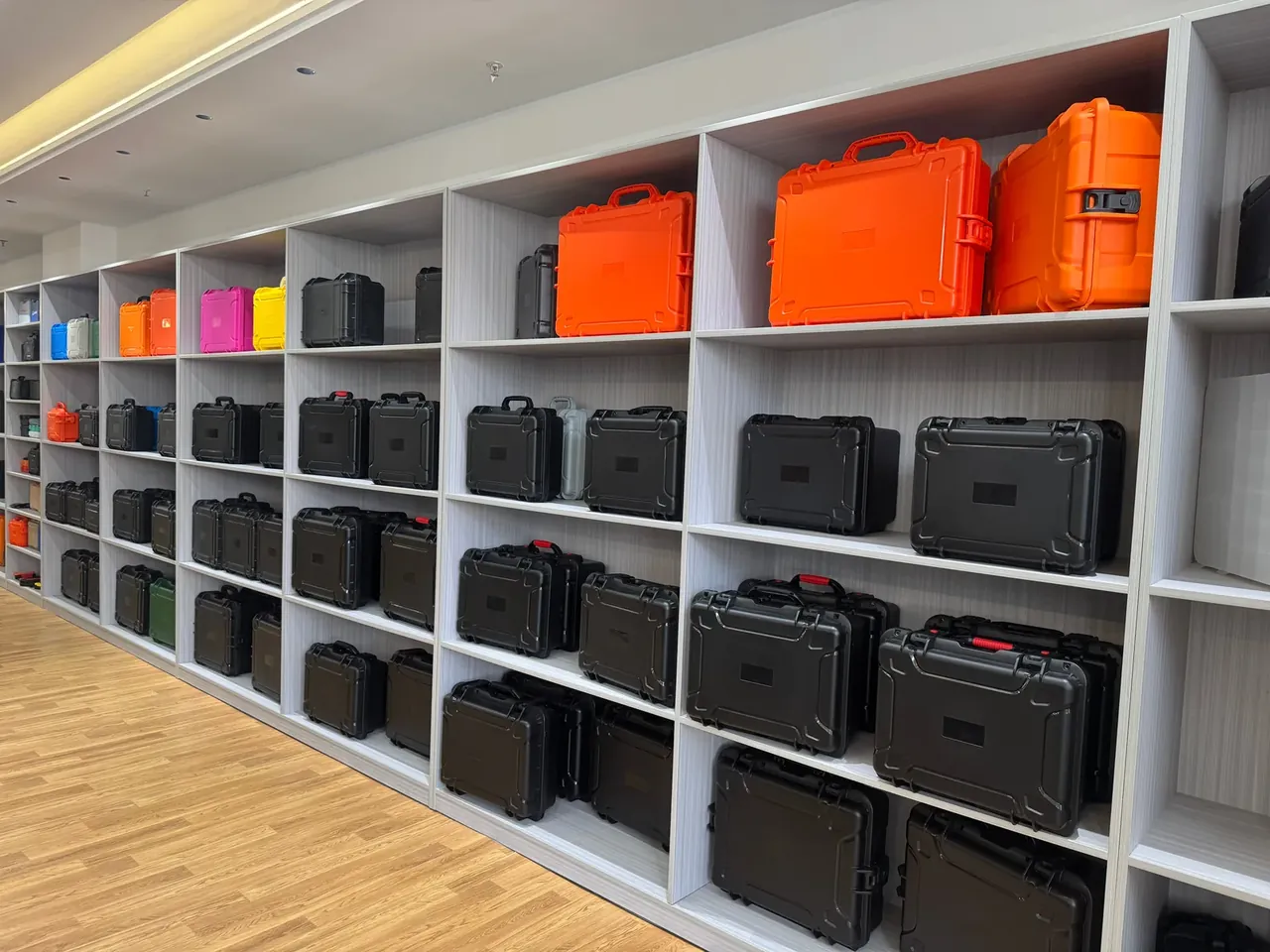
ABS yellows outdoors because of the double bonds in its butadiene phase. UV exposure breaks those bonds, the surface loses gloss and shifts yellow, and impact strength falls with it; an ordinary grade can discolour within half a year. An outdoor part therefore needs UV absorbers with hindered amine stabilisers, or ASA instead. Acceptance runs 500 h of xenon-arc ageing and reads ΔE.
Labels fail in two layers, face stock and adhesive. PET or synthetic paper resists tearing and water; acrylic pressure-sensitive adhesive needs the mould release agent wiped off with isopropanol first, and that wipe is often worth a full grade of adhesion. The cross-cut check is 1 mm spacing, 100 squares, one tape pull, then ISO 2409 class 0 or ASTM D3359 5B to pass.
| Item | Test | Pass line | Failure look |
|---|---|---|---|
| Colour | ΔE against sealed sample | 3 or less | two groups look alike |
| Weathering | 500 h xenon arc | ΔE shift 3 or less | yellowing, lost gloss |
| Adhesion | 1 mm cross-cut | ISO 0 / 5B | lifted edge, full peel |
| Temperature | -20 to 55 ℃ cycling | no blister, no curl | brittle cold, soft hot |
The temperature row is the one usually skipped. Cycling from -20 ℃ to 55 ℃ three times says more than one soak at either end: cold hardens the adhesive until a poorly bedded label lifts, heat softens it until a glove catches the corner.
Label Placement on Curved Case Surfaces
A label that will not lie flat cannot be read, and an outdoor expedition team gear color-coded case deals with that on the moulding rather than the label. The shell is moulded with rounded corners and 1–2° of draft, so a label laid on that slope is loaded at one end, lifts at the other, and curls within weeks.
The fix is a label pad: a 60×40 mm shallow recess 0.5 mm below the surrounding surface, with a 1 mm transition radius, so the step absorbs the glove that would catch the edge.
Curvature has a limit. The minimum radius a label tolerates is about twice its short edge, so 60 mm for a 50×30 mm label; below that the middle arches, the adhesive bridges an air pocket, and pressing only makes it spring back.
Wall thickness counts as well: a 0.8 mm wall deflects under a thumb and carries the label with it, so the pad is thickened locally to 1.6 mm. Release agent also matters, because the adhesive grips the agent rather than the plastic, so wipe with isopropanol and wait 5 min.
Role Colours and the Count Sheet
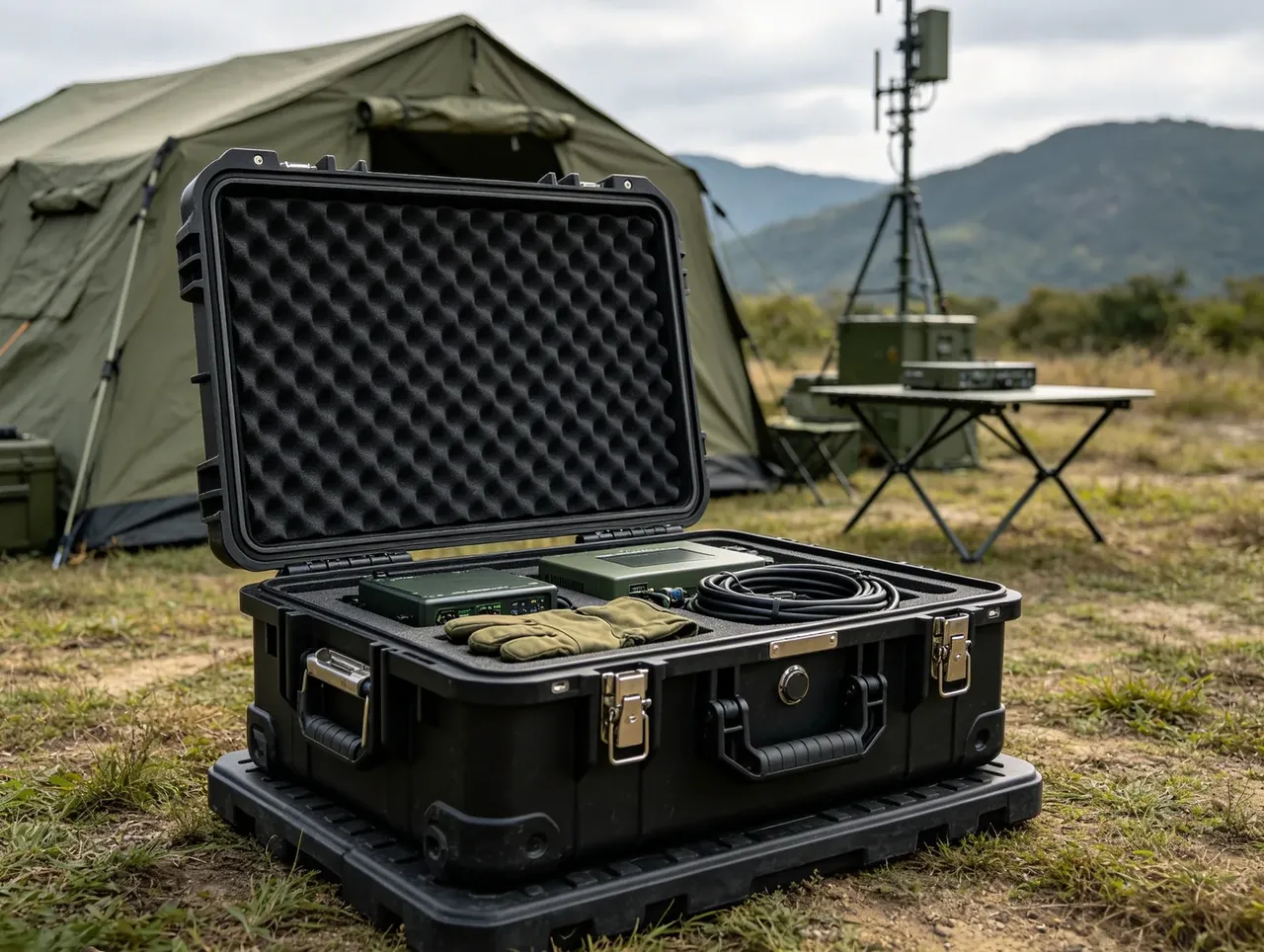
Role colour answers who carries which case in an outdoor expedition team gear color-coded case. Pack by group before departure, stack by colour when loading, and a glance at the tailgate shows whether a group is short.
The count sheet of an outdoor expedition team gear color-coded case answers which one is missing. Twelve rows per batch, one per case, with columns for colour, serial, owner and status. At the checkpoint only the last two digits are called and ticked, about 90 s for 12 cases with two people: one reads, one ticks, no lid opens.
| Colour | Role | Cases | Usual load | Owner |
|---|---|---|---|---|
| Orange | Communications | 3 | radios, spare cells | yes |
| Yellow | Medical | 2 | first-aid kit, drugs | yes |
| Blue | Technical | 4 | tools, test pieces | yes |
| Pink | Logistics | 2 | stoves, lighting | yes |
| Black | Shared | 1 | spares | yes |
Leave one row blank for a case added late, written as colour plus a temporary number and given a serial on return.
Checking Actions at Handover
Handover uses three actions, because a fourth gets skipped: colour matches the group, last two digits read, label edge felt for lift. Three actions total 90 s across 12 cases.
The reject line is written, not judged. Colour difference, adhesion and reading distance, any one over its limit, and an outdoor expedition team gear color-coded case loses the point of its coding: a drifting colour merges two groups at dusk, and a reading distance under 3 m forces someone to lean in.
Keep one remarks column with three kinds of note only: relabelled, disagrees with the sheet, short of gear.
Conclusion
Colour, label and position form one code, and two acceptance lines, colour difference and adhesion, keep it usable. When choosing an outdoor expedition team gear color-coded case, look for a label pad, a label test record, and a count sheet that clears 12 cases in 90 s.
This article discusses only the container (case) side of the specification and design intent, and does not cover any handling, loading or use of the items inside.
Related Reading
- Case or carton for e-commerce shipping
- Plastic case versus wooden crate
- Outdoor military gear case
- Outdoor field work storage hard box
Related Products
- 8 Series — Gun Cases; Military Equipment Cases; Camera Equipment Cases; Drone Cases; Watch Cases; Knife Cases; First Aid Cases; Electronics Equipment Cases
- WL8-2812 PP Gun Case — model WL8-2812
- All protective cases and toolboxes: 7 series, 158 models