

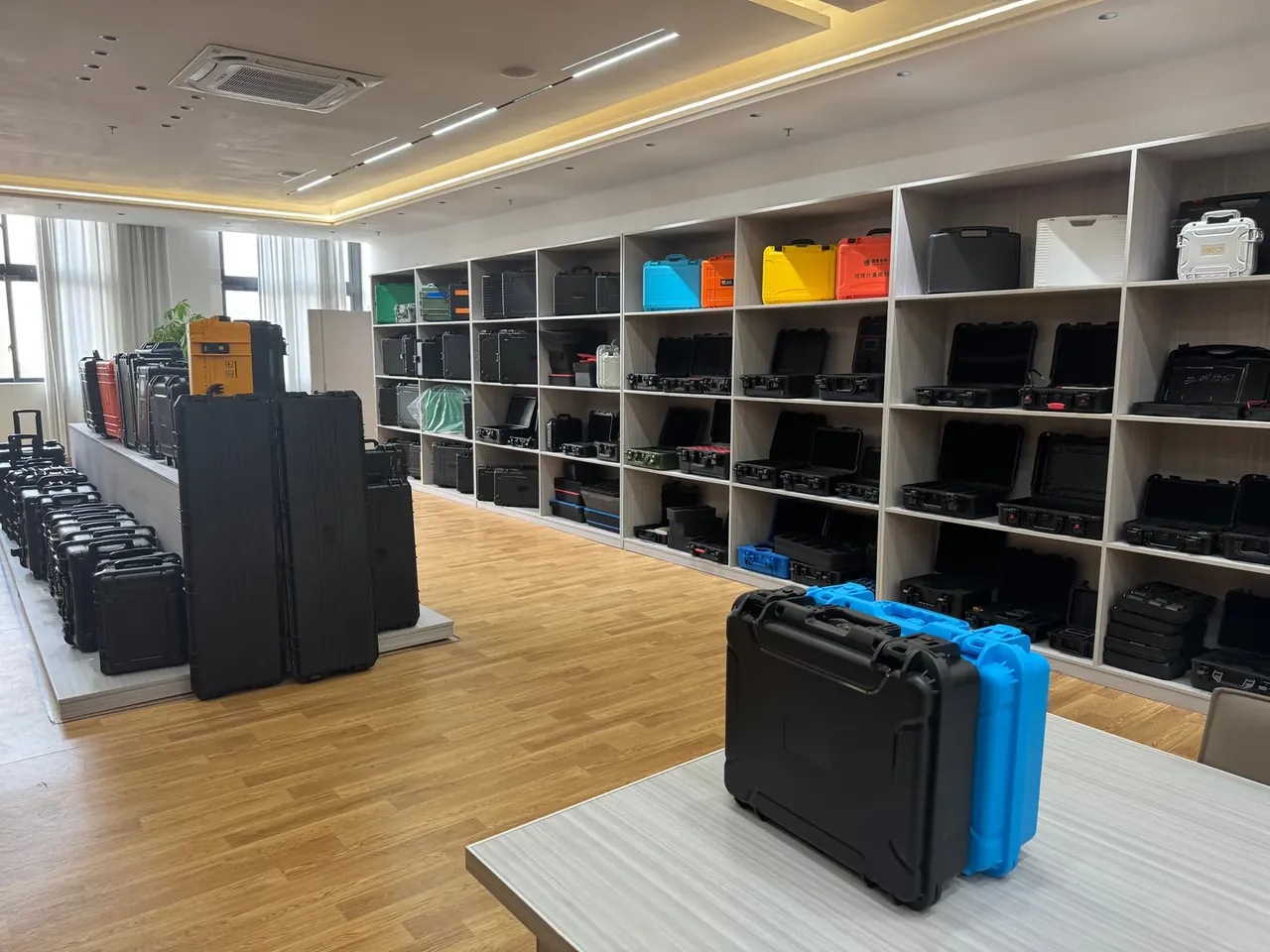
Quick answer: An Outdoor field work storage hard box holds 0.4 kPa / 10 min after 20 thermal cycles; a 3.2 mm lip and 145 mm point spacing preserve the seal.
Table of contents
- Gasket lip height of the Outdoor field work storage hard box
- Spacing of lid compression points
- Pressure-decay readings across thermal cycles
- Groove recovery in a rain retest
- Lip-height threshold for outdoor batches
- FAQ
1. Gasket lip height of the Outdoor field work storage hard box
Thermal cycling does not loosen a seal in one stroke; lip height and compression-point spacing decide how much squeeze survives each cold contraction. The Outdoor field work storage hard box uses a single continuous gasket groove with a 3.2 mm lip and one gasket at 20% compression, so the lip presses into the groove floor once the lid closes. An empty case of 5.4 kg against a rated payload of 11 kg does not change the lip, yet it changes how the lid flexes between the two compression points; once that flex grows, the groove far from the latches loses compression first. A taller lip is not automatically safer. If the Outdoor field work storage hard box lifts the lip too far, the 2 latches rated at 355 N each cannot pull the lid down to its designed seat.
| Lip height tier | Lip value | Residual squeeze after cold |
|---|---|---|
| 2.6 mm tier | 2.6 mm | Low, decays early |
| 3.2 mm tier | 3.2 mm | Stable margin |
| 3.8 mm tier | 3.8 mm | Tight, hard to close |
2. Spacing of lid compression points
A spacing of 145 mm is set by lid stiffness and latch count together. The Outdoor field work storage hard box carries 2 latches along the long edge at 355 N each; without enough lid thickness between those points the middle bows during closing. A 4.1 mm shell shows no visible warp at this span, yet widening the spacing to 180 mm in a comparison drops mid-groove compression by 0.3 mm against the ends. Spacing is coupled to lip height, so a change to one sends you back to check the other; two dial indicators under the points read lid travel while closing.
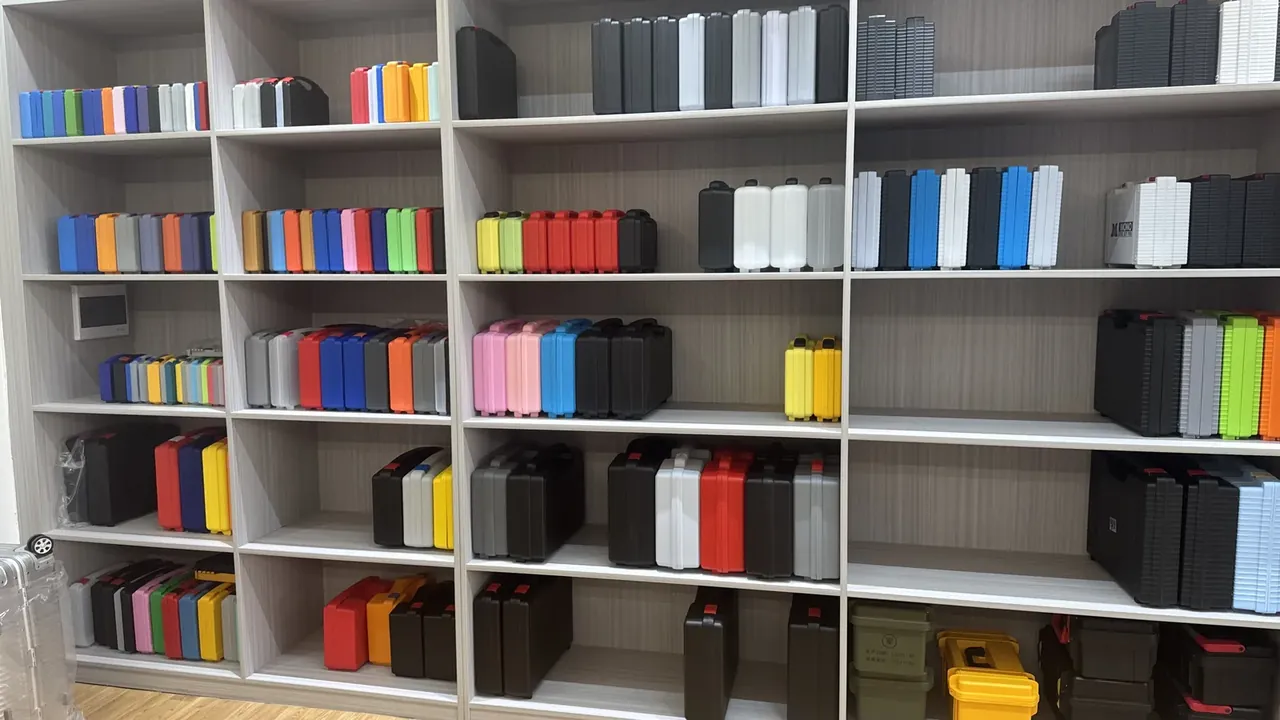
Before the rain retest the local lid thickness at the compression points is measured again, since stress around the latch seats lets the groove settle after repeated opening. The Outdoor field work storage hard box must still hold 145 mm spacing after 4200 open-close cycles; any drift sends the lid back for rematching, and mold mismatch between lid and shell is checked at the same time.
3. Pressure-decay readings across thermal cycles
Thermal cycling runs from -30 °C to 60 °C over 20 cycles, with an airtight decay logged every 5 cycles over a 10 min window. The Outdoor field work storage hard box has its acceptance line at 0.4 kPa / 10 min; all tiers hold at cycle 5, and the spread only opens after cycle 15. Decay is not a linear climb: a low-lip tier often jumps after one cold contraction, which is why each cycle is logged rather than only the last.
| Thermal cycle | Cumulative cycles | Decay at 3.2 mm tier |
|---|---|---|
| Cycle 5 | 5 | 0.18 kPa / 10 min |
| Cycle 10 | 10 | 0.24 kPa / 10 min |
| Cycle 15 | 15 | 0.31 kPa / 10 min |
| Cycle 20 | 20 | 0.38 kPa / 10 min |
The cycle 20 reading is isolated because the lip-height threshold recognises only that round. Small swings in the middle cycles are not grounds for rejection, and the rig log must state the starting pressure and final reading for every cycle.
4. Groove recovery in a rain retest
Rain is applied at 55 L/(m2·h) for 25 min, and the point is how far the groove still rebounds when wet rather than whether water entered the cavity. The Outdoor field work storage hard box uses one gasket at 20% compression; once a water film wets the lip, rebound slows, and a lip near its lower bound shows a rising decay at the first retest. Benchmarked against the IP67 ingress method, only the lid-seal segment is reported and it is not stretched into a whole-case rating claim. Groove rebound is gauged with a feeler at four corners, the smallest value governs, and a wide spread points to uneven lid loading.
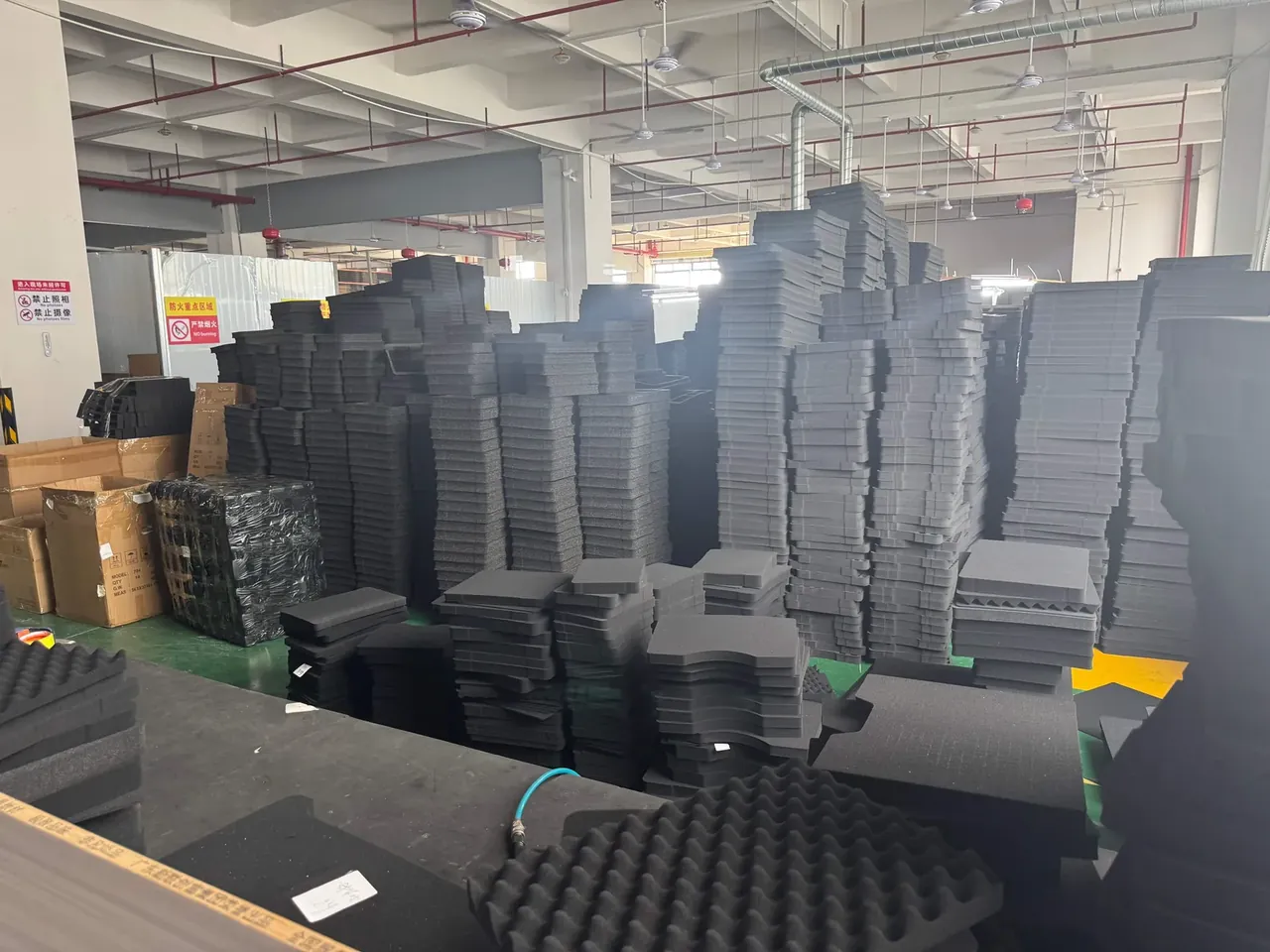
The single gasket at 20% compression is checked for hardness before and after the spray; a drift beyond the logged range triggers a fresh gasket and a retest.
5. Lip-height threshold for outdoor batches
The lip-height threshold takes the lowest tier whose decay still holds 0.4 kPa after cycle 20, and every sample below that tier is scrapped as a batch. Production lots of the Outdoor field work storage hard box close on this line with no exceptions; the retest after 4200 open-close cycles only confirms that latches and hinges have not pulled the mouth out of line. Batch records must trace each case back to its measured lip height and matching cycle decay, and a missing item blocks release.
| Pressure-decay reading | Lip tier | Batch decision |
|---|---|---|
| 0.4 kPa / 10 min or less | 3.2 mm tier | Release |
| 0.4-0.6 kPa / 10 min | 2.6 mm tier | Retest |
| above 0.6 kPa / 10 min | below 2.6 mm tier | Scrap |
Dimensions and mass sit on the same sheet so the rig clamping position can be checked: outer size 560 x 400 x 230 mm, inner cavity 495 x 340 x 165 mm, wall 4.1 mm, empty case 5.4 kg, rated payload 11 kg. The Outdoor field work storage hard box has its spacing measured under load, and the maker keeps the outgoing log under JUNZHIJIA with rig ID and gauge calibration date attached.
Conclusion
The airtight behaviour of the Outdoor field work storage hard box comes down to one coupled set: a 3.2 mm lip, 145 mm compression-point spacing and a decay at or under 0.4 kPa / 10 min after 20 thermal cycles. Reading the interface, latch preload and groove rebound separately misses how they interact, and per-case measured values beat a single pass verdict. Fix the batch threshold first, then confirm size and payload.
Related Reading
- Weatherstrip: the key case accessory for waterproof and dustproof sealing
- Field airtightness retest: how it is done on site
- Outdoor camping storage box with lid, stackable
- Case gasket replacement interval: by compression rate, not by year
Related Products
- 8 Series — Gun Cases; Military Equipment Cases; Camera Equipment Cases; Drone Cases; Watch Cases; Knife Cases; First Aid Cases; Electronics Equipment Cases
- WL8-2812 PP Gun Case — model WL8-2812
- All protective cases and toolboxes: 7 series, 158 models