

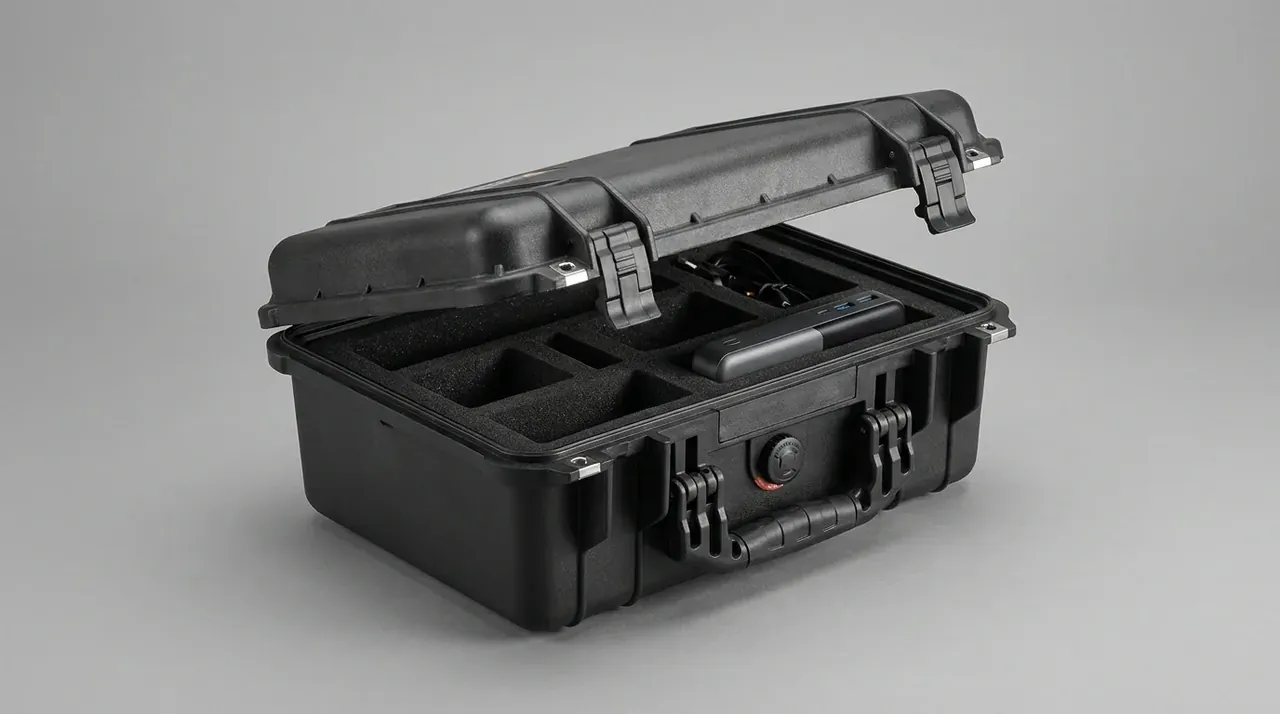
Quick answer: The Outdoor high altitude low temp resistant latch box holds return stroke below 0.85 mm and pin-hole play under 0.12 mm after 900 latch cycles at −35 °C.
Table of contents
- Spring leaf thickness in the Outdoor high altitude low temp resistant latch box
- Pin and hole fit clearance of the toggle latches
- Return stroke after 900 cycles at minus 35 degrees
- Pin-hole play rechecked after warming back
- Setting the leaf thickness for the low temperature batch
- FAQ
1. Spring leaf thickness in the Outdoor high altitude low temp resistant latch box
Cold to minus thirty-five degrees and worked repeatedly, a spring leaf either returns or it does not; nine hundred cycles settle the question. The shell measures 490×340×180 mm outside and 425×280×130 mm inside, with a wall of 4.0 mm, an empty mass of 4.0 kg and a rated load of 9.5 kg, yet the cold punishes the small leaf inside each of the two latches.
A leaf of 1.5 mm is the starting value for the low temperature batch. Go thinner and the steel loses its snap at −35 °C, so the latch lifts but no longer clamps the lid; go thicker and a hand force of 330 N per latch turns stiff. The moulder splits the stamped leaf into three thickness tiers from one tool, changing only the blanking allowance while the shell, latch seat and single seal stay fixed at 17 percent compression. The temperature span is pinned at −40 °C to 55 °C.
| Leaf thickness tier | Measured leaf | Hand feel at room temperature |
|---|---|---|
| Thin tier | 1.3 mm | Light latch, soft rebound |
| Middle tier | 1.5 mm | Clamp and rebound both acceptable |
| Thick tier | 1.7 mm | Lid closes hard, heavy feel |
No tier is cut below the thin one for the Outdoor high altitude low temp resistant latch box: a spring any thinner loses its return stroke before nine hundred cycles. These tiers only pick a starting point for the cold batch.
2. Pin and hole fit clearance of the toggle latches
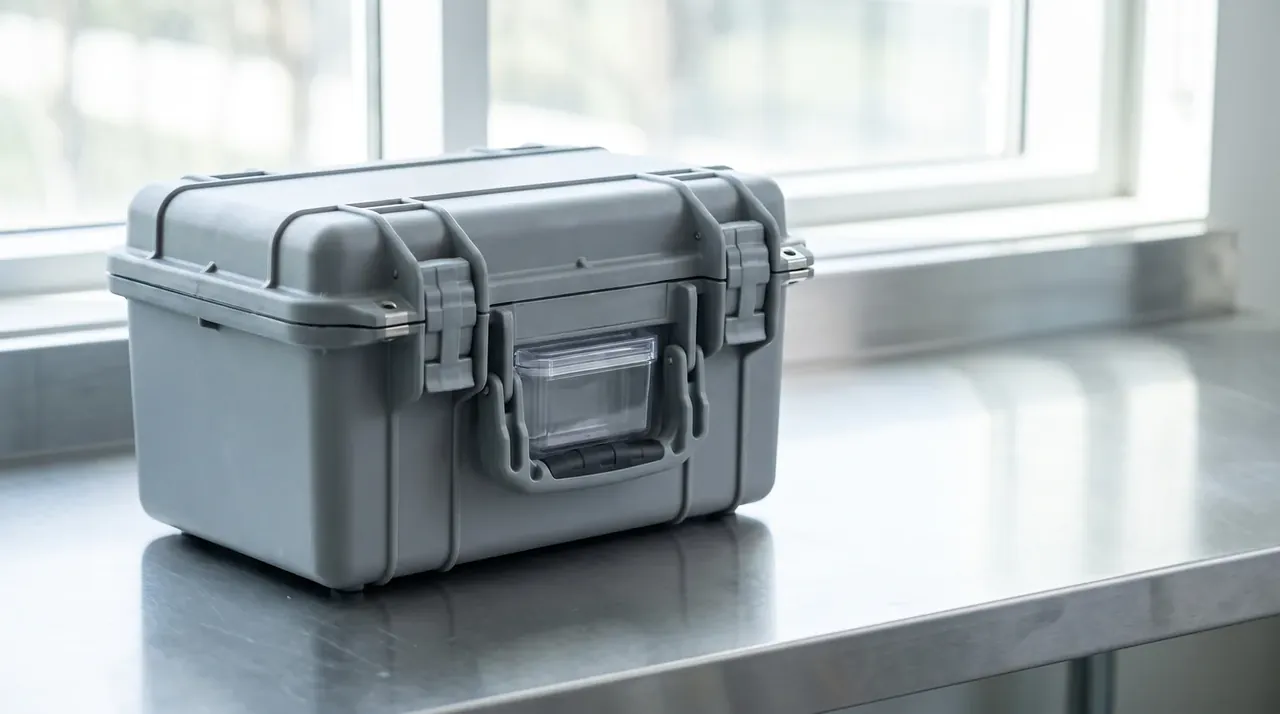
A pin fit of 0.16 mm is the baseline for this pair of latches. The pin passes through coaxial holes in the seat and the tongue, and the bore must be slightly larger for the latch to swing; too large a bore turns oval after repeated cycling at −35 °C. The Outdoor high altitude low temp resistant latch box holds two dimensions together: the pin diameter after cold contraction and the bore shrinkage at low temperature both fold into that 0.16 mm.
The rig measures the slack at the pin hole when the latch swings into its locked position, not the pin on its own. Each of the two latches is read once under a 330 N clamp, the seal keeps its 17 percent compression, and IP66 is verified against a reference method carried by that seal and the lid fit. The shell, seat and tongue all come from one moulding lot.
3. Return stroke after 900 cycles at minus 35 degrees
Inside a −35 °C chamber the rig opens and closes the latches 900 times, and the return stroke is the leftover gap between the tongue and its home position after each close, judged against a line of 0.85 mm or less. Readings at the first, 300th, 600th and 900th cycles show whether the stroke climbs evenly or jumps. What matters for the Outdoor high altitude low temp resistant latch box is that last stretch of the curve.
| Cycle number | Return stroke | What the tier shows |
|---|---|---|
| First cycle | 0.21 mm | Tongue seats flush, almost no residue |
| 300th | 0.44 mm | Leaf begins to lag a little |
| 600th | 0.63 mm | Pin fit still steady, stroke climbs slowly |
| 900th | 0.81 mm | Close to the line, still inside it |
A value of 0.81 mm sits inside 0.85 mm, so the 1.5 mm tier still stands after nine hundred cycles. The thinner tier touched 0.88 mm at the 600th cycle and was pulled from the cold batch early.
4. Pin-hole play rechecked after warming back
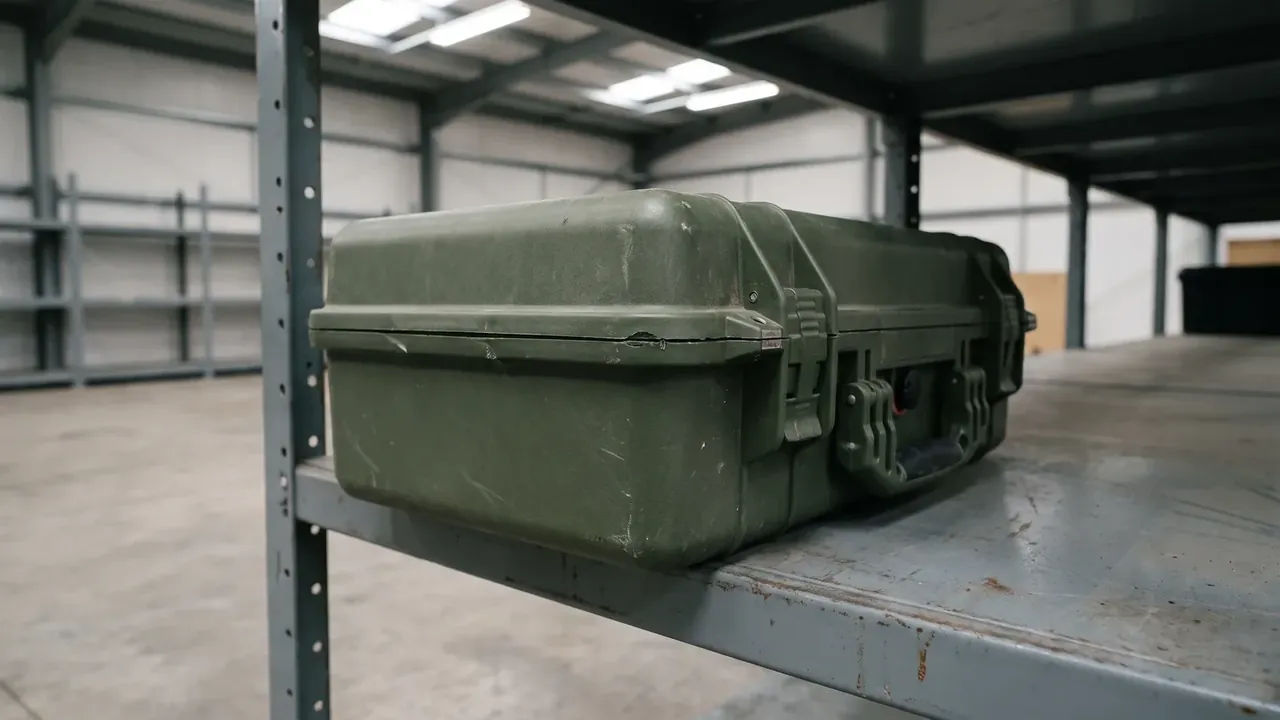
Cold readings are followed by a second pass once the shell warms. The pin and the bore both expand back to size, and a feeler gauge then measures pin-hole play against a line of 0.12 mm or less. This warm recheck catches whether cold cycling has worn a permanent looseness into the bore.
| Return reading | Cold pin-hole play | Play after warming |
|---|---|---|
| 1.3 mm leaf tier | 0.09 mm | 0.15 mm |
| 1.5 mm leaf tier | 0.07 mm | 0.11 mm |
| 1.7 mm leaf tier | 0.06 mm | 0.10 mm |
The 1.5 mm tier reads 0.11 mm after warming, inside the 0.12 mm line, while the 1.3 mm tier jumps to 0.15 mm, its bore already levered loose. The Outdoor high altitude low temp resistant latch box sets the three tiers side by side so that thickness, stroke and play confirm one another in a single table.
5. Setting the leaf thickness for the low temperature batch
The setting takes the thinnest tier whose return stroke still stays under 0.85 mm after the 900th cold cycle One line folds three tables into a single number: the thin tier crossed the line at the 600th cycle, the middle tier finished the 900th at 0.81 mm and its warm play never broke 0.12 mm, so 1.5 mm is written into the cold batch drawing. The cold identity of the Outdoor high altitude low temp resistant latch box rests on this one 1.5 mm leaf,; the next lot reviews the blanking allowance rather than the shell.
Conclusion
Chill the 490×340×180 mm shell to −35 °C and work its latches nine hundred times, and the 1.5 mm tier closes at 0.81 mm of return stroke and 0.11 mm of warm play, touching neither line. A pin fit of 0.16 mm, two latches at 330 N each, one seal at 17 percent compression: these dimensions all circle one cold assembly sheet. JUNZHIJIA leaves the Outdoor high altitude low temp resistant latch box with a single leaf setting
Related Reading
- What to Consider for Protective Cases in High-Altitude Environments?
- Opening a Case at -20 °C: When the Gasket Stiffens
- Cold Temperature Brittleness in Protective Cases: Why Winter Drops Crack Shells
- How to Choose a Protective-Case Latch: Types, Compression Points, and Selection Checklist
Related Products
- 8 Series — Gun Cases; Military Equipment Cases; Camera Equipment Cases; Drone Cases; Watch Cases; Knife Cases; First Aid Cases; Electronics Equipment Cases
- WL8-2812 PP Gun Case — model WL8-2812
- All protective cases and toolboxes: 7 series, 158 models