

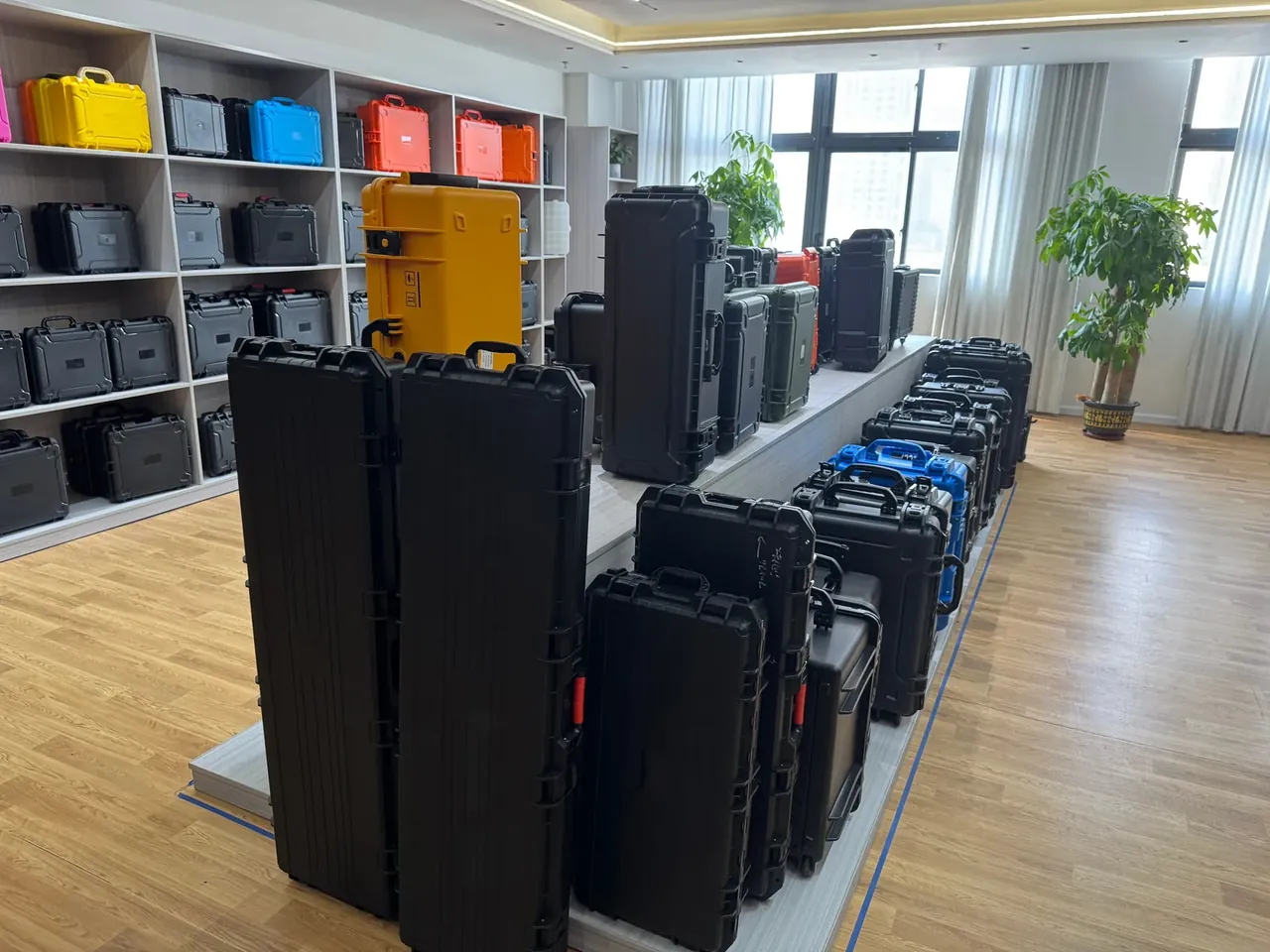
Quick answer: An Outdoor landscape photographer dustproof hard case joins 3 labyrinth stages to a 6.5 mm membrane edge, weighing the deposit after 8 h of dust.
Table of contents
- Labyrinth groove stages on an Outdoor landscape photographer dustproof hard case
- Width of the membrane clamp edge
- Deposit weighing after the dust trial
- Lid reopening resistance readings
- Stage setting for the photo batch
- FAQ
1. Labyrinth groove stages on an Outdoor landscape photographer dustproof hard case
Dust does not cross the seal face; labyrinth stages and the membrane clamp width set how many corners it must turn. This shell is 470 by 340 by 170 mm outside, 405 by 280 by 120 mm inside, with a 3.8 mm wall and 3 stages around the mouth. More stages lengthen the corner path but also the lid travel, lifting reopening force. The dust ledger for an Outdoor landscape photographer dustproof hard case lists stage count first and voids the grade whenever the mould or groove shape changes.
Stage counts of 2, 3 and 4 run on one chamber and one breather valve. A stage gap beyond tolerance bends the deposit reading, so a shell without a batch number stays out of the ledger for an Outdoor landscape photographer dustproof hard case.
| Stage grade | Labyrinth stages | Membrane clamp edge |
|---|---|---|
| One fewer | 2 stages | 6.5 mm |
| Nominal | 3 stages | 6.5 mm |
| One more | 4 stages | 6.5 mm |
One fewer stage lifts deposit to 2.3 mg; one more drops it to 1.1 mg but raises reopening force to 46 N. Only 3 stages hold both limits on one shell. An Outdoor landscape photographer dustproof hard case reads 2 stages worse because the corner path is short, not the resin.
2. Width of the membrane clamp edge
A 6.5 mm clamp edge on the breather membrane is the second grading quantity. It is a continuous pressed line around the valve seat, and its width sets whether the film rim lifts under a pressure difference: below 6.5 mm the rim curls after a temperature swing and lets dust past; above it the film is clamped so tight the difference lands on the reopening moment.
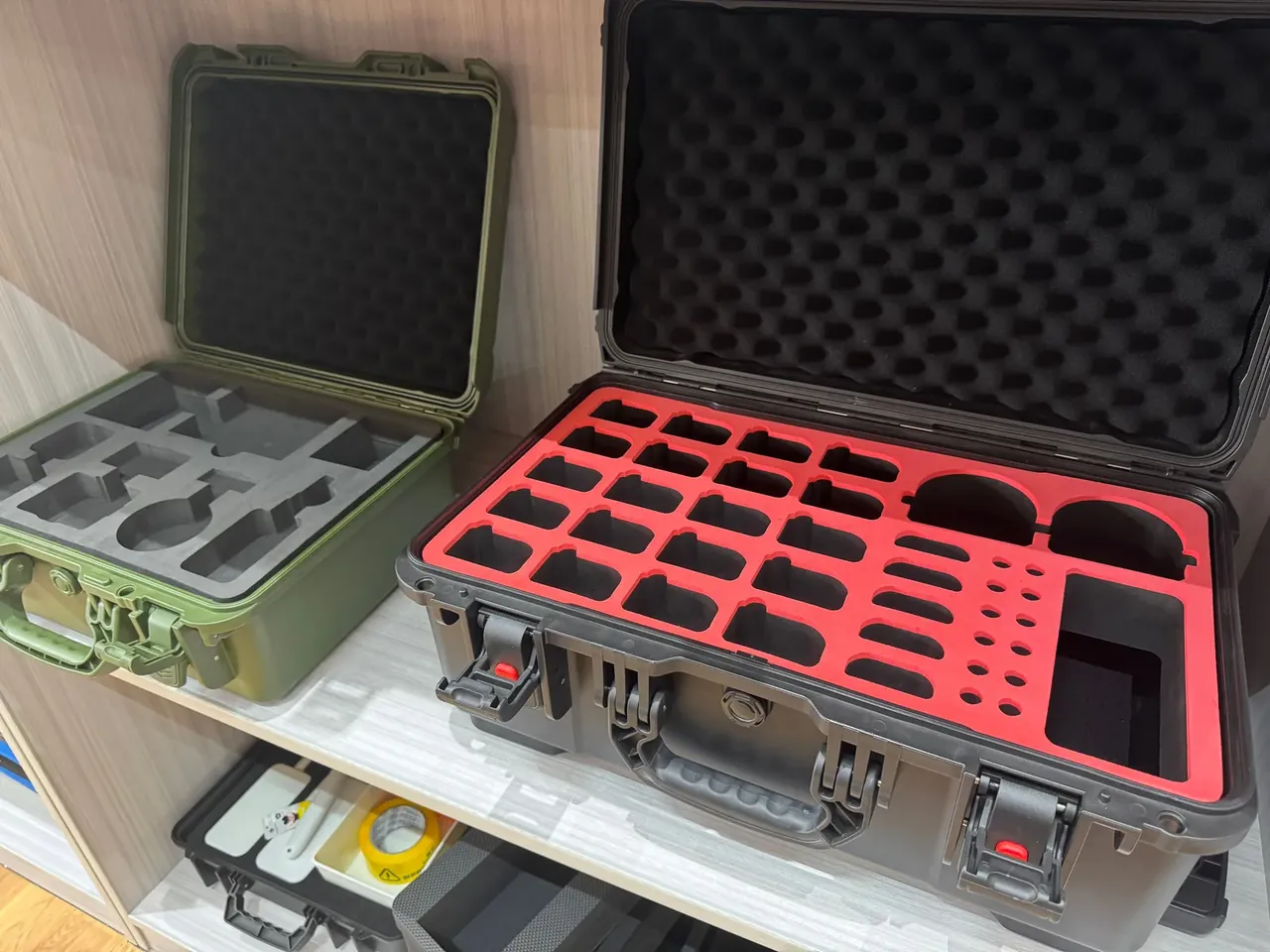
The two latches close at 340 N on a single seal compressed to 19%, logged on that same sheet. A wider clamp traps the film, so loose latches let the mouth slacken first and a high deposit is wrongly blamed on too few stages. The lid record for an Outdoor landscape photographer dustproof hard case files edge and latch force together, tagging a shell that misses either.
3. Deposit weighing after the dust trial
The dust trial is fixed at 8 h with the shell closed; afterwards the box settles, the lid opens, and a collector plate gain is weighed to 0.1 mg. Judgment uses the eighth-hour deposit, not the running total, since the criterion asks whether stages and clamp edge keep dust beyond the last corner. An Outdoor landscape photographer dustproof hard case takes the eighth hour as its gate, with earlier weighings filed as direction only.
| Dust stage | In-box deposit | Cumulative gain |
|---|---|---|
| 2 h | 0.4 mg | 0.4 mg |
| 4 h | 0.9 mg | 0.5 mg |
| 8 h | 1.8 mg | 0.9 mg |
Deposit reads 0.4 mg at 2 h, 0.9 mg at 4 h and 1.8 mg at 8 h, with a larger hourly gain in the second half, so the corner is breached only after dust builds up. Deposit of 1.8 mg and reopening force of 38 N fill two cells of one release sheet; one filled cell is no pass. An Outdoor landscape photographer dustproof hard case logs the stretch past 8 h without a grade, and the ledger takes only the eighth-hour row.
4. Lid reopening resistance readings
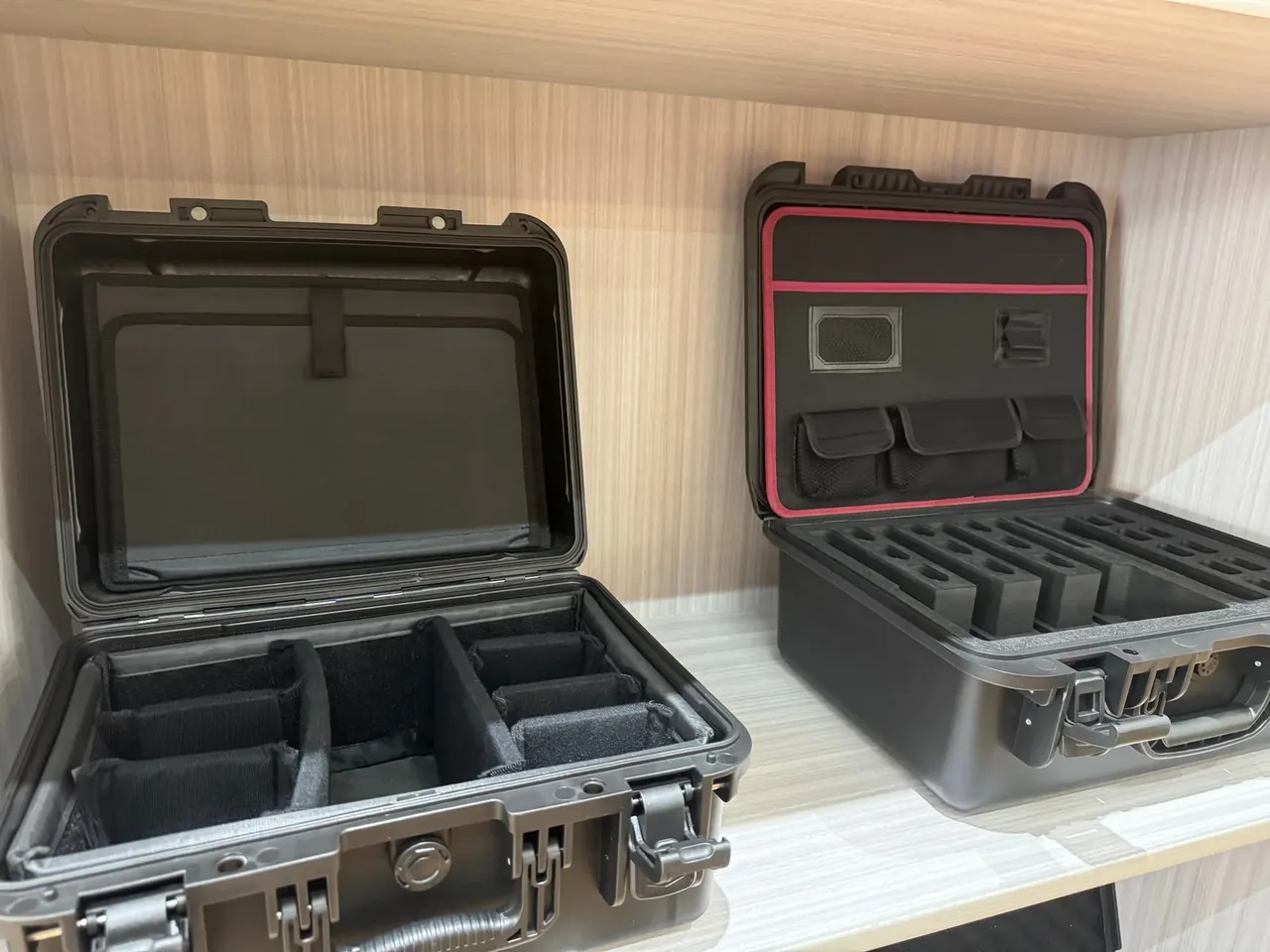
The trial ends with a reopening step on the same shell. A pull gauge reads the peak force along the lid normal just after the latches release, to 1 N. Deposit and force are separate: one more stage sends dust farther, but the rubbing travel between groove teeth and lid rim grows, so lifting the lid costs more.
| Deposit value | Labyrinth stages | Reopening force |
|---|---|---|
| 2.3 mg | 2 stages | 30 N |
| 1.8 mg | 3 stages | 38 N |
| 1.1 mg | 4 stages | 46 N |
Side by side, 2 stages cross on deposit at 2.3 mg, 4 stages cross on force at 46 N despite a cleaner 1.1 mg, and only 3 stages sit on both limits. A shell weighed but never reopened earns no grade; the force counts only after dust.
5. Stage setting for the photo batch
The photo batch closes on one line: the fewest stages whose eighth-hour deposit stays below 1.8 mg becomes the setting, and any shape with fewer stages stays off the field configuration sheet. A batch freezes 3.6 kg empty, 7 kg loaded, the -10 °C to 45 °C swing, 4500 cycles and two latches at 340 N; a new mould sends the dust trial and reopening step back to the start.
No single sample stands for the batch. Stage grade, clamp width, eighth-hour deposit and reopening force are logged for every shell, and four matching cells admit it; one missing or crossed cell sends only that shell back. Moulding parameters and dust readings for an Outdoor landscape photographer dustproof hard case sit in separate columns, and drawing tolerances trace to the rig condition.
Conclusion
Staging an Outdoor landscape photographer dustproof hard case means lining up three cells of readings, not one deposit figure: 3 stages hold deposit to 1.8 mg, a 6.5 mm clamp edge keeps the film rim flat from -10 °C to 45 °C, and reopening force stops at 38 N. A crossed cell sends that shell back, borrowing no margin from another. JUNZHIJIA files 4500 open-close rig records by batch; drawing tolerances come afterwards from Kexin New Materials (Guangdong) Co., Ltd.
Related Reading
- Why outdoor protective cases need dustproof design
- Photography equipment case: vibration damping and dust protection
- Camcorder lens dustproof waterproof trolley case
- Outdoor IP68 waterproof dustproof small hard box
Related Products
- 8 Series — Gun Cases; Military Equipment Cases; Camera Equipment Cases; Drone Cases; Watch Cases; Knife Cases; First Aid Cases; Electronics Equipment Cases
- WL8-2812 PP Gun Case — model WL8-2812
- All protective cases and toolboxes: 7 series, 158 models