

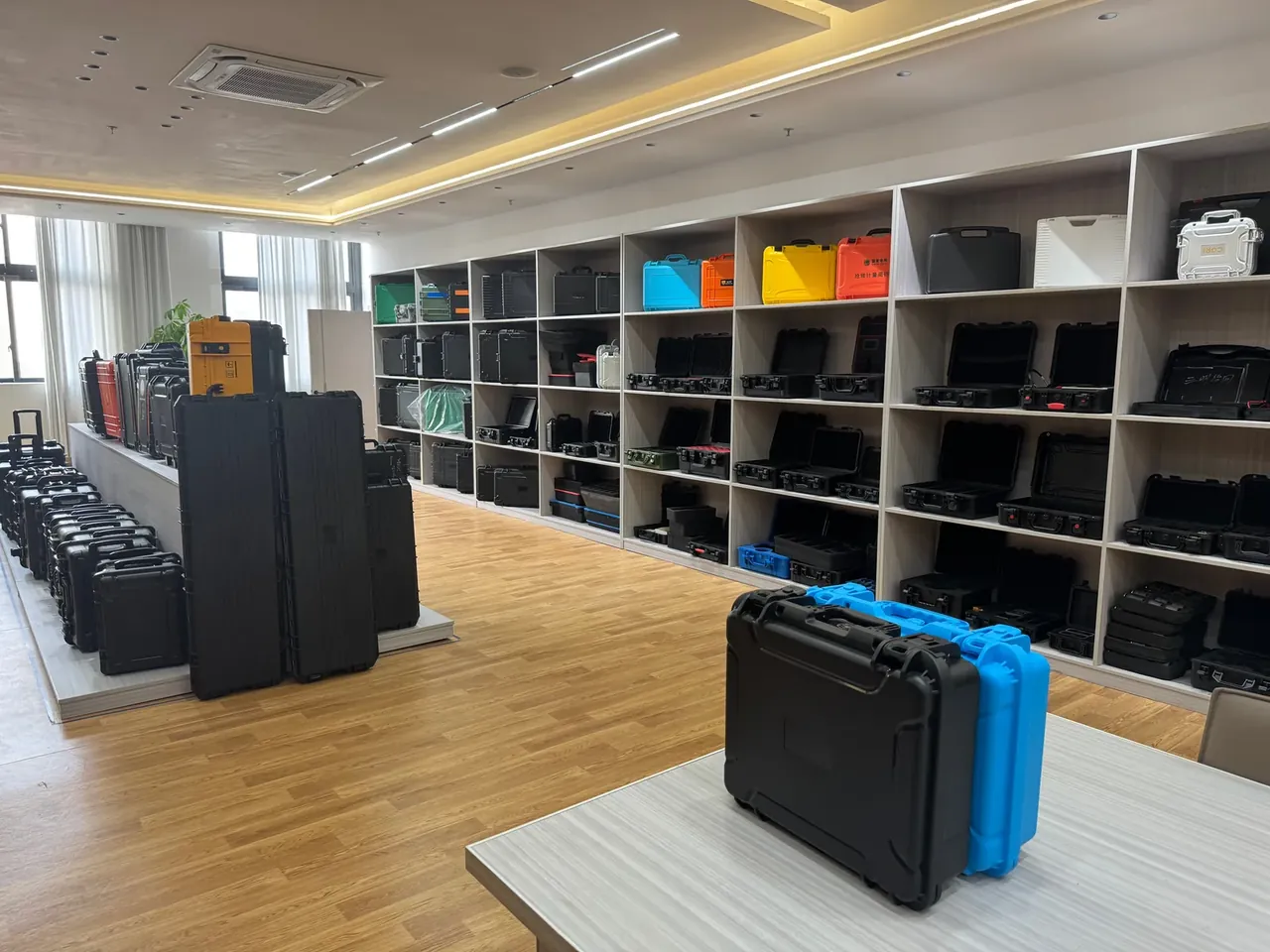
Quick answer: An Outdoor small waterproof phone & card dry box pairs a 3.5 mm seal section with a 32° latch angle, weighing seepage after a 30 min soak at 1 m.
Table of contents
- Seal section on the Outdoor small waterproof phone & card dry box
- How the latch closing angle is set
- Seepage weighed after a 30 min soak
- Force needed to lift the lid again
- Fixing the section for outdoor batches
- FAQ
1. Seal section on the Outdoor small waterproof phone & card dry box
With a thin seal margin, a gap between section diameter and latch angle shows up first in seepage. The Outdoor small waterproof phone & card dry box measures 210 by 140 by 65 mm outside, with a 185 by 115 by 45 mm cavity, a 2.8 mm wall and one gasket. A thicker cord lengthens lid travel and raises opening force. The immersion ledger for an Outdoor small waterproof phone & card dry box lists section diameter first and voids the grade when the mould or cord batch changes.
Three groups share one tank and one latch set at 3.2 mm, 3.5 mm and 3.8 mm; a section out of tolerance bends seepage before the angle does.
| Section grade | Seal section | Mouth compression |
|---|---|---|
| Thinner grade | 3.2 mm | 13% |
| Nominal grade | 3.5 mm | 15% |
| Thicker grade | 3.8 mm | 18% |
The 3.2 mm grade reaches 0.07 g of seepage; 3.8 mm drops to 0.02 g but pushes reopening force to 31 N. Only the middle 3.5 mm grade holds both. For an Outdoor small waterproof phone & card dry box a slim cord misses 15% compression, so water rounds the mouth; it is not a resin fault.
2. How the latch closing angle is set
The 32° closing angle is the second grading quantity: it measures the turn of the latch tongue ramp into the lid notch, not whether the latch clicks shut. A smaller angle leaves the mouth slack underwater; a larger one locks the tongue so hard that reopening load lands on the latches. The rebound margin after 15% compression also rests here.
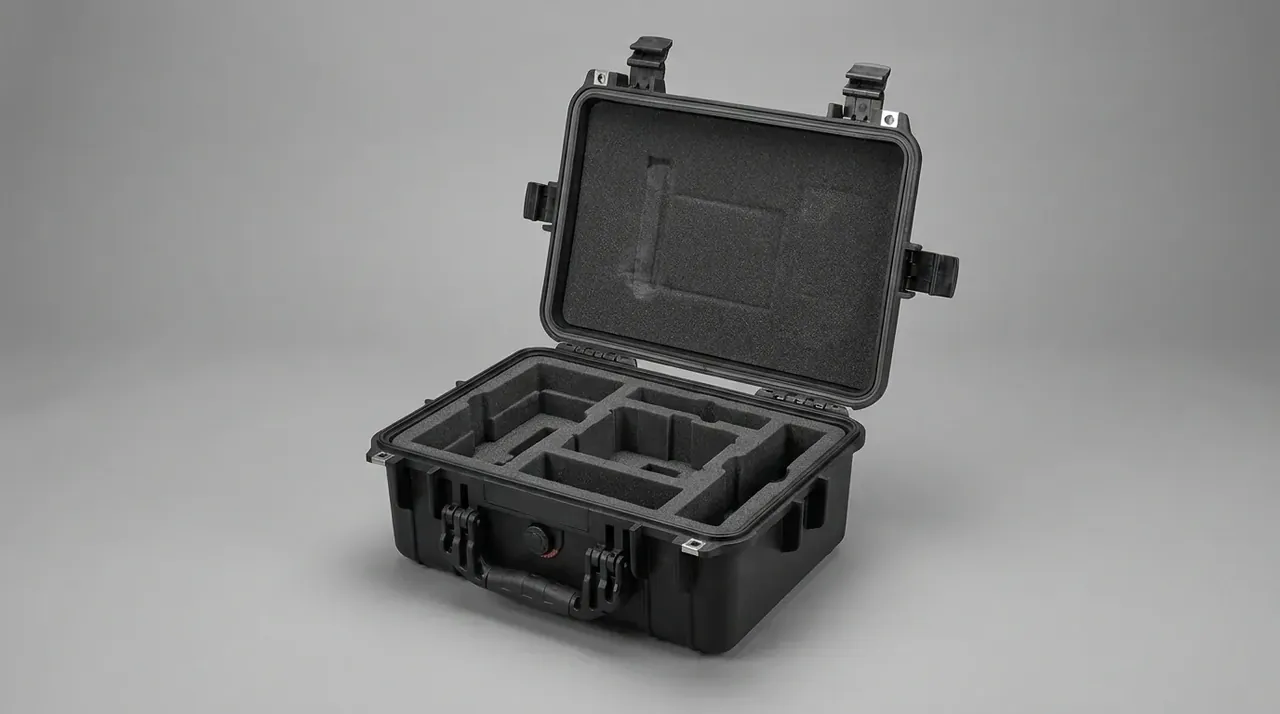
Two latches close at 165 N each on the same lid record. A thermal rig walks the shell from -10 °C to 50 °C, where the cord stiffens then softens; without a recheck, high seepage is blamed on the section by mistake. An Outdoor small waterproof phone & card dry box files 5200 open-close cycles with the angle, and a shell missing either item stays out of the ledger.
3. Seepage weighed after a 30 min soak
Immersion is fixed at 1 m for 30 min with the shell closed; on withdrawal the outside is wiped, the lid opens, and a pad gain is weighed to 0.01 g. Release uses the thirtieth-minute gain, not the running total, because the test asks whether section and angle keep water outside that ring. Earlier intervals are direction only.
| Soak interval | In-box seepage | Interval gain |
|---|---|---|
| 10 min | 0.02 g | 0.02 g |
| 20 min | 0.04 g | 0.02 g |
| 30 min | 0.05 g | 0.01 g |
Seepage reads 0.02 g at 10 min, 0.04 g at 20 min and 0.05 g at 30 min, with a smaller second-half gain, so the cord seals the last gap once pressure settles. A 0.05 g seepage and a 26 N force fill two cells of one release sheet; one filled cell is no pass. Beyond 30 min the curve is filed without a grade, and the ledger for an Outdoor small waterproof phone & card dry box takes only the thirtieth-minute row.
4. Force needed to lift the lid again
The soak does not end in a grade; the same shell is reopened once more. A pull gauge reads the peak along the lid normal just after the latches release, to 1 N. Seepage and force differ: a thicker section presses the cord harder and lengthens the rubbing travel against the rim.
| Seepage value | Seal section | Reopening force |
|---|---|---|
| 0.07 g | 3.2 mm | 22 N |
| 0.05 g | 3.5 mm | 26 N |
| 0.02 g | 3.8 mm | 31 N |
Across three rows, 3.2 mm drops out on seepage at 0.07 g, 3.8 mm reaches 0.02 g but crosses force at 31 N, and only 3.5 mm stays inside both. A shell weighed but never reopened earns no grade; for an Outdoor small waterproof phone & card dry box this force counts only after immersion.
5. Fixing the section for outdoor batches
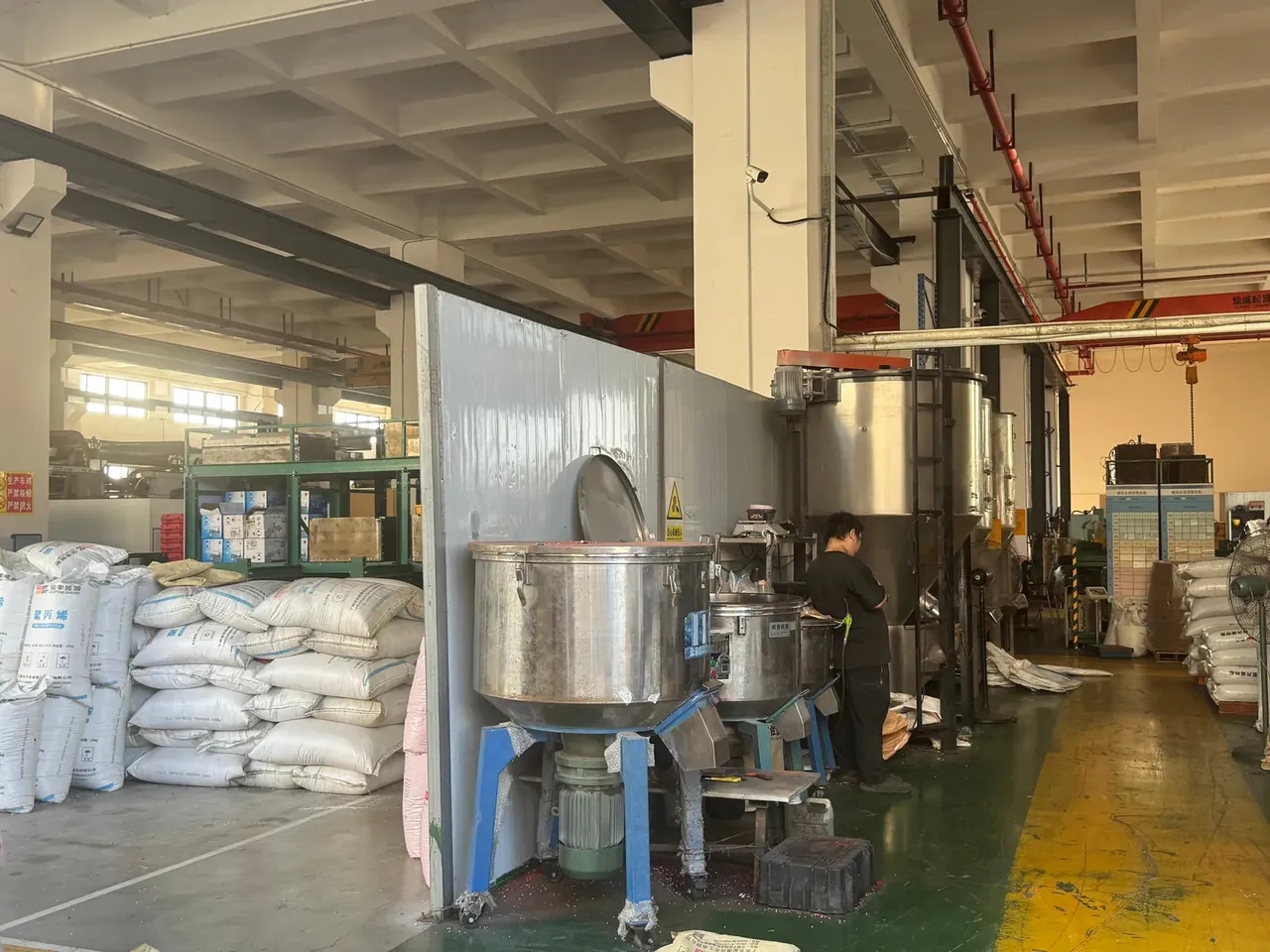
The outdoor batch closes on one setting line. The section setting is the thinnest grade whose thirtieth-minute seepage stays below 0.05 g, and finer cords stay off the configuration sheet. An Outdoor small waterproof phone & card dry box freezes 0.42 kg empty, 0.8 kg loaded, the -10 °C to 50 °C swing, 5200 cycles and two latches at 165 N as boundaries; a new mould restarts the weighing and reopening.
No single sample stands for the batch. Section grade, angle, thirtieth-minute seepage and reopening force are logged for every shell; four matching cells admit it, and a crossed cell sends only that shell back. Mould settings and immersion readings for an Outdoor small waterproof phone & card dry box sit in separate columns, tolerances trace to the rig, and the rating is filed against the IP68 reference method, not as a grade conclusion.
Conclusion
An Outdoor small waterproof phone & card dry box is graded only when section, angle and force line up: a 3.5 mm section holds seepage to 0.05 g, a 32° angle keeps the cord seated from -10 °C to 50 °C, and reopening force stops at 26 N. A crossed cell sends that shell back with no borrowed margin. JUNZHIJIA files 5200 open-close rig records by batch; tolerances come from Kexin New Materials (Guangdong) Co., Ltd.
Related Reading
- How Outdoor Low-Voltage Boxes Achieve IP67: Four Core Elements of System-Level Protection
- Carrying Cases: Portable Structure & Everyday Handling Protection
- Outdoor IP68 waterproof dustproof small hard box
- Why Do Outdoor Waterproof Boxes Leak: Five Seal Failure Causes and Fixes
Related Products
- 8 Series — Gun Cases; Military Equipment Cases; Camera Equipment Cases; Drone Cases; Watch Cases; Knife Cases; First Aid Cases; Electronics Equipment Cases
- WL8-2812 PP Gun Case — model WL8-2812
- All protective cases and toolboxes: 7 series, 158 models