

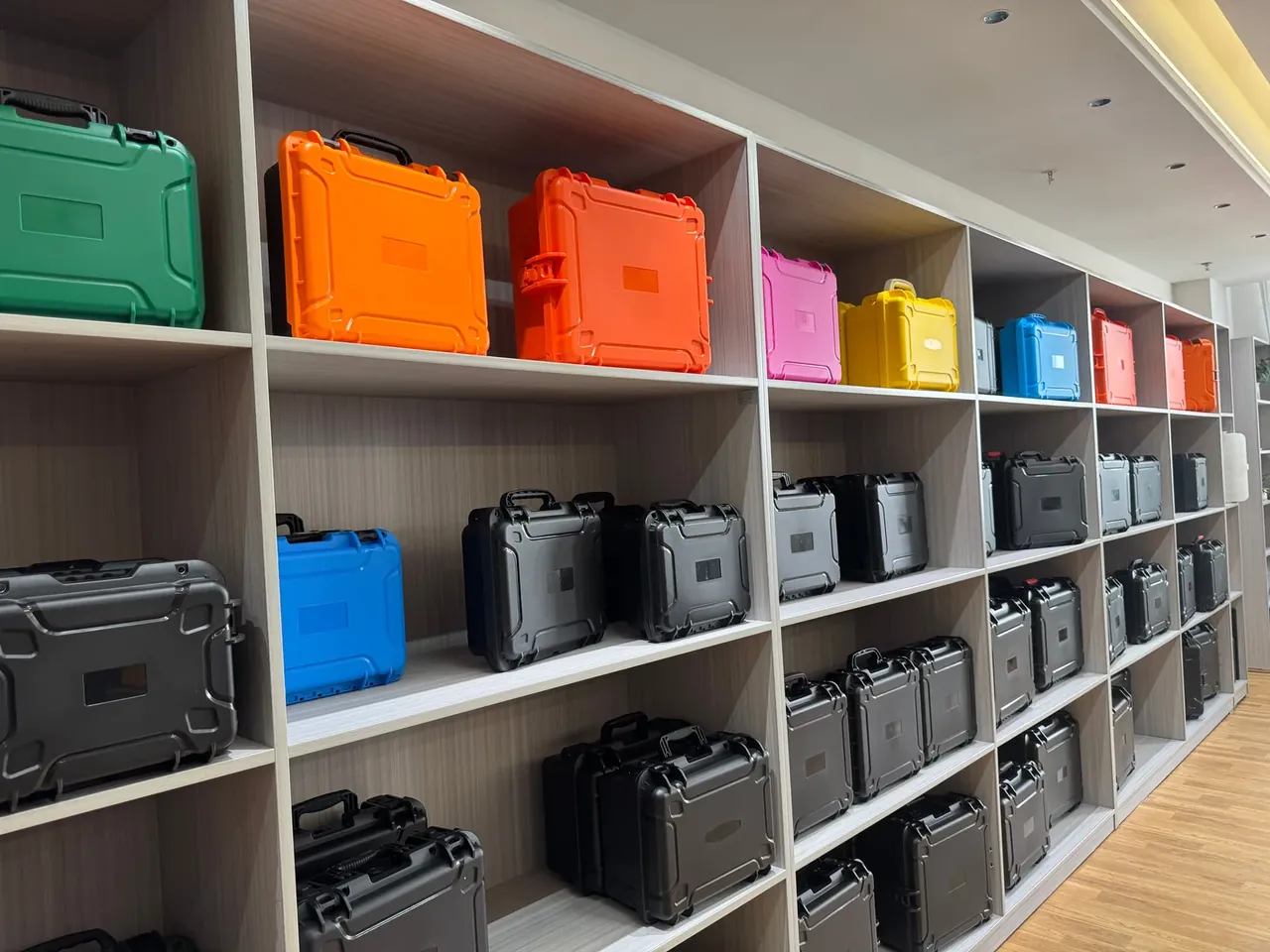
Quick answer: An outdoor solar panel charger storage case holds a folded panel flat on a 5 mm liner, caps the load at 8 kg and keeps a 10 mm air gap around the cells.
Table of contents
- How an outdoor solar panel charger storage case takes a flat panel
- What a panel face can carry
- Routing the MC4 leads
- Heat rise and the battery bay
- Trolley geometry and pull force
- FAQ
1. Flat storage
Fold the panel, drop it in, and a pale crease appears along the hinge line. It sits on the cells either side of a fold, because a closed 100 W panel is a 600×400 mm slab whose corners land on the hardest part of the base. An outdoor solar panel charger storage case needs a flat load face before it needs a thicker wall.
Four-fold panels close to 525×360×28 mm up to 595×565×35 mm, weigh 3.2–4.9 kg and open to 1.1–1.6 m. A 620×420 mm cavity leaves 10 mm a side: enough to lift the panel clear, tight enough that it cannot slide.
Name three surfaces before drawing. The panel face is the ETFE side, the load face is the flat inner floor, and the liner sits between them turning a point load into an area load. Run a 5 mm hollow PP liner across the full floor over 3 mm EVA; closed-cell foam at 25 kg/m³ carries 32–40 kPa at 25% compression, filling a rib channel without printing a mark.
Flat beats upright by load direction: on edge the weight lands on a 35 mm strip and the folds see shear, while the laminate is built for in-plane bending.
2. What a panel face can carry
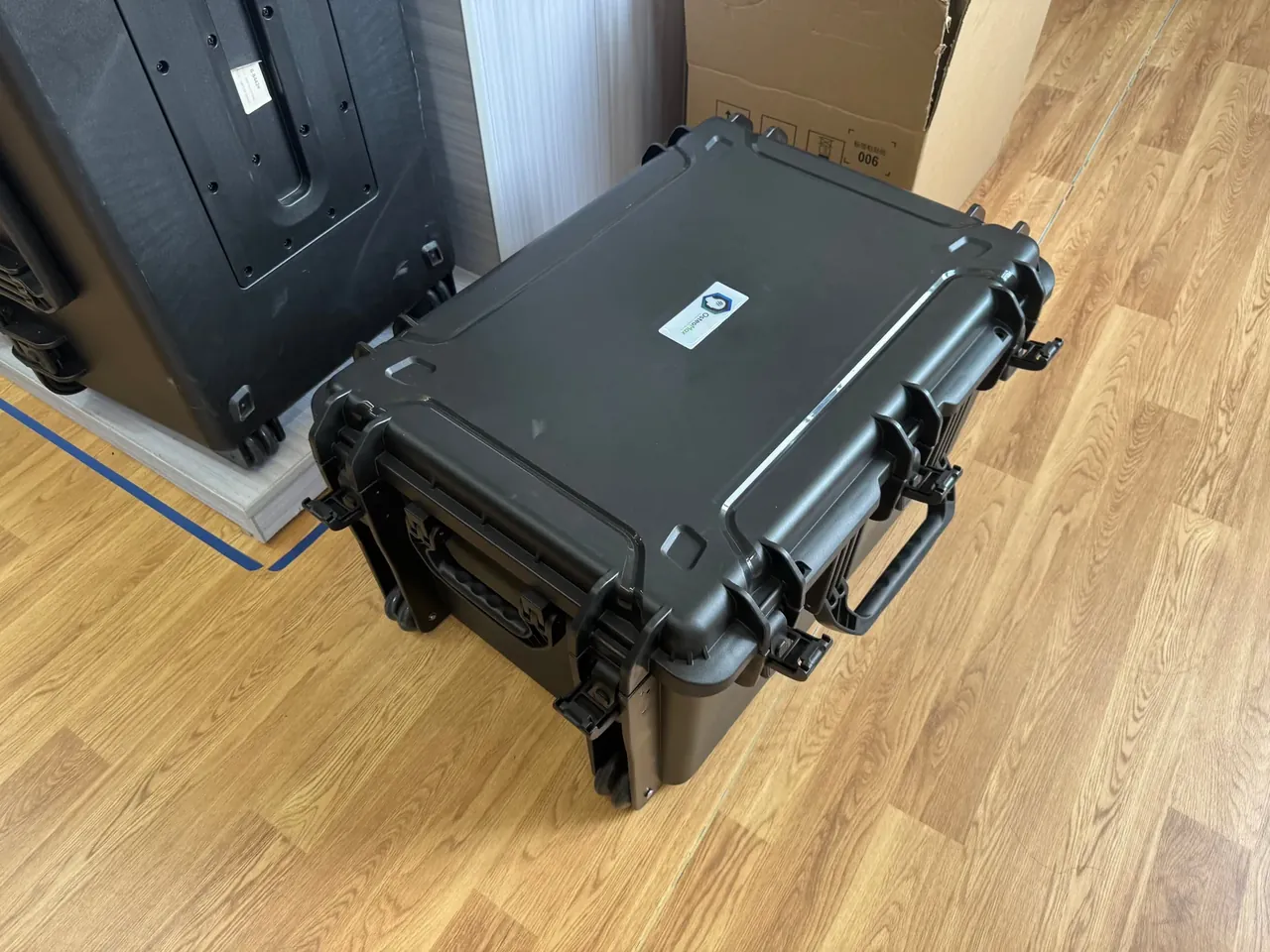
A folding panel has no glass, so survival depends on contact area rather than mass. For an outdoor solar panel charger storage case the 8 kg cap works out to 0.30 kPa across a 620×420 mm face, while the same 8 kg on a 30×30 mm corner reaches 87 kPa. Damage has a threshold, so load 8 kg evenly for 24 h, then check the folds and the open-circuit voltage.
| Load case | Area | Pressure at 8 kg | Result | Verdict |
|---|---|---|---|---|
| Even over the face | 620×420 mm | 0.30 kPa | No mark | Allowed |
| One fold corner | 30×30 mm | 87 kPa | Crease | Not allowed |
| Lid pressing down | 200×150 mm | 2.6 kPa | Faint print | 24 h only |
The lid row is the one buyers forget. A 15 mm gap runs between lid and panel face, which is where a cable, a peg bag or a chair crossbar ends up; a 20 mm bar lifts the pressure to 19 kPa and one trip makes a crease. Stacking takes another path: one 6.2 kg case on another sends load through four lid bosses, and doubling it crushes them onto the panel.
3. Routing the MC4 leads
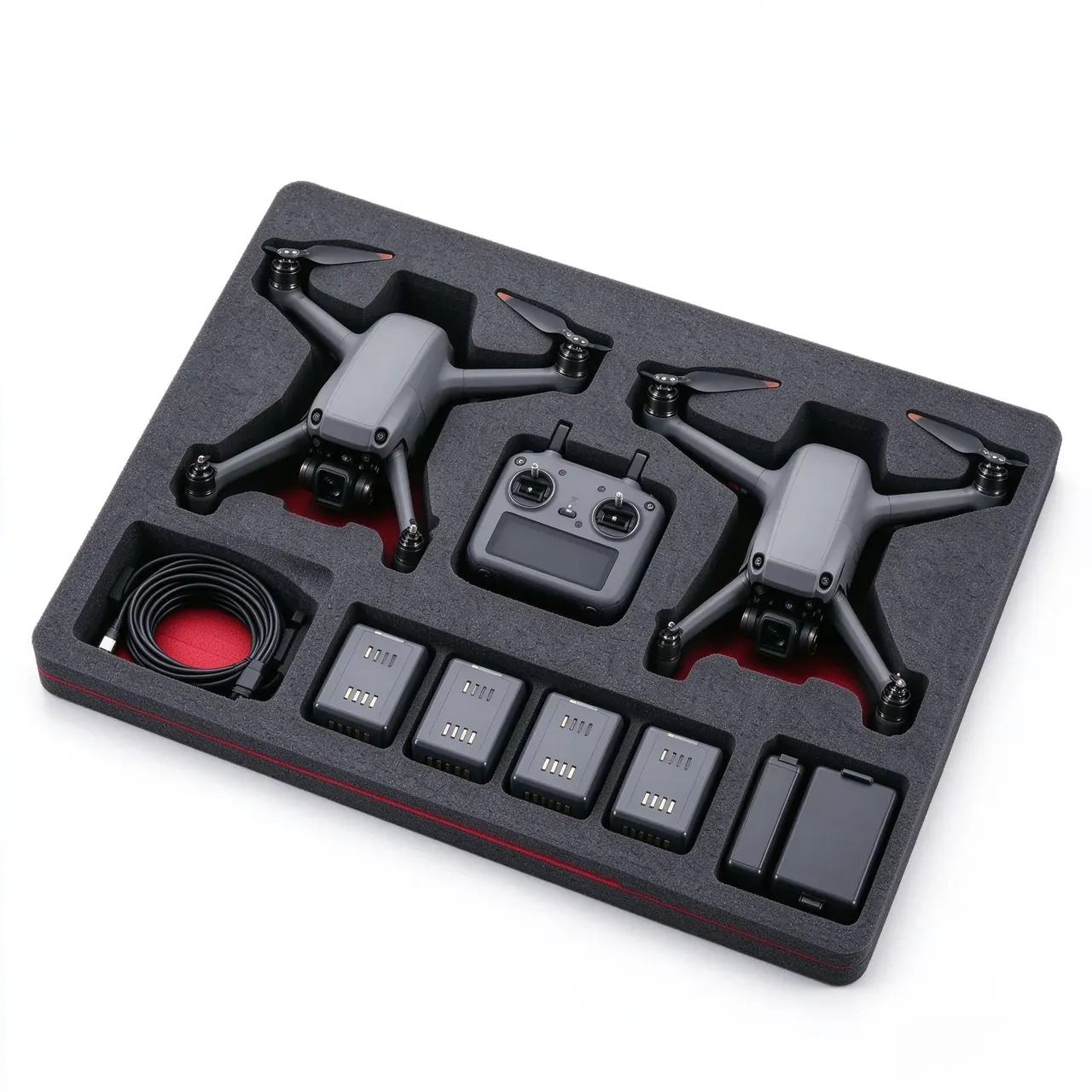
An outdoor solar panel charger storage case inherits two 500–900 mm pigtails ending in MC4 connectors. The usual rating is 30 A on 2.5/4/6 mm² cable, contact resistance at or below 0.5 mΩ, IP68 once mated, -40 to 85 °C, and 50 N at both insertion and pull-out.
A 4 mm² cable measures about 6 mm outside, so 18 mm is the bend-radius floor. Mold a 25 mm channel with eased corners, holding 7 mm of margin for a -10 °C morning when the sheath stiffens.
Park the pair mated in a 32 mm × 18 mm notch over 2 mm EVA; a split pair leaves tinned contacts in humid air until resistance climbs off 0.5 mΩ. Fix the run with 20 mm hook-and-loop every 150 mm, off the panel face, where a cable becomes a 3 mm hard point.
4. Heat rise and the battery bay
Heat rise is measurable. At 32 °C ambient with four hours of sun, the internal air reaches 47 °C, a 15 °C rise, while the sun-facing wall reads 62 °C. That 15 °C belongs to the body, so the only lever is distance.
Lithium cells store in a narrower window than they work in: roughly -20 to 25 °C at 50% charge, with aging doubling per 10 °C above 25 °C and 60 °C as a ceiling. So the bay faces away from the sun, 10 mm of air and a 3 mm PP divider from the panel, with four φ5 mm holes low in the divider.
| Time | Ambient | Case air | Battery bay |
|---|---|---|---|
| 08:00 | 24 °C | 25 °C | 25 °C |
| 12:00 | 32 °C | 45 °C | 41 °C |
| 14:00 | 34 °C | 49 °C | 44 °C |
| 22:00 | 21 °C | 22 °C | 22 °C |
The swing also builds pressure: 5 kPa from 32 °C to 47 °C, about 50 kg/m² on the lid. An ePTFE membrane with 0.2 μm pores passes air and holds water back.
5. Trolley geometry and pull force
A 6.2 kg body, three sections and 50 mm casters look matched until you follow the load. The root socket is the weak point of an outdoor solar panel charger storage case: extended to 980 mm at a 30° towing angle, the mass centre sits 150 mm ahead of the axle and loads it at 9 N·m, and a 3 g step strike pushes that to 27 N·m.
Wobble is the second number. Push 50 N sideways at the extended grip and the tip should stay inside 2 mm; each tube carries 0.15 mm of clearance, and arm length multiplies the stack.
A 50 mm caster facing a 20 mm step needs 299 N, far past the 120 N a person applies one-handed; on a 10 mm step the same wheel needs 81 N.
| Step | Pull, 50 mm wheel | Handling |
|---|---|---|
| 5 mm | 46 N | Tow over |
| 10 mm | 81 N | Tow over |
| 20 mm | 299 N | Lift by the base handle |
| 30 mm | Cannot climb | Carry it |
Aluminium at 1.2 mm wall, 340 mm per section and 980 mm extended is the balance. A thicker tube drags the body toward 7 kg and loads the socket you meant to protect.
Conclusion
Three numbers decide whether an outdoor solar panel charger storage case ships: whether the 8 kg cap survives what gets shut under the lid, whether the 15 °C rise is kept off the cells by 10 mm of air, and whether the handle tip holds inside 2 mm.
The first is the one that slips, because it is absent from the finished-goods sheet. One extra peg bag and one missing liner eat the margin of an outdoor solar panel charger storage case while appearance and voltage still read normal.
This article discusses only the container (case body) side of specifications and design intent, and does not cover any handling, loading or use of the contents.
Related Reading
- How much of a case cavity is actually usable
- Plastic cases against wooden crates in transit
- Storing a protective case outdoors long term
- Where a wheeled trolley case stops making sense
Related Products
- 8 Series — Gun Cases; Military Equipment Cases; Camera Equipment Cases; Drone Cases; Watch Cases; Knife Cases; First Aid Cases; Electronics Equipment Cases
- WL8-2812 PP Gun Case — model WL8-2812
- All protective cases and toolboxes: 7 series, 158 models