

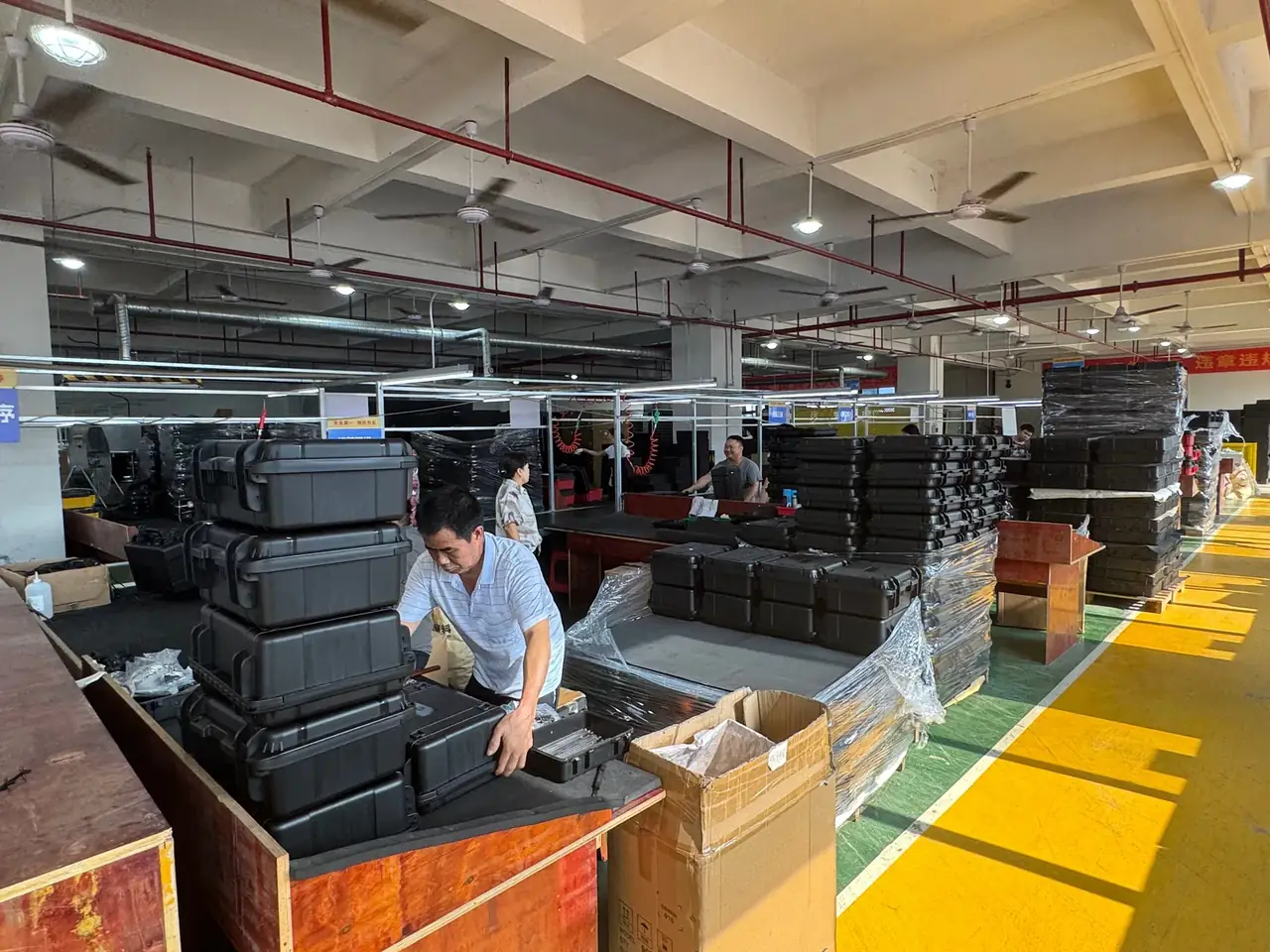
Quick answer: The Outdoor theft-proof storage box with lock holes pairs a 2.6 mm bushing with an 11 mm flange, keeping lock-point deflection under 0.5 mm at 1.2 kN.
Table of contents
- Bushing wall thickness in the Outdoor theft-proof storage box with lock holes
- Height of the lid anti-pry flange
- Lock-point deflection after pry loading
- Bushing loosening across open-close rechecks
- Bushing lower bound for outdoor batches
- FAQ
1. Bushing wall thickness in the Outdoor theft-proof storage box with lock holes
Lock-point deflection seldom starts at the lock itself; it traces to whether the bushing wall and the lid flange spread prying force into the shell. The Outdoor theft-proof storage box with lock holes measures 580×420×260 mm outside, clears 515×355×190 mm inside, carries a 4.4 mm shell and two φ8 mm lock holes. A 2.6 mm bushing wall is the middle step. On the rig, displacement is read at an empty 6.0 kg and a loaded 13 kg.
One mold serves all three steps, so forming variation is not read as wall-thickness variation.
| Bushing step | Wall value | Hole fit | Trial reading |
|---|---|---|---|
| Thin | 2.2 mm | φ8 mm × 2 | High displacement, oval mouth |
| Middle | 2.6 mm | φ8 mm × 2 | Mid displacement, fit clear |
| Thick | 3.0 mm | φ8 mm × 2 | Tight clearance, friction up |
When the Outdoor theft-proof storage box with lock holes picks a bushing wall, the deciding factor is whether the hole-to-shell joint spreads load. The 2.2 mm step ovalises first under 1.2 kN, the 3.0 mm step eats flange travel, and 2.6 mm leaves margin on both. A dial caliper reads the mouth, three samples per step averaged.
2. Height of the lid anti-pry flange
The 11 mm flange height is fixed with the bushing. As the lid of the Outdoor theft-proof storage box with lock holes presses the flange onto the mouth, prying force lands on the lip and passes through the bushing to the shell; a shorter flange loads the lock point directly. The rig builds 9 mm, 11 mm and 13 mm flanges and compares offset after a 1.2 kN pry.
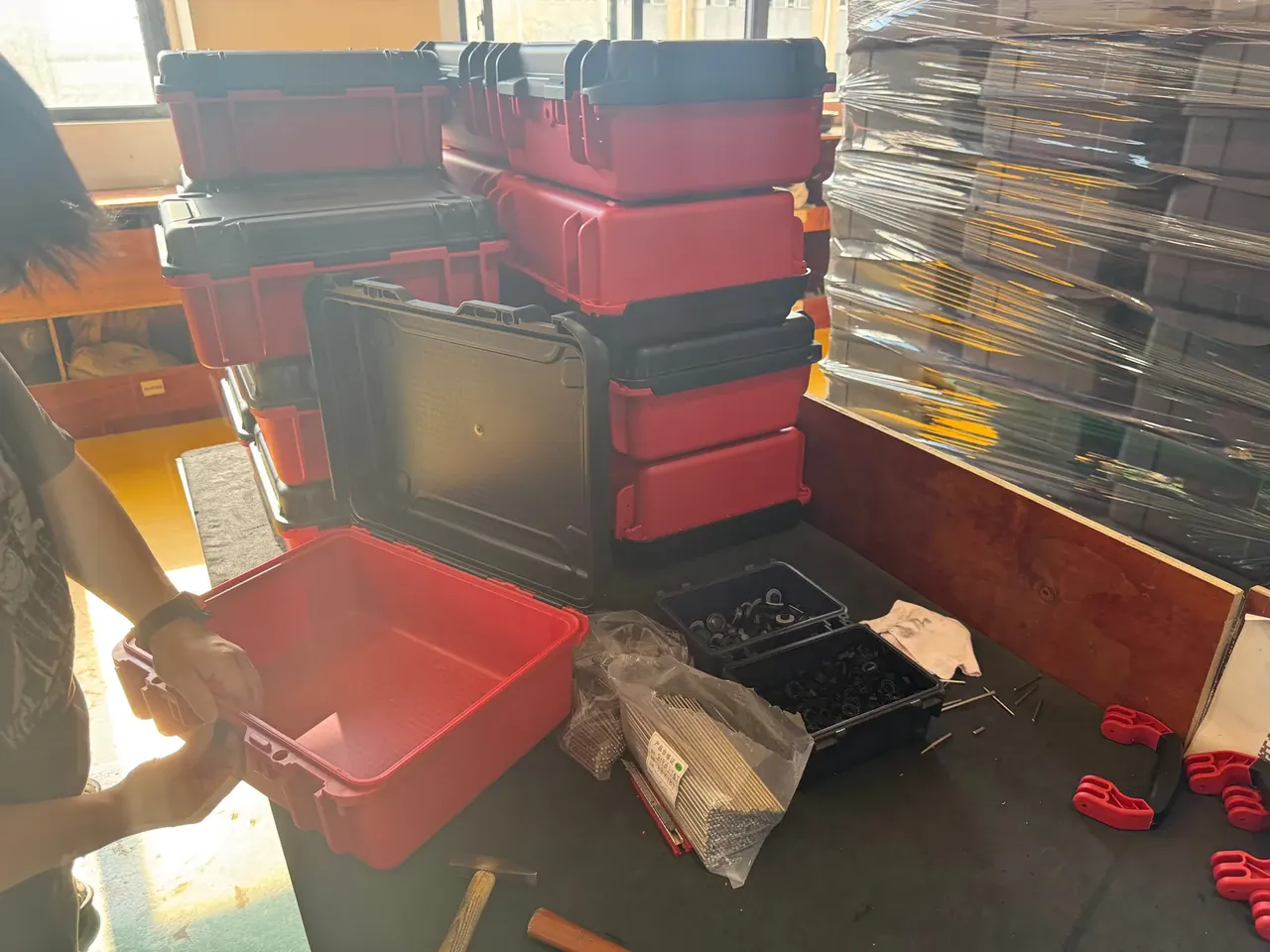
Open-close endurance is checked here too. The Outdoor theft-proof storage box with lock holes runs 4400 open-close cycles, logging 2 latches at 385 N each; the single seal ring at 20% compression is retested at cycle end, and the IP66 rain and dust conditions are recorded by method. After a 96 h salt spray the mating face is measured for a gap beyond 0.5 mm.
3. Lock-point deflection after pry loading
Pry readings are taken only at a defined load point. The Outdoor theft-proof storage box with lock holes applies 1.2 kN along the lid-to-mouth seam and reads lock-point displacement normal to a datum face; the reading must stay inside 0.5 mm and the bushing must not loosen to pass. Load position, force direction and hold time are written on the rig card.
| Pry step | Applied load | Lock-point deflection | Bushing state |
|---|---|---|---|
| Light | 0.6 kN | 0.2 mm | No loosening |
| Middle | 1.2 kN | 0.4 mm | No loosening |
| Heavy | 1.8 kN | 0.7 mm | Mouth micro-movement |
The 1.2 kN middle step is the dividing line for this Outdoor theft-proof storage box with lock holes. At 0.6 kN the light step deflects 0.2 mm; at 1.8 kN the heavy step reaches 0.7 mm and the mouth moves past the 0.5 mm line. The three readings form a rising curve against load.
The way deflection is measured is fixed as well. A dial caliper probe sits against the lock point, a ground plate levels the datum. The first reading comes after a 30 s hold, the second after a 60 s rest following unloading. Their difference is the permanent set. For the 1.2 kN step, residual displacement is 0.4 mm and spring-back 0.3 mm, logged apart. Any run deviating over 2° in load-arm angle is discarded.
4. Bushing loosening across open-close rechecks
Loosening cannot be judged from one pry; it is rechecked across open-close rounds. The Outdoor theft-proof storage box with lock holes samples every 1100 cycles and reads the axial retreat of the bushing relative to the hole wall, giving four reading points over 4400 cycles. Flange indentations and hole-mouth state are archived with the pry-round sample IDs.
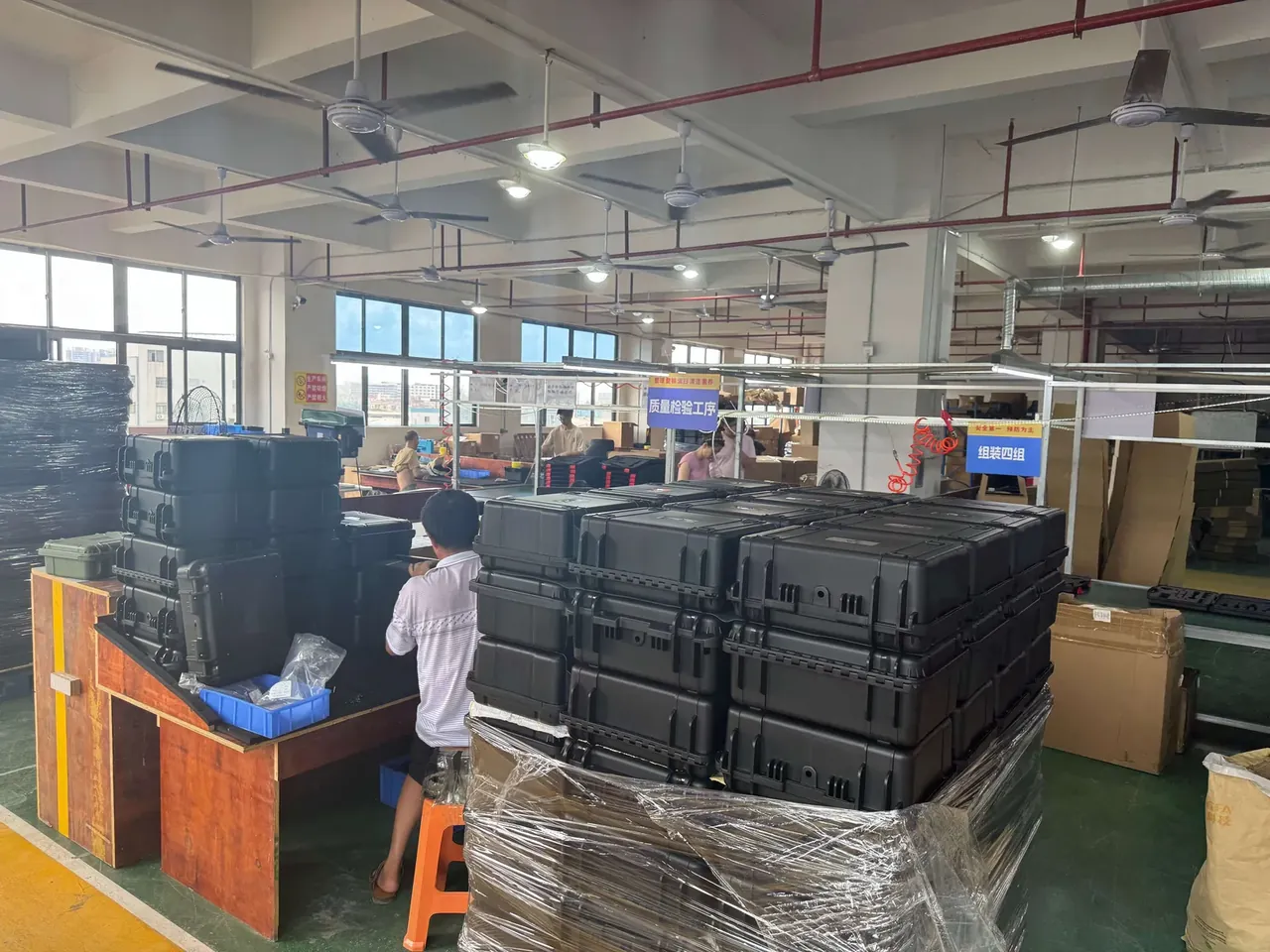
Across the four points, the first two sit at instrument resolution, the third rises slightly, and the fourth stays below 10% of the wall. The Outdoor theft-proof storage box with lock holes matches recheck readings against pry steps; a sample with mouth micro-movement at 1.8 kN moves to a 550-cycle interval, and 96 h salt-spray samples go on a separate sheet.
5. Bushing lower bound for outdoor batches
When grades converge into the shipping list, the critical step is the one taken. The Outdoor theft-proof storage box with lock holes puts pry readings, open-close retreat and post-salt-spray gap for the three bushing steps into one table, sorts by deflection, and sends edge samples through one extra 1.2 kN re-press.
| Deflection value | Matched step | Bushing wall | Shipping call |
|---|---|---|---|
| 0.2 mm | Light | 3.0 mm | Kept as margin |
| 0.4 mm | Middle | 2.6 mm | Listed |
| 0.7 mm | Heavy | 2.2 mm | Returned for retool |
The lower bound is the thinnest step that still holds deflection at 0.5 mm; any thinner lock-hole combination leaves the shipping list. After that line is fixed, the 2.2 mm step is dropped, 2.6 mm stays, and 3.0 mm is only a margin record. Batch means are still checked sample by sample.
Conclusion
The lock-point deflection of the Outdoor theft-proof storage box with lock holes comes down to how the 2.6 mm bushing wall and 11 mm flange divide a 1.2 kN pry into the 4.4 mm shell. Three bushing steps, the displacement curve and 4400-cycle retreat are the grading basis. The 96 h salt spray and IP66-mapped retest close back on the 0.5 mm bound. Graded this way, the Outdoor theft-proof storage box with lock holes gives a reproducible release criterion for outdoor batches.
Related Reading
- Case lock holes: matching 6 mm and 8 mm padlocks
- Can case locks be customized: combination, padlock holes and anti-pry design
- Choosing a lockable storage box: lock points, hardware and pry resistance
- Case tamper evidence: single-use seals and lock holes
Related Products
- 8 Series — Gun Cases; Military Equipment Cases; Camera Equipment Cases; Drone Cases; Watch Cases; Knife Cases; First Aid Cases; Electronics Equipment Cases
- WL8-2812 PP Gun Case — model WL8-2812
- All protective cases and toolboxes: 7 series, 158 models