

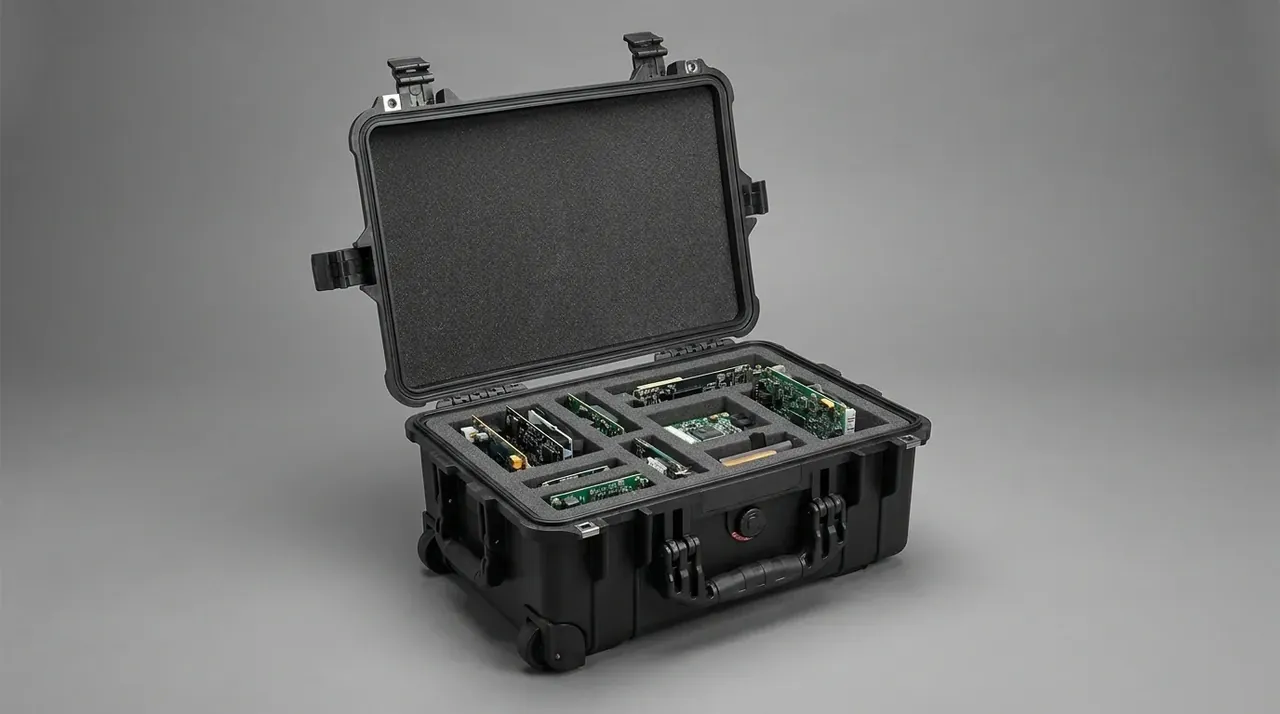
Quick answer: Case parcel packing lives on 20 mm of EPE: a 20 mm foam layer plus a 7 mm BC carton cut breakage on one 3.6 kg parcel from 3.1% to 0.4%.
Table of contents
- The four layers of a parcel
- Drop height and outer carton
- Eight handling steps on the sorter line
- Label zone, barcode grade and dim weight
- FAQ
1. The four layers of a parcel
A 420×320×180 mm case weighing 2.8 kg ships as four layers: the case, 20 mm EPE, a 7 mm BC carton and the label. Each absorbs one class of impact, and skipping one doubles the thickness needed from the rest.
The 20 mm is measured. On the same 1.2 m drop, peak acceleration at the corner runs 96 g with 10 mm of EPE, 52 g with 20 mm and 44 g with 30 mm. The first 10 mm removes 44 g, the next removes 8 g.
| Layer | Specification | What it absorbs | If removed |
|---|---|---|---|
| Case | 420×320×180 mm, 2.8 kg | Static squeeze and puncture | Latches pop, hinge pin bends |
| Cushion | EPE 20 mm, even on six faces | Impact acceleration | Corner hits 96 g and splits |
| Carton | BC flute 7 mm, 470×370×240 mm | Sorter throws and stacking | Flutes crush, case exposed |
| Label | 100×150 mm thermal | Routing and reading | Barcode drops to grade C |
The carton is derived backwards: 420 plus two 20 mm cushions plus two 5 mm board gaps gives 470 mm, and 320 and 180 follow to 370 mm and 240 mm. The 5 mm clearance lets foam compress and recover; pack it tight and impact passes through.
Cost is easy to state: EPE 3.1 yuan, carton 2.4 yuan, tape and label 1.2 yuan, 6.7 yuan against 2.5 yuan for a bare case in a single wall, while one damaged parcel costs 26 yuan to repair.
2. Drop height and outer carton
The 1.2 m comes from the chute, not a laboratory. Parcels fall 0.9 to 1.2 m into the tote, so design takes the upper bound, while ISTA 3A asks only 760 mm below 9.1 kg and leaves 440 mm of margin.
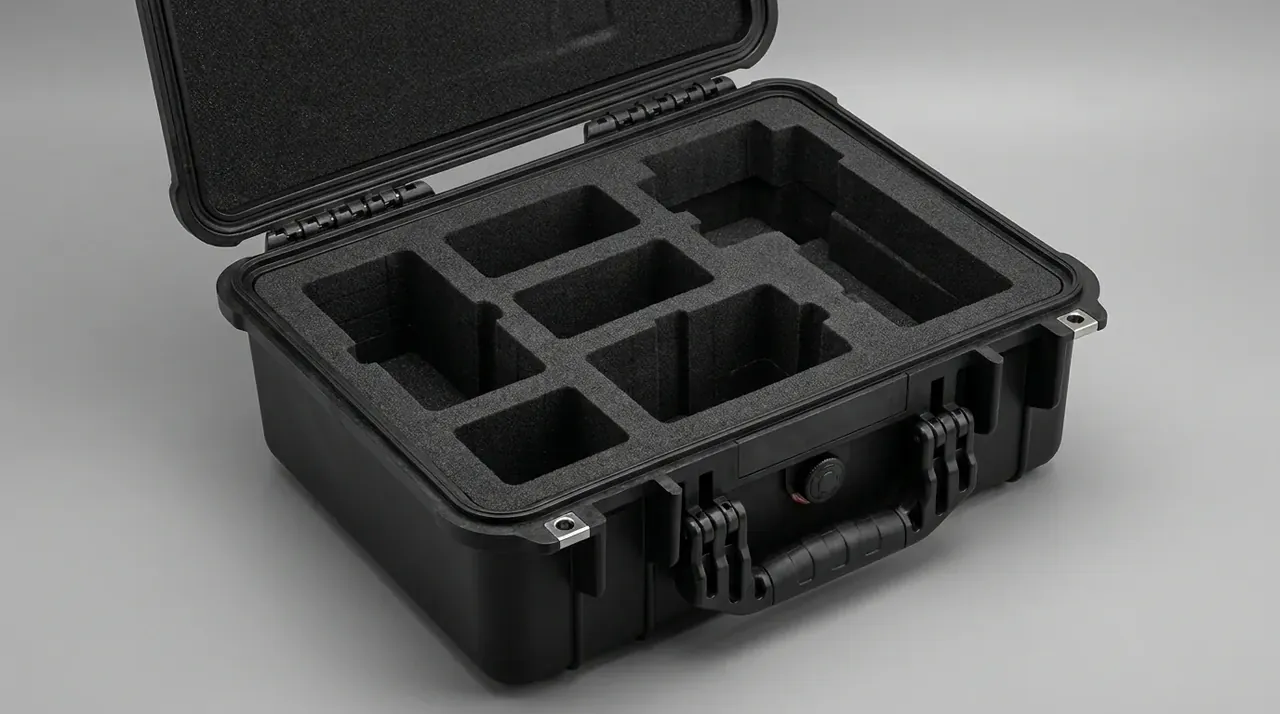
| Drop height | EPE | Peak at corner | Breakage | Packing cost |
|---|---|---|---|---|
| 760 mm, ISTA 3A | 10 mm | 96 g | 1.2% | 5.4 yuan |
| 1000 mm | 15 mm | 71 g | 0.7% | 6.1 yuan |
| 1200 mm | 20 mm | 52 g | 0.4% | 6.7 yuan |
| 1500 mm | 30 mm | 44 g | 0.3% | 8.3 yuan |
The worst hit is a corner drop. A 420×320×180 mm case lands on a corner or edge 60% of the time, contact is 30×30 mm, and the same energy gives 1.8 times the acceleration of a flat face.
So the cushion cannot be uniform. Four 30 mm corner blocks lift local thickness to 30 mm while five faces stay at 20 mm, adding 18 g of foam.
The 7 mm carton answers another injury: stacking. Four to six parcels sit on top of one in a cage, so at 3.6 kg each the bottom carton carries 21.6 kg. BC at 7 mm rates 4.5 kN/m edge crush, 2.1 kN around a 470 mm perimeter, about 210 kg.
Clearance is the forgotten variable. Beyond 25 mm the case accelerates before it meets foam, splitting one impact into two; below 3 mm the foam never compresses.
3. Eight handling steps on the sorter line
A parcel passes eight manual steps between bench and doorstep: pickup, line-haul load, hub unload, hub load, arrival unload, delivery load, depot sort and handover. Each may carry a 0.6 to 1.1 m throw, 6.4 m of fall in total.
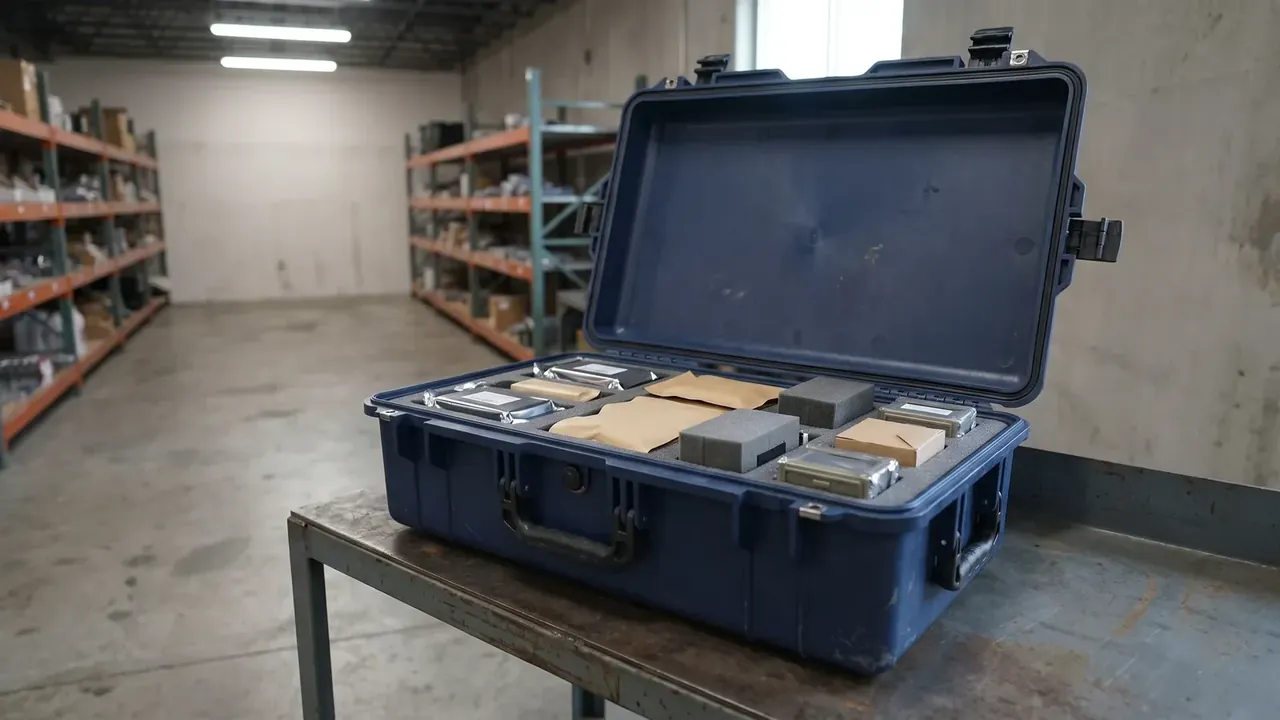
Three of the eight are controlled: pickup at 0.4 m, depot sorting into a tote at 0.5 m, and handover. The other five run on belts and tail lifts above 0.9 m, and those five set the design.
Belt transitions injure differently. A parcel leaves a 1.2 m belt at 0.8 m/s and hits the stop plate corner first, so the load is shear, not compression; foam cannot stop it, but 7 mm flutes spread force over a 60 mm wall.
Cage stacking is the step nobody books. Forty parcels fill a 1.1 m cage, and the bottom one sees vibration gain of 2.4 times static, so 21.6 kg becomes 52 kg. That is why the carton is 7 mm BC and not 5 mm.
4. Label zone, barcode grade and dim weight
The label is the thinnest layer and the one that undoes the rest. A 100×150 mm thermal label needs a 0.33 mm X dimension, 3.2 mm quiet zones and ANSI grade B at 3.5 to hold a 99.5% read rate.
Placement is fixed: 20 mm clear of any case edge, 30 mm clear of latches and handle. On a 420 mm curved face the code centre sits 1.5 mm low, usable depth of field drops 4 mm, and every first-read failure costs 40 s of re-scan.
Tape across the label costs half a grade too, since a 0.05 mm bubble layer swings reflectance 15%. Seal first, label last.
Dim weight is the tax on single parcels. A 470×370×240 mm carton measures 41.7 L, 7.0 kg at the 6000 divisor against 3.6 kg actual, a ratio of 1.94. Air freight bills 7.0 kg, 94% above the scale; at 450×350×220 mm the ratio falls to 1.7.
The claim photo chain is built before dispatch. Six frames: each carton face, a label close-up, the cushion, the fracture, the scale ticket. One missing frame drops approval from 92% to 61%.
Conclusion
Case parcel packing ends in a four-part kit: a 7 mm BC carton for stacking and shear, 20 mm EPE with 30 mm corner blocks for impact, a label zone for routing, and a dim ratio for freight. Drop one and the other three work overtime, which looks cheap until the claim lands. The actions are concrete: size the cushion on the worst throw, a 1.2 m corner drop; size the flute on the heaviest stack, a 52 kg peak; keep the label 20 mm clear of edges and free of tape; hold the carton between 450×350×220 mm and 470×370×240 mm so the ratio stays under 1.9. Fix the packing before the case, since a case change drags the tool and the load rating with it, while the kit costs under 7 yuan a parcel.
This article discusses container-side specifications and design implications only, and does not cover any handling, loading or use of the contents.
Related Reading
- ISTA 3A and 3E test sequences
- Running and judging a case drop test
- Six-face drop order and records
- Choosing the right ISTA procedure
Related Products
- 8 Series — Gun Cases; Military Equipment Cases; Camera Equipment Cases; Drone Cases; Watch Cases; Knife Cases; First Aid Cases; Electronics Equipment Cases
- WL8-2812 PP Gun Case — model WL8-2812
- All protective cases and toolboxes: 7 series, 158 models