

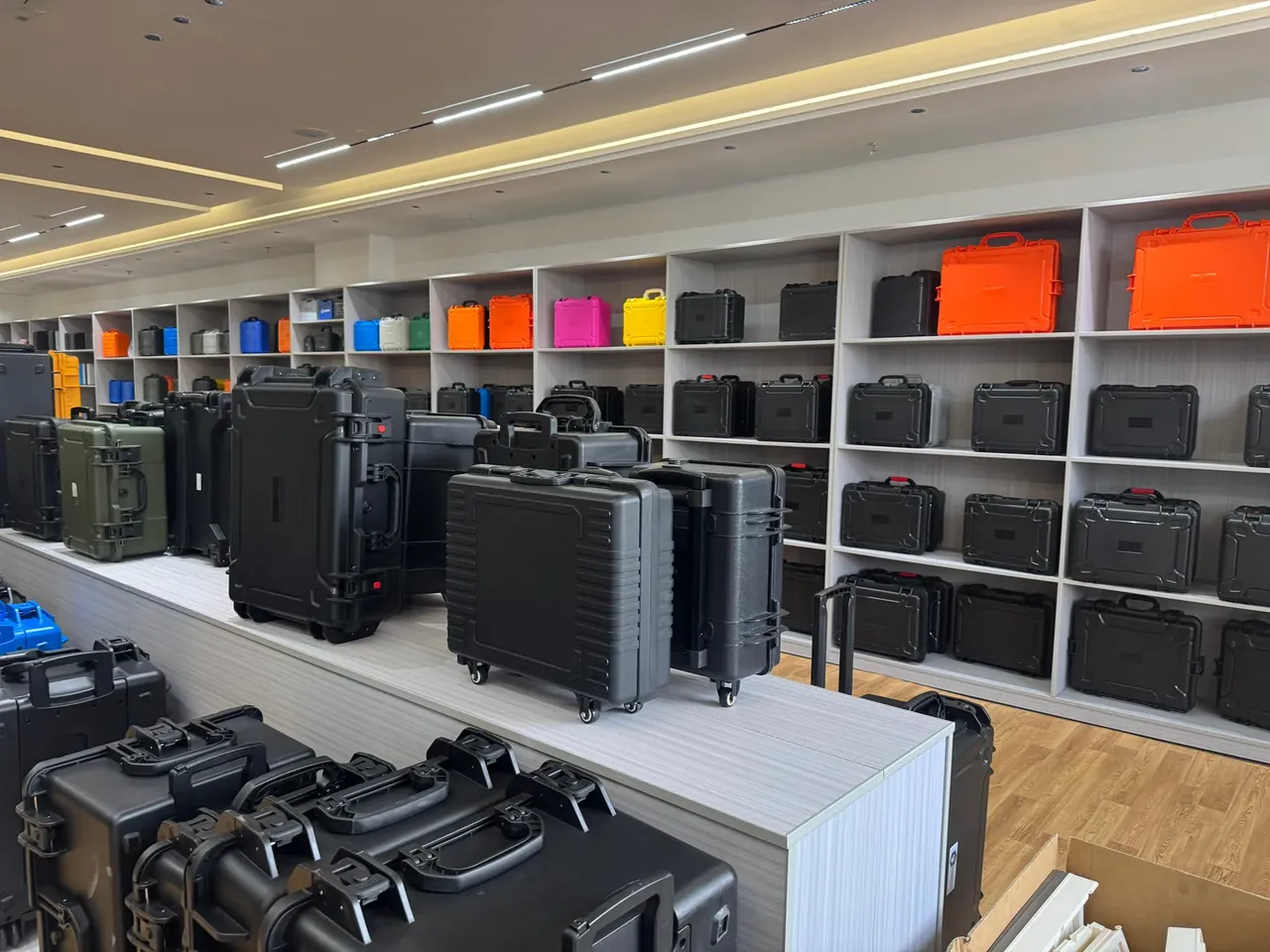
Quick answer: Pipeline construction operation tool case holds ≤1.1 mm lid diagonal and ≤0.35 kPa decay after 60 mm / 24 h, set by 205 mm span and 12 mm pads.
Table of contents
- Hinge-seat span of the Pipeline construction operation tool case
- Foot-pad height above the ground
- Diagonal readings after tilted rest
- Mouth rebound under reload retest
- Span floor for pipeline batches
- FAQ
1. Hinge-seat span of the Pipeline construction operation tool case
A trench edge leaves only one side of the shell supported, so hinge-seat span and foot-pad height decide whether the mouth still closes after a full day of rest. The Pipeline construction operation tool case spaces two hinge seats along its 580 mm edge at 205 mm. When the lid swings on that axis, the raised side drives torque into the seats and carries it to the opposite corner.
A 205 mm span pairs with a 4.4 mm wall and a 510×345×170 mm cavity, and the seat ribs feed force into the wall instead of letting the twist stall near the hinge. The bench records a lid gap at 5.9 kg empty and again at 16 kg loaded. Only the difference between those two states shows whether the seats have levelled the diagonal. A lid that binds along one diagonal goes back before any pressure reading is taken.
| Span grade | Seat spacing | After a 60 mm shim | Diagonal reading |
|---|---|---|---|
| Shortened | 175 mm | One corner lifts | Over 1.1 mm, rejected |
| Reference | 205 mm | Both sides share load | Inside 1.1 mm |
| Extended | 235 mm | Mid span dips | Reload retest needed |
2. Foot-pad height above the ground
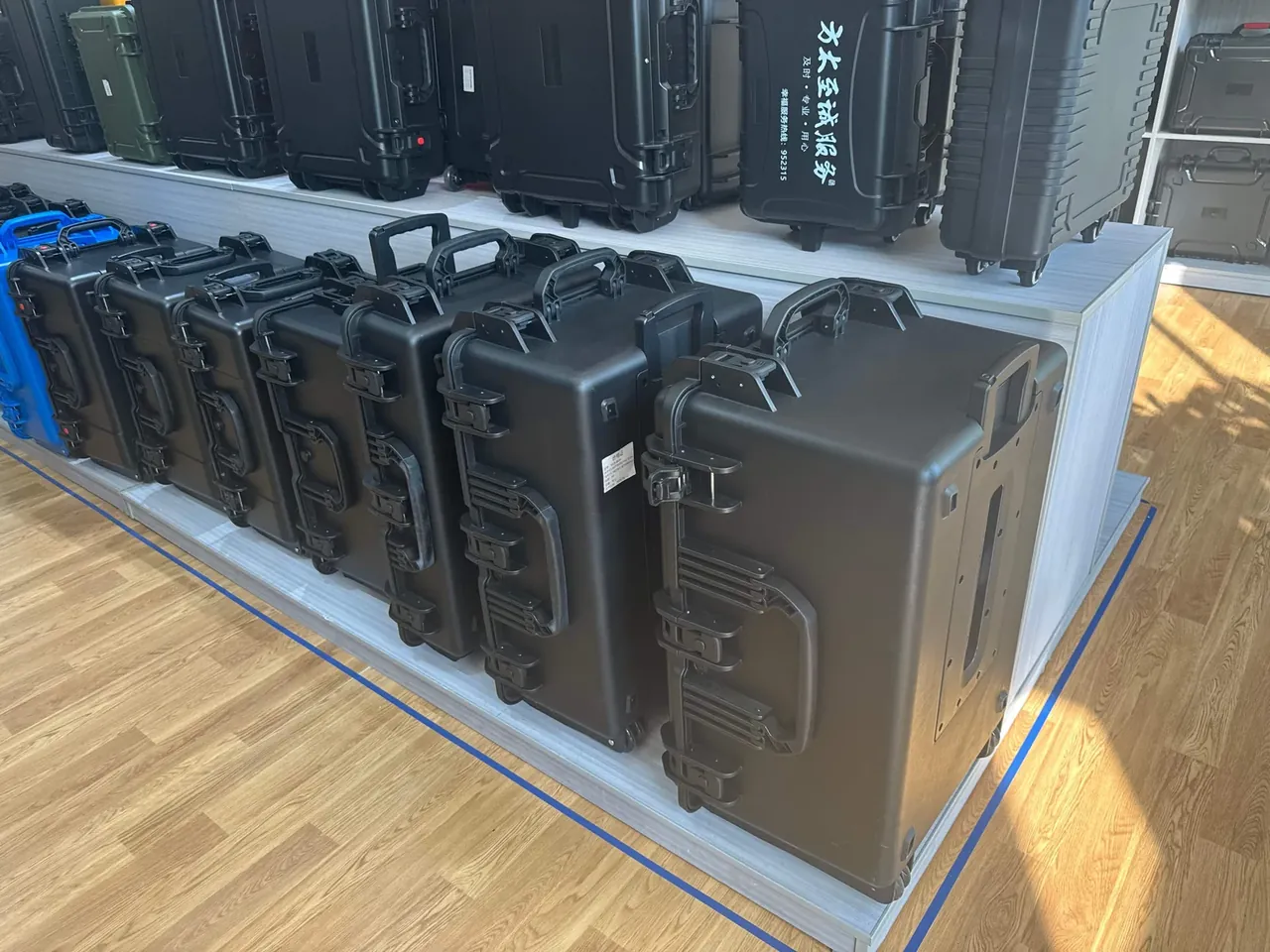
A 12 mm foot-pad height sets how far the base sits off the bench and how far the mouth skews once a 60 mm block lifts one side. The Pipeline construction operation tool case leaves 12 mm of clearance under four corner pads. Resting the trench-side pads on the block while the other side stays flat produces the single-sided tilt.
The bench keeps three lots at 12 mm pads with a 205 mm span and reads the mouth at 5.9 kg empty and 16 kg loaded. The drop between the two diagonal readings tells whether the one-sided shim has been absorbed by the pads. Swapping 12 mm for 9 mm or 15 mm shifts the whole curve, so pad height and span share one card. Four latches at 405 N and two rings at 20% compression are logged on that same card.
| Pad grade | Pad clearance | Block offset | Empty-to-loaded diagonal drop |
|---|---|---|---|
| Low | 9 mm | 60 mm | Base scrapes, reading unusable |
| Reference | 12 mm | 60 mm | Both ends separable |
| High | 15 mm | 60 mm | Shell wobbles, needs ballast |
3. Diagonal readings after tilted rest
The mouth diagonal difference is read only after a 60 mm shim has stood for 24 h. The Pipeline construction operation tool case is closed with four latches at 405 N before tilting and stays shut through the rest. At 24 h one gauge reads both diagonals and the gap must hold at ≤1.1 mm.
The bench logs at 1 h, 8 h and 24 h and takes the 24 h cell as the criterion rather than an early average. Two gasket rings at 20% compression make decay ≤0.35 kPa / 10 min a parallel line to the diagonal. Benchmarked against IP67, 3900 open-close cycles stay on the drawing as a separate shell check. A first-hour value is rejected because wall creep keeps pushing the diagonal further.
4. Mouth rebound under reload retest
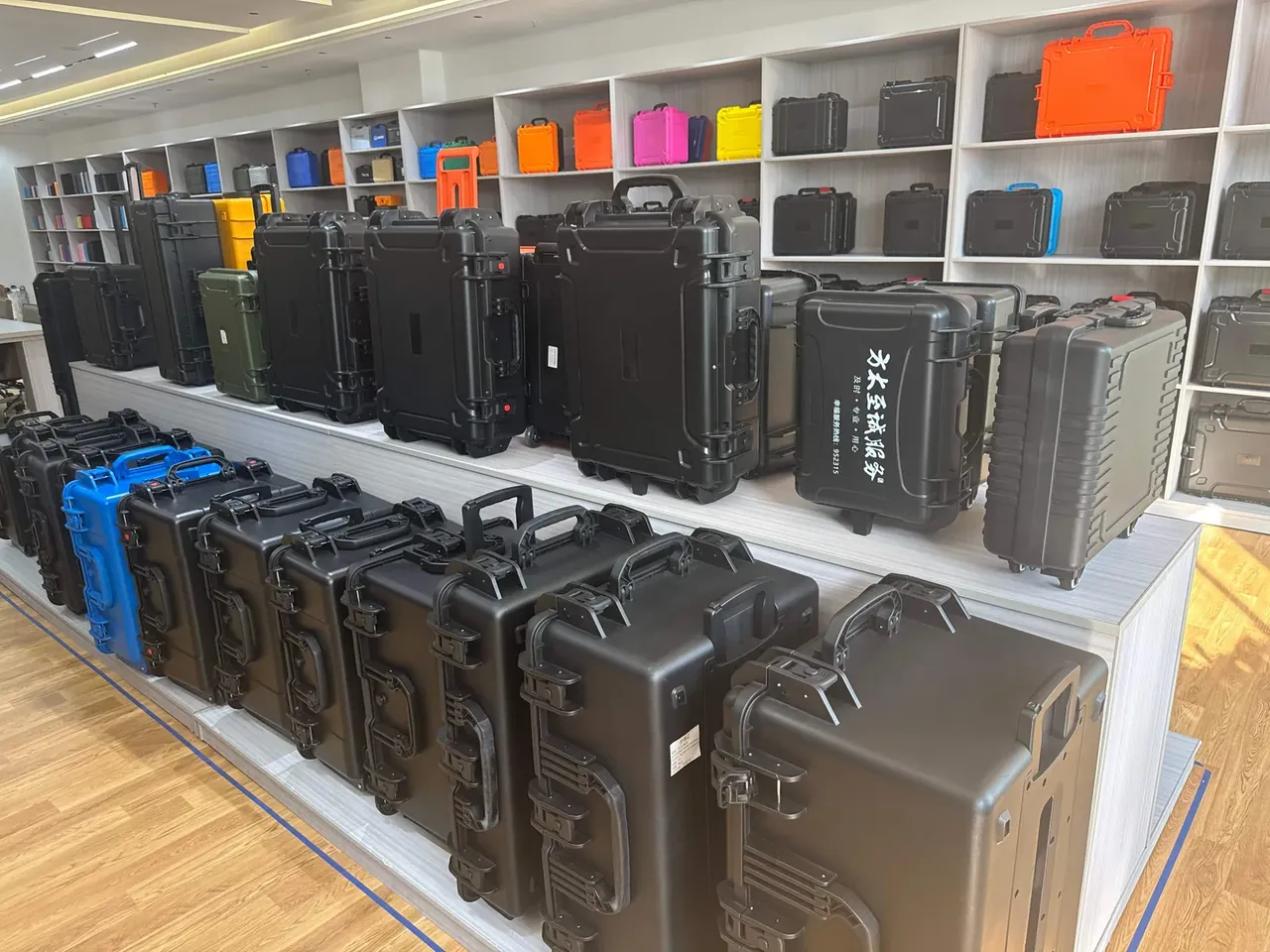
Whether the mouth springs back after unloading is the second half of the tilt criterion. The Pipeline construction operation tool case has the block removed and the shell set flat, then reads the diagonal and decay again. Between -25 C and 50 C the wall contracts when cold and softens when warm. Two rings at 20% compression and four latches at 405 N must hold the lid through the swing.
At 5.9 kg empty the mouth looks closed, but a 16 kg load leaves residual lid flex that does not recover when flattened. The bench tags the two states separately and returns to room temperature before the temperature leg. Reading decay ≤0.35 kPa / 10 min beside the diagonal separates elastic give from permanent set.
| Diagonal value | Matched span | Rest time | Retest verdict |
|---|---|---|---|
| 0.7 mm | 235 mm | 24 h | Rebound clears, keep sample |
| 1.0 mm | 205 mm | 24 h | Reference, released |
| 1.4 mm | 175 mm | 24 h | Over line, back to tooling |
5. Span floor for pipeline batches
The span floor is the shortest grade whose diagonal still holds 1.1 mm; shorter hinge-seat combinations return as a lot for tooling correction. The Pipeline construction operation tool case excludes the 175 mm grade at 1.4 mm after a 60 mm shim over 24 h. The 205 mm reference holds 1.0 mm and goes onto the card.
The card puts a 205 mm span, 12 mm pads, 16 kg load and 60 mm / 24 h in one column. The 580×410×235 mm outer size and 510×345×170 mm cavity are checked once on the drawing, while the bench watches only the diagonal and the decay. The 3900 cycles, four latches at 405 N and two rings at 20% compression stay fixed, and JUNZHIJIA builds to drawing. Only the 24 h diagonal cell counts, so tidy early numbers cannot loosen the floor.
Conclusion
Whether the Pipeline construction operation tool case passes comes down to a 205 mm span with 12 mm pads holding ≤1.1 mm diagonal and ≤0.35 kPa / 10 min decay after 60 mm over 24 h. Span grade, pad grade and diagonal value each sit in their own table. Only when all three agree is a pipeline batch of the Pipeline construction operation tool case ready to release.
Related Reading
- Railway maintenance tool case: heavy tool transport for track work
- What kind of tool case suits outdoor work
- Can a waterproof tool case work outdoors in rain
- Tool case versus tool bag: field efficiency compared
Related Products
- 8 Series — Gun Cases; Military Equipment Cases; Camera Equipment Cases; Drone Cases; Watch Cases; Knife Cases; First Aid Cases; Electronics Equipment Cases
- WL8-2812 PP Gun Case — model WL8-2812
- All protective cases and toolboxes: 7 series, 158 models