

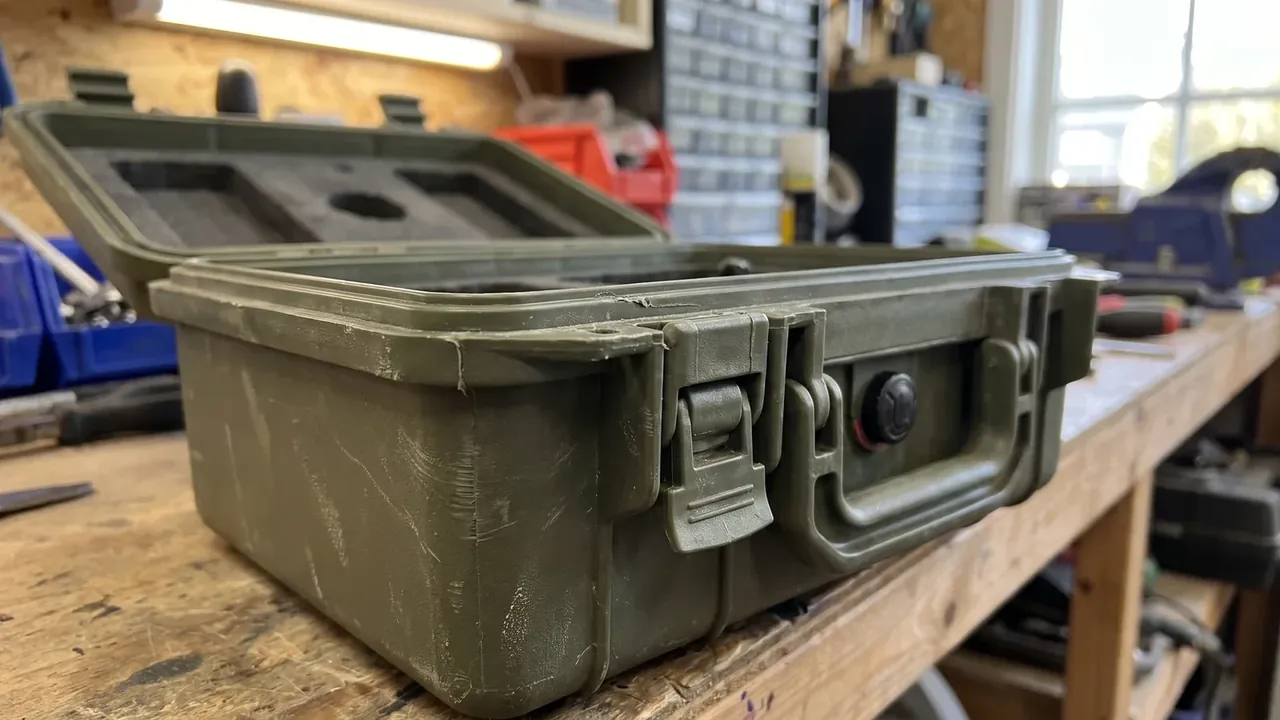
Quick answer: A pistol case needs scheduled checks on four ageing paths: gasket, latches and hinge, foam liner, shell. Each has a replacement line: 30 percent compression set, latch force below 90 N, more than 2 mm of foam thickness lost. Reaching the line means replacing, not waiting for failure.
Table of contents
- Four Maintenance Cycles
- Gasket and Latch Checks
- When the Foam Ages Out
- Three Lines for the Storage Room
- Scrap Criteria: When Repair Stops
- FAQ
1. Four Maintenance Cycles
Runaway pistol case maintenance usually means the checks have no rhythm: either nobody looks, or every trip triggers a strip-down.
The daily tier takes five minutes: wipe off moisture and grit, check latch recesses for sand, listen for a dry hinge.
| Tier | Frequency | Checks | Time | Pass mark |
|---|---|---|---|---|
| Daily | After each trip | Shell wipe, latch grit | 5 min | No rattle, no grit |
| Monthly | Once a month | Gasket continuity, latch rebound | 8 min | Full contact |
| Quarterly | Every 90 days | Gasket rebound, silicone, hinge | 20 min | Rebounds in 10 s |
| Annual | Once a year | Foam compression, screw torque | 45 min | 2.2 N·m |
The quarterly tier is hands-on: press the gasket every 200 mm, hold ten seconds, apply silicone at 3 g per metre. The annual tier strips the liner and re-checks M5 screws at 2.2 N·m.
2. Gasket and Latch Checks
The pistol case gasket ages daily while staying invisible. Sight the loop for breaks and rolled edges, press every 200 mm and time the rebound, then measure section height against the original record.
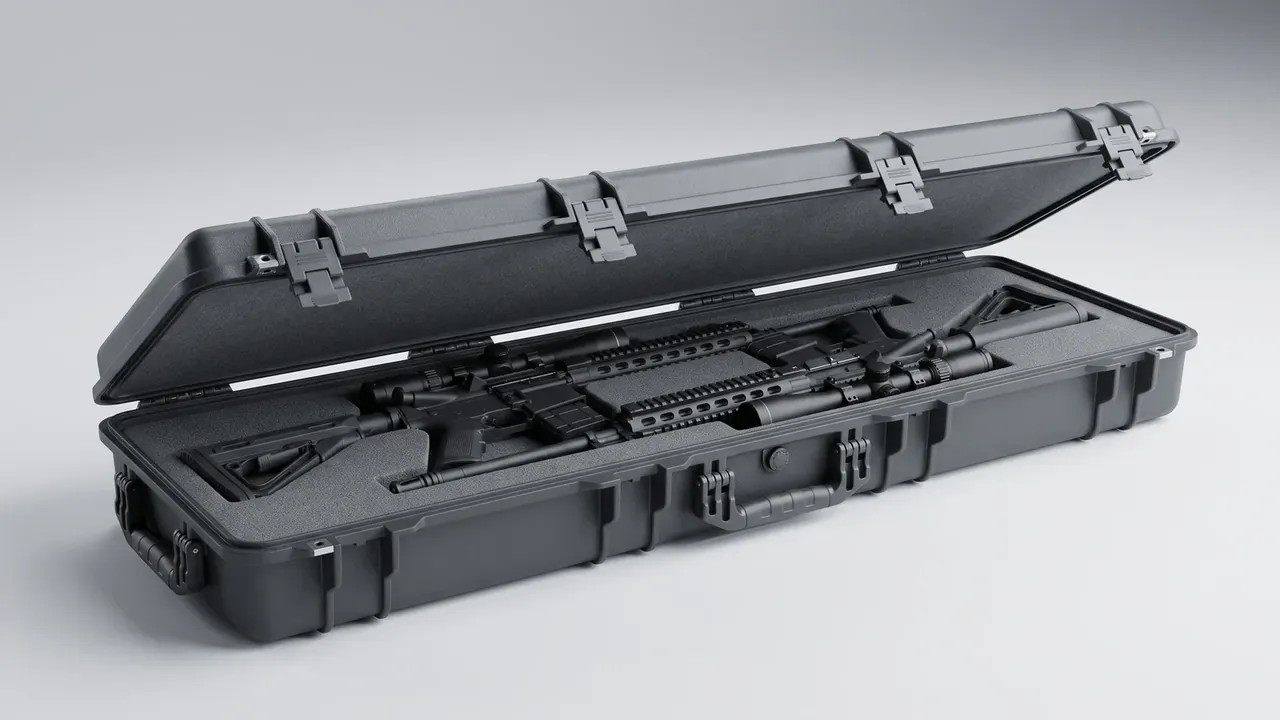
Latches are checked on holding force, pin clearance and lid contact: 130 to 160 N when new, below 90 N at replacement; anything rocking is past 0.6 mm.
| Item | Normal | Watch | Replace at |
|---|---|---|---|
| Gasket compression set | Under 15% | 15 to 30% | 30% |
| Gasket hardness, Shore C | 55 to 60 | 62 to 68 | 68 |
| Latch holding force | 130 to 160 N | 90 to 130 N | Below 90 N |
| Hinge axial clearance | Under 0.3 mm | 0.3 to 0.6 mm | Over 0.6 mm |
A4 paper screens a used case without instruments: trap it under the lid, latch it, pull segment by segment. Where resistance drops, the gasket is not compressed.
3. When the Foam Ages Out
Pistol case foam rarely collapses without warning: it stiffens, stops rebounding, then crumbles, and by then the slot has lost its grip.
Three measurements cover it: thickness loss, rebound, edge dusting. Take thickness with a caliper at three points. Compress a 50 × 50 mm sample by 25 percent for 22 hours, release for 30 minutes, and treat under 92 percent recovery as out of spec.
Replace the whole sheet, not the collapsed corner. Closed-cell PE suits damp rooms; EVA is better where fine slots matter.
4. Three Lines for the Storage Room
Three lines govern a pistol case in store: temperature sets how fast the gasket and foam age, humidity decides the failure path, ultraviolet light chalks the shell.
Hold 12 to 28 °C and 35 to 65 percent humidity; above 75 percent the air exchange at each opening wets the liner even with a perfect seal. Keep the case 150 mm off the floor and out of sunlight.
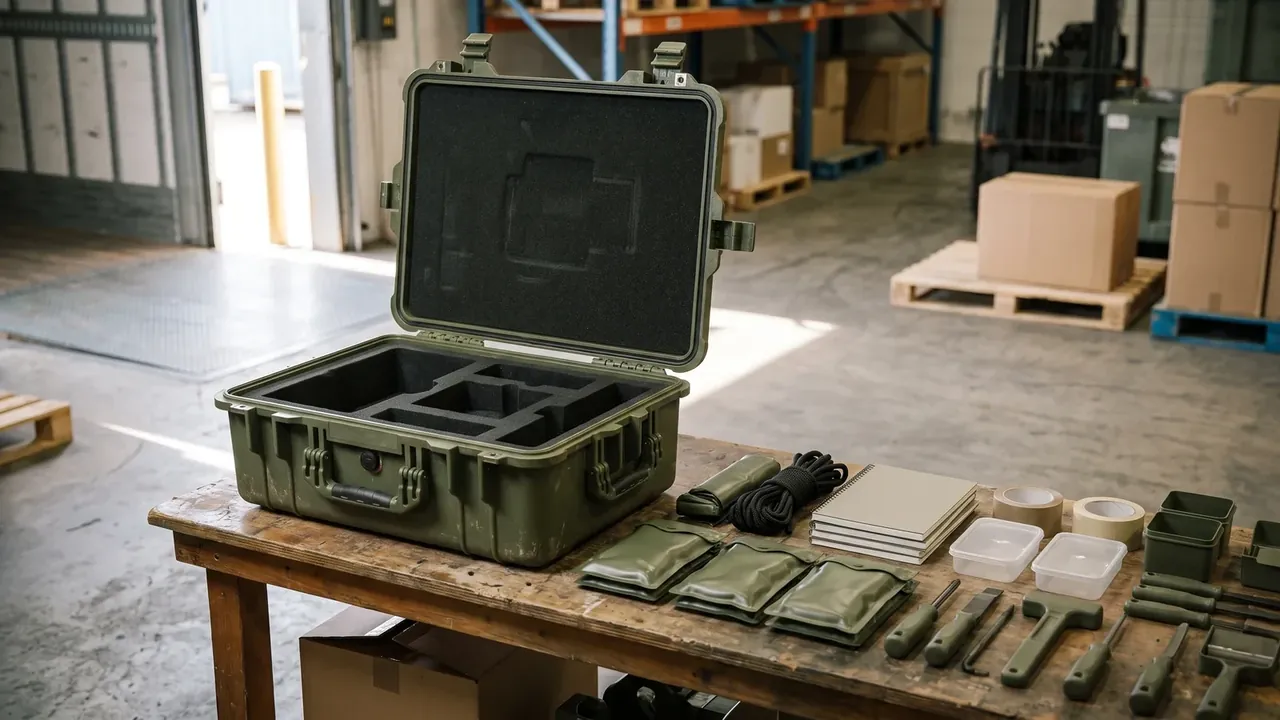
Desiccant runs at 500 g per 25 litres, changed every hundred days or once it gains 15 percent in weight.
Above three layers the bottom gasket stays compressed for months, so slow-moving stock stops at two.
5. Scrap Criteria: When Repair Stops
Four hard lines end the service life of a pistol case: a through crack longer than 40 mm, a seal groove distorted by more than 1.5 mm, three repairs on the same body, or six years in service.
The dividing line is not appearance but whether the sealing face returns to flat. Once the groove is distorted the gasket cannot be compressed evenly, and repair only postpones failure. Scrapping is not discarding: latches, handles, valve cores and hinge pins come off as spares.
Conclusion
Maintenance is less about diligence than about thresholds. Four tiers break the work into pieces, four thresholds turn judgement into numbers, four scrap lines stop money going into a failed body. On schedule, they keep a pistol case inside its design life.
This article discusses only the container (case body) side of specifications and design intent, and does not cover any handling, loading or use of the contents.
Related Reading
- How a short-body storage box is built and how it protects
- Choosing a pistol storage case: lock grade and size match
- Cleaning and gasket care for hard-shell suitcases
- Routine checks and repair limits for rotomoulded cases
Related Products
- 8 Series — Gun Cases; Military Equipment Cases; Camera Equipment Cases; Drone Cases; Watch Cases; Knife Cases; First Aid Cases; Electronics Equipment Cases
- WL8-2812 PP Gun Case — model WL8-2812
- All protective cases and toolboxes: 7 series, 158 models