

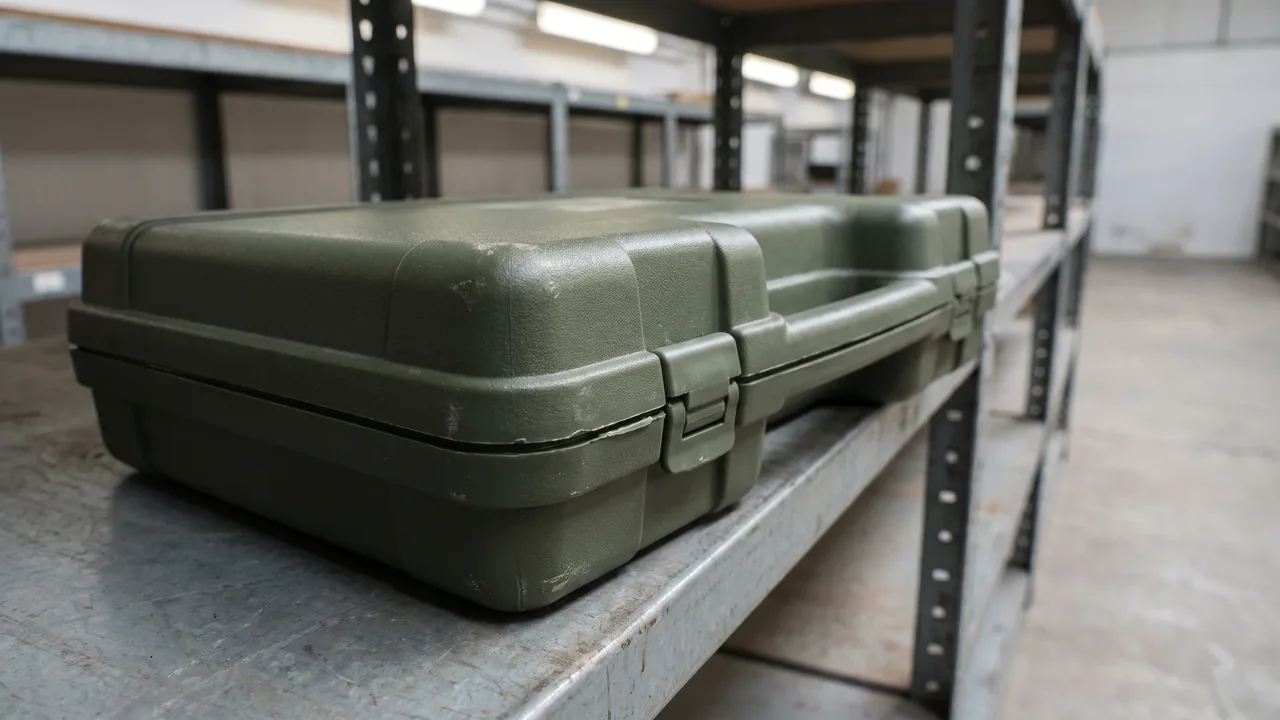
A Pistol Case looks like nothing more than a lockable box with a handle, yet its real job is to hold environmental and mechanical stress away from what sits inside. A duty sidearm issued by an equipment office, a club trainer, a dealer's display sample and a private owner's collection piece all face the same enemies during storage and carry: moisture in the air, salt-laden humidity near the coast and through the rainy season, shock and vibration during handling, and condensation that forms because a closed case does not breathe. Choose a handgun storage case badly and nothing shows for a while; several months later you find surface rust, a swollen grip, a shifted sight or a lifting finish.
JUNZHIJIA pistol cases are built by Kexin New Materials (Guangdong) Co., Ltd. around four lines: moisture control, rust control, zero displacement and easy carry. A rotomolded HDPE shell pairs with a CNC-routed EVA liner to locate each item, a grooved gasket and a pressure equalisation valve deliver IP67 protection, the interior reserves space for VCI film and desiccant, and latches, handles, stacking ribs and traceable labels are combined to suit the job, with tooling and OEM/ODM customisation available.
Table of Contents
- Pistol Cases and Handgun Storage Cases: Define the Job First
- Shell Materials: Rotomolded HDPE, Aluminium, Steel and Composite
- Size and Compartments: One, Two or Many Handgun Positions
- Liner Engineering: EVA, EPE and EPDM, and How Slots Are Cut
- Sealing and Ingress Protection: IP67 Gaskets, Grooves and Valves
- Moisture and Rust: VCI Film, Desiccants and Humidity Cards
- Cushioning and Restraint: Drop, Vibration and Stacking Loads
- Carry Design: Handles, Straps, Wheels and Ergonomics
- Locks and Seals: Mechanical Locks, Padlock Hasps and Tamper Seals
- Traceability and Marking: RFID, Barcodes and Asset Labels
- Testing and Acceptance: MIL-STD-810H, GJB and IP Test Items
- Export and Compliant Packaging: UN Marking and Control Notes
- Law Enforcement, Clubs and Retail: How Requirements Differ
- Custom Process and Shipped Documentation
Pistol Cases and Handgun Storage Cases: Define the Job First
Pistol case, handgun storage case, gun box and carry case get used interchangeably, but they answer different questions. The first decision is not the material; it is three questions. Will the item sit in storage for a long time or move frequently? Will the case live in an indoor store, a vehicle boot or a field site? Will it be opened daily or once a quarter? Long storage rewards sealing, moisture control and rust protection. Frequent movement rewards shock resistance, restraint and stackability. Frequent opening rewards a smooth latch action, a wear-resistant liner and restraint features that do not loosen after repeated handling. Treat a handgun storage case as a container you simply drop an item into, and within half a year you will see rust spots and collapsed foam.
Three broad families cover the market. The fixed storage case is heavy, rates highly for sealing, and usually carries a padlock hasp or an integrated lock; it suits an equipment store, a distribution point beside a club armoury, and long-term private storage. The transport case emphasises shell rigidity and stacking load, with foam or dividers turning the interior into fixed stations that survive road vibration and repeated handling. The carry case is light, opens fast and usually has a handle or a strap, serving range trips, training moves and retail display. None of the three is inherently better; the question is fit. JUNZHIJIA commonly keeps one shell family and switches its role through liner and lock combinations, so a buyer can cover several jobs with one case type and standardise spares.
One overlooked requirement is the transition state: an item leaves the store, travels, arrives at the range and returns the same day. Such a job does not demand a high ingress rating, but it does demand fast opening, dependable restraint and a presentable exterior. Misread a transition job as long storage and you buy a case that is too heavy and too slow to open every day; misread long storage as a transition job and you use a barely sealed soft bag for something that needs moisture control, paying for it in rust months later.
Shell Materials: Rotomolded HDPE, Aluminium, Steel and Composite
The shell material sets impact resistance, self-weight and long-term dimensional stability, and each family has its own failure mode.
Rotomolded polyethylene is the workhorse of protective cases. Powder is tumbled and heated inside a mould so the shell forms in one piece with no seams or weld lines, even wall thickness and good low-temperature toughness, and ribs, stacking steps and handle mounts can be moulded directly. It offers the best value, absorbs a drop by deforming as a whole, and often springs back from a dent. Its weakness is rigidity: under sustained heavy stacking it relies on geometry rather than the material itself, and the surface marks easily.
Aluminium shells are stiff, light and dimensionally accurate, common in instrument-grade and frequently opened carry cases. Their weakness is plastic deformation, because a local dent is hard to remove without damage, and aluminium in contact with other metals carries a galvanic corrosion risk that demands insulation and coating at joints. Sealing usually depends on a precisely machined groove and gasket, which is sensitive to impact.
Steel handgun storage cases are the strongest and most resistant to prying, suited to fixed storage and any place needing physical security. The price is weight and a tendency to rust, so a durable powder coat or plating must be maintained. Hinges and locks are usually welded, so serviceability is lower than with replaceable hardware.
Composite shells in glass or carbon fibre give the highest strength for a given weight and excellent puncture resistance, which is why they dominate air transport and premium carry work. They cost the most, are harder to repair locally, and usually need a thermoplastic inner shell to achieve good sealing.
| Shell material | Self-weight | Impact | Stability | Sealing difficulty | Typical use |
|---|---|---|---|---|---|
| --- | --- | --- | --- | --- | --- |
| Rotomolded HDPE | Medium | High (elastic) | Good | Low | Storage, transport, general carry |
| Aluminium | Low | Medium | Very good | Medium | Instrument-grade carry, frequent opening |
| Steel | High | High (rigid) | Very good | Medium | Fixed storage, physical security |
| Composite | Low | Very high | Good | Medium-high | Air transport, premium custom |
Size and Compartments: One, Two or Many Handgun Positions
The most common sizing mistake is comparing external dimensions. Only the internal clear space is usable, and wall thickness plus the base cushion and lid liner come out of it. A rotomolded HDPE shell is several millimetres thick, and once liner thickness is added the internal width can be well over ten millimetres less than the outside figure suggests. Measure the item together with sight height, grip thickness and any base extension, then allow three to five millimetres of clearance for easy removal, and only then work out the internal size that actually fits.
Positions come in three basic layouts. A single position suits a private owner or a collection that needs the highest protection, because all the interior volume goes into a thick liner. A twin layout is the common choice for law enforcement and clubs; the two positions should be separated by a divider or a thick liner wall so items cannot touch in transit and a visual count on opening is immediate. A multi-position case serves retail display and club issue, where the priority shifts from protecting one item to tidy stations, clear numbering and a short pick-and-return path; here divider rigidity and liner retention matter more than shell thickness.
Accessory stations need the same planning. Magazines, adapters, tools and cleaning items should have their own space, apart from the item positions, so hard accessories cannot bear on the main item in transit. Accessory space can take the form of separate pockets, routed recesses or a removable tray. The more accessories, the more each station dimension belongs on the drawing and should be frozen, rather than leaving a block of general foam for someone to cut on site: hand-cut slots vary in depth, cannot be reproduced, and make uniform management of a fleet of equipment impossible.
Liner Engineering: EVA, EPE and EPDM, and How Slots Are Cut
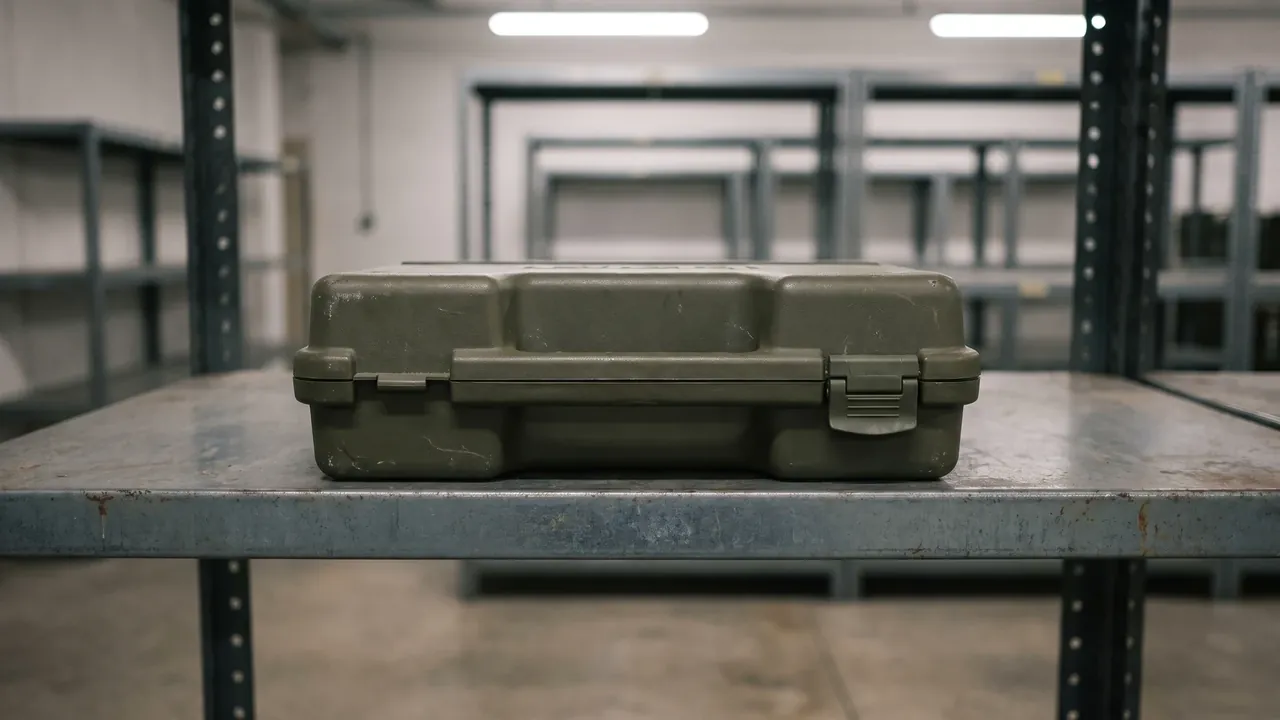
The liner is the part that actually touches the equipment, and it does three jobs at once: locate, cushion and isolate. The three common materials differ enough that the wrong choice affects both life and feel.
EVA is the mainstay of compartmental liners. It is closed-cell, resilient and resistant to repeated compression, and CNC routing produces accurate item and accessory slots with crisp, clean edges. Higher density gives more support at more weight. EVA suits daily insert-and-remove work, because the slot mouth stays firm after hundreds of cycles. Its weakness is stiffening after long exposure to moisture, which is why it belongs with good sealing and desiccant.
EPE is light, low cost and efficient at absorbing energy, especially for a single high-intensity event. Its skin is soft and it does not fully recover after compression, so it is a poor long-term locating material and better used as an outer cushion, corner block or transport inner pack. Cut a precision position from EPE and the slot walls collapse after a few uses, after which the equipment starts to move.
EPDM behaves more like rubber. It resists weather, ozone and ageing well and recovers strongly, which is why it appears in gaskets and damping pads and can also serve as a soft facing that touches the equipment. It supports less than high-density EVA, so on its own a position would be too soft; thin sheets bonded to an EVA slot face raise friction and protect the finish.
A few slot rules hold up in practice. Depth is usually about two thirds of the item thickness, which both retains the item and keeps removal easy. The mouth should carry a small radius or chamfer so a sharp edge cannot rub the finish over time. The slot floor should not be fully dead-seated; leave cushioning travel. Where items swap between positions, use one common slot size rather than a different cut for every location. For a fuller comparison of foam behaviour and selection criteria, see our review of case internal foam types and the density, resilience and cost discussion in foam material comparison.
Sealing and Ingress Protection: IP67 Gaskets, Grooves and Valves
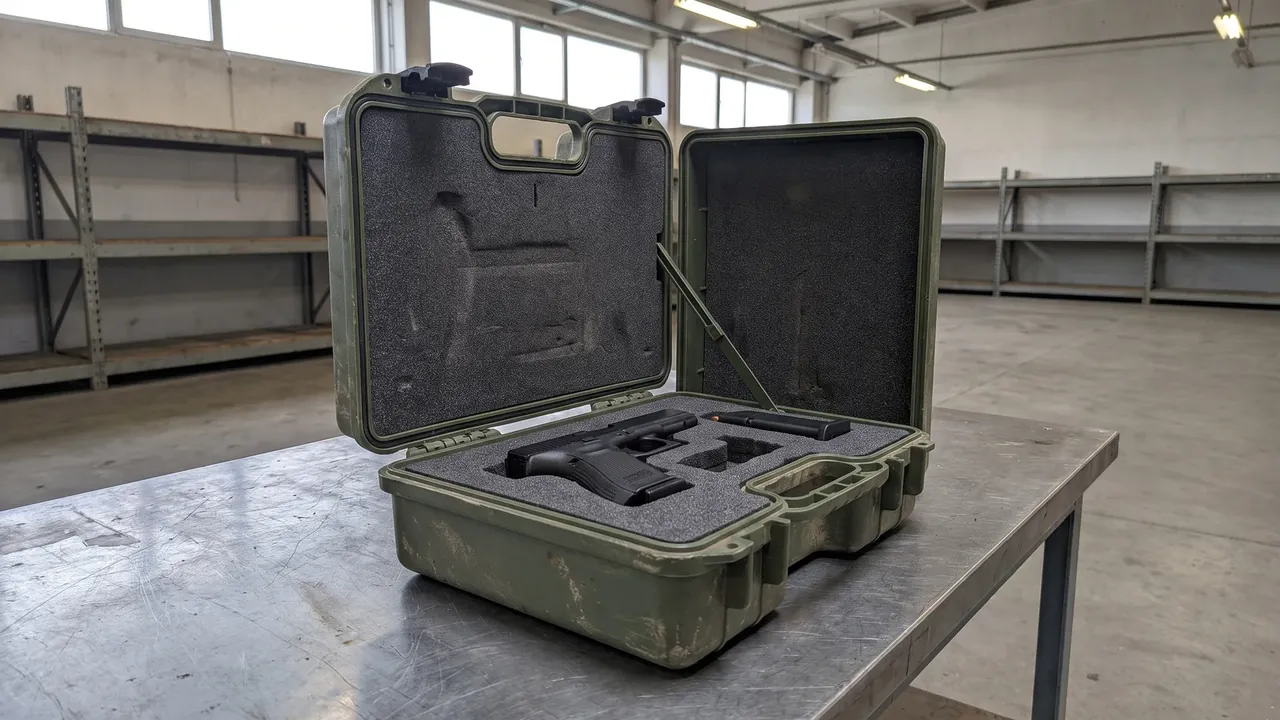
Sealing is the first and most important line of defence against moisture. A protective case normally seals through a groove between lid and base that carries an elastic gasket, compressed by the latches into a continuous contact band. The groove shape, gasket section and compression together decide the result. Too much compression and the gasket takes a permanent set and loses its resilience; too little and the contact band is discontinuous, so vapour enters at the weakest corner. In practice compression is held between a quarter and a third of the gasket section height, and the gasket runs continuously around the corners rather than being pieced from segments.
Gasket materials are usually silicone, EPDM or nitrile. Silicone covers the widest temperature range, recovers well and has no odour, which suits wide humidity and temperature swings. EPDM resists weather and ageing well at moderate cost and is the general outdoor choice. Nitrile resists oil, which suits environments where grease may be present. Hardness also affects feel: a harder gasket seals reliably but opens heavily, while a softer one is easier but ages and flattens sooner.
The IP code is the common language for sealing. The first digit covers dust and the second water, so IP67 means dust-tight and protected against short immersion. IP67 does not mean moisture never gets in. It proves the case keeps liquid water out under the stated test, but the moist air already inside, any water left on the equipment, and the humid air exchanged every time the case is opened all keep circulating in a closed volume. That is why a well-sealed case with desiccant but no rust protection can still show rust over a long storage period.
The pressure equalisation valve is a small part many buyers overlook. Once sealed, the case behaves as a near-closed volume, so a change in ambient temperature or altitude creates a pressure difference. When a case is packed hot and high and opened cold and low, a partial vacuum can grip the lid and make opening unusually hard; the reverse can create positive pressure. The valve equalises slowly through a membrane that passes vapour but not water, so opening stays easy while liquid water and dust stay out. For air freight, long road legs or use across climate zones the valve is close to essential; see how the pressure equalisation valve works. For a broader comparison of gasket materials, protective case gasket materials covers the selection in more depth.
Moisture and Rust: VCI Film, Desiccants and Humidity Cards
Rust on metal needs three conditions at once: water, oxygen and enough time. The moisture and rust strategy of a pistol case removes or weakens at least one of them. The gasket blocks liquid water, the equalisation valve stops the case breathing humid air under pressure differences, and desiccant plus vapour-phase protection deal with the residual moisture inside and any film of water on the equipment.
Desiccant absorbs water vapour from the air in the case and lowers relative humidity. Silica gel and montmorillonite are the common types; the first signals its state through a colour change, the second holds more per unit volume. The quantity has to be estimated from the free volume inside, the target humidity and the intended storage period, because too little lets humidity climb back within a month or two. Desiccant should sit where it cannot touch the equipment, so that liquid released during absorption never reaches a coating or a metal face.
VCI material is the other route. VCI film or a slow-release emitter gives off corrosion-inhibiting molecules inside the closed volume; they diffuse with the air and adsorb onto metal surfaces as an extremely thin, self-volatilising layer that blocks water and oxygen. It suits complex metal geometry that an oil film cannot fully cover, and it suits long-term storage. VCI and desiccant can be combined, but the proportions matter, because driving humidity too low can slow the diffusion of the inhibitor.
The humidity indicator card is a low-cost, high-value management tool. Its colour patches show a humidity band directly, so the state of the desiccant is obvious at the moment the case is opened. Recorded over time, the cards reveal how quickly a particular case gains moisture in a particular store. For fleet management, a temperature and humidity logger label inside the case keeps a record of the whole storage period.
Moisture and rust control is a system. A perished gasket, very frequent opening, or equipment packed with a wet surface will defeat the best desiccant plan. Two habits matter: confirm the surface is dry before packing, and close the case soon after opening rather than leaving it open. For a fuller treatment of long-term sealing, see vapour-phase protection in protective cases and the wider discussion in case sealing and moisture design.
Cushioning and Restraint: Drop, Vibration and Stacking Loads
A pistol case meets three mechanical loads: shock from handling drops, continuous vibration from vehicles, and static pressure from stacking in a store or a container. They demand different things and are often confused.
Drop shock is the most likely cause of hidden damage. The danger is not a cracked shell but energy passing through the liner into the equipment and loading its internals. The goal of cushioning is to bring the shock acceleration below the level the equipment accepts, a level usually stated by the maker or drawn from industry practice. The method is layered. The outer shell resists puncture and spreads the load over a wider area, the middle layer of energy-absorbing foam flattens the peak, the inner EVA locates and isolates local contact, and precision faces get a soft facing. Thicker is not automatically better, because an over-thick layer lets the item move further and can set up a secondary impact inside the case.
Vibration is a low-amplitude, long-duration load whose damage accumulates: threads loosen, catches creep, liner slots wear wider. The key is to remove degrees of freedom, holding the item firmly in the slot so there is no relative motion between item, case and liner. That is why loose soft fill is a poor choice for long transport: it absorbs energy but does not fix position.
Stacking load tests the rigidity of the lid and side walls. Stacking empty cases is easy; stacking loaded cases is the real test. Rotomolded HDPE spreads static pressure to the walls through lid ribs, stacking steps and side ribs so nothing collapses locally. Any stacking requirement should name the number of layers and the weight per layer so the maker can add the right reinforcement, rather than propping the stack on a pallet afterwards. For palletisation and container loading, see case stacking and pallet planning, and for a wider shell-strength discussion see military protective case selection.
Carry Design: Handles, Straps, Wheels and Ergonomics
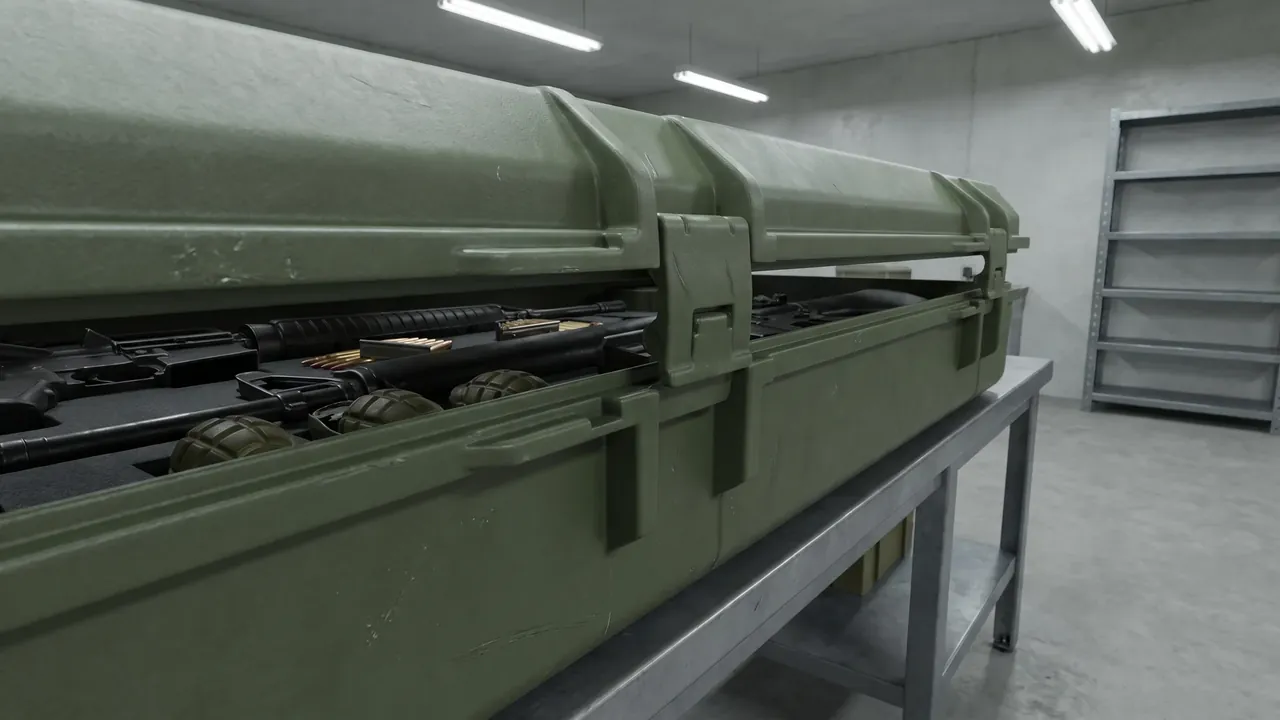
Carry design decides whether a case actually leaves the store. However good the protection, a handle that bites, an off-centre balance or an unmanageable weight ends up sitting on a shelf.
The handle is the basic carry part. A good one has enough section and radius at the grip so pressure spreads across the palm, and a transition reinforcement where it meets the shell so sustained load cannot tear it. The usual approach thickens the mounting pad and adds inner ribs so handle load spreads along the wall. A folding handle lies flush when not in use and snags less; a fixed one is stronger but takes more space.
A strap suits walking distances. Strap mounts must be designed into the shell, because a plastic clip added later will not carry a full load. Mount position sets the attitude of the hanging case: symmetric side mounts keep it level, while a single diagonal mount suits light loads. Strap width and pad softness decide comfort over a long carry.
Wheels resolve the conflict between weight and distance. A wheeled pistol case saves real effort on flat, hard ground, which suits airports, stations and large training sites. Choose on wheel diameter, material and bearing type: a larger wheel clears thresholds and gaps, a harder-wearing material survives rough ground, and a metal bearing runs quieter and lasts longer at speed. Castors turn tightly, fixed wheels track straighter, and the two are often combined.
Weight control runs through all of it. At one size, shell material, liner density and hardware count set the total. For a case meant to be carried, prefer an aluminium or composite shell, a medium-density EVA liner and only the hardware that is needed; for fixed storage, a steel or thick-wall rotomolded shell can push protection to the maximum. For more on grip and overall carry feel, see protective case handle ergonomics.
Locks and Seals: Mechanical Locks, Padlock Hasps and Tamper Seals
Locks are what turn a box into a controlled container. They decide who can open it, and whether the act of opening can be recorded.
A mechanical lock is the usual integrated option, typically a cam lock or a push-and-turn lock opened with a key. It avoids carrying a separate padlock and completes the open-close action in one move. Its weakness is key management: lose a key and the whole cylinder has to change, and a shared cylinder across a batch needs its own plan. Where several people share access at different levels, issue and return of keys should be defined and the cylinder numbers logged.
A padlock hasp passes the choice of lock to the user. A rubber or metal-covered hasp needs enough hole diameter and sensible spacing to accept different padlocks. Too small a hole limits choice, and too narrow a spacing lets a padlock hang without clamping the lid. For higher security, a double hasp can require two people to be present, which builds in a two-person rule. The hasp should sit on a metal reinforcement plate so it cannot simply be levered off.
Tamper-evident seals record whether a case was opened in transit or storage. Common forms are a one-piece pull-tight plastic seal and a numbered lead seal, neither of which can be restored once cut. The number ties the seal to the waybill and the handover record. For law enforcement and retail transfers, the seal is often the key evidence that divides responsibility: an intact number at handover confirms the contents were not touched within that interval. For lock options see military case lock selection, case latch selection and the wider military security box design.
Traceability and Marking: RFID, Barcodes and Asset Labels
Once a case fleet grows from a handful to dozens or hundreds, the hard problem shifts from protection to finding the right one and confirming the match. Traceability and marking solve exactly that.
The base layer is external marking. Serial numbers, owning department, category and warning information can be screen-printed, hot-stamped or laser-marked. Numbers should be unique and systematic, for example a department code, a category code and a serial, so they work both for people and for a database. Marking belongs where it will not wear, away from stacking faces and high-friction corners.
Barcodes and QR codes are the cheapest digital entry point. A QR code carries more data and can link directly to the asset record, the responsible person, the storage location and the service history. Label stock has to resist weather and be laminated against moisture and rubbing, or the label will fail before the case does. Where the shell surface is unsuitable, the label can be recessed into the liner or a dedicated label pocket.
RFID suits batch, contactless inventory. A whole row of cases is read through a gate or by a handheld reader in seconds, replacing a manual count of every case, which is ideal for monthly stock takes and goods-in and goods-out. The tag position must avoid the signal shadow of the metal shell, so anti-metal tags or a liner recess are used. To link physical marking to a digital asset record, see case asset QR code tracking.
Whichever method is used, the principle is the same: marking matches the record, and entry matches change. Duplicate numbers, a lost label never replaced, or a record that no longer matches the shelf all quietly disable the whole system. The value of marking is not the technology itself but the auditable record of every pick, return and transfer.
Testing and Acceptance: MIL-STD-810H, GJB and IP Test Items
Whether a pistol case really survives a hard environment is a question of tests, not a specification sheet. The most common acceptance mistake is judging a sample by feel and ignoring verifiable evidence.
MIL-STD-810H is the US military's general standard for environmental engineering considerations and laboratory tests. It does not prescribe a single case type; it defines methods. Methods relevant to protective cases cover high and low temperature storage, thermal shock, humidity, fungus, salt fog, vibration, mechanical shock and drop. A maker normally selects the methods that match the intended environment and issues a report. When buying, read the test conditions and conclusions rather than the phrase passes 810H, because a different set of methods carries very different weight.
GJB is the domestic military standard system, and some protective cases are verified against it for environmental worthiness. For domestic buyers a GJB report is often easier to accept in a compliance review or a tender. Note that standard numbers and revisions change, so acceptance should confirm that the report matches the current version and that the methods cover the real environment.
IP ratings are tested to IEC 60529, and IP67 requires separate dust and immersion tests. The report will state the test duration and immersion depth, and those figures decide whether the case suits a brief accidental dunking or a short submergence; neither is the same as long-term soaking. Salt fog testing, commonly to ASTM B117, verifies coating and hardware corrosion resistance and matters especially near the coast or on board. Drop and vibration tests map directly to the transport load.
A complete acceptance flow should include first-article confirmation of structure, liner, hardware and gaskets by sight and feel; a sealing test with immersion or spray; drop and vibration tests; salt fog where relevant; and a check that the shipped documents are complete. Only when structure, test and paperwork line up is the protection rating of a handgun storage case something you can prove rather than something a sales sheet claims.
Export and Compliant Packaging: UN Marking and Control Notes
When a pistol case is used for cross-border transport or an export project, packaging compliance turns a good container into a unit that customs and the carrier will accept.
UN packaging marking is the common certification language for packaging in dangerous goods transport. A code set states the packaging type, performance level and conditions of use, and proves the container passed the required drop, stacking and sealing performance tests. Where such transport applies, the container has to be certified to the relevant rules and carry the matching mark. Requirements differ by mode, road, sea or air, and by the category of goods, so the supplier and the carrier should confirm the applicable clauses together.
Export packaging also has to consider wood packaging quarantine rules for pallets and bracing, label language, document language and the destination market's entry rules. For long sea legs, packaging should add moisture and rust protection. Palletisation and container loading should be planned in advance so nothing is improvised on site and the cases do not deform under load.
To be clear, everything to do with defence trade and export is governed by local law and export control requirements, and this article discusses only the structure, performance and certification of the packaging container, not how any contents are handled. For general cross-border logistics points, see the case cross-border logistics guide.
Law Enforcement, Clubs and Retail: How Requirements Differ
The same pistol case serves very different priorities, and pinning down the user group is the first selection step.
For a law enforcement equipment office the priorities are control, auditability and scalability. Cases are bought in batches, stored together and issued per officer, so uniform specification, numbered marking, lock and seal management and a clean interface to the asset register matter most. The rating has to cope with the temperature and humidity swings of a patrol vehicle boot and with frequent handling. Batch purchasing should also weigh spare-part supply and uniform repair, so a single damaged case can be replaced. Hardware replaceability, a common cylinder and RFID batch reading often matter more than appearance.
For a shooting club the priorities are durability, easy opening and easy counting. A case is opened many times a day by different members, so liner wear resistance and the stability of the restraint matter; for bulk storage, tidy stations, clear numbering and a short pick-and-return path matter. Clubs also move several items at once, so stacking load and handling convenience deserve attention. Choosing an EVA compartmental liner rather than loose foam sharply reduces long-term collapse and movement.
For a dealer the priorities balance display and turnover. Transport demands that the case survives logistics and the item arrives cosmetically sound; display demands smooth opening, a neat liner and clear marking so a customer can inspect it. Sample items on loan or on tour may also need seals and a responsibility record. Retail runs many case units and opens them often, so hardware durability and liner abrasion resistance drive the experience. Whatever the group, start by fixing the core checks in gun case buying and then separate the roles of a gun case and an ammo box so the two container types are never confused.
Custom Process and Shipped Documentation
Building a pistol case that genuinely fits, rather than one that is compromised, usually runs through four stages: requirement capture, design, first-article validation and production.
Requirement capture should establish the item list and individual dimensions, quantities and position layout, storage or carry intent, the environment with temperature, humidity, salt fog, vibration and stacking layers, lock and marking needs, and whether export or dangerous-goods packaging certification is required. The more complete the input, the less rework later. For air transport, confirm whether the relevant air transport case standard applies; see the ATA 300 airline case standard.
Design fixes shell material and wall thickness, rib layout, compartments and liner slots, gasket section and groove dimensions, valve position, hardware selection and marking. It should produce drawings and a technical data set that can be confirmed, covering overall size, internal clear size, slot coordinates and tolerances.
First-article validation is the risk control step. A sample should be built and a full pack-and-unpack rehearsal completed to check that items seat properly, that slots are neither too tight nor too loose, that handle and locks feel right and that sealing is reliable. Where needed, the first article goes through drop, vibration and immersion tests so the measured result confirms the design. Once confirmed, drawings and the liner program are frozen and production begins.
Shipped documentation normally covers a packing list with an item correspondence table, a compartment and slot drawing, lock and key management notes, the maintenance and replacement interval for gaskets and desiccant, test reports where available, and the interface to marking and the asset register. For batch orders, a spare-part list for gaskets, hardware and replacement liners with a maintenance interval keeps protection at its design level for years. JUNZHIJIA can deliver compartment design, liner tooling, hardware configuration and multilingual shipped documents as one package, with OEM/ODM support.
Pistol Case FAQ
Q: Are a pistol case and a handgun storage case the same thing, and how should I tell them apart when choosing?
A: No, and the difference lies in the job rather than the name. A pistol case normally means a smaller box intended to be carried, where opening speed and carry comfort dominate. A handgun storage case normally means a thicker container with a higher sealing and protection rating, built for longer storage or controlled management. Three questions nearly always settle the choice. Does the item move frequently or sit for long periods? Is the environment an indoor store, a vehicle or the field? Does the case open daily or quarterly? Frequent movement favours impact resistance, restraint and stacking strength. Long storage favours sealing, moisture control and rust protection. Frequent opening favours liner wear resistance and hardware life. Because the two names overlap so heavily in everyday use, buyers often end up with a case optimised for the wrong job, either too heavy and slow for daily handling or too lightly sealed for months on a shelf, and the mismatch only becomes obvious when rust spots or a collapsed liner appear later on. When in doubt, write down the storage-versus-carry split and the opening frequency first, then match the case to that written description rather than to the shop label.
Q: The item stayed inside the case, so why did rust still appear after a while?
A: Because sealing is not the same as drying. The gasket blocks liquid water, but the case already holds moist air, and if the item goes in with a wet surface that moisture circulates inside the closed volume, settles on metal and starts corrosion. Three other causes are worth checking. An aged gasket or poor compression lets the case slowly breathe as temperature and humidity change. The desiccant charge is too small, or already saturated, and has not been changed. Opening is so frequent that every cycle exchanges a fresh volume of humid air. A fourth cause is common in practice: the case is packed while still warm from a vehicle or a room, so the air inside cools afterwards and its moisture condenses on the coldest metal surfaces. The answer is a combination. Keep the gasket in good order, use the equalisation valve to reduce pressure-driven gas exchange, size the desiccant to the free volume, add vapour-phase protection to the metal surfaces, and confirm the item is dry and at ambient temperature before packing. Done consistently, rust problems can largely be controlled.
Q: Does an IP67 pistol case make moisture a non-issue?
A: No. IP67 means dust-tight and protected against short immersion. It proves the case keeps liquid water out under the stated test, but it does not stop water vapour slowly crossing between inside and outside, and it does nothing about moisture already inside. In other words IP67 addresses splashes and a brief dunking, not humidity management over long storage. For long storage, pair even a well-sealed case with desiccant and vapour-phase protection, and check the internal humidity with an indicator card from time to time. Also read the test duration and immersion depth in the report, because those figures decide whether the case suits a brief accidental dunking or a short submergence, and neither is the same as long-term soaking. A further point is that every gasket ages. Ask for the expected service life of the seal and the recommended replacement interval, keep a spare, and re-test the seal after any hard impact, because a rating measured on a new sample says little about a case that has been dropped and reopened a thousand times.
Q: EVA or EPE liner, which should I choose?
A: It depends on whether the case is opened and packed repeatedly over a long period. EVA is closed-cell and resilient, resists repeated compression, and can be routed into accurate item slots with firm walls that survive hundreds of cycles, which makes it the mainstay of compartmental liners for daily use where stable location matters. EPE is light, low cost and efficient at absorbing energy, but it does not fully recover after compression and its skin is soft, so a precision slot collapses after a few uses. It suits outer cushioning, corner blocks and short-cycle transport inner packs. Density matters as much as the family: a low-density EVA still wears quickly, while a high-density grade holds a slot mouth for years at some weight penalty. In practice the two work together. An outer layer of EPE or expanded foam absorbs the shock, an inner layer of high-density EVA routes the positions and gives long-term support, and a soft facing touches the precision surfaces. That combination balances cushioning, location, cost and service life.
Q: Is a pressure equalisation valve necessary, and when is it essential?
A: For a well-sealed case it is strongly recommended, and for transport across climate zones and for air freight it is close to essential. Once sealed, the case is a near-closed volume, so a change in ambient temperature or altitude creates a pressure difference. A case packed hot and high and opened cold and low can develop a partial vacuum that grips the lid and makes opening so hard that two people are needed; the reverse creates positive pressure and a rush of air when the lid opens. The valve equalises through a membrane that passes vapour but not water, so opening stays easy while liquid water and dust stay out. Where the case flies, travels long road legs, crosses climate zones or sees a pronounced day-night temperature swing, fit the valve as standard. For strictly constant-temperature indoor storage the decision can follow the sealing rating and how the case is used. Check that the membrane is replaceable, because a clogged valve defeats its purpose while still looking perfectly intact.
Q: Can VCI material and desiccant be used together?
A: Yes, and for long-term storage the combination is often the recommended approach, provided the quantity and the space relationship are right. Desiccant lowers the relative humidity inside the case and weakens the corrosion conditions at the source. Vapour-phase material slowly releases inhibitor molecules that diffuse through the air and adsorb onto metal surfaces as a thin, self-volatilising layer that blocks water and oxygen. The two mechanisms complement each other: one manages the environment, the other the surface. Do not drive the humidity too low, though, because that can slow the diffusion of the inhibitor, so size the charge to the free volume rather than adding more. Keep both away from direct contact with the equipment so no liquid released during absorption reaches a coating or a metal face, set a regular inspection and replacement interval, and use a humidity indicator card to judge the state. Record the change dates on the case or in the asset record, so the schedule survives staff turnover.
Q: How do I choose between a handle, a strap and wheels for carry?
A: Decide by weight and distance rather than trying to have everything. For short distances and light loads, such as a daily range trip, choose an ergonomic handle with enough grip section and radius and a thickened transition at the shell, so sustained load cannot tear it. Add a strap when walking distances, but design the mounts into the shell because a clip added later will not carry a full load; symmetric side mounts keep a hanging case level. For heavier loads or longer distances, at airports, stations and large training sites, choose wheels and judge them on diameter, material and bearing type: a larger wheel clears thresholds and gaps, a metal bearing runs quieter and lasts longer at speed, castors turn tightly and fixed wheels track straighter, and the two are often combined. Whichever you pick, keep the loaded weight within what you can carry for long, or even a good handle will be left unused, and check that the handle itself can be replaced once it wears.
Q: What information is needed to specify a custom pistol case, and what ships with it?
A: Provide the item list with individual outline dimensions including sight height, grip thickness and any base extension, the quantity and position layout, whether the case is for storage or carry, the environment covering temperature, humidity, salt fog, vibration and stacking layers, the lock and marking requirements, and whether export or dangerous-goods packaging certification is needed. For air transport, state whether the relevant air transport case standard applies. The usual sequence is requirement capture, design, first-article validation and production. First-article work builds a sample and runs a full pack-and-unpack rehearsal, with drop, vibration and immersion tests where needed, then freezes drawings and the liner program before production. Shipped documents normally include a packing list, a compartment and slot drawing, lock and key notes, gasket and desiccant intervals, test reports and the interface to the asset register.
Conclusion and Related Reading
Choosing a pistol case means turning moisture control, rust control, zero displacement and easy carry into verifiable structural decisions. Material sets weight and rigidity, compartments set pick-and-count speed, the liner sets long-term location, sealing and desiccant keep metal free of rust, and locks and marking make the container manageable. JUNZHIJIA builds to order, with OEM/ODM support.
Related Reading