

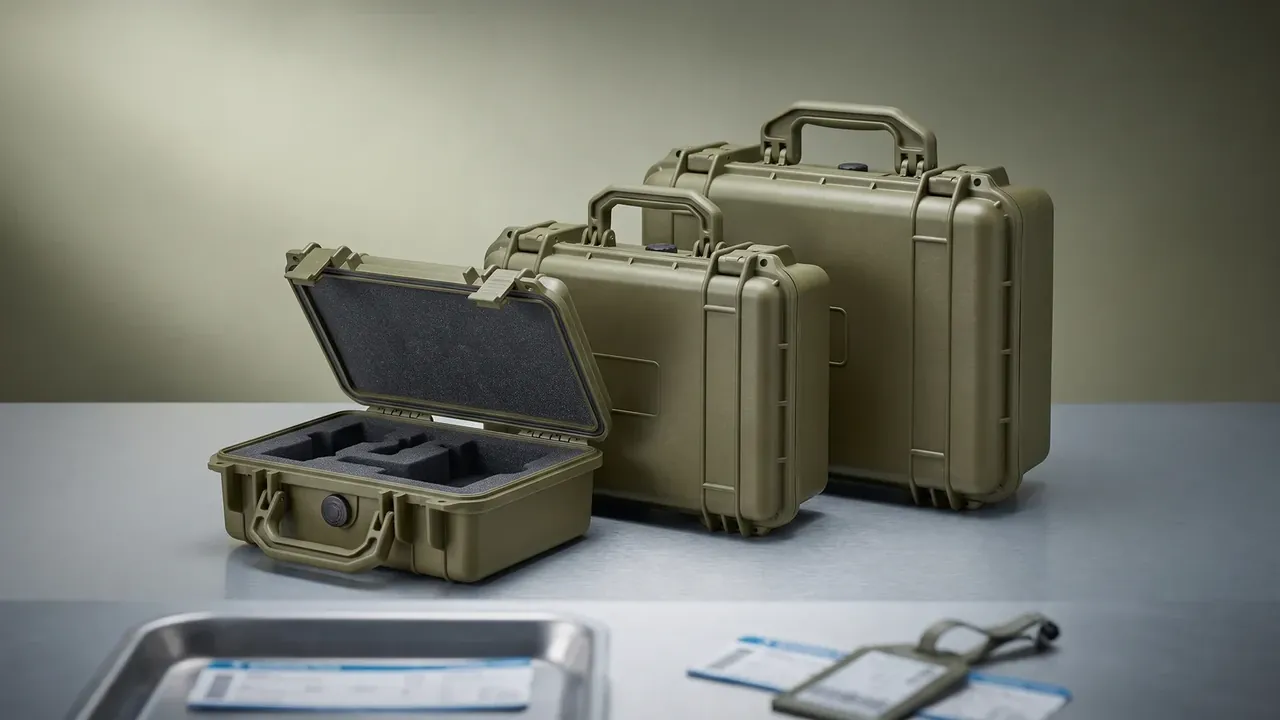
Quick answer: A pistol storage case acceptance standard is judged by repetition, not by clause count. Fix each check with its gauge and reading rule, bind sampling to batch size, give every defect class a verdict, and state how long reports are kept.
Table of contents
- What a Pistol Storage Case Standard Must Judge
- Sampling and Acceptance Quality Limits
- Defect Classes and Verdict Rules
- Test Reports and Retention Periods
- Failures, Re-inspection and Disposition
- FAQ
1. What a Pistol Storage Case Standard Must Judge
Acceptance starts with rewriting sentences, not opening a carton. "Appearance acceptable" lets two inspectors reach two verdicts; "no through-scratch at 500 mm under D65 light" leaves room for one. Fixing that rewrite in the contract annex is the whole job.
Checks fall into six groups: appearance, dimensions, wall and hardware, sealing, mechanical performance, assembly.
| Check | Method and pass value | Typical failure |
|---|---|---|
| Appearance | D65 light at 500 mm, no through-scratch | Flash at the parting line |
| Interior size | Calipers, three points per axis, within drawing | Liner will not seat |
| Wall thickness | Ultrasonic, minimum of eight points, 92% of nominal | Thin spot under the rim |
| Sealing | 15 kPa held 90 seconds, decay under 0.3 kPa | Leak at a corner |
Reading rules matter as much as limits: wall thickness takes the minimum of eight points, latch retention records the whole force curve, pressure is read the moment the clock stops.
2. Sampling and Acceptance Quality Limits
Sampling runs by batch, not by pallet. A batch means one mould, one resin grade, one shift; mixed pallets are split first.
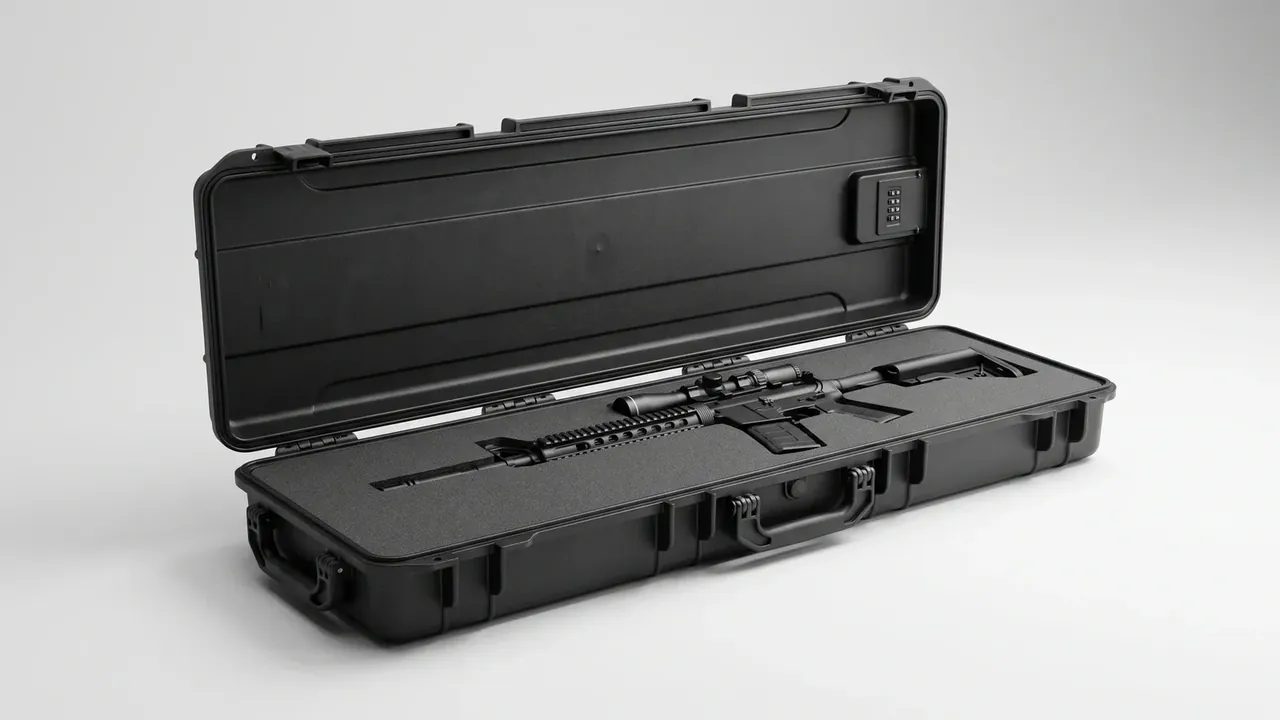
Once the batch is set, apply GB/T 2828.1 level II, single sampling. Each class carries its own acceptance quality limit: 0.25 critical, 1.5 major, 4.0 minor; a shared limit lets minor defects decide the batch.
| Batch size | Sample | Critical Ac/Re | Major Ac/Re | Minor Ac/Re |
|---|---|---|---|---|
| 91 to 150 | 20 | 0/1 | 1/2 | 2/3 |
| 151 to 280 | 32 | 0/1 | 1/2 | 3/4 |
| 281 to 500 | 50 | 0/1 | 2/3 | 5/6 |
| 501 to 1200 | 80 | 0/1 | 3/4 | 7/8 |
Destructive checks sit outside the count: three units for the 1.2 m six-face drop, two for the static stack, from three cavities. First-article inspection covers every cavity in full; patrol takes five units every two hours on three key items.
3. Defect Classes and Verdict Rules
Classify before writing dispositions: A covers seal failure, latch breakage and wall thickness below the limit; B covers dimensional overshoot that still assembles; C covers colour, flow marks and marking offset.
A concession is not a verbal yes: cap the quantity, the window and the use, 30 days at most, and escalate two consecutive concessions on one defect into a supplier review. Concession records deserve their own file: a pistol storage case showing the same concession twice is usually showing mould wear.
Rejection needs evidence too: failed list, sample numbers, raw readings. Objections are due in five working days; the inspector answers to neither buyer nor supplier.
4. Test Reports and Retention Periods
A report is worth the readings it preserves: report number, sample-to-batch link, a verdict per item, gauge numbers with calibration dates, two signatures.
Retention follows use: six years for routine batches, ten where the project demands it, plus the destination country's rule. Paper and electronic sets are both kept, indexed by batch, retrievable in three minutes.
After a mould repair the old report is marked void rather than destroyed and the new one renumbered; one mould with two live verdicts is the hardest gap to audit.
5. Failures, Re-inspection and Disposition
A failed batch is quarantined, red-tagged and stored apart. Re-inspection doubles the sample and covers the failed item plus what it affects: wall thickness brings the stack test, sealing brings lid flatness.
Two consecutive failures move the supplier into review: written cause analysis in seven working days, then a verification batch at tightened sampling, then three clean batches before normal sampling returns.
Disposition follows the class: a minor overrun is sorted and released in three working days, a major defect needs a concession form and re-check in five, a critical defect quarantines the batch for a full check in ten. Pass rate, concession rate and re-inspection rate belong on a monthly scorecard.
Conclusion
An acceptance standard is measured by how easily a third person reproduces each line: the check and its gauge, the batch and its sample, the defect class and who signs it off, the paper kept for the stated years. Do that, and a pistol storage case acceptance standard starts deciding batches.
This article discusses only the container (case body) side of specifications and design intent, and does not cover any handling, loading or use of the contents.
Related Reading
- Sizing a pistol storage case
- How a pistol storage case is built
- Routine checks and replacement lines
- Pistol Case Procurement: Quotes, MOQ and Lead Time
Related Products
- 8 Series — Gun Cases; Military Equipment Cases; Camera Equipment Cases; Drone Cases; Watch Cases; Knife Cases; First Aid Cases; Electronics Equipment Cases
- WL8-2812 PP Gun Case — model WL8-2812
- All protective cases and toolboxes: 7 series, 158 models