

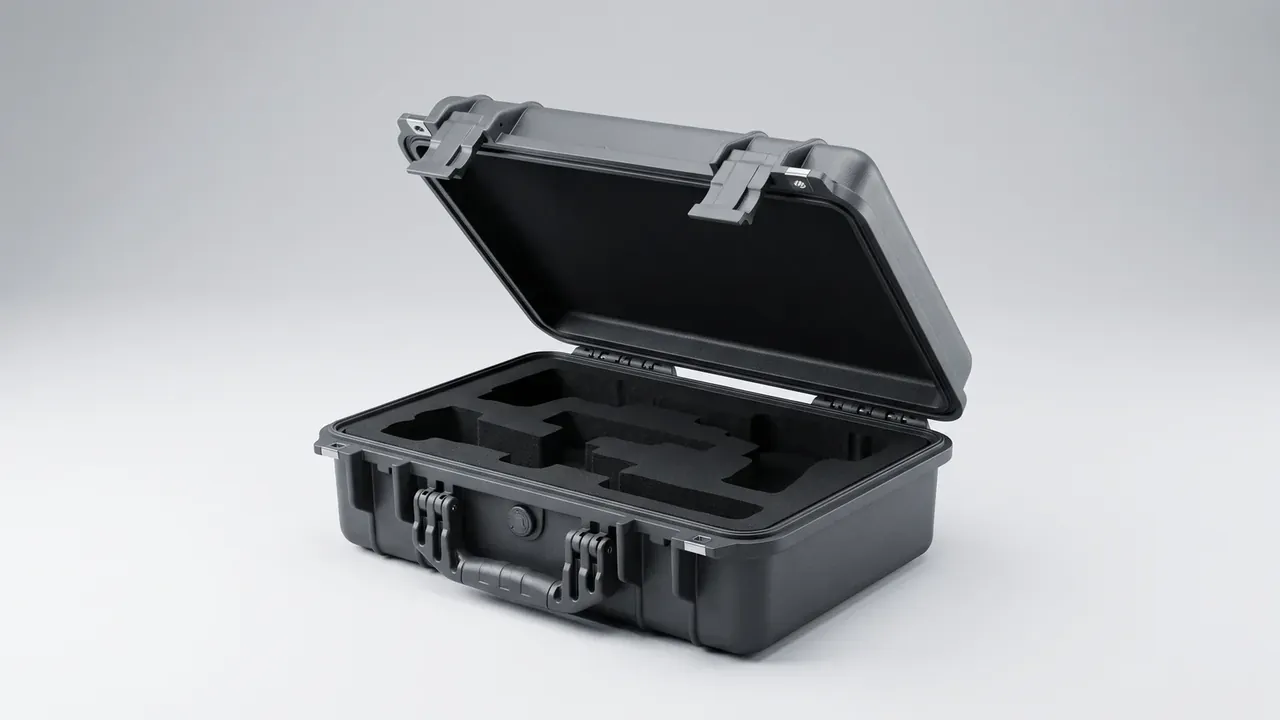
Quick answer: Judge a die cut insert by three numbers you can measure on the bench: a 3 mm land between adjacent cuts, a 2 mm bridge left uncut, and a nesting yield of 78% to 85%. Those three decide how far a part travels on a rough road, and how much die cost lands on each unit.
Table of contents
- Where a Plastic Case with Die Cut Foam Starts to Fail in Transit
- Land and Bridge Widths That Set Nesting Density
- Cut Angle and Nesting Yield Behind the Die Cost
- Proof Actions for Sample Lead Time and Die Life
- FAQ
1. Where a Plastic Case with Die Cut Foam Starts to Fail in Transit
Last winter a batch of 1.8 kg machined aluminium parts rode 1180 km by box van at -12 °C overnight. On opening, three parts had shifted 6 mm as a block, denting a locating face by 0.15 mm. Nothing was lost, yet all 300 went back for inspection.
Pulling the insert out showed the cause: the die line sat too tight at one corner, leaving a 0.9 mm bridge, and the foam tore apart within hours of vibration. It started in the layout, not at the wall.
| What you see | Usual cause | Measurable check | Bench test |
|---|---|---|---|
| Parts shift as a block | Bridge too narrow | 2 mm bridge | Bend a corner |
| Parts sink locally | Base foam too thin | Base not under 25 mm | Caliper pocket to case floor |
| Crumbling pocket edges | Cut angle too steep | 15° bevel, clean edge | Thumb along the wall |
| Part lifts with the insert | Land narrower than blade | 3 mm land | Feeler between pockets |
None is fixed by a thicker wall, which is why a plastic case with die cut foam deserves the same scrutiny as the shell.
2. Land and Bridge Widths That Set Nesting Density
The land is the foam between two adjacent cuts; the bridge is the uncut ligament between pockets. A plastic case with die cut foam is most often cheapened here: squeeze the land to 1.5 mm and the foam, softened at 40 °C in a van, tears under its own weight.
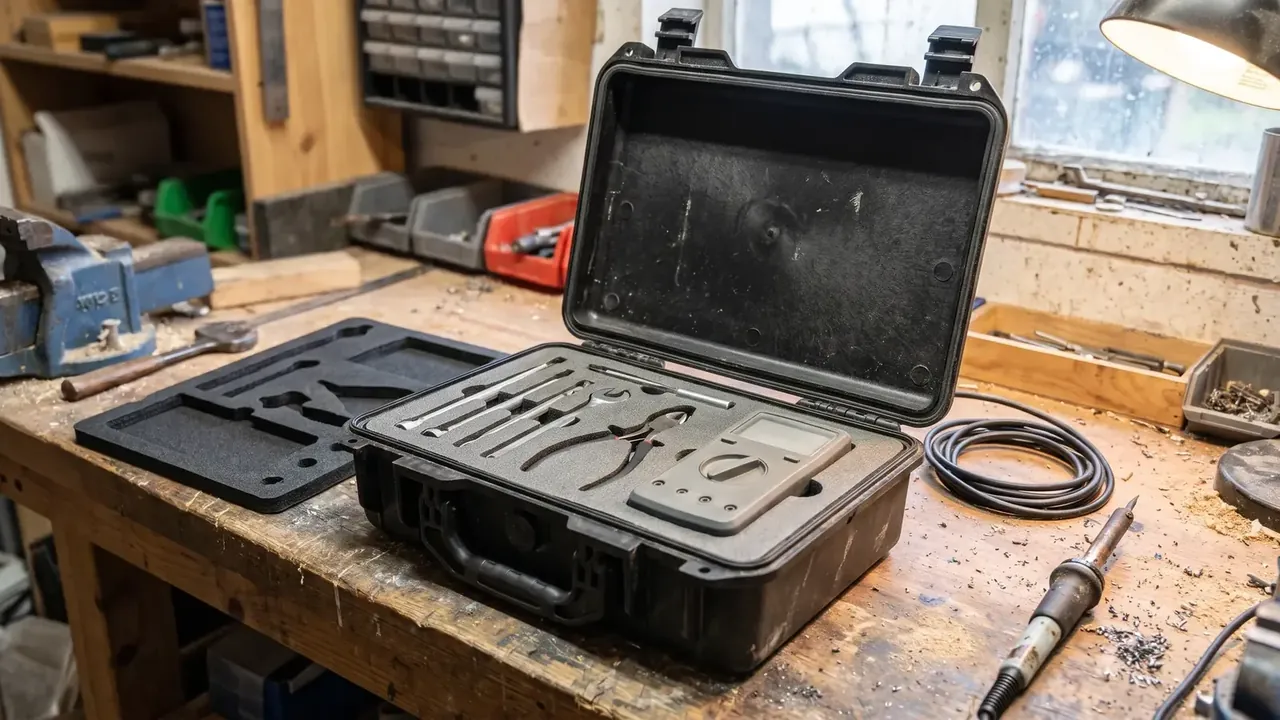
Two samples came from one 30 mm EVA block. The 3 mm land and 2 mm bridge version carried the 1.8 kg part through ten drops from 1.2 m with light bruising; the 1.5 mm land version cracked to the pocket floor on the third. A 15° bevel leaves a slanted wall fingers can pull against; a 90° cut grips until you rock the part twice, and those rocks are where movement begins. Bridge width also stiffens the sheet, so the insert behaves like one board. Neither 3 mm nor 2 mm is a standard; both are calculated minimums. Below 2 mm the break is brittle and flat, above it the foam tears with filaments, so the break face shows the state of the die.
3. Cut Angle and Nesting Yield Behind the Die Cost
A 600 × 400 mm die is quoted near 2600 CNY: 8.7 CNY per unit over 300 pieces, 0.87 CNY over 3000. In the price of a plastic case with die cut foam, that charge is usually folded into the foam rate and never shown.
| Parameter | Normal range | What breaking it costs | Who pays |
|---|---|---|---|
| Cut angle | 15°, bevel ground | Blade grips, part lifts out | Buyer, rework hours |
| Nesting yield | 78% to 85% | Under 78%, foam use rises 8% | Both, per unit |
| Die life | 5000 strokes | Edge dulls, mouth fuzzes | Supplier, new die |
| Sample lead time | 3 days to first article | Squeezed to 1 day, too few trials | Buyer, article risk |
On one 1000 × 2000 mm sheet, 78% yields 12 sets and 85% yields 13. If the foam rate on a plastic case with die cut foam sits well below market, the supplier is probably running above 90% yield with bridges under 1 mm.
Die life of 5000 strokes is where a steel rule die on EVA turns over: the cut face goes glossy to matte and burr height climbs from 0.05 mm to 0.2 mm. That figure never appears on a quotation.
4. Proof Actions for Sample Lead Time and Die Life
Three days is a sane rhythm: day one for drawings, day two for the die and a trial stroke, day three for loaded drop and inversion checks. A plastic case with die cut foam promised in 24 hours has usually skipped day three.
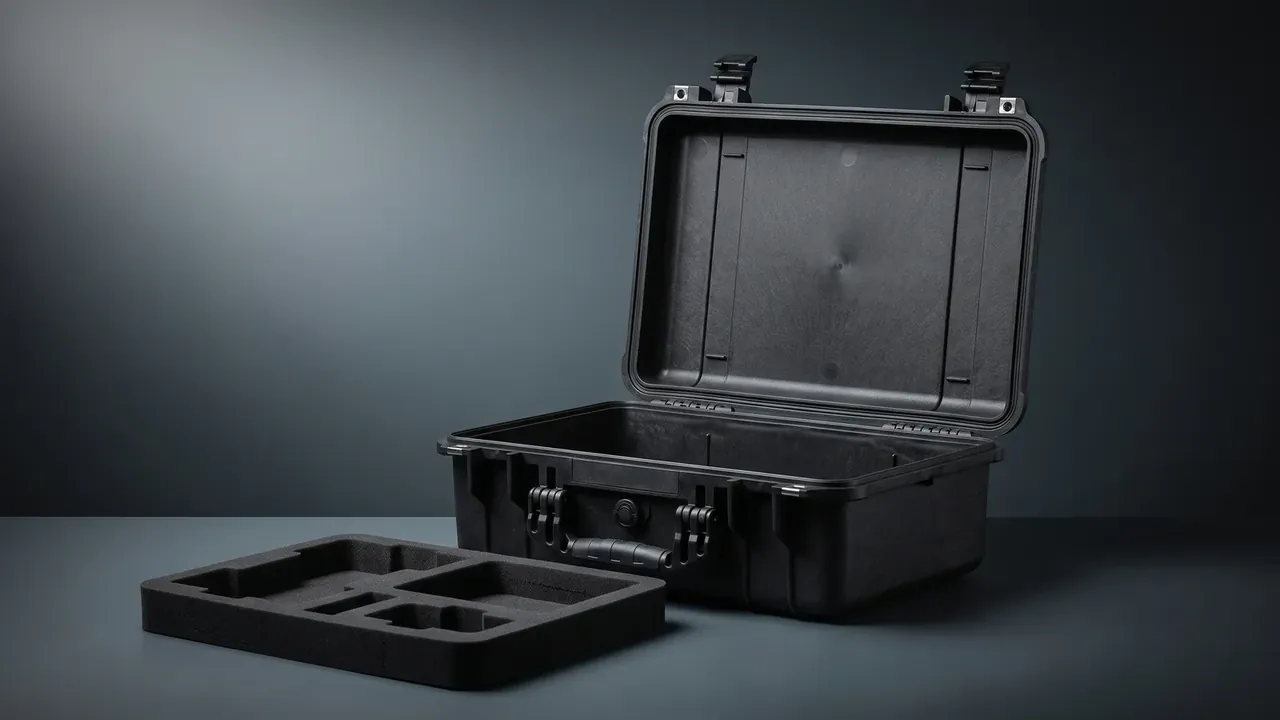
Five bench actions:
- A 3 mm feeler that enters between pockets means the land is cut through
- Base foam under 25 mm from pocket floor to case floor is a reject
- Loaded and inverted for 30 seconds, no part may slide out
- A thumb that catches on the wall means a dull edge
- A die stroke count above 5000 means a new die
Acceptance of a plastic case with die cut foam was never about appearance.
Conclusion
Movement like this reads as a layout bill in hindsight and a few millimetres of compromise beforehand. Put a 3 mm land, a 2 mm bridge and a 15° cut angle on the drawing, then hold the die to accuracy and stroke count. The difference in a plastic case with die cut foam is not foam colour but whether those numbers survive to stroke 5000.
This article discusses only the container (case body) side of specifications and design intent, and does not cover any handling, loading or use of the contents.
Related Reading
- How foam is actually cut
- Choosing between foam cutting methods
- What to look at during a showroom visit
Related Products
- 8 Series — Gun Cases; Military Equipment Cases; Camera Equipment Cases; Drone Cases; Watch Cases; Knife Cases; First Aid Cases; Electronics Equipment Cases
- WL8-2812 PP Gun Case — model WL8-2812
- All protective cases and toolboxes: 7 series, 158 models