

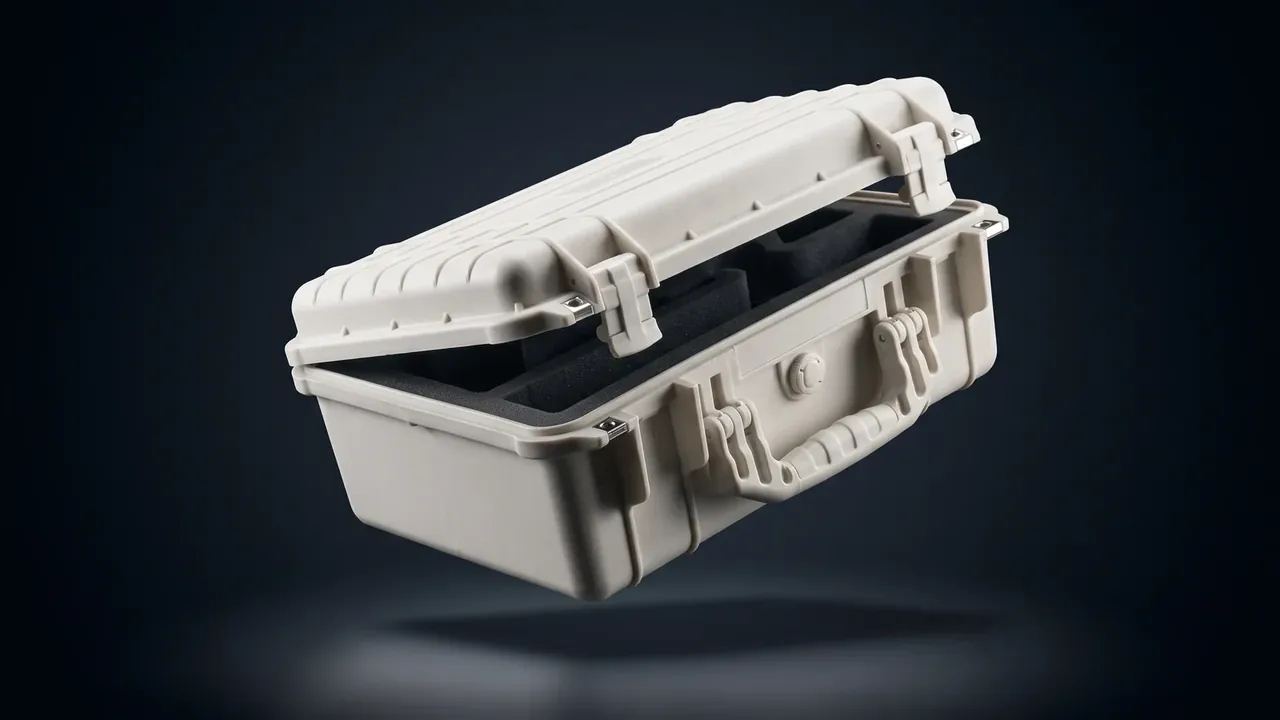
Quick answer: Four numbers settle most of it for a plastic case with handle: a 30 kg static pull on the handle root, 6 mm of latch engagement, 2.5 mm of base deflection after four stacked layers, and a 48-hour salt fog result. Each is measurable with a weight, a feeler gauge, a straight edge and a fog chamber.
Table of contents
- What the four checks on a plastic case with handle are
- Check one: the handle root under load and fatigue
- Check two: latch count and engagement depth
- Check three: stacking layers and base deflection
- Check four: cold, salt fog and drop
- Turning four checks into one sample sheet
- FAQ
1. What the four checks on a plastic case with handle are
The handle is the most underrated part. It takes the weight plus the sway of walking.
| Line | What to look at | Pass value |
|---|---|---|
| Handle | Root thickness, rivets, clearance | 30 kg static, 1 mm set |
| Latch | Count, engagement, force | 6 mm engagement, 0.5 mm gap |
| Stacking | Base after four layers, 48 hours | Centre sag under 2.5 mm |
| Environment | Handle, hardware after cold and fog | No crack at -25 °C |
The order follows failure. The handle goes first, because on a plastic case with handle the load lands on two roots a few tens of square millimetres wide. Latches go second, as repeated closing wears them faster than structure fatigues. Stacking comes third, since a base problem surfaces two weeks into storage, after the goods ship. Environment comes last, because 48 hours of fog stands in for half a year in a damp warehouse. One sample exposes four return reasons in two hours, and the order cannot be swapped: rust hides root cracks.
2. Check one: the handle root under load and fatigue
Nine handle failures in ten start at the root, not the grip.
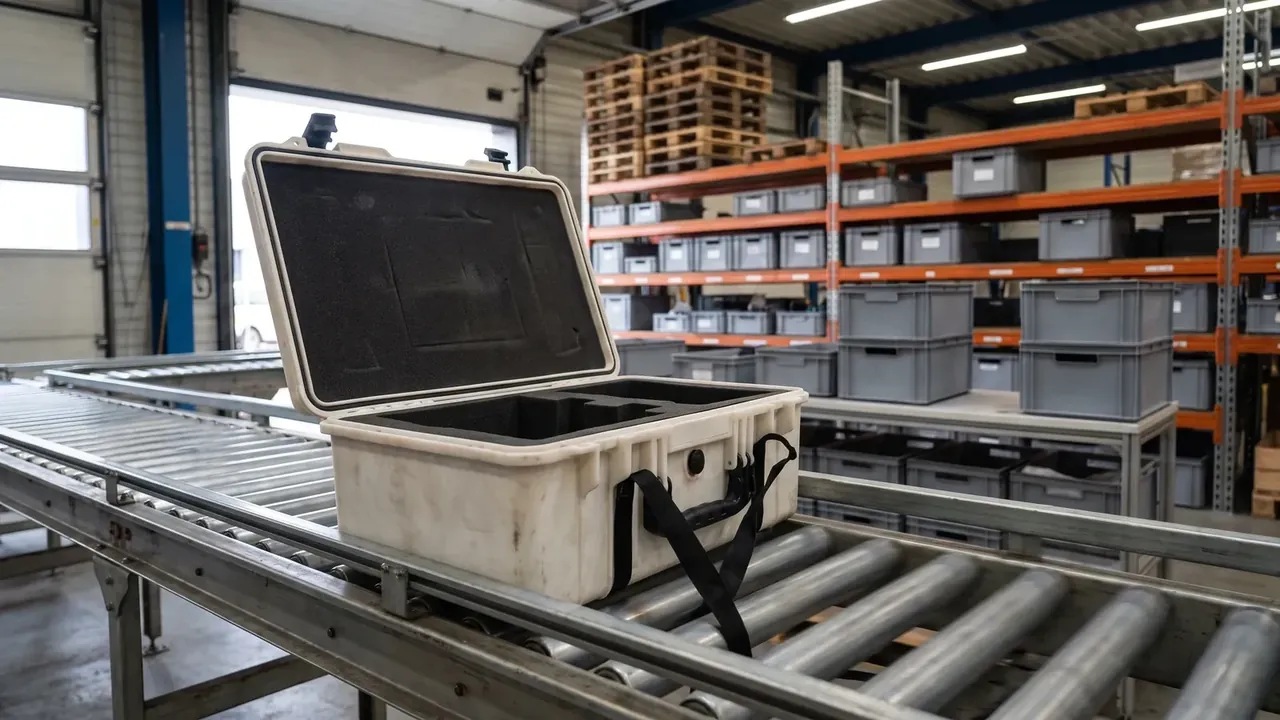
Load 30 kg, pass a bar through the handle, hang ten minutes, measure the gap between grip and body. Past 1 mm of set the root has yielded. An injection moulding needs 4 mm at the root; a 3 mm root fails the first hang.
Fatigue is closer to real use: swing ±30 degrees for 3000 cycles, feel the root every 500 for whitening, the sign that chains align before a crack. A one-piece handle holds better than a riveted one, which adds a stress point.
Grip clearance matters: a gloved hand needs 25 mm, or workers carry the plastic case with handle by its rim.
3. Check two: latch count and engagement depth
Position matters more than count. Under 1 m, two symmetric latches are enough; past 1.2 m, add one in the middle.
- Engagement: close the latch, slip in a feeler gauge; under 6 mm it pops on impact;
- Closing force: one hand to close, two to open, is the right feel;
- Tongue: replaceable on its own, or a whole latch must be scrapped;
- Corners: a radius at the seat, since a square transition starts cracks.
The tongue breaks most and is ignored most; whether it swaps alone decides repair or scrap.
4. Check three: stacking layers and base deflection
Stacking tests the base, not the lid; many samples have a thick lid over a 2.5 mm floor.
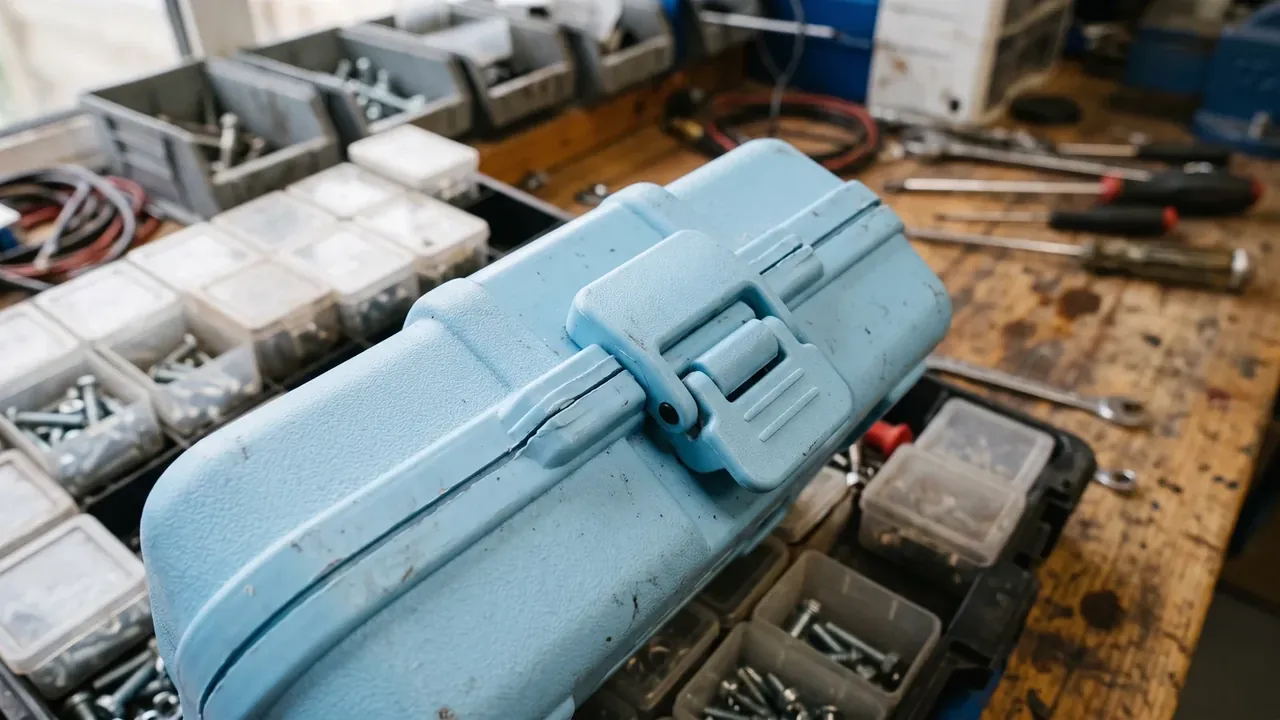
Load three empty cases with one full 25 kg case on top, leave 48 hours, gauge the base centre. Past 2.5 mm total, or 1 mm set after a day of rest, the case cannot be quoted at four high. The figure drifts with temperature: at 35 °C a warehouse loses a layer, and summer overflow traces back to racks planned on winter data.
5. Check four: cold, salt fog and drop
Environment is skipped first because it costs time, and without it you trust a report.
| Item | Condition | Watch | Pass |
|---|---|---|---|
| Cold drop | 4 hours at -25 °C, 1 m on a corner | Corner, handle root | No crack, handle on |
| Salt fog | 48 hours neutral fog | Rivets, springs | No red rust, free |
| Hot stacking | 48 hours at 35 °C | Base centre | Sag under 3 mm |
Cold and drop must run together, because a case leaving a -25 °C chamber warms fast and the first 3 minutes are the least tough window. Drop it then and thin walls show; drop it later and almost anything passes.
6. Turning four checks into one sample sheet
One page, five columns, a number in every cell.
- Handle: 30 kg static for ten minutes, record set;
- Latches: engagement and joint gap on three units;
- Stacking: 48 hours at four layers, record sag and set;
- Environment: cold drop and 48-hour fog, photographed.
Once filled, the difference between one plastic case with handle and another sits on paper, and what remains is a trade: 1 mm sag for a lighter body, or a thicker floor for fewer layers. Keep a sealed sample for arrival.
Conclusion
Four checks confirm one thing: whether a plastic case with handle keeps margin at the points pulled hardest. The handle and latches decide if it can be lifted with confidence; stacking and environment decide if it can be piled. Buying a plastic case with handle means buying the load maths behind the handle, not the handle itself.
This article discusses only the container (case body) side of specifications and design intent, and does not cover any handling, loading or use of the contents.
Related Reading
- Gun case selection guide
- What to check in a showroom visit
- Knife case selection guide
- Rifle case selection guide
- Military box selection guide
Related Products
- 8 Series — Gun Cases; Military Equipment Cases; Camera Equipment Cases; Drone Cases; Watch Cases; Knife Cases; First Aid Cases; Electronics Equipment Cases
- WL8-2812 PP Gun Case — model WL8-2812
- All protective cases and toolboxes: 7 series, 158 models