

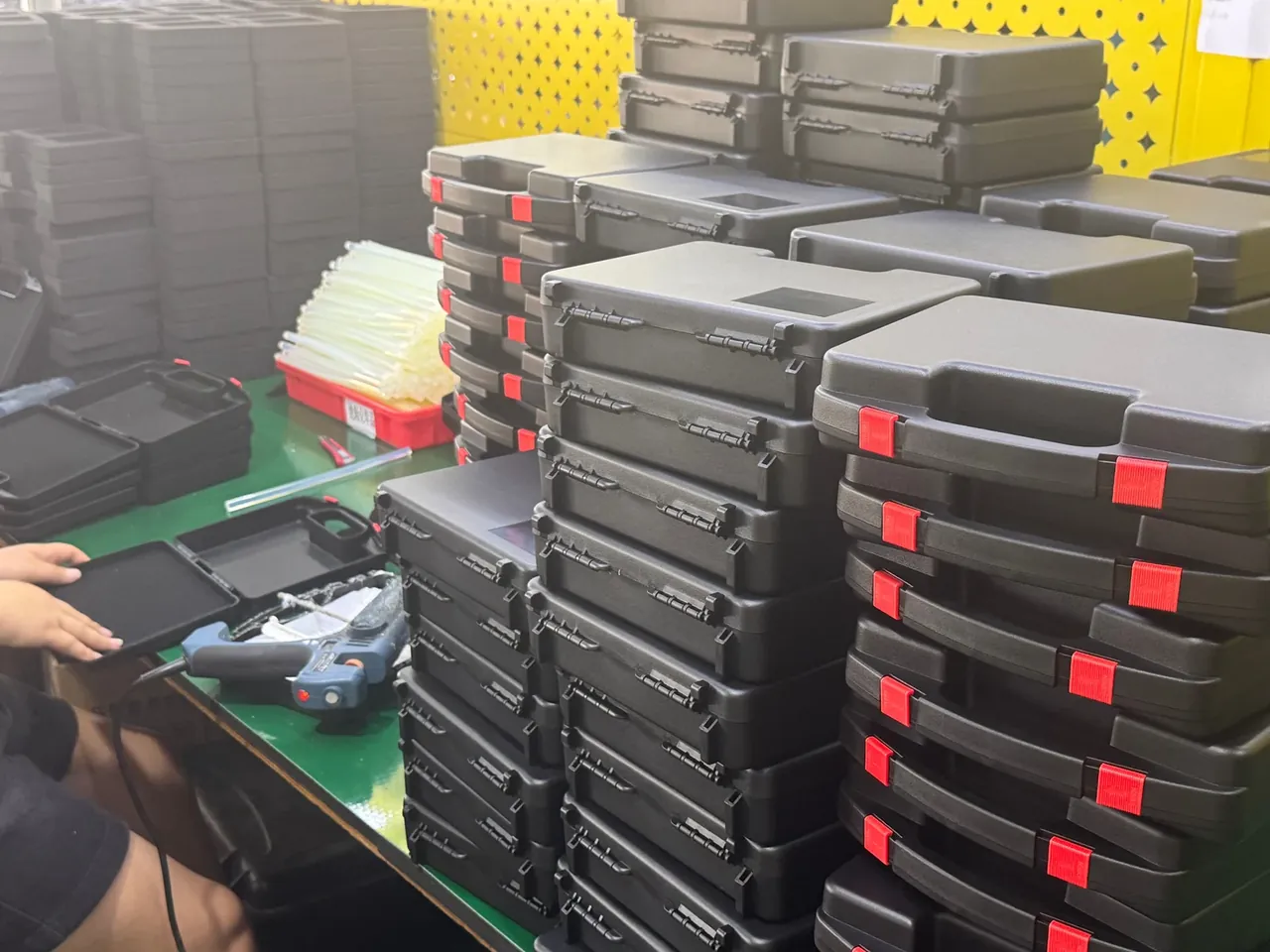
Quick answer: A plastic tool box with compartments succeeds or fails on one call: cells that follow the trade, or cells that follow part size. One shared box, sampled three times, shows slot pitch cutting eight dividers to ten.
Table of contents
- Why a plastic tool box with compartments splits by trade
- Electrician cells: 24 is a ceiling, not a target
- Plumbing and mechanic cell differences
- Divider travel and slot pitch
- Counting and handover: one cell, one item
- Sampling: eight dividers settled at ten
- FAQ
1. Why a plastic tool box with compartments splits by trade
The box was shared: day-shift electricians, swing-shift plumbers, night-shift mechanics.
Dividing starts with people. A cell changing hands three times a day must open wide enough for a gloved pinch; one with a single owner can close onto the part. A plastic tool box with compartments zoned by part size is cheapest to mould and first to fail at handover.
| Trade | Cells | Clear size | Parts | Motion |
|---|---|---|---|---|
| Electrician | Front left, 6 | 58 by 38 mm, 32 deep | Terminals, fuses | Two-finger pinch |
| Plumbing | Middle, 5 | 76 by 52 mm, 45 deep | Tape, washers | Full-hand grab |
| Mechanic | Rear right, 4 | 96 by 66 mm, 60 deep | Bolts, cotter pins | Sideways reach |
| Shared | Lid, 3 | 40 by 40 mm, 14 deep | Marker, labels | Lift and take |
Motion orders the table, not size: it fixes the opening, and the opening sets the divider count.
2. Electrician cells: 24 is a ceiling, not a target
Electrician parts are the smallest, so round one kept cutting. Dividers fell from 1.8 to 1.1 mm and the middle three bowed 0.8 mm off the mould.
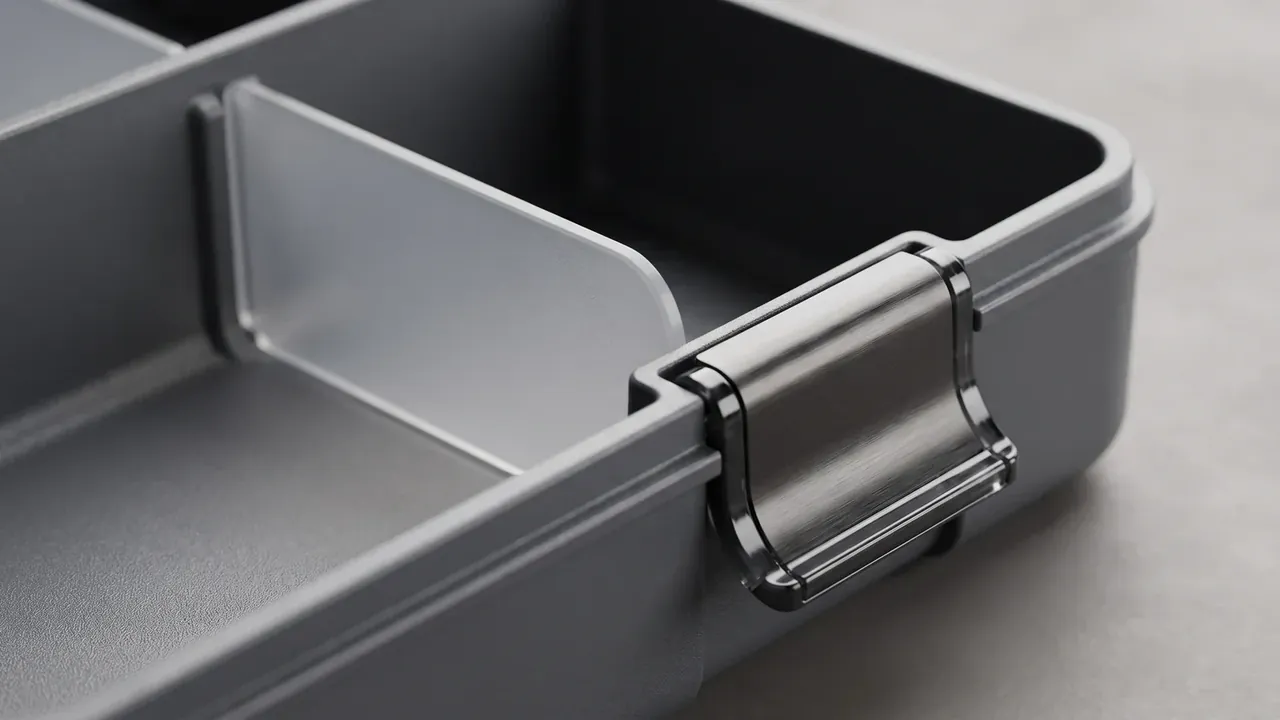
At a 12.5 mm pitch, seven slots across and four down give 24 cells at most, smallest 58 by 38 mm.
Eighteen terminal types cover one shift, so 24 cells hold the lot with six spare.
The ceiling is a finger: under 46 mm clear width, two fingers crowd.
3. Plumbing and mechanic cell differences
Plumbing parts are bulky and taped, mechanic parts heavy and oily. A plastic tool box with compartments cannot copy the electrician layout, or clamps lie sideways and bolts dish the floor.
- A 1.5 mm floor groove stops a taped roll rolling next door.
- Plumbing cells run 76 by 52 mm, so five clamps leave in one grab.
- Mechanic cells run 96 by 66 mm over two ribs and hold 0.8 kg of bolts.
- One through-slot two cells wide takes 120 mm cotter pins flat.
Past 110 mm a pin must cross a cell, and a divider in the way forces it in at an angle that scrapes the neighbour.
One cell per part is the ideal; two cells per part is the job.
4. Divider travel and slot pitch
Dividers drop into side-wall slots: pitch 12.5 mm, depth 3.5 mm, seated 6 mm below the rim.
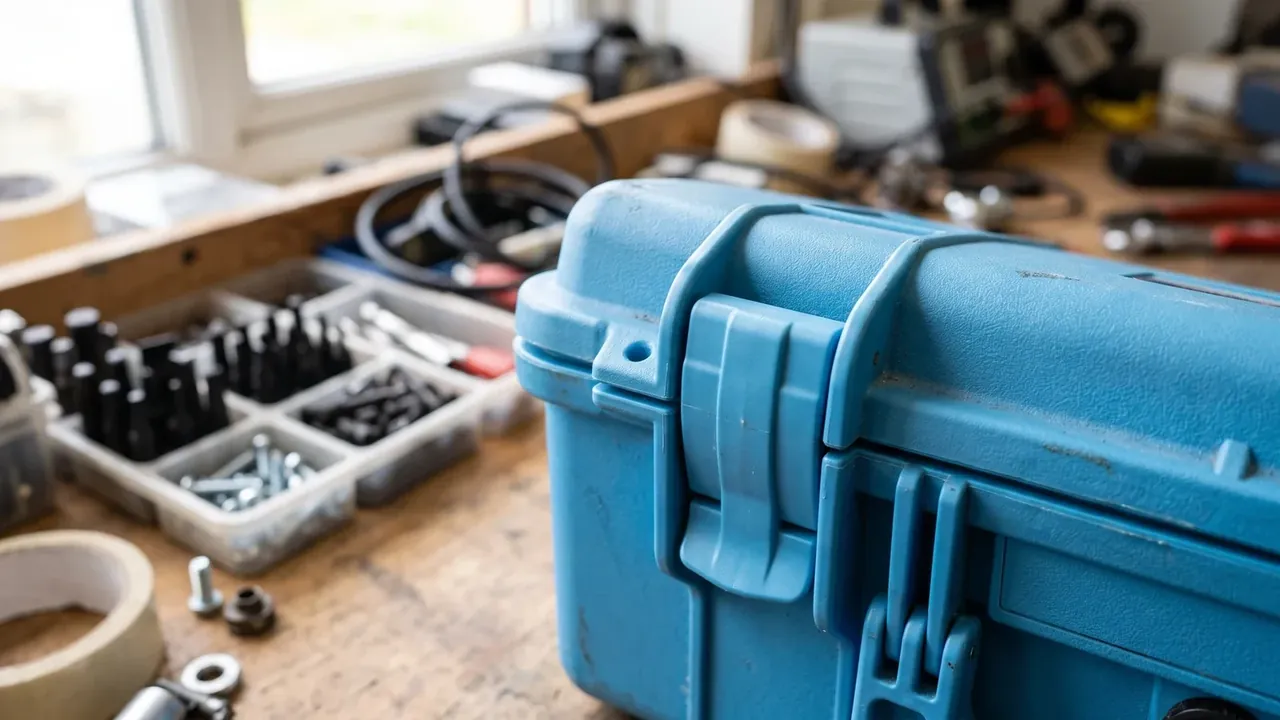
Four widths come out of one body.
| Slot position | Width | Use | Dividers |
|---|---|---|---|
| Adjacent, 12.5 mm | 58 mm | Terminals, fuses | 8 |
| One skipped, 25 mm | 83 mm | Clamps, washers | 5 |
| Two skipped, 37.5 mm | 108 mm | Tape, nipples | 3 |
| Three skipped | 133 mm | Cotter pins | Through floor |
Adjustable is not adjusted: set at packing, moved twice a year. Past 40 insertions the slot mouth furs up and needs a thumb to seat.
5. Counting and handover: one cell, one item
Handover gets 90 seconds, so the counting method decides whether a shared box survives.
- Number every cell on the floor, where nothing covers it.
- Fix a quantity per cell, 20 terminals or 5 clamps, so a gap shows.
- Open the lid flat, each hand checks half, both sign the label inside.
Counting 21 cells fell from 41 seconds to 16.
Slow counting is rarely slow people; it is cells that say nothing.
6. Sampling: eight dividers settled at ten
Round one used 8 dividers and 14 cells. Clamps would not fit a 58 mm cell, so they lay on their side and the lid pressed a line into them. Round two went to 11 dividers and 21 cells, then a 1.2 m six-face drop; the third divider on the right climbed half out of its slot.
Round three pulled back to 10 dividers and 19 cells. Slot width opened from 3.5 to 3.65 mm to absorb 0.3 percent shrinkage after two hours at 60 °C, two mechanic cells merged into a through floor, three lid cells took a 2 mm chamfer. A second drop left every divider seated. The round also split divider height by trade, 32, 45 and 60 mm, so tall cells meet the liner first and the divider takes the load. The price: dividers no longer swap zones and the spares list grows.
Over-dividing costs most: one more divider, one more slider, 0.6 CNY a unit, 60,000 CNY across a 100,000-piece run.
Loading the real kit once beats a mould change.
Conclusion
A plastic tool box with compartments is not a body sliced into small boxes; the cells map people first, parts second. This sample went from 8 dividers to 10 and 21 cells to 19 by aligning motion, wall thickness and slot pitch. Before cutting a mould for a plastic tool box with compartments, answer three questions: who picks, how often, and who signs for it.
This article discusses only the container (case body) side of specifications and design intent and does not cover any handling, loading or use of the contents.
Related Reading
- Hardware tool box layouts on site
- Trolley tool cases on rough ground
- Fixing a tool case inside a vehicle
- Tool box organiser zoning
- Chest formats, lid height and door swing
Related Products
- 8 Series — Gun Cases; Military Equipment Cases; Camera Equipment Cases; Drone Cases; Watch Cases; Knife Cases; First Aid Cases; Electronics Equipment Cases
- WL8-2812 PP Gun Case — model WL8-2812
- All protective cases and toolboxes: 7 series, 158 models