

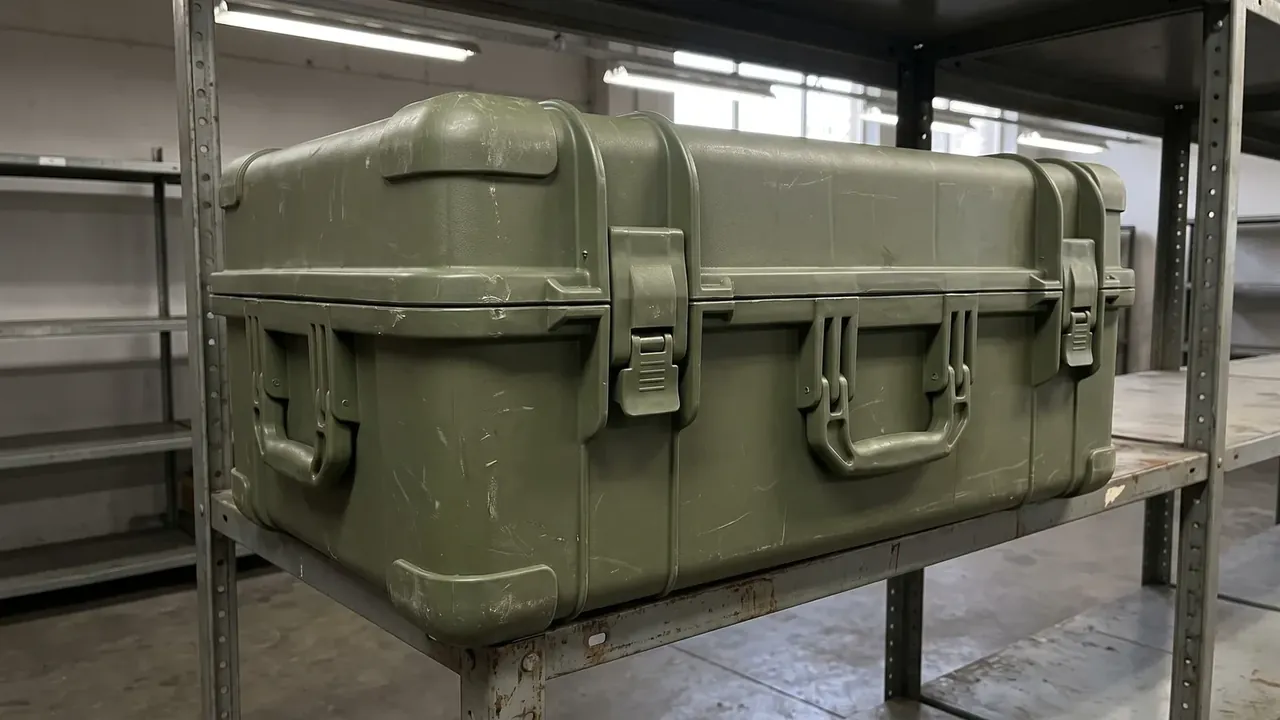
Quick answer: Portable blood glucose meter custom protective case colour control pairs a 2.0% masterbatch dose with a 42 mm gate offset to hold ΔE at 1.2 or less.
Table of contents
- Masterbatch lots behind a portable blood glucose meter custom protective case
- Where the lid-shell gate sits
- Colour-difference readings across sampled colours
- Re-checking the mould-parting seam offset
- Colour tolerance for the custom batch
- FAQ
1. Masterbatch lots behind a portable blood glucose meter custom protective case
Three colours on one order are hard not because of the tinting but because the masterbatch lot and the gate position must line up the parting seam across all three shell runs. The portable blood glucose meter custom protective case measures 300×210×95 mm outside, 265×180×65 mm inside, with a 3.2 mm wall; on a shell this thin, any scatter in the 2.0% masterbatch dose shows up as a shade shift on the lid. Sampling 3 colours × 24 pieces is not padding; it catches the drift between the front and the tail of the barrel. The lot is therefore the first lock on the appearance baseline, and a portable blood glucose meter custom protective case puts it on the top line of the order process card.
2. Where the lid-shell gate sits
The gate sits 42 mm from the rim, on the long side of the lid near the centre seam, and the flow lines and knit lines follow from that point. A 3.2 mm lid is unusually sensitive to gate position, and 42 mm is the step that lets all three colours travel the same flow length. The press is set at 23 °C / 50% RH, melt and mould temperatures logged on one card, and a colour change swaps only the masterbatch lot, never the gate. A portable blood glucose meter custom protective case files the gate coordinate with the mould, so the three colours share one parameter set instead of each being tuned alone.
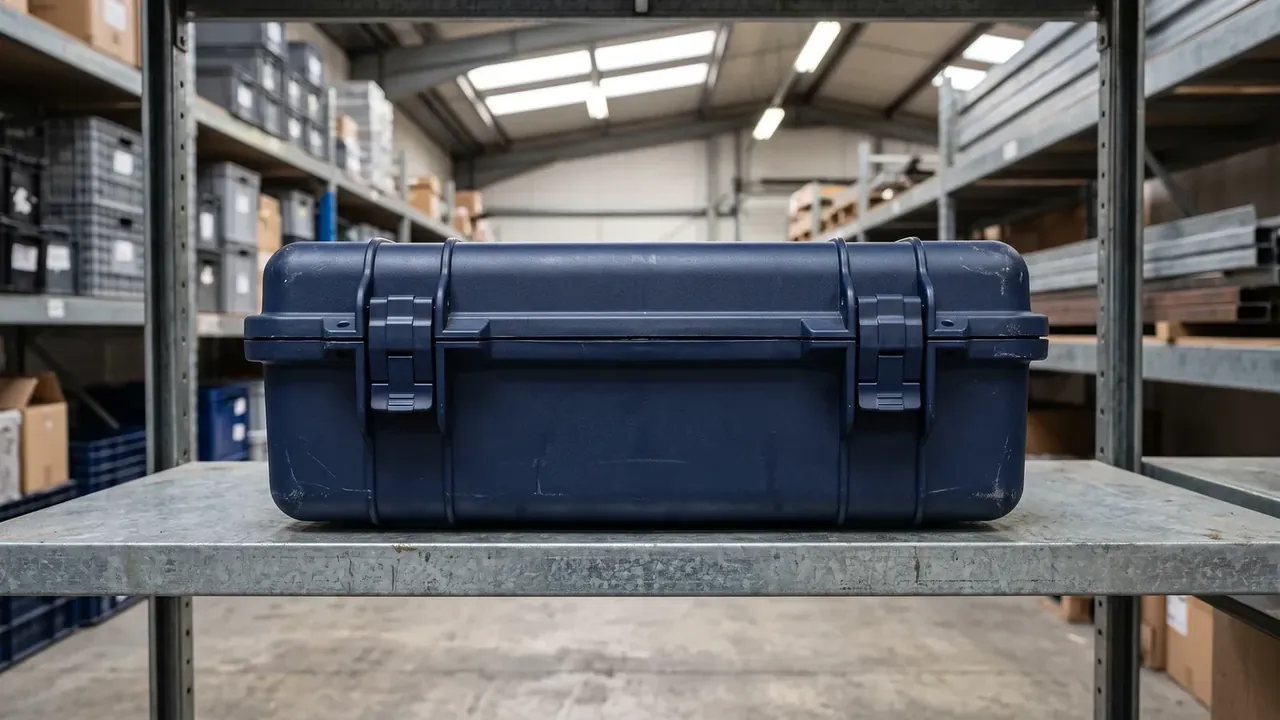
Seam offset on a portable blood glucose meter custom protective case is capped at 0.35 mm, measured as the left-right mismatch of the centre seam once the lid and body are closed. Two latches at 270 N each matter here: too little clamp force lets the seam gape and inflates the offset. With one gasket at 16% compression, reopen after checking against the IP65 conditions and confirm the seam has not shifted half a step through repeated latching.
3. Colour-difference readings across sampled colours
Each colour yields 24 pieces, and the difference is logged as ΔE using the largest gap between a sample shell and the sealed reference, not an average that would flatten the spread.
| Masterbatch step | Dose | Worst ΔE per colour |
|---|---|---|
| Lot A | 1.8% | 1.35 |
| Lot B | 2.0% | 1.06 |
| Lot C | 2.2% | 1.44 |
Lot B at 2.0% holds ΔE to 1.06, one step clear of 1.2; lot A runs pale and lot C runs dark, both crossing the line. A portable blood glucose meter custom protective case takes lot B as the order baseline and keeps the other two as tinting trends only.
| Sample number | First-piece ΔE | Last-piece ΔE |
|---|---|---|
| Pieces 1–8 | 0.94 | 1.02 |
| Pieces 9–16 | 1.00 | 1.06 |
| Pieces 17–24 | 1.03 | 1.06 |
Across 24 pieces ΔE climbs only 0.12, so the masterbatch is not settling at the barrel tail. If pieces 17–24 jump, the lot number is the first thing to audit.
4. Re-checking the mould-parting seam offset
Passing colour does not pass appearance; seam offset gets its own re-check after the lid has rested, on a card separate from ΔE.
The re-check stays on the same 23 °C / 50% RH bench, colour first then seam, because reversing the order lets handling carry the 0.35 mm reading away. Shells at 1.4 kg empty and 2.5 kg loaded are each latched and measured to see whether the clamp pulls the lid skew. The room condition does not change between colours, so all three compare under one environment. A portable blood glucose meter custom protective case matches the colour card to the offset card by sample number, and a missing card blocks release.
5. Colour tolerance for the custom batch
Closing out a whole portable blood glucose meter custom protective case batch means folding the ΔE and seam offset of three colours × 24 pieces onto one release sheet. The tolerance is set at ΔE 1.2, and a colour over the line is sent back alone rather than merged into the order appearance baseline.
| Colour reading | Masterbatch lot | Batch disposition |
|---|---|---|
| ≤1.2 | Lot B 2.0% | Into the order baseline |
| 1.21–1.44 | Lots A and C | That colour reworked alone |
| >1.44 | Unsampled lot change | Whole colour back to tinting |
There is no blend-the-colours row, because each of the three is tied to its own masterbatch lot and mixing them dissolves the baseline. Boundaries such as 1.4 kg empty, 2.5 kg loaded and 4800 cycles stay with the order, ready for the next run to reuse by colour.
Conclusion
On a portable blood glucose meter custom protective case, masterbatch lot and lid gate position are one paired set; move either and ΔE and seam offset drift in different directions. Five figures on one release sheet, 2.0% dose, 42 mm gate, 24 pieces per colour, ΔE 1.2 and 0.35 mm offset, say more about whether three colours form one order than a shade check ever does. A portable blood glucose meter custom protective case releases per colour, returning only the one that crosses the line rather than flattening the bias with an average. JUNZHIJIA files lot number and gate coordinate as a pair on these custom orders so repeat runs reuse them by colour.
Related Reading
- Medical diagnostic device hard case with custom foam
- Portable medical emergency equipment safety box
- Bespoke plastic protective case specs: size, wall thickness and load
- Foam lining: cushioning and custom fits for case interiors
Related Products
- 8 Series — Gun Cases; Military Equipment Cases; Camera Equipment Cases; Drone Cases; Watch Cases; Knife Cases; First Aid Cases; Electronics Equipment Cases
- WL8-2812 PP Gun Case — model WL8-2812
- All protective cases and toolboxes: 7 series, 158 models