

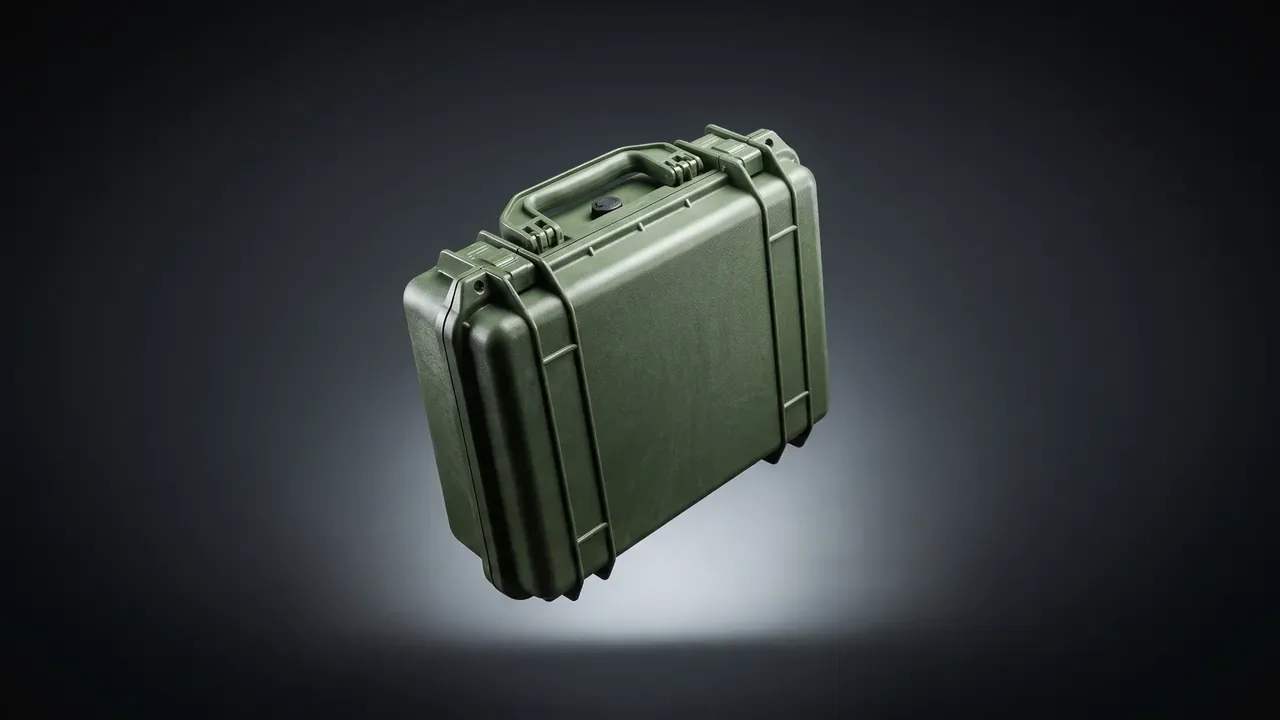
Quick answer: Unit price says little about a portable electronic equipment case. An 8 kg shell opened a thousand times a year costs more in one repair than it did to buy, so find the part that fails first and fund that part.
Table of contents
- Where the cost sits across four duty cycles
- Vehicle testing: the gasket is worn out by opening
- Substation inspection: one-handed opening and a tether point
- Broadcast sites: cable ports and temporary positions
- Docks and vessels: salt fog, lifting points, corners
- Folding rework cost back into unit price
- FAQ
1. Where the cost sits across four duty cycles
Buyers compare portable electronic equipment case prices line by line and rarely price what follows delivery. Four duty cycles break four different parts first: the lid gasket on a road test truck, the latches in a substation, the cable port at a broadcast site, the corners on a dock. Gasket failure is a spare part, latch failure costs a shift, a worn corner can cost the instrument.
| Duty cycle | Openings per year | First failure | Cost per incident |
|---|---|---|---|
| Vehicle road test | 900 | Lid gasket flat | Half a day lost |
| Substation inspection | 1400 | Latch force drops | One missed inspection |
| Broadcast site | 600 | Sleeve pulls out | One segment re-shot |
| Dock lifting | 200 | Corner worn through | One instrument flooded |
2. Vehicle testing: the gasket is worn out by opening
A road test crew opens its portable electronic equipment case four or five times a day for a data logger, a memory card or temporary power. At 220 working days and four openings a day, one spot on the lid rim is compressed almost nine hundred times.
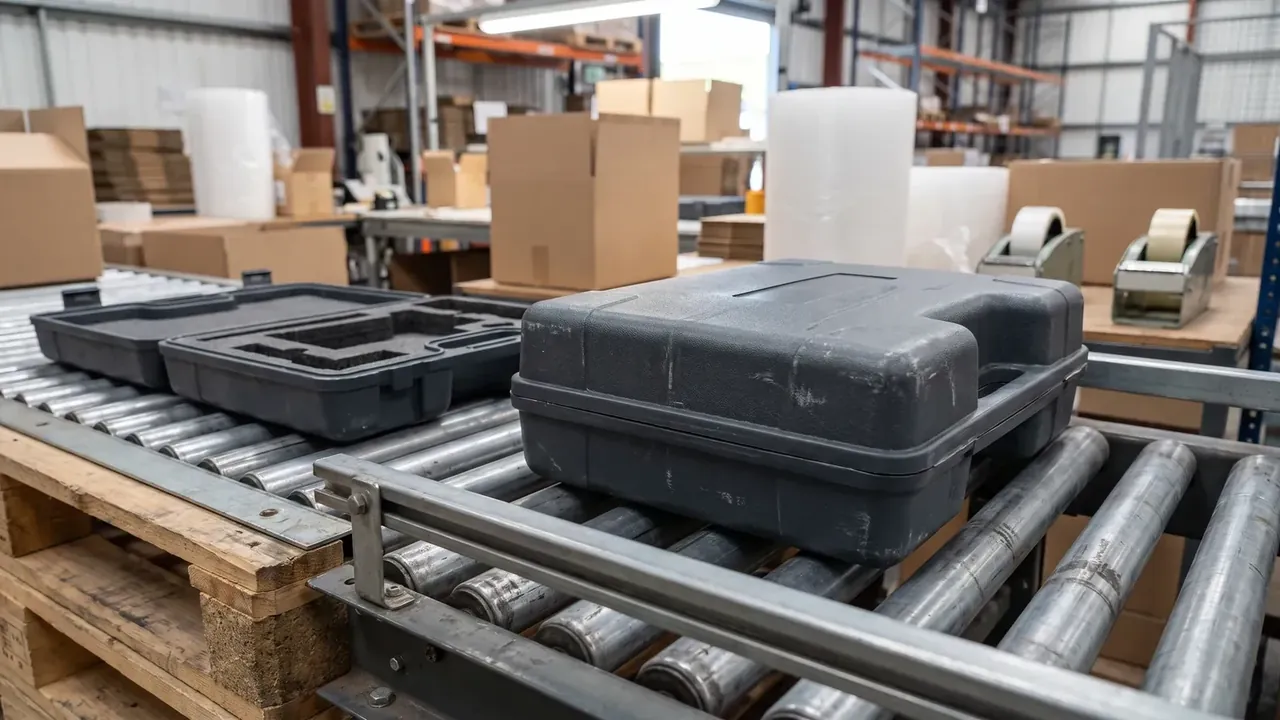
Gasket failure has an order: the rubber takes a permanent set, hardens in the cold, then leaves a crease at the lid corner that will not flatten.
A 12 mm continuous gasket cycled between minus 20 and 55 degrees Celsius keeps about seventy percent of its rebound after 18 months, so it is a consumable. The routine is two sentences long: wipe the rim before opening, run a hand around the seal before closing.
3. Substation inspection: one-handed opening and a tether point
Substation rooms have no clear bench, so an inspector holds a ladder with one hand and opens the case with the other.
Clamping force is measurable: a new plastic latch sits near 60 N and falls to roughly 35 N in two years, about the limit of one thumb; metal latches hold longer for 0.8 kg of extra weight.
4. Broadcast sites: cable ports and temporary positions
At a broadcast site the portable electronic equipment case holds patch cables, a monitor and a small switcher, so the lid stays open and cables leave through a port sized to the bundle with 1 mm of clearance.
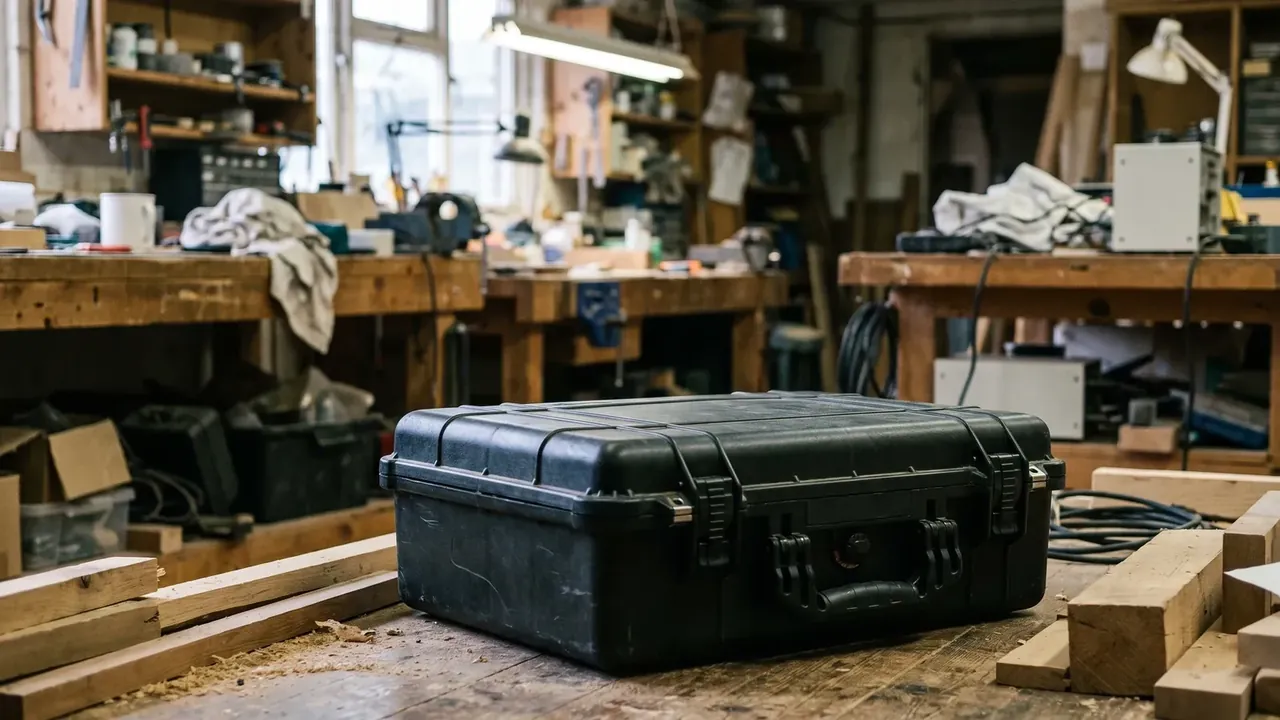
In that position the case becomes part of the rack, so the cable port is the thinnest link in the chain. If the sleeve pulls out under cable weight, rainwater follows the cable inside and nobody checks the bottom of the box. Placement fails more often: a case beside a speaker picks up low frequency, the monitor shakes, and the operator blames the signal before the position. That rework never appears in a datasheet, yet it raises cost per incident faster than a hardware fault. The field fix is a 20 mm rubber mat or a lighting stand. Six dollars of mat against a re-shot segment is an easy trade.
5. Docks and vessels: salt fog, lifting points, corners
Dock-side, a portable electronic equipment case has to survive salt fog and lifting. Neutral salt fog for 480 hours is the usual threshold, so hardware is passivated and hinge pins are 304 stainless.
A sling touches the corner over a few square centimetres, and after a few lifts the corner is notched, wall thickness dropping from 4 mm to just over 2 mm.
6. Folding rework cost back into unit price
Spread the rework across units and the upgrade order is obvious.
- Gasket: cheapest part, highest frequency
- Latches: mid-priced, decides whether the job finishes
- Cable port sleeve: cheap, and its failure means water
- Corner guards: one-time spend, cheapest over the case life
| Upgrade | Added cost | Rework avoided | Payback |
|---|---|---|---|
| Metal latches | 4 USD each | About 1.5 failed closures a year | Under a year |
| Spare gaskets | 2 USD each | One flooding event | First event |
| Corner guards | 3 USD per set | One shell replacement | Two years |
| Tether strap | 2.5 USD per set | One drop | First drop |
The four add under 12 USD against a repair bill above 45 USD, which is the procurement logic for a portable electronic equipment case: spend on structure, not after-sales.
Conclusion
The expensive part of a portable electronic equipment case never appears on the invoice. It sits in every opening and every repair that follows. A case costing thirty percent more up front often ends the third year cheaper.
This article discusses only the container (case body) side of specifications and design intent, and does not cover any handling, loading or use of the contents.
Related Reading
- Electronic equipment cases in lab, field and transit
- Configuring a protective case for field work
- How IP ratings are judged on ABS equipment boxes
- Inside an electronic equipment case: structure and process
Related Products
- 8 Series — Gun Cases; Military Equipment Cases; Camera Equipment Cases; Drone Cases; Watch Cases; Knife Cases; First Aid Cases; Electronics Equipment Cases
- WL8-2812 PP Gun Case — model WL8-2812
- All protective cases and toolboxes: 7 series, 158 models