

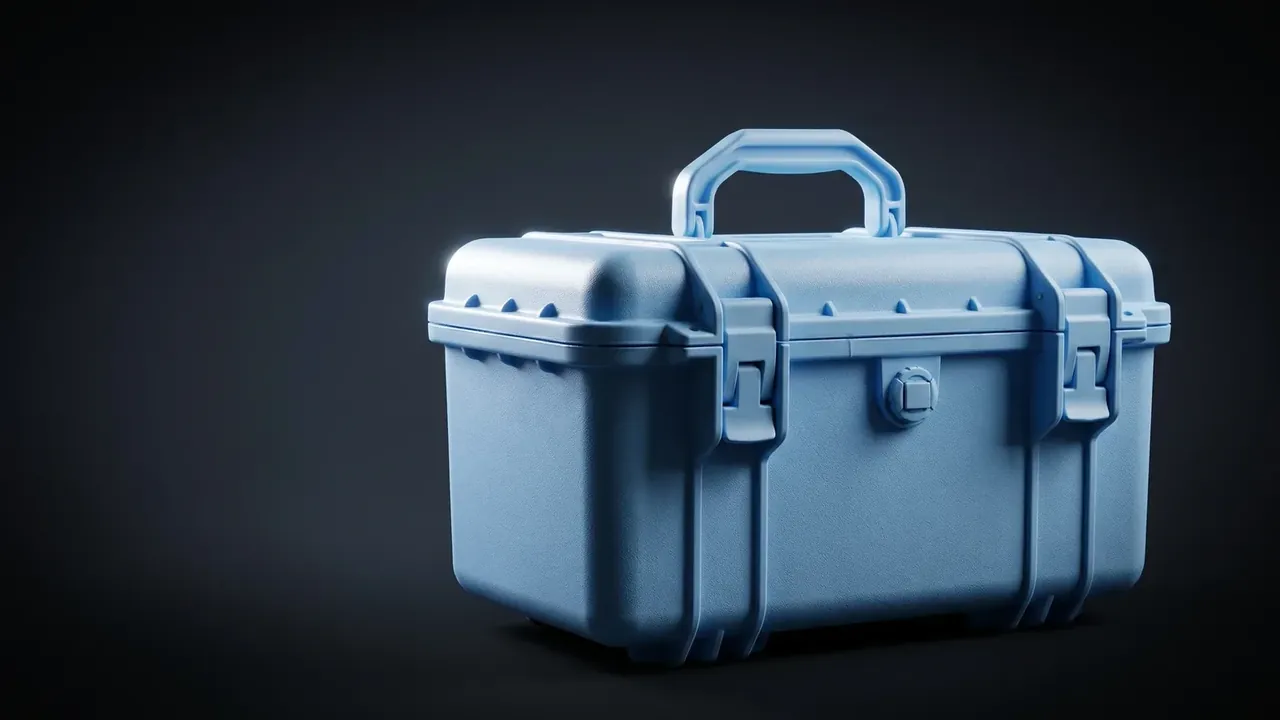
Quick answer:The first test in portable medical equipment case design is not how many kilos a handle can hang, but whether one hand stays steady after 15 min under a 12 kg load. The 3.2 kg shell and the 25 kg static rating sit at opposite ends of one set of dynamic loads, with the 90 mm inner arc and the 120 mm centre-of-gravity offset as the two figures a buyer can measure.
Table of contents
- Lifting Is Not Carrying
- Handle Shape and Palm Contact
- Measuring the Centre of Gravity
- Straps and Carry Systems
- One-Handed Lid Opening
- FAQ
1、Lifting Is Not Carrying
The easiest way to lose portability is to confuse lifting with carrying. A static hang test proves the short-term strength of a handle and the wall behind it; carried at walking pace, the load alternates with every step and by 15 min it is the base of the fingers that aches.
Portable medical equipment case design splits three states first: a 3.2 kg empty shell, 12 kg loaded with a unit and its probes, and close to 25 kg for a two-person lift. One handle serves all three, so its section is a compromise, and any hard edge under 30 mm leaves a mark past 15 min.
2、Handle Shape and Palm Contact
Contact area shapes a grip more than diameter does. Adult grip spans run 80 mm to 100 mm, so a 90 mm inner arc lets four fingers sit along the full width and spreads pressure over the knuckles.
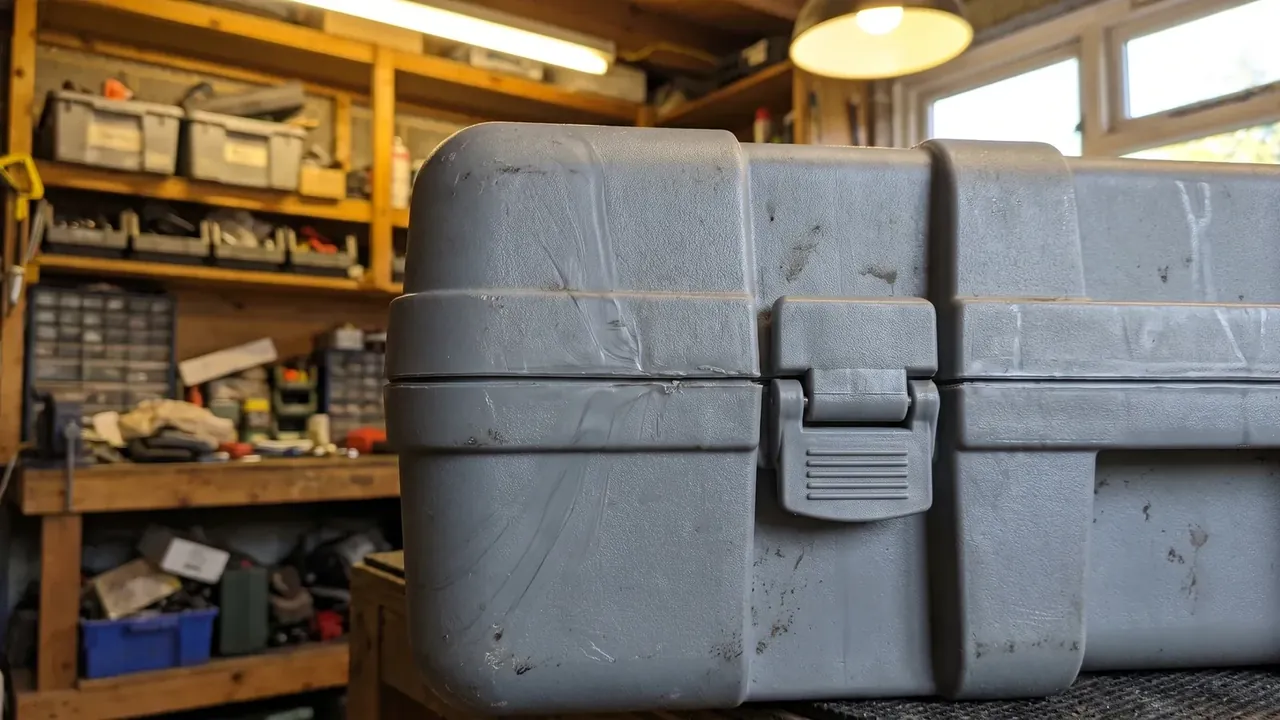
Worn corners say more about handling than the handle does: the hand pulls up while the corner strikes down, and a 4 mm bumper keeps the mark on the surface where a 2 mm corner wall would crack.
| Handle type | Where the load goes | Static reading | Usual failure |
|---|---|---|---|
| Moulded recessed handle | Through the wall into ribs | 25 kg, no deflection | Flash line frays at the arc |
| Riveted metal handle | Into four rivet points | Whitens past 30 kg | Rivets loosen, handle rocks |
| Webbing handle | Through stitching to the lugs | Stitching creeps at 15 kg | Stitch chafes through |
A moulded recessed handle dominates portable medical equipment case design because nothing can shear off in a drop; the price is an R3 radius, so no parting line sits where the hand closes. A riveted metal handle passes 30 kg but needs a backing plate inside.
3、Measuring the Centre of Gravity
When the centre of gravity leaves the geometric centre, the shell hangs tilted. Lay the empty case flat, draw a cross, roll it over a round bar front to back and left to right; the crossing of the two balance lines is the empty centre. Load it and repeat to read the shift.
Portable medical equipment case design caps that shift at 120 mm. Past it, a one-hand lift tilts the body 8 to 10 degrees and the wrist stops compensating on stairs. Offsetting 12 kg by 120 mm gives about 14 N·m, held for 20 min at most.
Two corrections exist: put the heaviest item under the handle, or put the handle on the projected centre, typically 15 mm to 25 mm off centre. Interior radii move it another 10 mm or so.
4、Straps and Carry Systems
A strap moves load from the fingers to the shoulder blade and lets the case swing at the hip. Width 50 mm is the dividing line: at 40 mm, 12 kg sits on one line under the collarbone and marks the skin within 10 min.
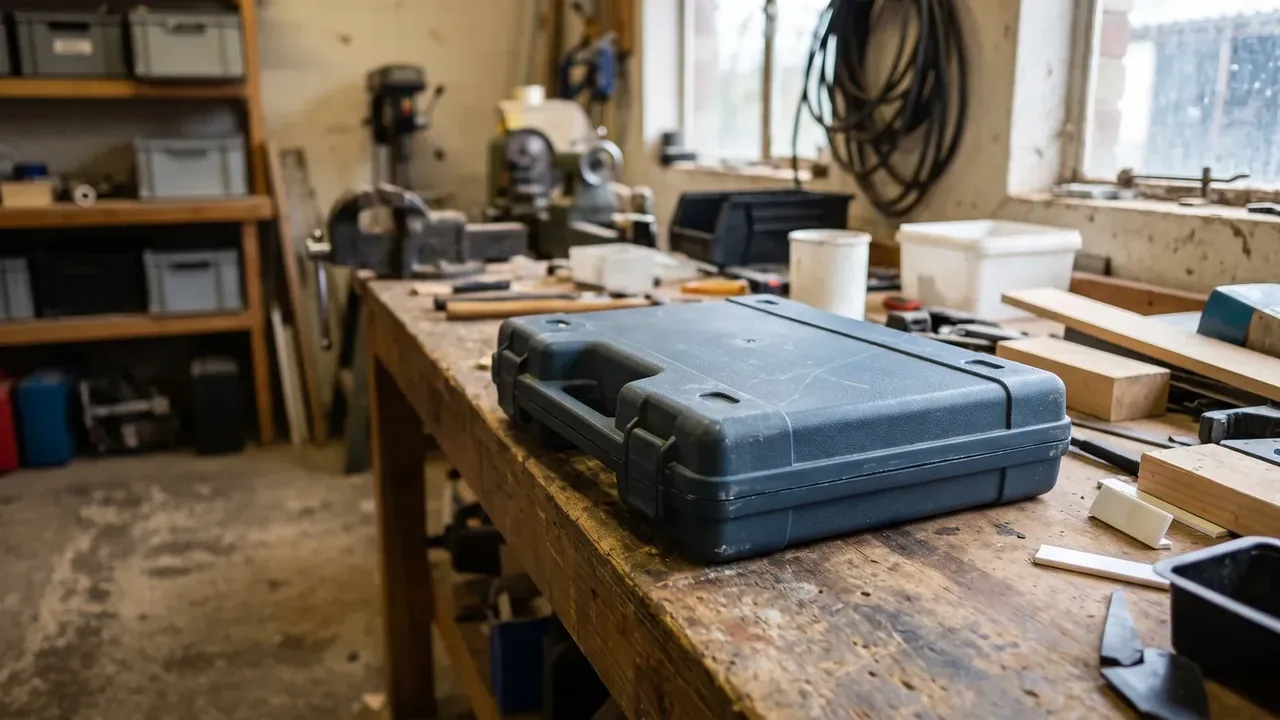
Either way the case is set down flat before the lid opens. Portable medical equipment case design pairs the 105 degree lid angle with that flat position, so the lid mass sits ahead of the hinge and both hands stay free.
| Carry mode | Working distance | Change-over | Main cost |
|---|---|---|---|
| One hand | Under 400 m | Swap hands every 5 min | Finger base, thumb web |
| Single shoulder strap | 400 m to 1.5 km | Change shoulder every 15 min | One trapezius |
| Two-shoulder harness | Beyond 1.5 km | Rest every 40 min | Lower back, heat |
| Two-person lift | Above 25 kg | Rotate by leg | Floor panel, bumpers |
Anchors are overlooked more often than width. Within 30 mm of the lid seam they leave the body hanging and swinging; drop them toward the centre height and the swing halves. Detachable straps dominate portable medical equipment case design, and their D-rings are metal because moulded loops go brittle in the cold.
5、One-Handed Lid Opening
The test needs a fixed definition: one hand on the handle or lid, the other releasing and lifting within 3 s, the lid resting at 105 degrees. Portable medical equipment case design treats that as an acceptance item, ahead of any cosmetic review.
| Opening mechanism | Release action | Fits 3 s, one hand | Cost |
|---|---|---|---|
| Two independent latches | Flick each in turn | No | Low price, even clamp |
| Two latches with tie bar | One finger, both at once | About 2 s | Three extra parts |
| Single central latch | Press once | Under 1 s | Rim ends stay loose |
| Hinge with friction disc | Holds at the angle | Not a release item | Extra friction stack |
In portable medical equipment case design, below 95 degrees a lid closes itself on a slope and needs propping; above 115 degrees the mass passes behind the hinge and an empty case tips backwards.
Tie-bar pins belong in stainless, or the linkage hardens with the body in the cold until one press in three opens the lid. Hinge clearance runs 0.3 mm to 0.5 mm, and a carried case takes the upper half of that range.
Conclusion
Write 3.2 kg empty, 12 kg loaded and 15 min per carry into the design input, and portable medical equipment case design has an obvious order of trade-offs: distance first, handle and strap second, latch last. The 90 mm inner arc and the 120 mm offset can both be measured before a mould is cut.
This article deals only with the specification and design meaning on the container (case body) side, not with any handling, loading or use of the contents.
Related Reading
- Case weight and the cost of carrying
- Three medical case types compared for carrying
- Typical medical case applications
- How interior shape moves the centre of gravity
Related Products
- 8 Series — Gun Cases; Military Equipment Cases; Camera Equipment Cases; Drone Cases; Watch Cases; Knife Cases; First Aid Cases; Electronics Equipment Cases
- WL8-2812 PP Gun Case — model WL8-2812
- All protective cases and toolboxes: 7 series, 158 models