

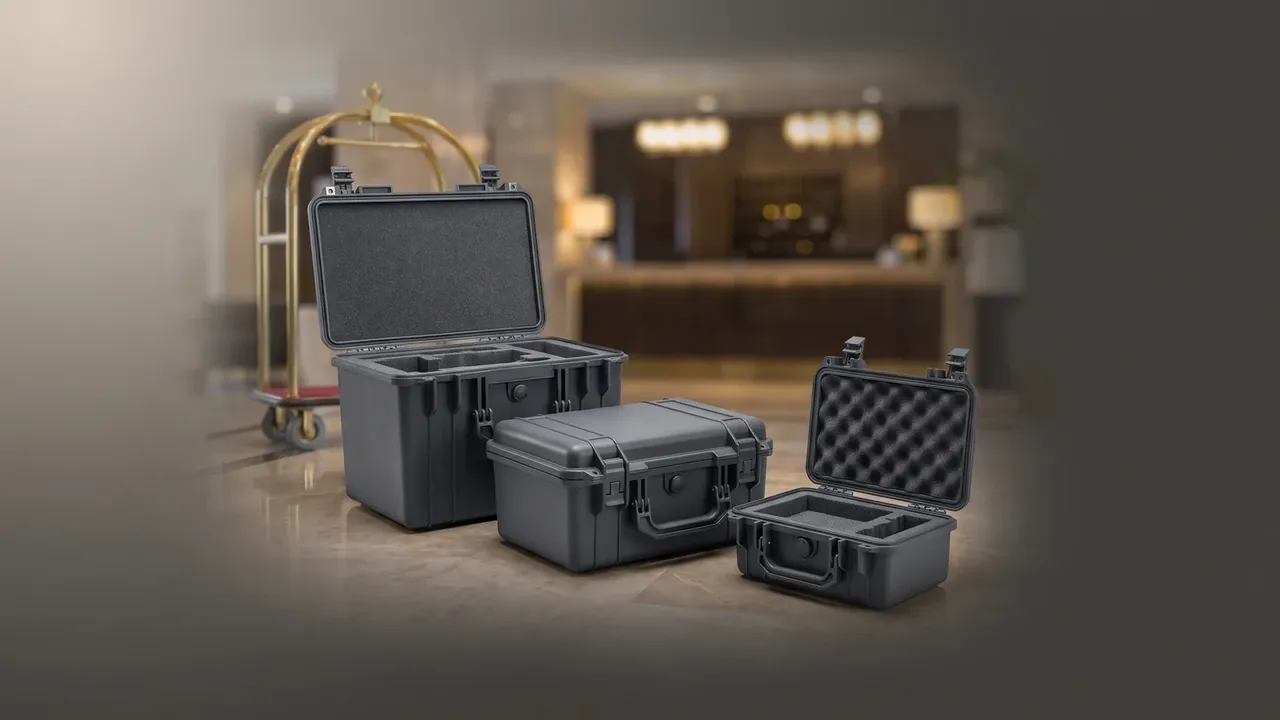
Quick answer: For a portable plastic tool storage box that rides to service calls, settle three numbers: 3.2 kg empty under an 11 kg load, a grip of 28 × 16 mm or more, and a body a 25 mm strap can pin down.
Table of contents
- Four thresholds for on-site service use
- One-hand carry: grip, centre of gravity, the 4 kg line
- Load-out order and a 4-second open
- Securing it in the van: strap and boot divider
- Opening in rain or snow
- Six mistakes made on site visits
- FAQ
1. Four thresholds for on-site service use
A service case is lifted a dozen times a day and opened in the rain.
Load to empty weight comes first: 11 kg of tools against 3.2 kg of case, because past 30 percent fatigue arrives at the fourth stop. Footprint comes second: 420 × 320 × 170 mm drops into a saloon boot corner, anything past 480 mm lies diagonally. Third is a surface you can strap down: ribs on the base, a channel on the side.
| Threshold | Figure | On site |
|---|---|---|
| Load to weight | 11 kg / 3.2 kg | No hand change at stop four |
| Footprint | 420 × 320 × 170 mm | Stands in the boot corner |
| Latch effort | 28 N per latch | One pull, thin gloves |
| Strap channel | 25 mm | One strap over the lid |
2. One-hand carry: grip, centre of gravity, the 4 kg line
The grip is the only part of a portable plastic tool storage box that touches a hand, and 28 × 16 mm sits where the two failures meet: narrower and 12 kg cuts into the palm, wider and gloved fingers cannot close.
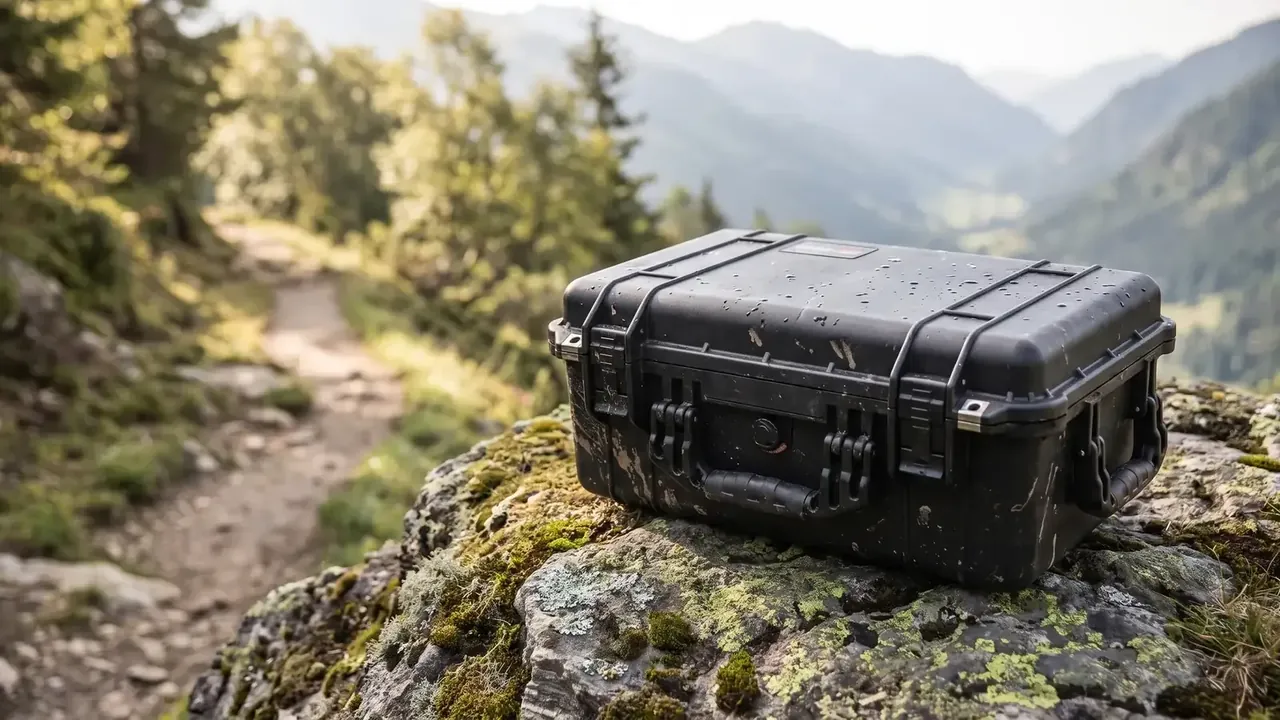
Static handle rating is usually 30 kg, nearly three times the load, and the margin is for potholes: over a bump an 11 kg case briefly sees 25 kg.
Centre of gravity outweighs grip position. Tools in the lower half put it 30 mm above the base and 200 m of walking only tires the wrist; heavy items in the top tray raise it 60 mm and the same walk needs two wrist turns.
Four kilograms is the comfort ceiling for one hand. A 14 kg case is not immovable, just short-range: most people swap hands at 50 m, often setting the base on gravel outside a client's door.
3. Load-out order and a 4-second open
Time on site disappears into searching. A portable plastic tool storage box usually splits into three levels: a top tray for screwdrivers and tape, a middle for pliers, a lower one for the hammer, drill and spares. The tray earns its place if it lifts out whole.
Open cycles set fatigue. Six stops a day means twelve cycles, over 2,800 a year; hardware rated at 30,000 cycles lasts a decade, but the latch spring stiffens at −15 °C.
Four seconds per cycle is the usability test, lift to press. Past six, the latch is too tight or the lid too heavy, and people stop closing it.
4. Securing it in the van: strap and boot divider
A portable plastic tool storage box that slides wears faster than one that is carried. Under 0.6 g of braking an 11 kg body pushes forward with about 65 N, hits the boot wall and rebounds.
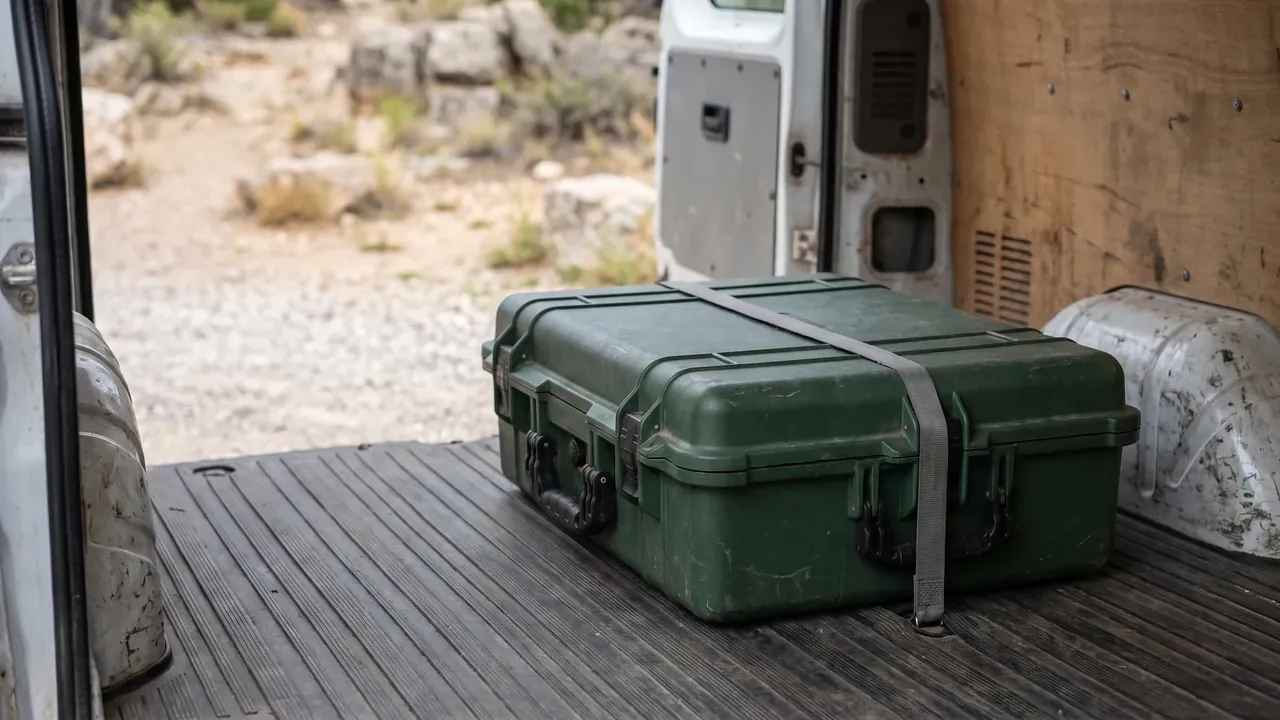
A 25 mm polyester strap with a cam buckle is simplest: across the middle of the lid, ends on floor rings, no corner lifts. Strap the lid, not the sides, because side tension bows the walls and pulls the seal groove out of line.
A divider is optional, a fixed position is not: 100 mm from the tailgate, against one wall.
5. Opening in rain or snow
Rain rarely enters the seal of a portable plastic tool storage box. It enters as the lid lifts, from water standing on the rim. A 6 mm groove stops spray, but with the groove facing up, rim water runs along the edge into the cavity.
The fix is a drip lip, a 3 mm outward flare so water falls clear when the lid is closed. Without it, three openings in ten in heavy rain carry water inside.
Wet hands change friction more than force: a fine texture bites better than a polished face, and 28 N feels lighter when wet, so in thick gloves open one side, then the other.
6. Six mistakes made on site visits
- Choosing by volume and never weighing the loaded case.
- Putting the handle on the lid, so the centre of gravity rides high.
- Calling a blanket a fixing and leaving the boot unsecured.
- Burying everyday tools at the bottom, forcing a full unpack each stop.
- Spreading tools on the lid in rain, where water runs back into the groove.
- Two identical cases in one van, swapped at handover.
Conclusion
For a portable plastic tool storage box that lives in a vehicle, the order is weight, footprint, then layout. Weight sets the grip and the centre of gravity, footprint sets how it sits in the boot, layout decides how often the case is unpacked. Of the four thresholds, buyers skip the strap channel, and it decides whether the case survives three years of calls. Put those numbers on the selection sheet and the portable plastic tool storage box is specified for the work.
This article discusses only the container (case body) side of specifications and design intent, and does not cover any handling, loading or use of the contents.
Related Reading
- Routine checks for a portable tool case
- Portable cases against alternative structures
- Material comparison for portable cases
- The full guide to portable tool cases
Related Products
- 8 Series — Gun Cases; Military Equipment Cases; Camera Equipment Cases; Drone Cases; Watch Cases; Knife Cases; First Aid Cases; Electronics Equipment Cases
- WL8-2812 PP Gun Case — model WL8-2812
- All protective cases and toolboxes: 7 series, 158 models