

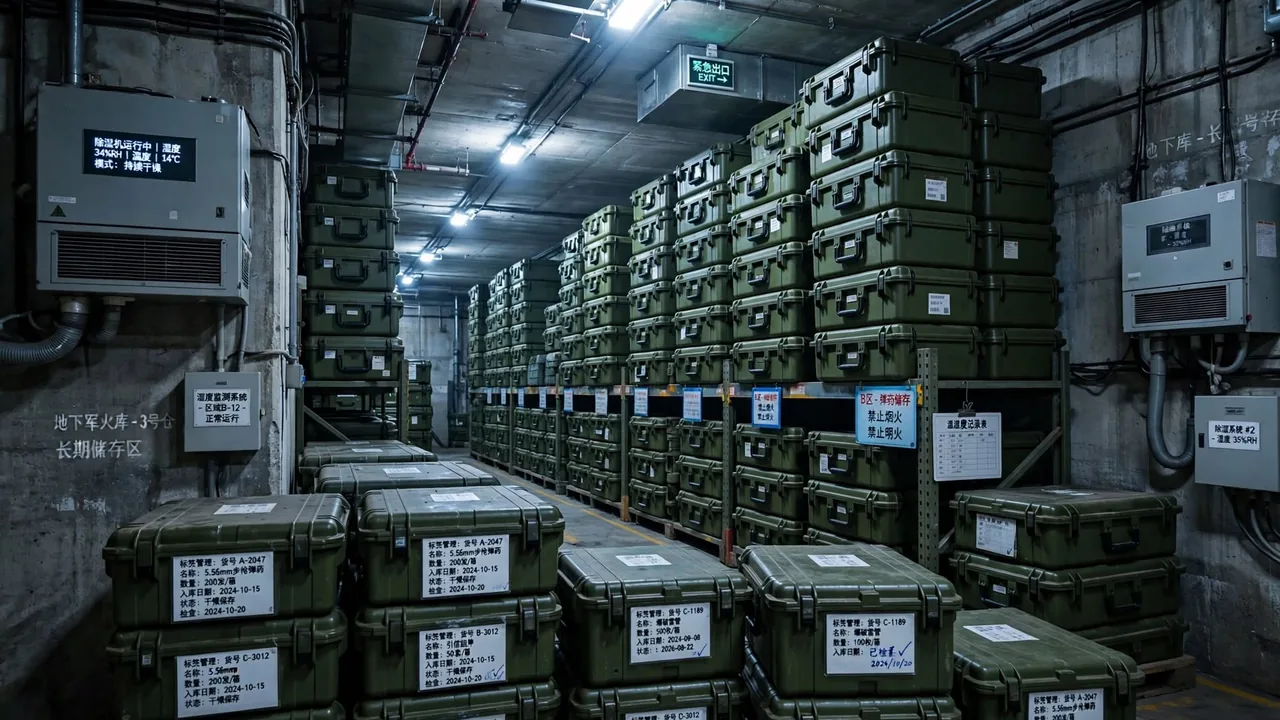
A plastic portable tool box is the most widely used tool container in the field, from workshop checks and electrical inspection rounds to outdoor breakdown response and permanent car storage. Plastic wins its place on low weight, electrical insulation, freedom from rust and great freedom of shape. Its engineering difficulty is not whether it can hold tools but how long it keeps doing so. Materials change gradually under ultraviolet radiation, thermal cycling, sustained load and chemical contact, and those changes are invisible during purchasing and acceptance, only surfacing collectively after a year or two in service.
This article stays within the container: shell and lid material, wall thickness and ribs, hinges and latches, gaskets, masterbatch and markings, together with the moulding processes and inspection methods that surround them. Where material grades and test methods are mentioned, the treatment is an engineering one rather than an absolute verdict, and applicability is governed by the contract and by local regulations.
Positioning a Plastic Portable Tool Box and the Material Family
The first step in judging which scenario suits a plastic tool box is not dimensions but the material family. Four groups dominate engineering practice. Polypropylene (PP) and high-density polyethylene (HDPE) are polyolefins: chemically stable, water resistant, cost effective, and reasonably tough at low temperature. Acrylonitrile butadiene styrene (ABS) is rigid, takes a good surface finish and holds dimensions well, making it the most common engineering plastic for shells and lids. Polycarbonate (PC) offers outstanding impact resistance and can be transparent, but it costs more and is sensitive to internal stress. Engineering plastics such as nylon (PA) and polyoxymethylene (POM) tend to appear in hinges, clips and slides.
The relationship between price and performance across these groups is not linear. ABS beats PP on surface hardness and appearance but is more sensitive to ultraviolet exposure. PP beats ABS on chemical and water resistance but is weaker in rigidity and paintability. PC has the highest impact resistance of the group yet is notch sensitive and performs poorly with some solvents and alkaline cleaners. Understanding these trade-offs is what allows a sound choice between two boxes that look almost identical, instead of being led by appearance and feel. A useful cross-comparison of how these materials behave in box shells is given in PP tool box versus ABS tool box.
PP, HDPE, ABS, PC and Engineering Plastics Compared
On engineering parameters, the differences concentrate in four dimensions. The first is rigidity, usually expressed as flexural modulus: ABS and PC sit well above PP and HDPE, so at the same wall thickness an ABS shell resists stacking and side compression better. The second is low-temperature toughness. PP retains some ductility when cold and tends to yield rather than shatter; ABS sits between PP and PC; PC has the highest impact resistance but is notch sensitive, so a scratch or weld line can cut its impact strength sharply.
The third is weathering. Polyolefins resist ultraviolet radiation comparatively well, but long exposure still needs antioxidant and light stabiliser support at formulation level. The butadiene phase in ABS contains unsaturated double bonds, which are the primary target of ultraviolet attack, so prolonged outdoor exposure tends to produce surface chalking and colour shift. PC yellows and stress-cracks under long ultraviolet and hydrolytic exposure. The fourth is chemical resistance: PP and HDPE tolerate most acids, alkalis and salt solutions; ABS is sensitive to ketones, esters and some aromatics; PC is sensitive to alkaline solutions and some alcohols. When a box must face oil, solvents and sunlight at the same time, the material must be chosen for the most severe of those conditions rather than the average.
Three Selection Constraints: Temperature, Load and Chemical Contact
Making material selection an engineering decision means reducing it to three constraints. The temperature constraint defines the working range: a box may face low-temperature impact at minus twenty or thirty degrees outdoors in winter and a baking environment at sixty or seventy degrees inside a vehicle in summer, and the material must remain serviceable at both ends. The load constraint describes sustained stress: a box full of heavy tools stacked for months places continuous stress on the base and walls, and plastic creeps under those conditions, which appears as a visible depression in the base after several months.
The chemical contact constraint is the one most often overlooked, yet its consequences are direct. Engine oil, hydraulic oil, diesel, cleaning agents, alcohol and disinfectants all touch the shell over time, and solvents and alkaline cleaners are the greatest threat to ABS and PC, showing up as loss of gloss, whitening, fine cracks and, in severe cases, cracking at stress concentrations. The list of contacting media and the cleaning method should therefore be defined at the enquiry stage, rather than discovered afterwards when a box has been sprayed with the wrong cleaner. A comparison of how these materials perform in outdoor protection is available in advantages of a PP outdoor protective case.
Injection Moulding and Rotational Moulding: How Process Limits Structure
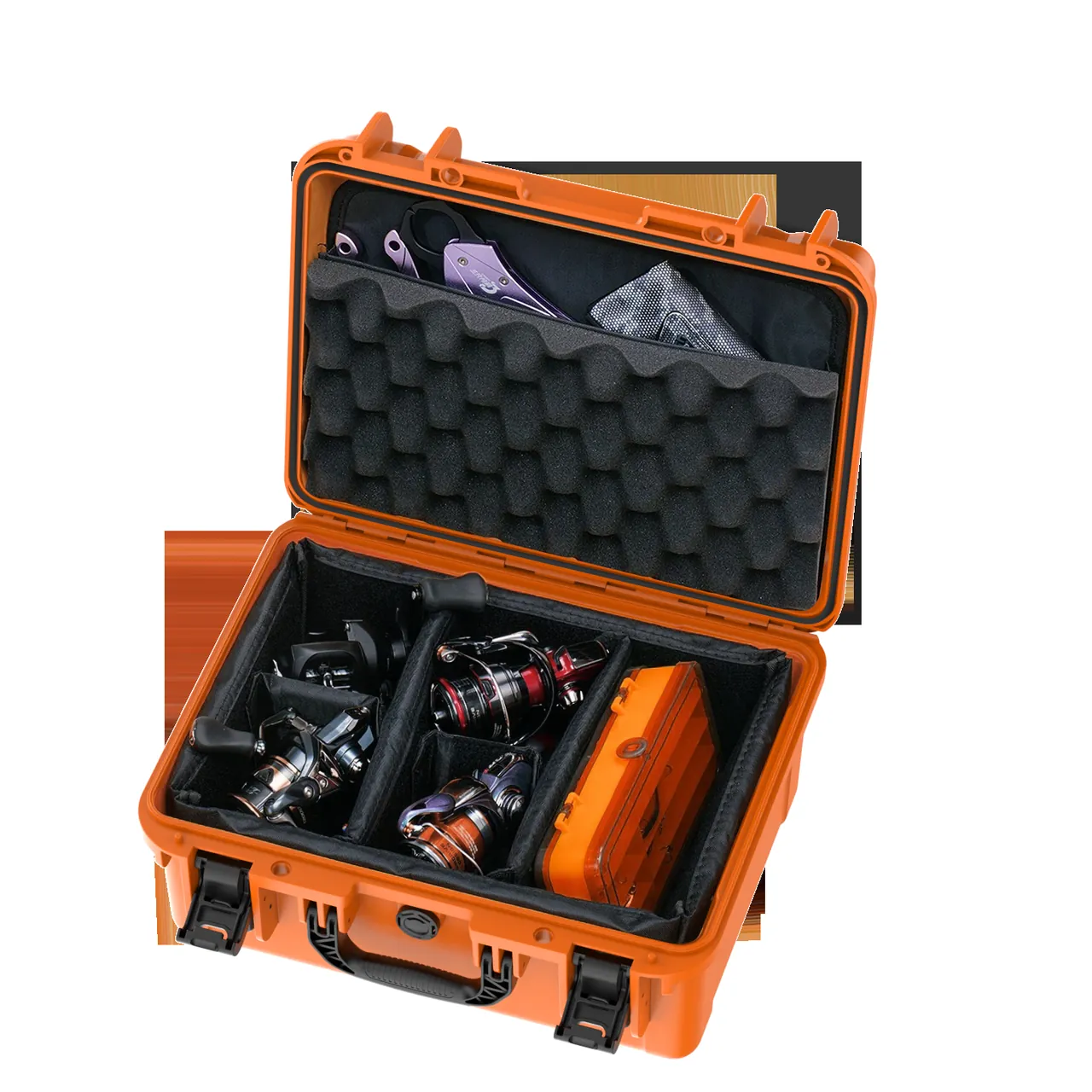
Plastic boxes are made mainly by injection moulding and rotational moulding. Injection moulding suits small and medium shells in high volumes: dimensional accuracy is high, surface quality is good, and clips, hinge bosses and ribs can be formed in one shot, with cost falling markedly with volume. Its limits are high tooling cost and a process window that constrains wall thickness, since heavy walls cause sink marks and internal stress. Rotational moulding suits large, thick-walled, double-wall shells: tooling is comparatively cheap, wall thickness can be substantial, and the finished shell is generally tough and impact resistant. Its limits are lower dimensional accuracy and surface quality, long cycle times and poor suitability for fine detail.
The process choice feeds back into design. On an injection route, the designer must keep wall thickness inside the process window and add stiffness with ribs rather than thickness, while paying attention to weld line positions, because a weld line placed in a load-bearing zone leaves the box far weaker than the material datasheet suggests. On a rotational route, the designer can exploit a double-wall structure as an insulating air gap, but must allow process clearance for draft angles, radii and the placement of internal fittings. Attributing the strength difference between the two routes to material quality, when the cause is process, is the kind of misdiagnosis that leads to a costly re-selection. The practical gap between engineering plastics and ordinary plastics in shells is covered in engineering plastic versus normal plastic cases.
Ultraviolet Ageing: Mechanism, Symptoms and Formulation Response
Ultraviolet ageing works by photon energy breaking polymer chains and initiating radical reactions, so the surface gradually loses ductility. The symptoms arrive in three stages. The early stage shows loss of gloss and slight colour shift. The middle stage brings surface chalking and a fine crack network, with powder coming off on a wipe. The late stage sees cracks propagate inwards and brittle fracture on impact. Polyolefins and ABS behave differently: polyolefins tend to chalk and crack at the surface, while ABS commonly yellows and embrittles in the outer layer.
Formulation responses fall into three groups. Hindered amine light stabilisers trap radicals and slow chain scission. Ultraviolet absorbers take up high-energy photons and convert them to heat. Pigment and opacifying systems reduce how deep ultraviolet radiation penetrates. The three are normally used together, and the influence of pigment choice is routinely underrated: light-coloured shells run cooler and reflect more ultraviolet radiation, but they tolerate colour shift poorly because a slight yellowing is immediately visible, whereas dark shells absorb more heat and therefore demand more of the material's thermal ageing resistance. Colour is therefore not merely an aesthetic decision; it takes part in the weathering design.
It is important to stress that no universal conversion factor exists between accelerated ageing and real exposure. Xenon arc, fluorescent ultraviolet and outdoor exposure can rank materials differently, so acceptance should require the test method, irradiance, cycle conditions and evaluation criteria such as colour difference, chalking grade and impact retention to be stated explicitly, rather than accepting the word pass. The verification logic mirrors the wider protection criteria described in common plastic materials for protective cases.
Low-Temperature Embrittlement and High-Temperature Softening
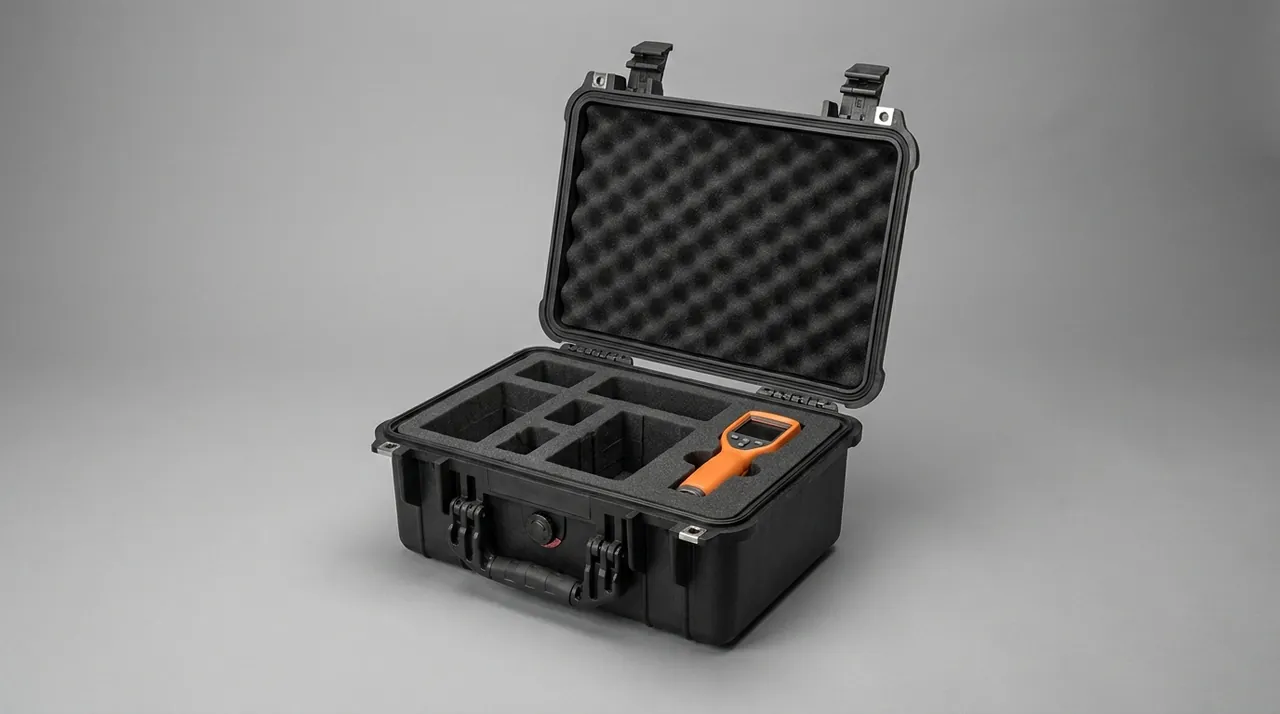
Low and high temperature threaten a plastic box in opposite directions, with equally serious results. In the cold, molecular chain mobility falls, yield strength rises and elongation at break drops, so the material becomes harder but more brittle: an impact produces a crack rather than a dent, and the crack usually starts at a notch, weld line or bolt hole. Low-temperature acceptance therefore cannot rely on a whole-box drop alone; it should include notched specimen falling-weight impact or low-temperature brittleness testing, with the fracture surface examined to determine whether failure was ductile or brittle.
At the high end, the problem is softening and creep. Modulus falls, the shell deforms progressively under stacking load, latch and hinge seats distort until compression force decays, and gaskets lose resilience under long compression. Critically, high temperature and load together accelerate failure markedly. A box that passes at room temperature can develop a dished base and a warped lid after several weeks loaded in a summer vehicle. Standards testing tends to separate these conditions into independent items, while service applies them simultaneously, so acceptance plans should combine them deliberately. Judging low-temperature brittleness is described in low-temperature brittleness testing.
In-Vehicle Heat and Short-Term Thermal Deformation
Keeping a tool box in a vehicle is one of the most common scenarios and the source of most heat distortion complaints. The interior of a closed vehicle under direct summer sun can reach temperatures far above ambient, and a box against a window or on a dark floor mat can sit at elevated temperature for hours. Three problems appear: large-area bulging or dishing of the shell; widening of the gap between lid and case mouth, which breaks the seal; and reduced latch retention, to the point of popping open.
The response has three steps. First, reduce heat intensity: light or highly reflective surfaces, a shaded storage position, and an insulating mat between the box and the heat source. Second, raise the thermal deformation resistance of material and structure: a grade with a higher heat deflection temperature, denser ribs in the base and lid, and latch and hinge anchor points built with metal inserts so plastic holes do not deform progressively. Third, control the load: avoid leaving a fully loaded box in high temperature for long periods, moving heavy tools lower or onto a fixed vehicle bracket. How material temperature performance maps onto real vehicle conditions is discussed in toolbox deformation in a hot car.
Wall Thickness, Ribs and Overall Shell Stiffness
Stiffness design in a plastic box follows logic similar to metal but not identical. Because plastic modulus is far below steel, increasing wall thickness to gain stiffness is inefficient and brings sink marks, internal stress and uneven cooling, so ribs are the better tool. Rib efficiency depends on three parameters: height, thickness and spacing. Greater height raises section modulus more effectively but becomes hard to fill during moulding. Rib thickness is usually held between one half and two thirds of the nominal wall; thicker ribs produce sink marks and stress concentration at the root. Spacing then governs how much the panel between ribs can bulge locally.
The critical load zones of a box are the base, the handle mounts, the hinge seats and the latch anchors. The design principle here is to distribute rather than concentrate, transferring load into the overall structure through thickened zones or metal inserts instead of letting a screw or clip act directly on a thin wall. A second common defect is a warped lid rim, typically caused by insufficient lid stiffness or by internal stress released from a poorly placed gate. The remedy is a circumferential rib on the inside of the lid or a deeper downturned rim, rather than simply thickening the lid.
Hinges, Latches and the Life of a Living Hinge
Plastic boxes realise their hardware in two ways: integrally moulded plastic hinges and clips, or separately fitted metal or engineering-plastic components. The living hinge, a thin integral web, is assembly-free, low cost and continuous for sealing purposes. Its life depends on material fatigue behaviour and on web thickness control: too thick makes closure stiff and concentrates stress, too thin gives insufficient fatigue life, and repeated cycling produces whitening followed by a crack along the fold. A living hinge suits boxes that are opened infrequently; where daily cycling is high, a pin-type hinge is the correct choice.
Latch life usually appears as gradual loosening. Two causes dominate: stress relaxation in the plastic clip after repeated elastic deflection, and wear at the mating surfaces that consumes the compression stroke. Countermeasures include a generous root radius on the clip, a tougher engineering plastic, and a compression stop that can be adjusted. Where a box must hold an IP rating over a long period, decaying latch compression directly degrades sealing, so latch cycle life and compression retention belong in the acceptance criteria; checking that it closes is not enough.
Gasket Material and Weathering Match
Sealing in a plastic box depends on the gasket at the case mouth and uniform compression. Common gasket materials are nitrile rubber, EPDM, silicone rubber and thermoplastic elastomer. Nitrile handles oil well and suits boxes that contact lubricants. EPDM excels in weather, water and ozone resistance, making it a common choice for outdoor boxes. Silicone has the widest temperature range and stays flexible when cold, at higher cost and with only moderate oil resistance. Thermoplastic elastomer can be over-moulded with the shell, but its compression set after long loading tends to be higher.
Seal failure is usually not a matter of the wrong material but of three things not being solved together: the compression volume designed into the gasket, insufficient case mouth stiffness causing uneven compression, and incompatibility between the gasket and the cleaning agent. Too little compression leaks, too much accelerates permanent set. A case mouth that lacks stiffness between the latches produces the classic pattern of tight ends and a leaking middle. The wrong cleaner swells or hardens the gasket. Prototype work should therefore include spray and immersion verification, and should record gasket compression and recovery figures as a baseline for later batch comparison.
Drop, Stacking and Plastic Creep
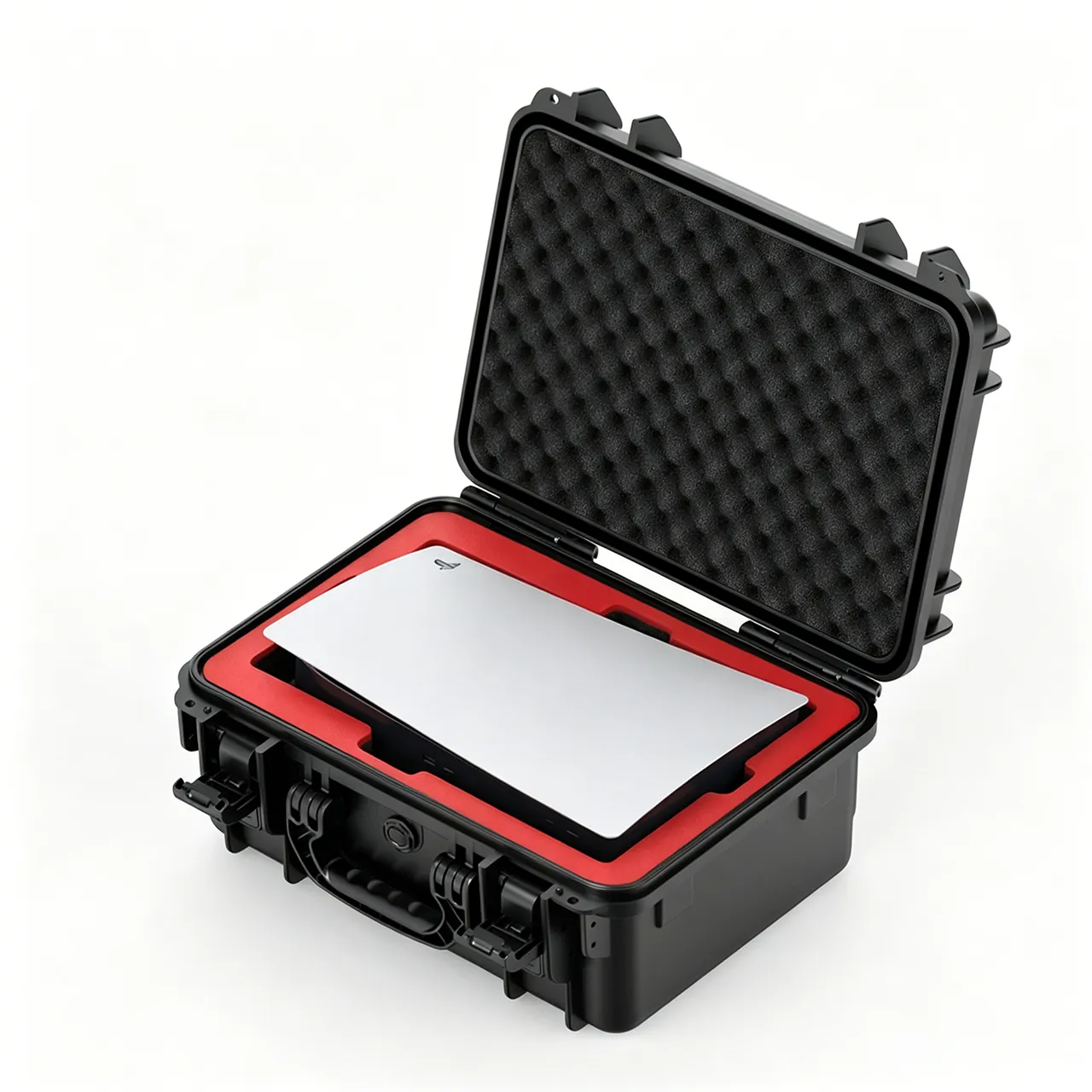
A plastic box behaves very differently from a metal one in a drop. Metal absorbs energy through plastic deformation and may carry a dent but remain usable. Plastic may crack outright below its ductile-brittle transition, and at normal temperature it more often deflects and rebounds, appearing fine while internal stress whitening and micro-cracks form as starting points for later failure. Post-drop evaluation must therefore go beyond appearance to include functional checks and magnified visual inspection of critical zones.
Stacking tests a plastic box through creep. Under sustained stress and elevated temperature, plastic flows slowly, producing a dished base, bulging side walls and permanent impression marks on stacking faces. Practical controls include reducing layer count and per-layer weight, avoiding long-term stacking in high temperature, adding longitudinal ribs to the base to raise the bending section, and packing so heavy items are not concentrated in the centre. Stack design is part of shell design, and its verification parallels the loading scheme in stacking load testing for protective cases.
Recycled Content, Masterbatch and Marking Durability
Recycled content is the largest hidden variable in plastic box quality. Blending recyclate is not inherently wrong, but recyclate has already been through a thermal history: molecular weight distribution broadens, contamination rises, and impact strength, colour consistency and batch repeatability all suffer. The properties most sensitive from a user's perspective are low-temperature impact and long-term creep, and these are precisely the ones that incoming visual inspection cannot reveal. Practical identification includes requiring grade and batch traceability documentation, running low-temperature impact and tensile comparisons at sample stage, and looking for abnormal colour variation or flow marks across a batch.
Masterbatch choice affects both appearance and weathering. Some pigments are themselves ultraviolet sensitive and fade locally first, while others migrate during high-temperature moulding and leave surface patterns. On marking, silk screen and thermal transfer can fade or flake after prolonged outdoor exposure, whereas in-mould labelling and laser marking bond more securely to the substrate. Where a box carries asset numbers, inspection status or safety warnings, marking durability should match the service life of the box and be included in acceptance, so that identification does not become unreadable after a year or two and undermine the management system.
Inspection, Acceptance and Common Failure Modes
Incoming acceptance is best organised on four lines. The first is dimensions and fit: overall size, case mouth flatness, lid-to-body clearance, and the absence of local gaps after latch closure. The second is material and weathering evidence: material grade and batch documentation, colour difference and appearance consistency, and reports for ultraviolet ageing and low-temperature impact. The third is function: hinge travel smooth and quiet, latch compression and release comfortable, gasket continuous around the perimeter, and handle not deforming under full load. The fourth is environmental performance: spray or immersion verification, chemical wipe tests where relevant, and dimensional re-measurement after high-temperature storage.
Six failure modes dominate. Cracking on low-temperature drops. Chalking and colour shift after prolonged sunlight. A dished base after loaded stacking in heat. Seal degradation from decaying latch compression. Whitening and cracking along a living hinge fold. And whitening and stress cracking caused by cleaning agents. Each maps to material choice, formulation, structural stiffness, hardware design, fatigue design or user instructions respectively, so acceptance should link each one to a specific inspection action and document requirement rather than a blanket statement that appearance and function shall be normal.
A Procurement Checklist to Avoid Batch Rework
First, do not equate thickness with stiffness. Plastic stiffness depends more on section shape and rib layout, and simply adding thickness brings sink marks and internal stress that reduce real strength. Second, do not accept a quotation supported only by an appearance sample. Material grade, masterbatch system, ultraviolet ageing and low-temperature impact data are what determine life, and a low price without them usually means the material was where the saving came from. Third, do not leave gasket compression to be settled on site. Compression is a design parameter, not assembly experience, and must be confirmed on drawing and sample.
Fourth, do not neglect cleaning instructions. Most cases of whitened, cracked shells trace back to unsuitable cleaning agents, so deliver a compatibility list for cleaning and disinfection. Fifth, do not use an integral living hinge in high-cycle applications, because its cost advantage is cancelled out by replacement cost once cycling is frequent. Sixth, do not omit high-temperature stacking verification from the contract. High temperature combined with loaded stacking inside a summer vehicle or container is the harshest condition a plastic box faces, and one such retest is worth more than three room-temperature appearance checks. Seventh, do not overlook spares and recycling: gaskets, latches and handles should be individually replaceable, and recyclability should be confirmed at selection stage, since it affects both running cost and compliance reporting.
Closing Perspective: Making Material Life Part of the Specification
The engineering content of a plastic portable tool box is not in its appearance but in whether the material still holds shape, stiffness and sealing under the combined action of time and temperature. Writing material family, temperature and load constraints, the chemical contact list, ultraviolet stabilisation, rib layout and gasket compression into the technical requirements; putting ultraviolet ageing, low-temperature impact and high-temperature stacking into the verification plan; and leaving a replacement path for gaskets and latches in the design are what allow a box to keep its as-delivered function throughout its service life. For buyers, treating material life as part of the procurement specification is cheaper than dealing with a batch of cracked shells or a shipment that changed colour, and it makes comparisons between suppliers far more defensible.
Frequently Asked Questions
Q: How should the material for a plastic tool box be chosen, and which scenarios suit PP, ABS and PC? A: Start from the environment and the load, then consider cost. PP is a polyolefin: water resistant, tolerant of acids and alkalis, cost effective, and still somewhat ductile when cold, which suits outdoor, damp, oily and frequently washed applications, but its lower rigidity means large or heavily loaded boxes can feel soft and need rib and structure compensation. ABS is rigid, finishes well and holds dimensions, which suits workshop and instrument boxes where stiffness and appearance matter, but its butadiene phase contains unsaturated bonds that chalk and shift colour under prolonged outdoor exposure, so ultraviolet environments require formulation-level light stabilisation. PC has the highest impact resistance and can form a transparent lid, which suits precision tools and visual inspection, at higher cost and with sensitivity to notches and alkaline cleaners, so scratches must be avoided and cleaning agents matched. Where a box must face sun, oil and low-temperature drops together, modified PP or a hybrid of PP with engineering plastic is the usual answer, verified against the harshest single condition.
Q: How can the weather resistance of a plastic tool box be judged as adequate? A: Do not accept the word weatherproof; ask for three sets of information. The first is material and formulation: base grade, whether light stabilisers and ultraviolet absorbers are present, and whether the masterbatch system has been validated outdoors. The second is test evidence, with attention to the ultraviolet or xenon arc method, irradiance, cycle conditions and evaluation criteria such as colour difference, chalking grade and impact retention, because different methods can rank results differently and data without stated conditions cannot be compared. The third is the link to real duty: compare the solar intensity, annual temperature and humidity and intended service life of the site against the test conditions to judge whether the accelerated regime covers the real stress. Because no universal conversion exists between accelerated ageing and real exposure, installation records from similar environments are more valuable than calculations for long-life outdoor projects. Where such records are unavailable, insist on a stepwise validation plan: first confirm the grade and formulation, then the accelerated results, and only then commit to a service-life claim, with a mid-term inspection point written into the contract.
Q: Why does a plastic tool box crack so easily when dropped in winter, and how can it be prevented? A: In cold conditions molecular chain mobility falls, yield strength rises and elongation at break drops, so the material becomes harder and more brittle. The drop energy cannot dissipate through plastic deformation and instead initiates a crack at a stress concentration, typically a notch, weld line, bolt hole or clip root. Lowering the risk starts with material: modified PP and certain engineering plastics outperform ordinary ABS and PC in cold toughness. It continues with structure: every potential crack origin should have a generous radius, avoiding sharp corners and abrupt thickness changes, and weld lines should be placed outside load-bearing zones. It also involves user practice: avoid corner impacts and free drops when handling in the cold, and add cushioning where necessary. Verification should include notched low-temperature falling-weight impact or brittleness testing, with the fracture surface examined, because ductile and brittle fractures lead to completely different conclusions. It also helps to specify a minimum service temperature in the contract and to state how it was verified, so that a claim about cold performance is tied to evidence rather than to a grade name.
Q: Does a plastic tool box deform when left in a car, and how can this be mitigated? A: Yes, particularly in a closed vehicle under direct summer sun. As the material approaches its heat deflection temperature, modulus falls rapidly, and if the box is full of heavy tools the base dishes under sustained load while the lid may warp, which widens the mouth gap, breaks the seal and allows the latch to pop open. Mitigation works on three levels. First, reduce the heat: use a light or highly reflective surface, avoid storage against a window, and place an insulating mat between box and floor. Second, raise stiffness: specify a grade with higher heat deflection temperature, increase rib density in base and lid, and build latch and hinge anchors with metal inserts so plastic holes do not creep. Third, control the load: avoid long-term loaded stacking at high temperature and move heavy tools lower or onto a fixed bracket. Contracts should require dimensional re-measurement data after high-temperature storage as acceptance evidence.
Q: Should an integral living hinge or a pin-type hinge be used? A: The deciding criteria are cycling frequency and sealing requirements. A living hinge is a thin integral web that flexes repeatedly, and its advantages are no assembly, low cost, continuous sealing and no pin holes to leak through, which suits boxes opened infrequently and used mainly for storage. Its life depends on fold thickness control: too thick makes closing stiff and concentrates stress at the fold, too thin gives insufficient fatigue life, so repeated cycling whitens the line and eventually cracks it. A pin hinge, using a metal or engineering-plastic pin as the bearing, lasts longer and runs more smoothly, which suits boxes cycled daily that must hold compression over years, at the cost of holes through the shell that must be sealed separately. The practical rule is a living hinge for low-frequency indoor use, and a pin hinge for outdoor and high-frequency use, with independent sealing provided around the hinge. Whichever type is chosen, state the expected cycle life in the specification and verify it on a sample, because hinge failure is rarely gradual and usually ends with the lid separating from the case.
Q: Why do gaskets in plastic tool boxes age, and when should they be replaced? A: Gasket ageing comes from three sources: permanent set after long compression, hardening or softening through thermal cycling, and chemical attack by cleaning agents or oils. Nitrile resists oil well but weathers only moderately, EPDM excels in weather and water resistance, silicone has the widest temperature range but only moderate oil resistance, and thermoplastic elastomer is convenient for over-moulding but tends to take a higher compression set. There is no universal replacement interval, and the right criterion is function rather than time: replace when the gasket becomes slimy, hard, cracked, fails to recover after compression, or fails a spray and immersion check. Extending life is decided at design stage, through a sensible compression volume, a case mouth stiff enough for uniform clamping, and a cleaner compatibility list issued with the delivery. Gaskets should be supplied as an independent spare part, with inspection intervals and acceptance criteria written into the maintenance procedure. Recording the compression volume measured at delivery also gives maintenance staff a reference point, so that a gasket is replaced because it has measurably changed rather than because someone thought it looked tired.
Q: A plastic box base dished after long use. Is it a material problem or a design problem? A: Usually both together. Plastic creeps under sustained stress at elevated temperature, meaning slow plastic flow, so a dished base first indicates that long-term load exceeded the design value, and second that the base bending section was insufficient. Three improvements follow: reduce stack layer count and per-layer weight and avoid long-term stacking in high temperature; add longitudinal ribs to the base to raise section modulus rather than simply thickening the wall; and change packing so heavy items are not concentrated in the centre of the base. Recycled content makes the problem worse, because its broader molecular weight distribution and higher contamination degrade both long-term creep and low-temperature impact. Requiring grade and batch traceability, and running a high-temperature loaded stacking retest at sample stage, are the two most effective controls against this failure mode. A third useful control is to record the base profile of a batch at delivery, then re-measure it after a defined storage period, so that creep appears as a measurable trend rather than as a complaint raised long after the warranty has expired.