

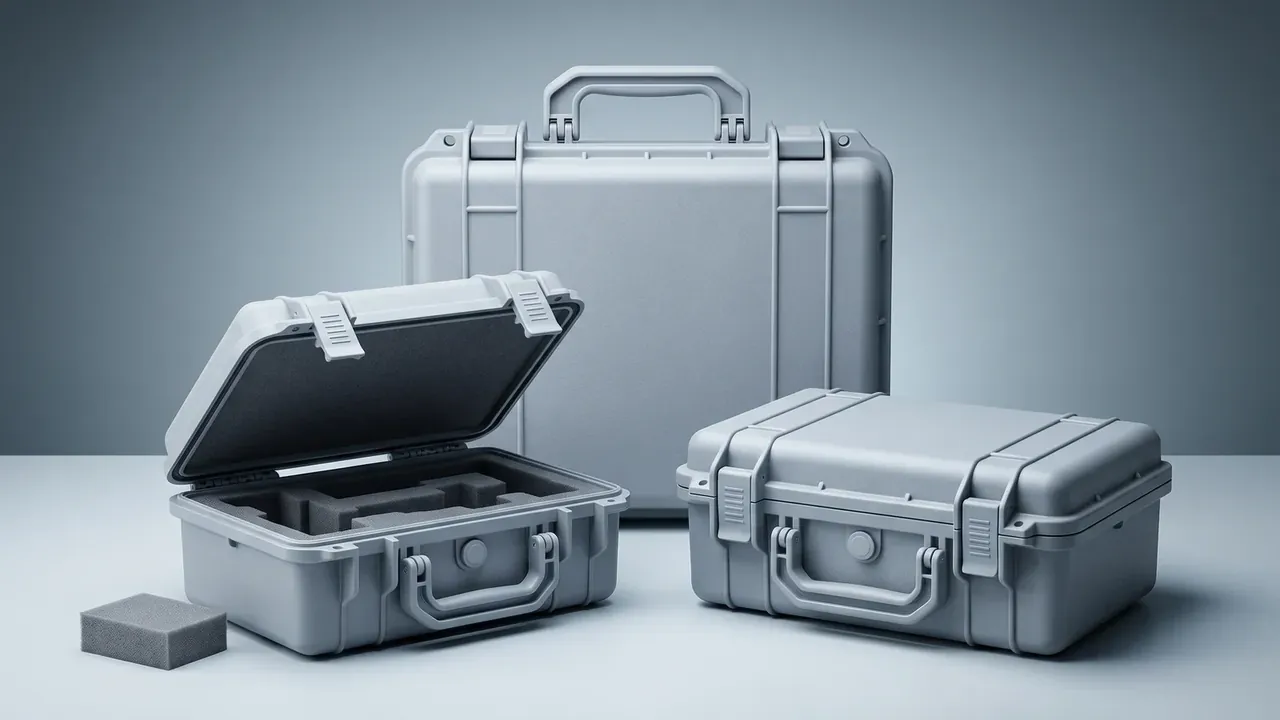
Quick answer: A portable sample case with wheels is chosen on cavity size, foam grade, wheels and handle, latch cycles, and surface care. A 420 x 300 x 120 mm cavity takes 12 compartments, 15 mm EVA and 60 mm PU wheels, with a 3.4 kg shell carrying 20 kg of samples.
Table of contents
- Where the Portable Sample Case With Wheels Decision Starts
- Criterion One on Cavity Size and Compartments
- Criterion Two on Foam Grade and Fixing
- Criterion Three on Wheels, Handle and Load
- Criteria Four and Five on Latch Life and Appearance
- FAQ
1. Where the Portable Sample Case With Wheels Decision Starts
A portable sample case with wheels lives in a narrow setting: sales calls, trade stands, customer benches. It opens twenty to thirty times a day over lifts, carpet and flooring, so it is judged on opening cycles and how the contents read, not on stacking and drop.
Write three things down: how many samples and how big the largest is, who carries it, whether the lid opens flat. Count sets the compartments, the largest part sets the cavity, the carrier sets wheels.
| Setting | Cavity | Compartments | Shell weight |
|---|---|---|---|
| Sales calls | 420 x 300 x 120 mm | 8 to 12 | 3.4 kg |
| Trade stand | 450 x 330 x 150 mm | 6 deep | 4.1 kg |
| Bench comparison | 380 x 260 x 100 mm | 4 | 2.6 kg |
2. Criterion One on Cavity Size and Compartments
A portable sample case with wheels is bought by numbers, and nominal size is not usable size. A 450 x 330 x 150 mm shell loses 15 mm of foam top and bottom, leaving 450 x 330 x 120. Long gauges lose another 8 mm to the divider rib, so usable length is 434 mm.
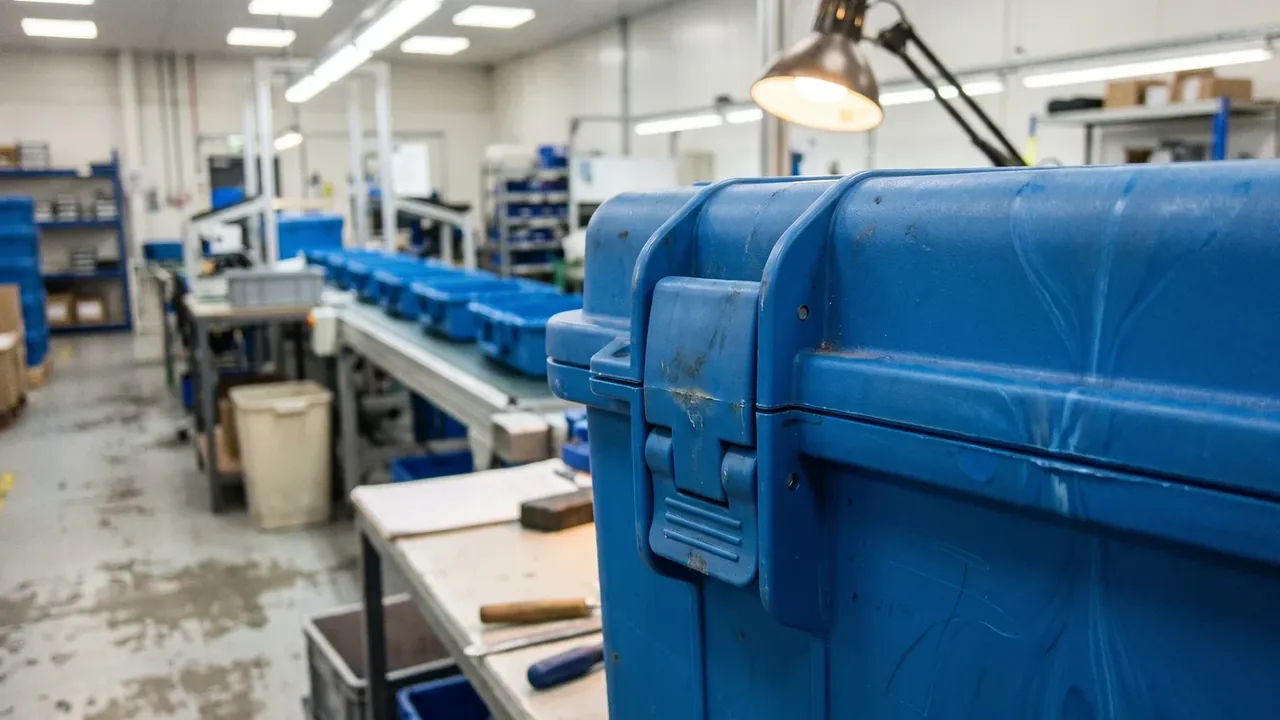
Set compartments by the largest part, not by head count. With twelve samples and one 200 mm piece, the rest arrange around it. A 3.4 kg shell carries no more than 20 kg, beyond which wheels and handle fail first.
3. Criterion Two on Foam Grade and Fixing
The foam in a portable sample case with wheels does two jobs: holding and showing. EVA at 45 kg per cubic metre and Shore A 38 cuts clean and takes no moisture. EPP at 60 g per litre springs back but cuts fuzzy under stand lighting, and sponge at 25 kg per cubic metre collapses within three months.
Skip the 25 mm of transport cases. Flatter walls need only 15 mm, but the fixing has to be better: adhesive alone slides after eight hours at 60 degrees Celsius, so add pins or a 2 mm groove in the base.
4. Criterion Three on Wheels, Handle and Load
Pick the wheel by the floor: 60 mm PU at 25 kg dynamic per wheel on exhibition tile, or the same diameter with a 30 mm rather than 24 mm tread for hotel carpet.
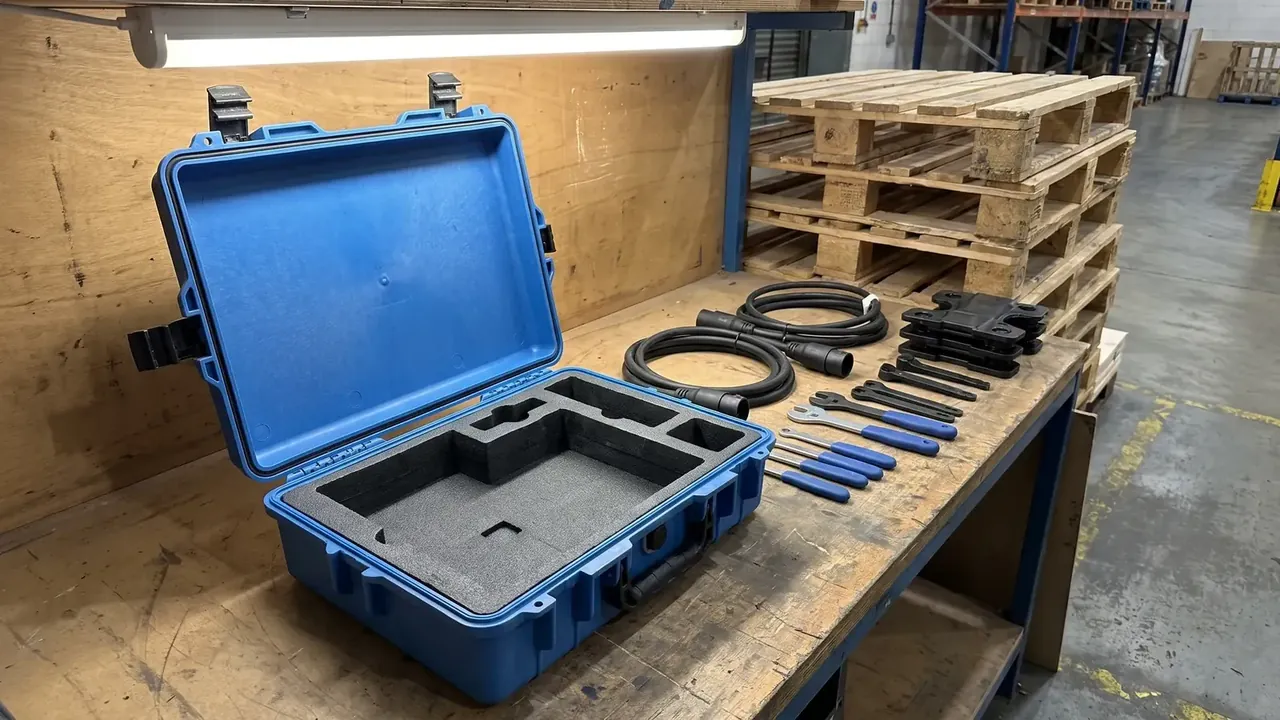
A 1.2 mm handle tube with three detents and a 500 N pull is standard. Past 30 degrees of tilt the load turns into bending at the second joint, so stairs justify twin grips, and after 30 km the axle play should stay under 0.3 mm.
5. Criteria Four and Five on Latch Life and Appearance
Size the latch by cycles. Twenty to thirty openings a day is 5000 to 7500 cycles over 250 working days, where holding force falls from 120 N to under 80 N. Ask for the cycle figure, and specify 2 mm stainless hinge pins so the lid does not shift.
| Item | Typical value | Replace when |
|---|---|---|
| Latch cycles | 5000 | Force below 80 N |
| Hinge pin | 2 mm stainless | Lid shifts over 1 mm |
| Wheel travel | 30 km | Axle play over 0.3 mm |
| Handle pull | 500 N | Joint works loose |
A matte surface hides scratches and fingerprints better than gloss, and 50 wipes with 75 percent ethanol without colour loss is the baseline. Five cases from one batch under D65 light should stay within ΔE 1.5.
Conclusion
Choosing a portable sample case with wheels is a balance between opening cycles, presentation and pushing distance: cavity against the largest part, compartments against count, foam against temperature, wheels against floor, hardware against cycles. Put the five on paper and the case will not arrive with a lid that will not close. A portable sample case with wheels specified this way shows the difference on the first sales call.
This article discusses only the container (case body) side of specifications and design intent, and does not cover any handling, loading or use of the contents.
Related Reading
- Where sample display cases are used
- Setting specifications for custom foam inserts
- Selection logic for wheeled protective cases
- How to choose a protective case size
Related Products
- 8 Series — Gun Cases; Military Equipment Cases; Camera Equipment Cases; Drone Cases; Watch Cases; Knife Cases; First Aid Cases; Electronics Equipment Cases
- WL8-2812 PP Gun Case — model WL8-2812
- All protective cases and toolboxes: 7 series, 158 models