

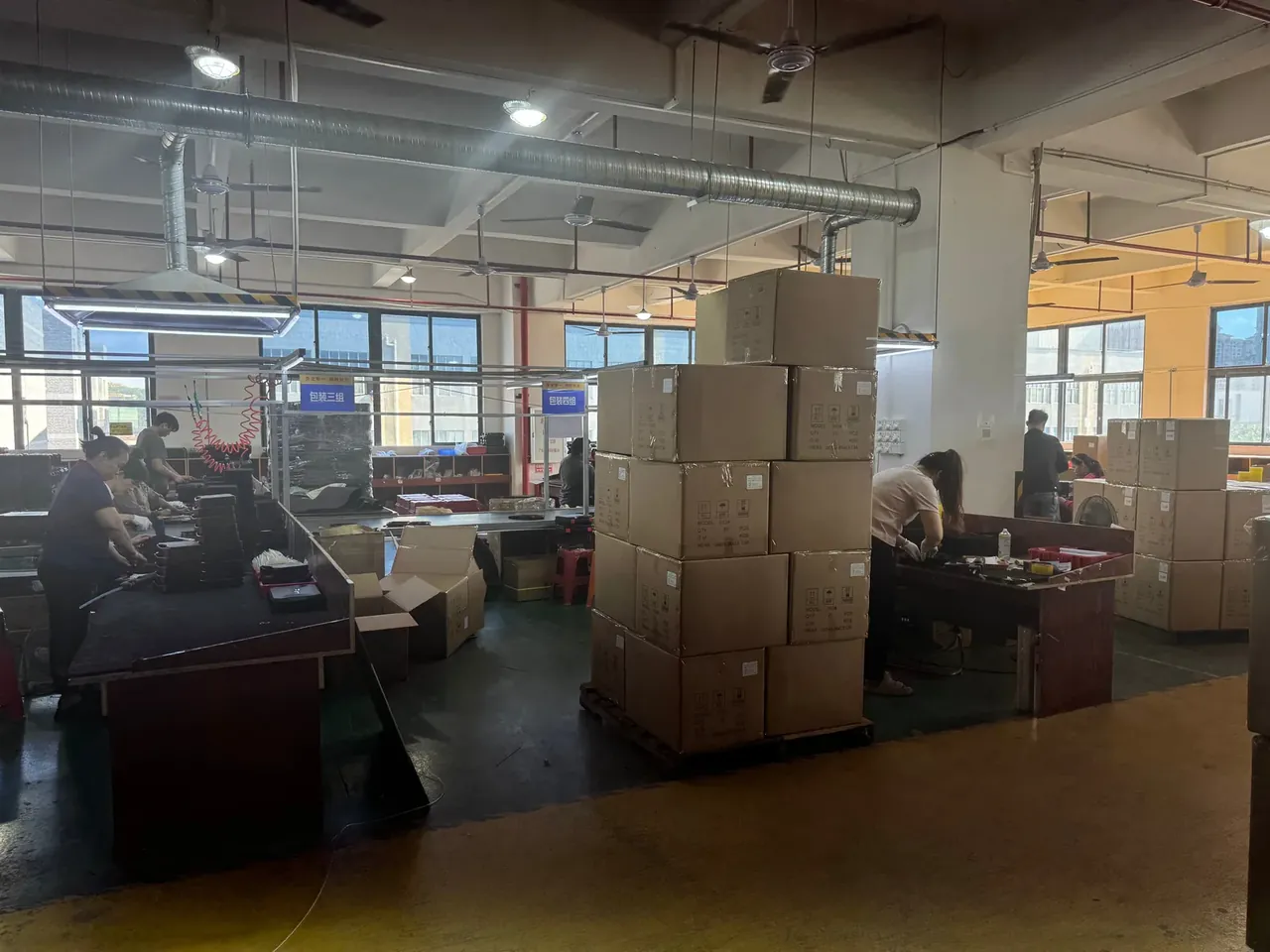
Quick answer: Portable weather station sensor protective case: four isolated bays, a φ12 mm vent holding 8 kPa, and ΔE 2.0 after 1000 h of xenon exposure.
Table of contents
- How the Bays Are Split Inside a Portable Weather Station Sensor Protective Case
- Separate Bays for the Wind Mast and the Rain Gauge
- The Breather Valve Behind the Temperature and Humidity Probe
- UV Ageing and Shell Colour
- What the Observation Crew Fixes as Standard
- FAQ
1. How the Bays Are Split Inside a Portable Weather Station Sensor Protective Case
A weather station carries four probes, so the case needs four bays that ignore each other. They arrive with different cable lengths and fragile corners, and in one open cavity they fight for space while every retrieval moves the other three. Splitting solves three problems: nothing knocks against a neighbour in transit, each cable keeps to its channel, and a failed probe leaves without disturbing the rest.
The Portable weather station sensor protective case measures 520×380×230 mm outside behind a 4.5 mm wall. Four dividers eat 6 mm, leaving a 470×330×185 mm cavity in four zones of unequal area. Areas follow the hand: longest bay by the handle for the mast, squarest opposite for the rain gauge.
Dividers are not better for being thick: at 3 mm a moulded rib holds its shape, and anything heavier steals bay width. Height runs at seventy percent of cavity depth so cables cross above. Retrieval runs temperature and humidity first, mast last, and that order belongs on the drawing.
2. Separate Bays for the Wind Mast and the Rain Gauge
In the Portable weather station sensor protective case the mast seat is a φ28 mm bore with a 1.5 mm chamfer, deep enough for the mast to stand without a clamp.
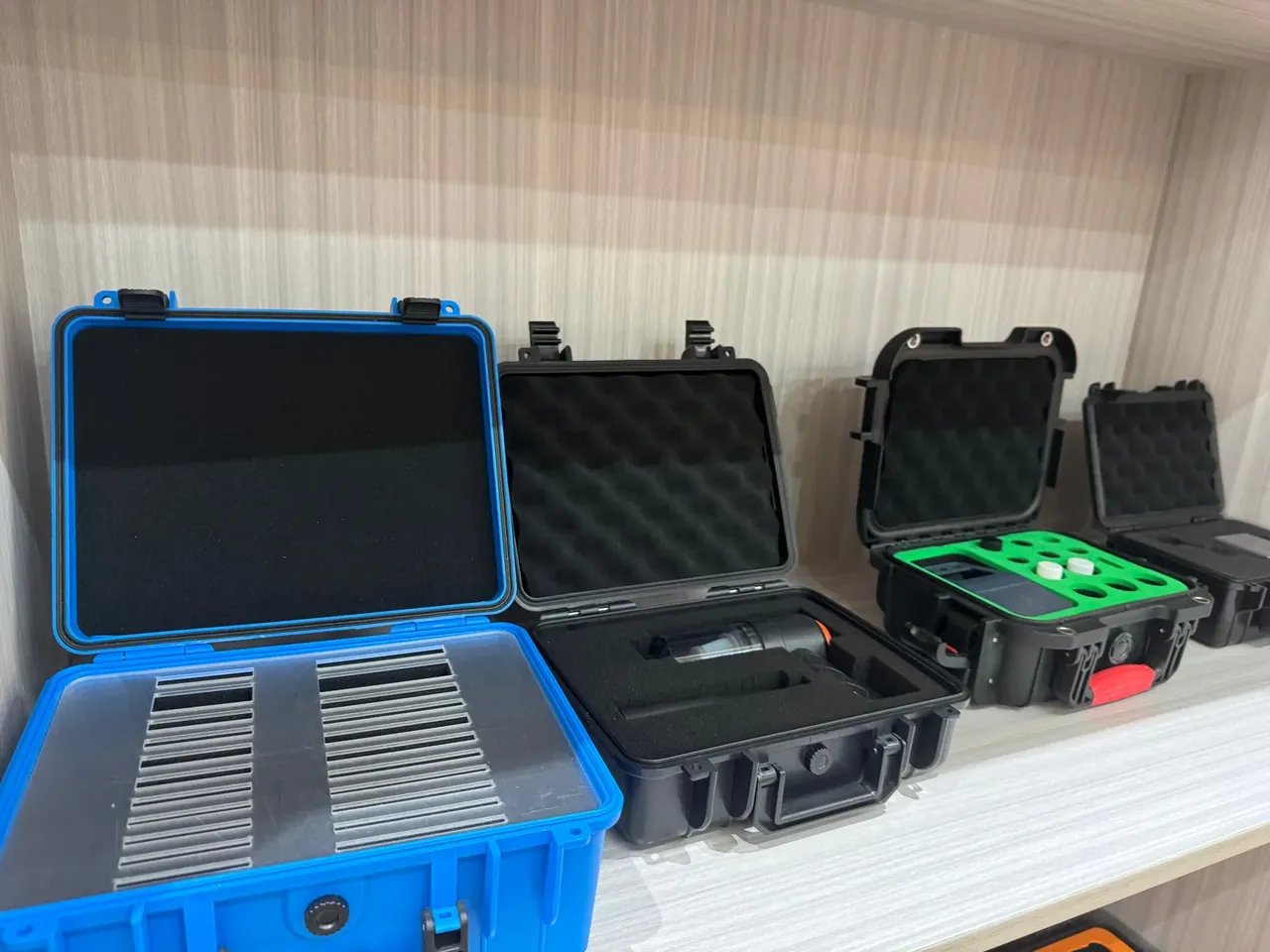
The rain bay is a 180×180×160 mm box moulded in one shot, inner corners at R8 so a tip-over does not concentrate stress on a sharp edge. A 12 mm solid wall divides the two, with no cable penetration: the mast cable leaves through a φ10 mm grommet, the gauge through its own exit.
| Bay tier | Divider thickness | Narrowest clear bay | Cable channels |
|---|---|---|---|
| Compact | 2.5 mm | 62 mm | 1 |
| Standard | 3.0 mm | 70 mm | 2 |
| Wide | 3.5 mm | 78 mm | 3 |
Compact costs 8 mm of bay and forces the longest probe in at an angle; wide adds a third channel and assembly time. On the Portable weather station sensor protective case, standard is where most crews settle.
3. The Breather Valve Behind the Temperature and Humidity Probe
What troubles a temperature and humidity probe is not water but stale air. The shell swells with the day-night swing, and the harder the gasket is compressed the less that differential escapes.
The Portable weather station sensor protective case carries its valve on a recessed pad in the lid: φ12 mm body, M12×1.5 thread, expanded PTFE membrane rated between 550 ml/min and 3000 ml/min at 7 kPa, a figure meaningless without its test differential.
The body stands 3 mm proud of the lid face and lands in a clearance hole in the liner, so closing neither crushes the valve nor smothers its air path. The case goes through the IP66 jet test as one assembly — 12.5 mm nozzle, 100 L/min, 2.5 m to 3 m standoff, 1 min per square metre and never less than 3 min.
Across a 25 ℃ swing, 28 L of free air pushes the gasket to bulge at 8 kPa; at φ8 mm effective area the reading falls under 2 kPa within a quarter hour.
4. UV Ageing and Shell Colour
Sunlight reaches the colour first. A dark shell absorbs more heat and runs a dozen degrees hotter, so the same compound in charcoal and light grey ages at different rates. On the Portable weather station sensor protective case, colour is a thermal decision as much as a visual one.
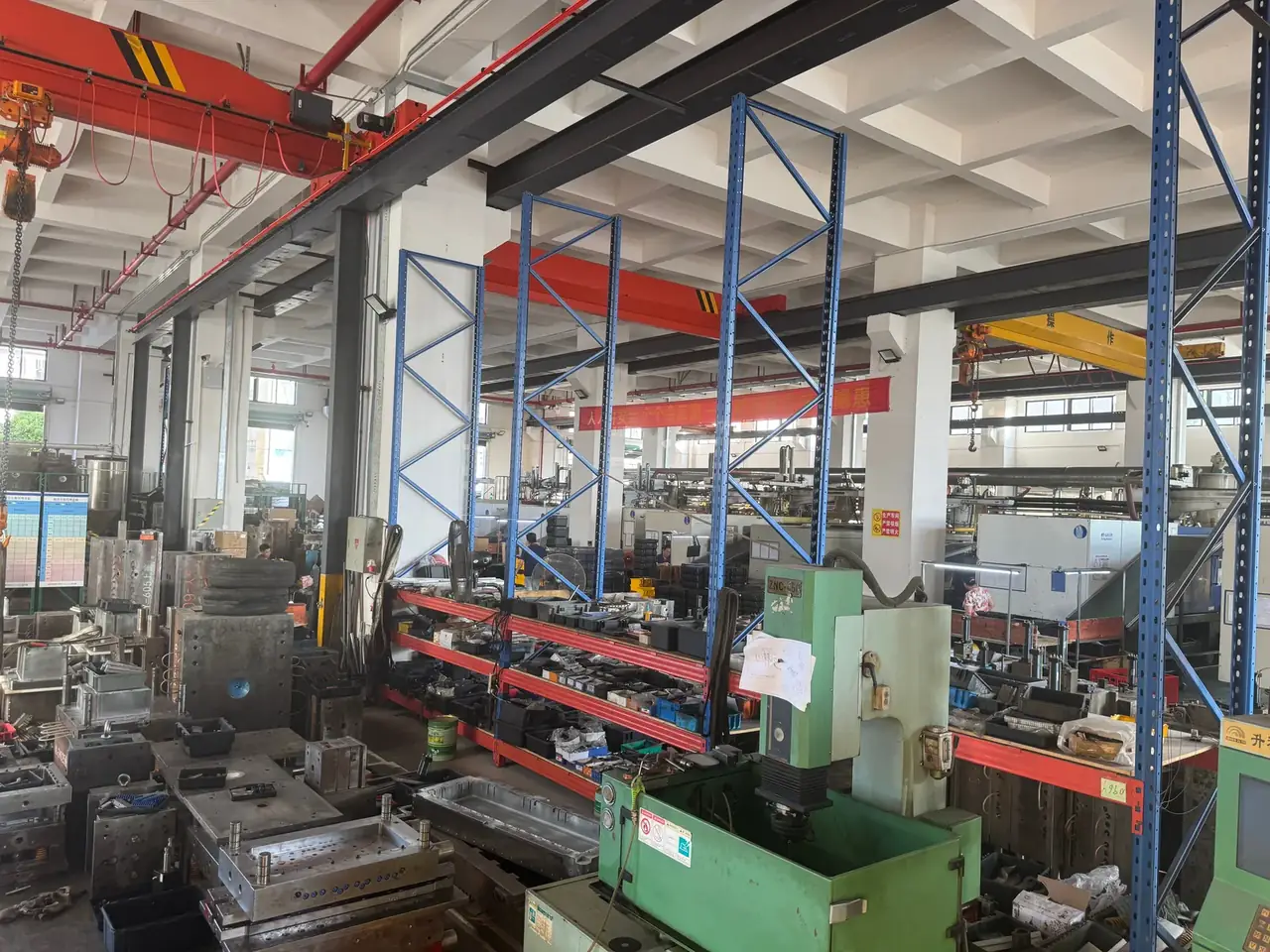
Ageing follows the ISO 4892-2 xenon cycle: 0.51 W/(m²·nm) at 340 nm, black panel 65 ℃, 50% relative humidity, 102 min of light then 18 min of spray, run to 1000 h and read as ΔE in CIELAB. That dose is roughly one outdoor year.
Pass 2.0 the eye sees a shift and past 3.0 the part is visibly aged; below seventy percent gloss retention the surface chalks. Pale shells climb slowly but show marks, dark shells hide dirt and reveal shift early, so crews take a mid-tone grey-green.
| Exposure | Black panel | ΔE limit | Gloss retention floor |
|---|---|---|---|
| 500 h | 65 ℃ | 1.5 | 85% |
| 1000 h | 65 ℃ | 2.0 | 70% |
| 2000 h | 65 ℃ | 3.0 | 60% |
The rows are acceptance limits, not measurements: 500 h gates the first sample, 1000 h the batch, 2000 h long programmes, on coupons matching the shipped compound and colour.
5. What the Observation Crew Fixes as Standard
The crew fixes the standard on the worst case. Three cases come off the batch and run 1000 h of exposure, 3600 open-close cycles and 360 N on each of four latches; only the overlap counts.
The rejection line is fixed: bay specification takes the palest colour tier that still holds ΔE under 2.0 after a thousand hours, and anything paler stays off field parts.
On the Portable weather station sensor protective case, cycle life is counted at 3600, hinge and latches together. At 3000 the latch tongue is measured, and wear over 0.3 mm means a new tongue rather than a new case.
Differential is logged on a 0.5 kPa gauge, cold and hot, on a card that travels with the case; a card beats a database where there is no network.
| Differential reading | Condition | Action |
|---|---|---|
| Under 2 kPa | Balanced | Recheck on the normal interval |
| 2 kPa to 8 kPa | Gasket too tight | Retest vent flow |
| Above 8 kPa | Gasket bulging | Withdraw and replace the vent |
Conclusion
The order is bays, vent, colour. Bays follow probe shape and hand order, dividers between 2.5 mm and 3.5 mm; the vent holds differential under 8 kPa; colour follows the ΔE reading at 1000 h, not taste. All three are set in the mould, and one change buys a new tool.
Related Reading
- Compartments in Weather Station Cases
- Field Layout of Observation Cases
- Volume Split Across Compartments
- Probe Cavities and Couplant
Related Products
- 8 Series — Gun Cases; Military Equipment Cases; Camera Equipment Cases; Drone Cases; Watch Cases; Knife Cases; First Aid Cases; Electronics Equipment Cases
- WL8-2812 PP Gun Case — model WL8-2812
- All protective cases and toolboxes: 7 series, 158 models