

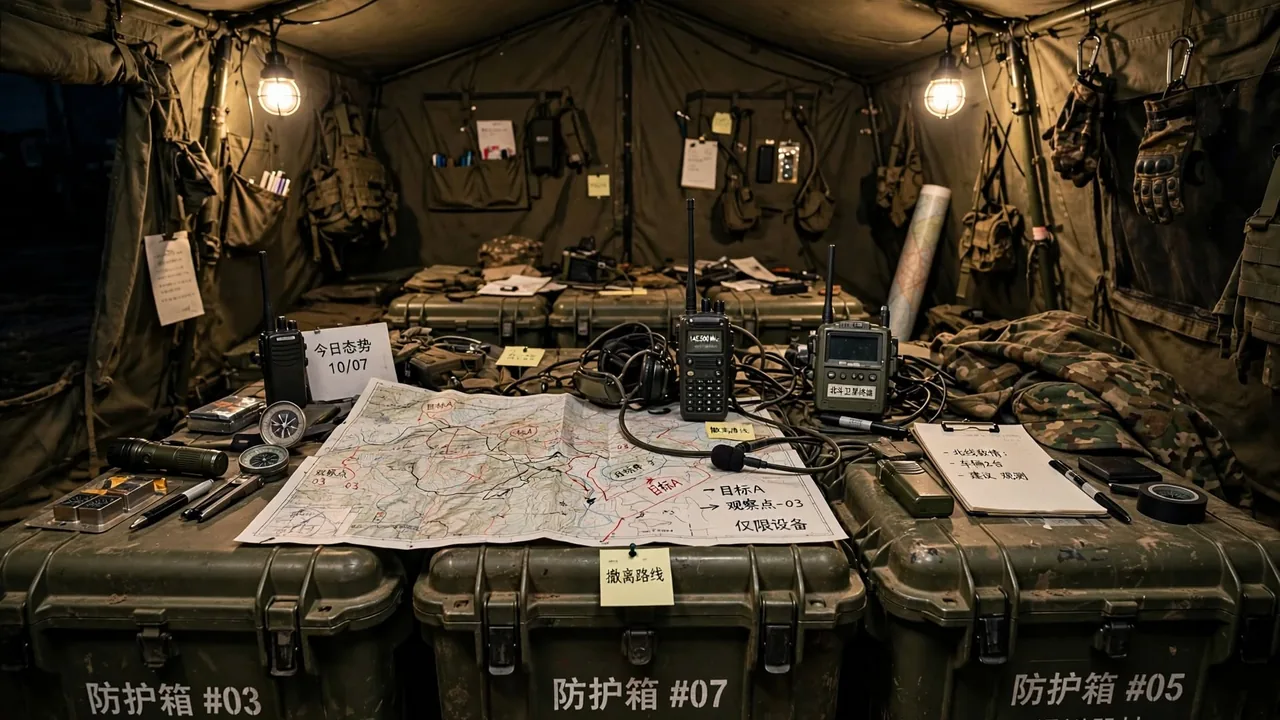
At long-term field stations operated by meteorological offices, research observation networks, and airport weather departments, sensors, data loggers, radiosondes, and calibration accessories are often exposed for years to harsh conditions such as sunlight, rain, salt spray, dust, and freeze-thaw cycles. Field experience shows that a well-structured, reliably sealed, and weathering-rated protective case can cut the unplanned downtime of outdoor observation equipment by more than half, serving as the first line of defense for stable long-term operation. This article focuses on the container itself - its material, shell, sealing, thermal control, vibration damping, locks, stacking, certification, customization, and maintenance - to systematically explain how to select the right meteorological observation instrument case for long-term outdoor deployment, helping procurement and engineering staff avoid common failures at the selection stage.
1. Weathering Requirements of Long-Term Field Observation
The biggest difference between long-term field observation and short-term transport is continuous exposure. An unattended automatic weather station may run at the same location for three to five years, enduring summer heat, winter embrittlement, humid monsoon seasons, coastal salt spray, and abrasive sandstorms. A common storage box may develop hardening seals, chalking shells, and loose hinges within months, whereas a professional meteorological observation instrument case must keep its protective performance essentially unchanged across the whole lifecycle.
From a failure-mode perspective, the three most common problems are water ingress, condensation, and vibration damage. Water usually enters through aged seals or deformed lid compression; condensation comes from internal dew formation caused by day-night temperature swings; vibration damage arises from transport, inspection handling, and long-term micro-vibration from nearby equipment. Selection therefore cannot rely only on a static rating; it must also consider the material's performance retention under long-term ultraviolet exposure, the compression set of the seal, and the rebound capacity of the liner.
Mountain, plateau, coastal, and desert stations each impose different demands. Plateau sites care about shell bulging and pressure equalization under low pressure; coastal sites care about salt-spray corrosion and seal aging; desert sites care about dust intrusion and thermal stress from temperature swings; mountain sites emphasize drop and transport shock. A qualified meteorological observation instrument case should weight its design toward the dominant environmental factors of the target site rather than applying one generic structure.
In terms of use, this protective case mainly stores and transports the sensors, data loggers, power modules, and calibration or spare accessories of automatic weather stations. It does not perform calibration of measured parameters such as temperature, humidity, or pressure; instead it provides a stable physical environment so the enclosed instruments are less disturbed by the outside. Understanding this keeps the procurement focus on the reliability of the container itself rather than on the measurement accuracy of the instruments inside.
2. Shell Material and Ultraviolet Aging Resistance
Most long-term outdoor instrument cases use rotomolded modified polypropylene or high-density polyethylene shells, while some adopt engineering plastic alloys or glass-fiber-reinforced composites. The greatest advantage of a plastic shell is that it does not rust, is light in weight, and offers high design freedom for ribs, stacking corners, and mistake-proof structures. For sun-intensive sites, the ultraviolet stabilizer system in the material formulation matters more than wall thickness.
Ultraviolet aging shows up as surface chalking, discoloration, and declining impact strength. To judge weathering ability, one should not look only at initial wall thickness but at the performance retention after accelerated ultraviolet aging tests. Xenon-arc or fluorescent UV chambers are commonly used to simulate long-term sunlight, and the accumulated radiant energy expressed as typical values serves as a reference for material selection. Dark shells with added carbon black or stabilizers usually outperform light or transparent shells in outdoor UV resistance, but one must also account for higher surface temperature under summer sun.
Metal cases excel in impact and fire resistance, yet their anti-corrosion cost is high in coastal salt spray and their weight is substantial, which hinders single-person handling at alpine and remote sites. Long-term field meteorological observation therefore tends to favor modified plastic shells certified to the UL94 flame-retardant rating, balancing lightweight and weathering. Note that the flame-retardant rating addresses fire behavior, not waterproofing or weathering, and the two must be verified separately.
Material selection should also consider the low-temperature brittleness point. Northern and plateau stations may drop to minus forty degrees Celsius in winter; if the material's low-temperature brittle point is high, cracks may appear near latches under impact. It is advisable to match the material's low-temperature impact test typical values against the site's extreme low-temperature records, and to prefer formulations validated through high-low temperature cycling.
It is also worth comparing rotomolded and injection-molded shells when specifying a long-term case. Rotomolding yields seamless, stress-free walls with uniform thickness and excellent impact resistance, which suits lower-volume, larger, or more customized cases; injection molding gives tighter tolerances and higher repeatability for standardized small and medium cases. For a meteorological observation network that may later expand, discussing both processes with the supplier early helps align tooling cost and lead time with the expected batch size, and prevents a late redesign when the network grows beyond the original plan.
3. Shell Structure and Impact-Resistant Ribs
A thicker shell is not necessarily better; rational structural design often matters more than absolute wall thickness. Professional cases arrange interlocking ribs across the outer walls to gain maximum bending stiffness with minimal added material. Ribs also distribute local impact during drops, avoiding stress concentration that could crack the case. When selecting, press the side wall by hand to feel its rebound and rigidity; an overly soft thin shell tends to creep under long-term stacking.
The balance between wall thickness and strength requires engineering judgment. Excess thickness raises weight and material cost, while too little reduces rigidity. As a rule of thumb, the main load-bearing faces of a long-term outdoor case should have sufficient wall-thickness margin, with rounded corners at angles to spread impact. Rounded design improves crash resistance and also reduces edge damage to adjacent cases during transport and stacking, a common detail in professional protective cases.
Hinges and shells should use compatible materials joined integrally or reliably, avoiding loosening from different thermal expansion rates during long-term hot-cold cycles. High-strength hinges bear not only opening cycles but also the prying force on the lid during drops. It is recommended to review the cycle-life typical values of the hinge and estimate the maintenance interval from the field opening frequency.
Reinforcement should also serve stacking stability. Convex and concave features around the case create an interlock so that stacked load transfers vertically rather than pressing on the lid seal. This structure is especially important for spare-part cases stored long term in warehouses or stations, preventing lower-layer lid seals from failing under prolonged compression.
4. Sealing Design and the IP67 Rating
Sealing is the core of case waterproofing. The common approach is a continuous foamed gasket inside the lid that forms a closed waterproof ring when closed. The gasket material, cross-section shape, and compression together determine the result. For long-term outdoor use, prefer ethylene propylene diene monomer or silicone rubber materials that resist ozone and aging, avoiding premature hardening and cracking under UV and thermal cycling.
IP67 is one of the most frequently cited ratings for meteorological observation cases. According to IEC 60529 and the equivalent national standard GB/T 4208, IP67 means the enclosure is fully protected against solid objects not smaller than one millimeter and can survive immersion in one meter of water for thirty minutes without ingress. It must be clear that IP67 is short-term immersion protection rather than sustained deep submersion; sites possibly flooded briefly by high water should treat this rating as a baseline.
Seal reliability depends not only on the rating label but also on field assembly consistency. After repeated opening, long transport, and temperature cycles, the gasket develops compression set. Professional products give a designed compression range and verify it through batch sampling. Buyers should request the gasket material specification and aging test typical values rather than trusting only the rating number in promotional text.
To improve long-term reliability, some cases use double seals or labyrinth seals, so that even if the outer seal shows minor leakage from dust wear, the inner seal still blocks moisture. For coastal and high-humidity sites, this redundancy significantly extends the safe cycle. Related selection points are also discussed in the outdoor waterproof case design and IP67 protective case articles.
5. Thermal Control and Condensation Prevention
The case itself usually does not actively control temperature, but passive means can reduce condensation risk from day-night temperature swings. Condensation occurs when the internal air temperature drops below the dew point and water precipitates onto instruments and circuits; over time it corrodes connectors and pins. For humid sites, condensation control is as important as waterproofing.
Common passive condensation control includes placing reversible desiccant inside and replacing it periodically; leaving an air-insulation layer between liner and shell to slow external temperature conduction; and locally sealing the cavity of critical instruments. For more demanding sites, the structural logic in the outdoor rain and humidity case helps partition a dry chamber from the equipment chamber.
The thermal expansion coefficient of materials also affects sealing. Large day-night temperature swings cause repeated deformation of shell and gasket; if their expansion rates differ too much, micro-gaps may form at the interface over time. In regions with alternating severe cold and heat, prefer seal combinations with matched linear expansion coefficients and validated through high-low temperature cycling.
It must be emphasized that thermal and condensation design aims to provide a stable micro-environment for enclosed instruments, and does not replace the instrument's own rating. When a site sits in an extreme temperature range, still combine the climate archive with separate insulation or heating cavities for sensitive sensors, positioning the instrument case as the outer barrier of an overall protection system.
6. Vibration Resistance and Damping Liners
Instruments suffer random vibration during transport, inspection handling, and long vehicle runs; prolonged micro-vibration can loosen connectors and fatigue solder joints. The damping liner absorbs and disperses external vibration energy before it reaches the instruments. Common liner materials include polyethylene foam, ethylene vinyl acetate, and polyurethane, whose hardness, rebound, and energy absorption differ and should match instrument weight and fragility.
Liner forming methods include die-cutting, thermoforming, and pick-and-pluck grids. Die-cutting suits standardized batch products; thermoforming fits irregular instrument contours for closer protection; pick-and-pluck offers on-site flexibility to carve by shape. For research networks mixing multiple models, the selection logic in the case foam lining guide helps balance standardization and flexibility.
Liner thickness and density must match the protected instrument. Too soft a liner under a heavy instrument bottoms out and loses cushioning; too hard a liner under a light instrument absorbs insufficient energy. As a rule, the instrument should sit with even surround coverage and extra support at critical points. For fragile items such as movable parts or radiosondes, layered liners that isolate the breakable piece are recommended.
Damping is best verified by test rather than feel. Using typical-value methods from transport vibration testing, run sweep and random vibration on a fully loaded case and observe the internal acceleration transmissibility. A periodic spot check before equipment rotation transport can reveal liner aging or loose instrument fixation early.
7. Latches, Hinges, and Stacking Structure
Latches are the most frequently used and often the first to fail. Outdoor latches must balance theft resistance, accidental-opening prevention, and cold-weather operability. Common options are strap latches, butterfly latches, and protected latches with lock cylinders, some with padlock holes for asset management. Review the cycle-life typical values and corrosion treatment; coastal sites especially need metal parts tolerant to salt spray.
Hinges and latches should be designed as a set so the lid stays aligned after many openings, avoiding uneven seal compression from lid offset. High-strength hinges with limit structures prevent the lid from slamming in strong wind and protect the seal face from ground impacts. Structural details are reviewed in the high-strength case hinge article.
Stacking structure is essential for long-term storage and transport. A standard case has interlocking top-bottom features so stacked load transfers vertically and the lid bears no bending moment. Stacking layers should follow the stacking-load typical values and account for floor flatness and pallet use. Excessive stacking keeps lower cases in long-term creep; the planning method in the case stacking structure article is useful.
For airports and stations requiring frequent spare access, the case should also support clear marking. Plan a marking zone on the case face for station number, instrument category, and seal position, integrated with asset management to reduce misplacement. Stacking stability combined with clear marking delivers real value in daily operations.
8. Pressure Equalization Valve and High-Altitude Adaptation
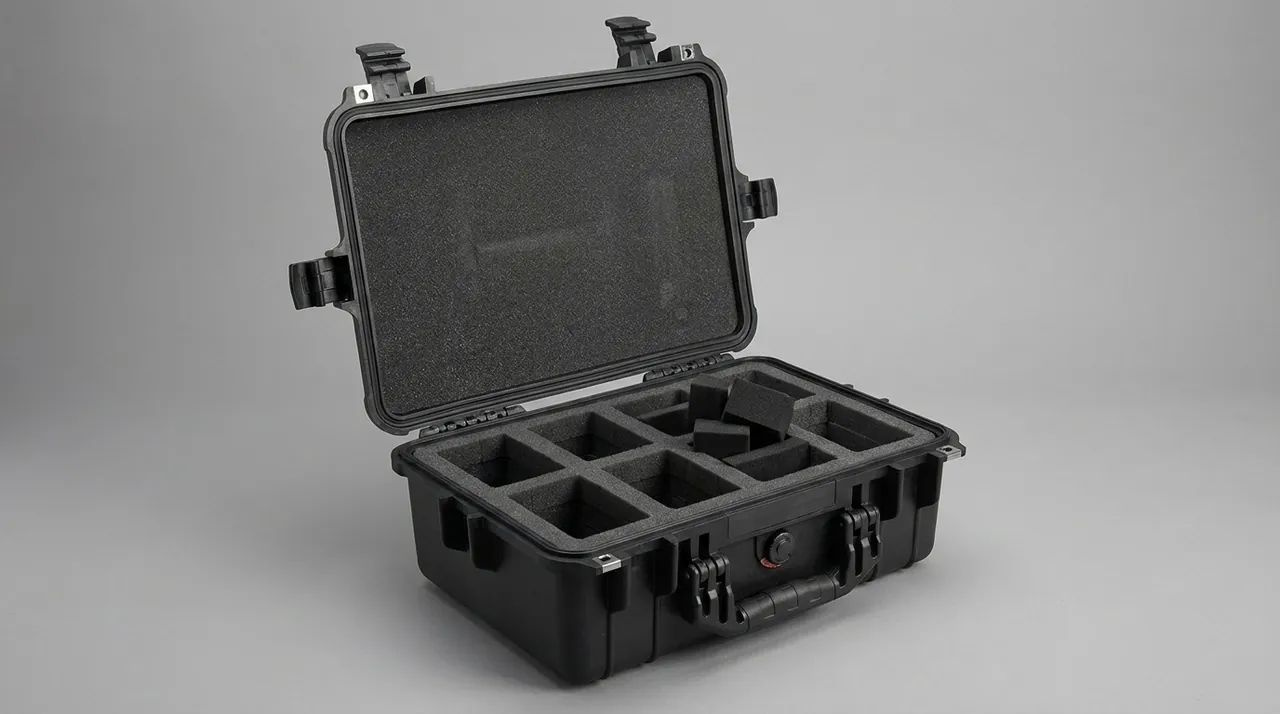
Plateau and high-altitude stations have pressure far below plains; a sealed case bulges internally while ascending and sucks inward returning to plains, and repeated pressure differences accelerate seal fatigue, even making the lid hard to open or the seal slip. The pressure equalization valve, or breather valve, balances internal-external pressure slowly while blocking liquid water and particles, allowing gas exchange without ingress.
Pressure equalization valves typically use a water-repellent microporous membrane or a mechanical one-way structure. Selection should ensure its waterproof rating matches the overall case and that the air flow meets the station's altitude change rate. For research networks frequently moving instruments between plateau and plains, this component is almost mandatory; the design logic is covered in the outdoor case pressure valve article.
Beyond altitude, temperature rise also creates positive pressure inside a closed case. Under summer sun, a dark shell heats quickly and internal air expands; without a balance path, the positive pressure keeps pushing the gasket. The valve relieves this, but must be paired with reasonable shell stiffness to avoid permanent lid deformation under long-term positive pressure.
Note that the valve is a consumable; its membrane gradually fouls in dust and salt spray and loses effectiveness. Include valve inspection in the annual station maintenance and replace when necessary. Treating the valve as a one-time factory fit and never checking it is a common hidden failure source at plateau and coastal sites.
9. Certification Standards: IEC 60529, GB/T 4208, MIL-STD-810H, ISTA
Certification turns claimed performance into verifiable metrics. For protection rating, IEC 60529 is the international standard for enclosure classification, adopted equivalently in China as GB/T 4208; both define the IP code consistently and are the authoritative basis for judging IP67 and similar ratings. Buyers should require test documentation corresponding to the rating rather than only the model label.
For environmental adaptability, MIL-STD-810H is a US Department of Defense test-method standard covering high-low temperature, humid heat, vibration, shock, low pressure, and other harsh-environment procedures, widely cited as an engineering reference for equipment robustness. Although it is a method rather than a certification, projects tested by it effectively prove the case's stability in complex environments. For long-term field sites, prefer products verified by relevant MIL-STD-810H procedures.
For transport reliability, the ISTA series provides systematic test procedures for vibration, drop, and compression of shipping packages, simulating cumulative logistics damage. For observation-network spares moved across provinces or countries, ISTA verification helps reduce transport breakage. For flame safety, UL94 evaluates material burning behavior and can be an added requirement near coastal or equipment-room scenarios.
In summary, a qualified delivery file should at least include: test documentation for the IP rating referencing the standard, typical values for key material flame retardancy and aging, and test summaries per MIL-STD-810H or ISTA methods. Reading these against the IP rating guide helps quickly judge a supplier's real capability.
10. Custom Liners and JUNZHIJIA Customization Capability
Observation networks often use non-uniform instrument models, and standard liners cannot fit all. Custom foam liners fix different sensors, loggers, and spares in their own cavities, preventing collision and speeding inventory during inspection. The core is designing the enclosure by the instrument's three-dimensional size and center of gravity so the center falls in the support zone and no shift occurs in transit.
For customization, JUNZHIJIA provides an end-to-end process from drawing confirmation and foam-liner prototyping to batch production, supporting molding from the physical instrument or a 3D model and compatible with die-cut, thermoformed, and pick-and-pluck liner options. For the pain point of mixed models in observation networks, JUNZHIJIA's OEM/ODM capability can unify case size, liner zoning, and exterior marking into one product series, lowering later spare-management cost.
The seal is another focus of customization. JUNZHIJIA can match gasket material and cross-section to the case structure and target rating so the compression falls in the design range, and provides gasket material and aging test typical values as acceptance evidence. For coastal and plateau sites, a combination of salt-spray-resistant seals and pressure equalization valves forms a more targeted weathering solution.
Acceptance documentation is also part of customization value. JUNZHIJIA can deliver a structural parameter table, liner layout drawing, and corresponding standard test summary at handover, making it easy for stations to include the case in asset management and periodic re-inspection. Upgrading customization from a one-time shape to documented, traceable engineering service is key to controlling operational risk at long-term sites.
11. Maintenance, Inspection, and Seal Replacement
An instrument case is not a buy-and-forget consumable. An actionable annual maintenance checklist should include: checking whether the gasket is hardened, cracked, or permanently deformed; checking latch and hinge smoothness and rust; checking pressure-valve airflow; cleaning lid drain grooves and vents; and verifying marking and seal integrity. Writing maintenance into station procedures significantly extends case life.
Seal replacement is a maintenance priority. When local compression marks are too deep, rebound is insufficient, or surface chalking appears, replace with the same specification promptly. Clean the seal groove thoroughly to avoid old adhesive affecting new-fit, and close at the recommended compression, then rest so the gasket forms a stable deformation memory. Steps are detailed in the seal ring replacement guide.
Cleaning should use neutral detergent and a soft cloth, avoiding strong solvents that attack shell and seal. Coastal stations should rinse surface salt with fresh water every quarter to prevent salt grains from wearing the seal interface and accelerating corrosion. Before long storage, dry the case inside and out, air the liner in shade, and close only when dry, avoiding sealing moisture inside.
Maintenance records should be traceable. Build an archive for each batch recording deployment site, activation date, maintenance date, and replaced parts, using the cycle in the protective case maintenance guide as a basis, so the case state remains assessable after years of operation. Traceable maintenance is the hidden guarantee of long-term site reliability.
12. Procurement Checklist and Action Steps
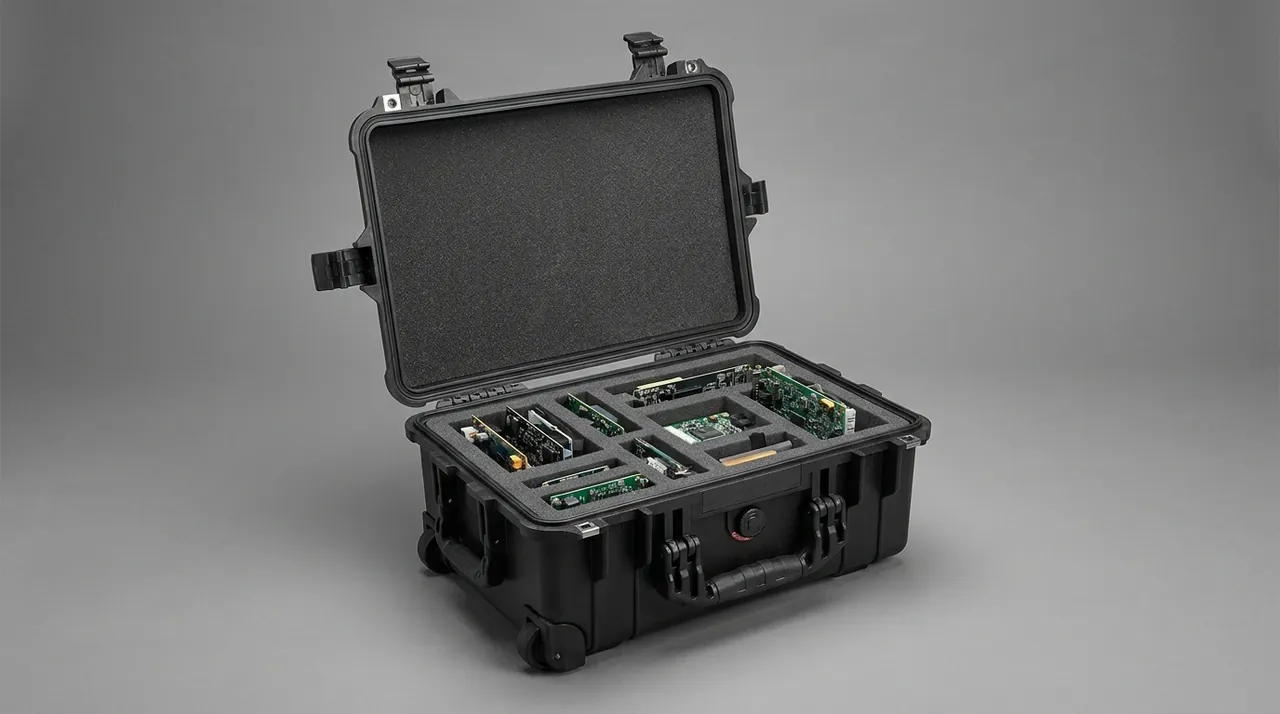
Before formal procurement, compile a site environment archive listing the target site's extreme high temperature, extreme low temperature, annual sunshine, relative humidity, salt-spray or dust exposure, altitude, and possible inundation risk. This archive is the baseline for all later selection judgments, avoiding generic boxes chosen by experience. The more specific the archive, the smaller the selection deviation.
Based on the archive, confirm in order: first, whether the shell material and weathering rating cover the site's UV and temperature range; second, whether the sealing structure and IP67 rating have corresponding standard documents; third, whether the liner plan fits the station's instrument mix; fourth, whether latches, stacking, and marking meet daily operation; fifth, whether a pressure valve and drying measures are needed; sixth, request MIL-STD-810H, ISTA, and other relevant test typical values.
For action steps, pilot a small batch first and observe case performance across one full seasonal cycle before scaling. During pilot, record opening count, seal state, internal humidity, and transport damage as acceptance evidence. For multi-site networks, unify a primary model first, then add accessories for special sites, reducing management complexity.
Finally, archive supplier technical files, custom drawings, and maintenance records together. The value of long-term field observation lies in data continuity, and behind continuity is every container kept under control. Combined with the instrument case selection guide and the custom foam lining guide, selection can be standardized and process-driven, reducing dependence on individual experience.
A practical closing recommendation is to treat the case as a managed asset rather than a one-time purchase. Assign each case a unique identifier, link it to its environment archive and maintenance schedule, and review the whole fleet annually to retire cases that no longer meet the site's needs. This disciplined approach turns the selection described above into a recurring cycle of specify, pilot, deploy, maintain, and improve, which is what keeps a multi-year observation network running with minimal surprise. When procurement, field staff, and maintenance share one documented standard, the instrument case becomes a quiet but essential contributor to data quality.
FAQ
Q: Why can a long-term field meteorological station not simply use a common storage box instead of a professional instrument case? A: A common storage box is designed for indoor organization, and its shell material, sealing structure, and latches are not weighted for continuous outdoor exposure. At sun-intensive sites, an ordinary case may chalk and lose impact strength within months; in monsoon or coastal sites, its gasket hardens and cracks and cannot hold stable waterproofing. More importantly, ordinary boxes lack pressure equalization, damping liners, and traceable test documents, so once internal instruments are damaged by moisture or vibration, the loss far exceeds the case price difference. A professional meteorological observation instrument case uses weathering materials, IP67 sealing, reinforced structure, and verification per MIL-STD-810H and ISTA methods, keeping protective performance essentially stable over years, which is exactly the capability long-term sites need. The apparent saving of a cheaper box is illusory once downtime and data gaps are counted. Beyond the direct cost of a failed instrument, the hidden cost is the lost observation record, because a gap in a multi-year climate series cannot be recovered later. For stations that feed forecasting or research models, that lost continuity is often the most expensive consequence of under-specifying the container.
Q: What does the IP67 rating mean for a meteorological observation case, and is it enough against flood inundation? A: According to IEC 60529 and GB/T 4208, IP67 means the enclosure is fully protected against solid objects not smaller than one millimeter and can survive immersion in one meter of water for thirty minutes without ingress. For most long-term field stations, this rating easily handles rain, surface water, and brief splashing. But it must be clear that IP67 is short-term immersion protection, not sustained deep submersion; if a site sits in a low-lying area possibly inundated for a long time by flood, IP67 alone is unsafe, and measures such as raised installation, drainage design, and redundant sealing must be added. Buyers should also require supplier test documentation corresponding to the rating rather than trusting only the model label, because true reliability comes from seal structure and assembly consistency, not the printed number. In practice, a site flood risk assessment should be documented before purchase, and the chosen rating should be matched to the assessed risk rather than to a generic catalog grade, so the case is neither over-specified at needless cost nor under-specified at fatal risk.
Q: Why does a case need a pressure equalization valve when moving instruments between plateau and plains? A: Plateau pressure is far below plains; a sealed case bulges internally while ascending and sucks inward returning to plains, and repeated pressure differences accelerate seal fatigue, even making the lid hard to open or the seal slip. The pressure equalization valve uses a water-repellent microporous membrane or mechanical one-way structure to allow gas exchange while blocking liquid water and particles, slowly balancing internal-external pressure. For research networks frequently moving instruments between plateau and plains, this component is almost mandatory. Note that the membrane gradually fouls in dust and salt spray and loses effectiveness, so it should enter the annual maintenance checklist and be replaced periodically; it cannot be treated as a one-time factory fit that is never inspected again. Additionally, when a case is shipped by air freight, the cabin and cargo hold pressure changes during climb and descent produce the same cycle, so the valve protects not only field movement but also logistics. Specifying the valve early avoids costly retrofits after the first difficult-to-open case is reported from a remote station.
Q: How does internal condensation form, and how should the case prevent it? A: Condensation occurs when internal air temperature drops below the dew point and water precipitates onto the inner wall, instruments, and circuits, and over time corrodes connectors and pins, especially harmful at humid sites. Although the case does not actively control temperature, it can mitigate passively: place reversible desiccant inside and replace periodically; leave an air-insulation layer between liner and shell to slow external temperature conduction; locally seal the cavity of critical instruments. For more demanding sites, partition a dry chamber from the equipment chamber and pair it with moisture-absorbing material. It must be emphasized that these measures aim to provide a stable micro-environment, and extreme temperature zones still require separate insulation or heating cavities for sensitive sensors. A useful field habit is to log internal humidity with a small indicator card or data logger during the first season, so the desiccant replacement interval is set by evidence rather than guesswork, and so a sudden change in condensation pattern can alert staff to a failing seal before instruments are harmed.
Q: How should a damping liner be chosen to fit instruments yet truly absorb energy? A: The damping liner absorbs and disperses external vibration energy to prevent direct transmission to internal instruments. Common materials include polyethylene foam, ethylene vinyl acetate, and polyurethane, whose hardness, rebound, and energy absorption differ and should match instrument weight and fragility. Liner forming includes die-cutting, thermoforming, and pick-and-pluck grids; networks mixing multiple models should balance standardization and flexibility. The key principle is even surround coverage after the instrument sits, with extra support at critical points; too soft a liner under heavy instruments bottoms out, while too hard a liner under light instruments absorbs insufficient energy. Validation by transport vibration test typical-value methods observing internal acceleration transmissibility is preferable to judging by feel alone. When several instruments share one case, separate the heaviest unit from the most fragile one with a rigid divider, and keep cables and probes in shaped channels so they cannot whip against rigid parts during transit. Documenting the liner layout per case also simplifies re-pack verification after maintenance.
Q: What technical documents should buyers request from suppliers to prove case reliability? A: A qualified delivery file should contain at least four types of content: first, test documentation for the IP rating referencing the standard, proving the IP67 label is real and verifiable; second, typical values for key material flame retardancy and aging, such as UL94 grade and post-UV performance retention; third, test summaries per MIL-STD-810H or ISTA methods covering high-low temperature, humid heat, vibration, shock, and low pressure; fourth, structural parameter table, liner layout drawing, and gasket material specification for acceptance and later re-inspection. Reading these against the IP rating guide and instrument case selection guide quickly reveals whether a supplier truly has engineering capability or merely prints high ratings in promotions, which is the difference between a dependable purchase and a costly mistake. It is also wise to require that the supplied documents name the exact case model and batch, because a generic certificate that does not tie to the delivered product provides no real assurance and should be rejected during incoming inspection without hesitation.
Q: How often should the case gasket be replaced, and how do we know it is time? A: A gasket has no fixed uniform replacement cycle; it should be judged by condition. Maintenance should check whether the gasket shows hardening, surface chalking, visible cracks, or local compression marks too deep with insufficient rebound, and replace immediately once found. Coastal and plateau sites, with more frequent salt spray and pressure cycling, usually need more frequent replacement than inland sites. When replacing, clean the seal groove thoroughly to avoid old adhesive affecting new fit, and close at the recommended compression, then rest so the gasket forms stable deformation memory. Writing seal inspection into the station annual maintenance checklist, combined with traceable maintenance records, avoids leaving hidden danger until equipment is already damaged and discovered too late. As a practical rule, photograph the seal at each inspection and compare images year over year; progressive chalking or compression-set growth becomes obvious in a visual series, turning a subjective judgment into an objective, auditable decision that supports budget planning for spare seals.
Q: An observation network has many different instrument models; how can cases be unified without wasting space? A: The core of mixed-model packing is custom foam liners that fix different sensors, loggers, and spares in their own cavities so the center of gravity sits in the support zone and no shift occurs in transit. For networks, leverage the supplier's OEM/ODM capability to unify case size, liner zoning, and exterior marking into one product series, lowering spare-management cost and easing inspection inventory. Practically, unify a primary model for most sites first, then add accessories for special sites such as salt-spray-resistant seals, pressure equalization valves, or partitioned dry chambers. Piloting a small batch for one full season before scaling is an effective way to control selection deviation and avoids large write-offs from a wrong bulk order placed too early. To avoid wasted space, design the liner around the actual instrument set per station rather than a theoretical maximum, and keep one standardized empty cavity for site-specific spares so the same case footprint serves several station types without bespoke tooling for each.
Q: What extra weathering details should coastal meteorological station cases pay attention to? A: The main threats at coastal sites are salt-spray corrosion and accelerated seal aging. In material selection, focus on anti-salt-spray treatment of shell and metal parts; metal parts such as latches and hinges need reliable anti-corrosion plating or corrosion-resistant materials; gaskets should prefer ozone- and aging-resistant materials with a shorter re-inspection interval. In operation, rinse surface salt with fresh water every quarter to prevent salt grains wearing the seal interface and accelerating corrosion; before long storage, dry the case inside and out and air the liner in shade before closing. Moreover, if coastal sites add typhoon and high-tide inundation risk, installation height, drainage, and redundant sealing should enter the overall design rather than relying on a single IP rating alone for safety. A coastal station handbook should also specify how to document salt accumulation and rinse frequency, because discipline in routine washing often matters more than the initial material grade when the site operates for five years or longer under constant marine exposure.