

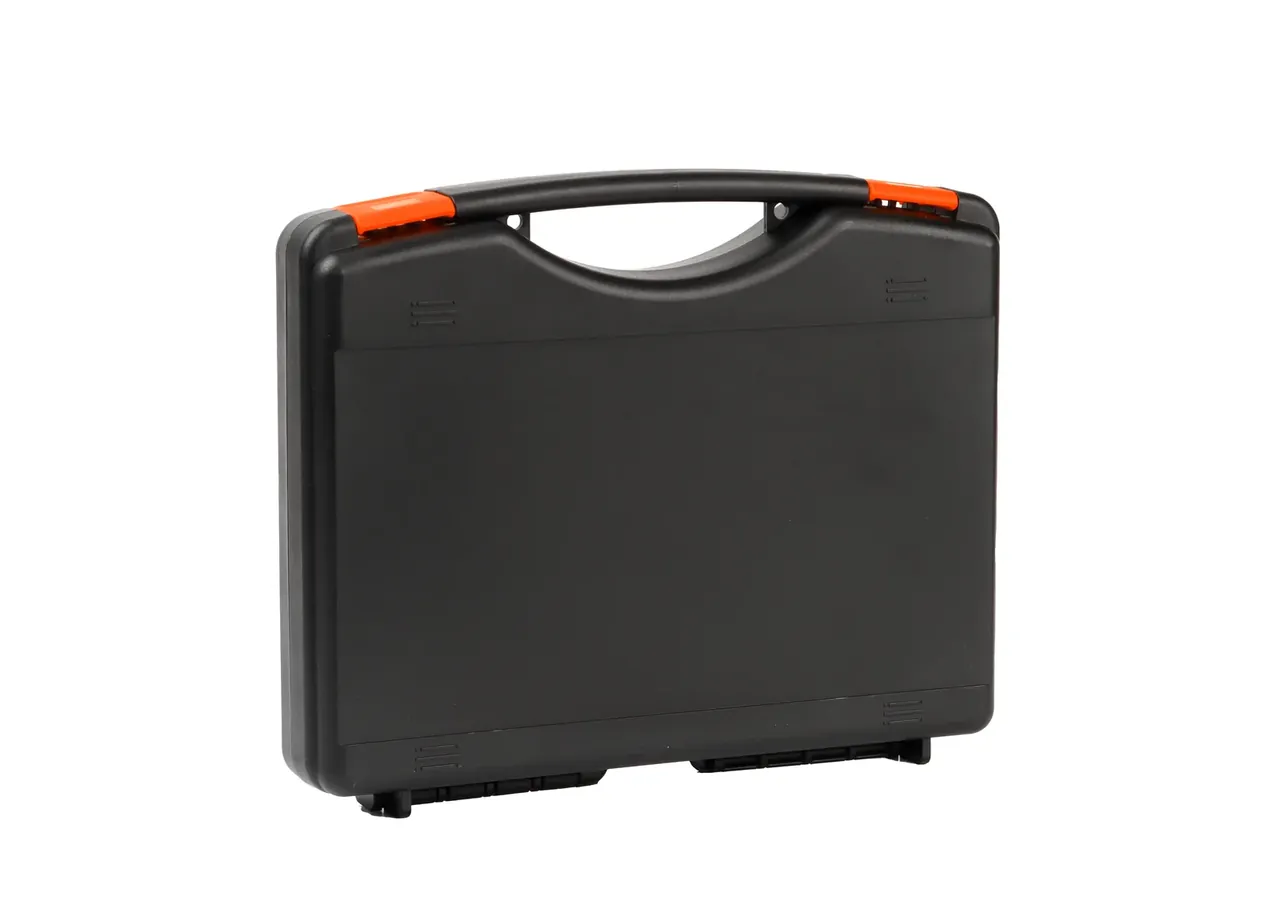
Quick answer: Four lines use the same box for different reasons, and the differences come down to ambient temperature, latch cycles per shift and how the liner meets the lid. A cold dock at minus 18 C needs a gasket that still springs back; an electronics line needs a latch that survives ninety closures a shift. Measure those three, then fix liner and latch count.
Table of contents
- Cold-Store Dock Assembly Order
- Four Things That Happen in Forty Seconds
- Two Liner Systems for Hardware and Medical Stock
- Static Control and Cycle Time on an Electronics Line
- Five Mistakes That Repeat on Site
- FAQ
1. Cold-Store Dock Assembly Order
The dock runs at minus 18 C, and the spot beside the freezer door is colder: with the air curtain open a meter reads minus 22 C. A PP Plastic Case gets forty minutes between freezer and truck to be opened twice, checked once and sealed once. That fixes the order: liner down, case on its side, long-edge latches first, then a finger run along the gasket.
Wrong order fails the next morning, not that day.
Cold pushes three values up together. Silicone hardness goes from 50 Shore A to 68 and rebound from 0.6 second to 1.4 seconds. Latch force climbs from 70 N to 95 N, which a gloved finger cannot press, so crews hit it with a palm heel and a white mark appears at the root. The walls stiffen as well, so the case stops denting and the corner radius takes the energy.
| Scene | Ambient | Load per case | Stack | Closures per shift |
|---|---|---|---|---|
| Cold-chain transfer | minus 18 C | 22 kg | 5 high | 12 |
| Hardware spares | ambient, 35 C in summer | 18 kg | 4 high | 6 |
| Medical consumables | 22 C, controlled | 9 kg | 3 high | 30 |
| Electronics line | 23 C | 11 kg | 2 high | 90 |
All four zones of that distribution centre run the same 590 by 390 by 220 mm PP Plastic Case. Freezer duty needs five-high stacking ribs; the electronics line stacks two high, drops to two ribs, and the saved resin roughly pays for the conductive masterbatch.
2. Four Things That Happen in Forty Seconds
Forty seconds is the average, counted from lifting a latch to closing it again. Crews lift the lid before looking at the liner, so a lid pushed open by 95 N swings into the door frame and the hinge stop takes the hit.
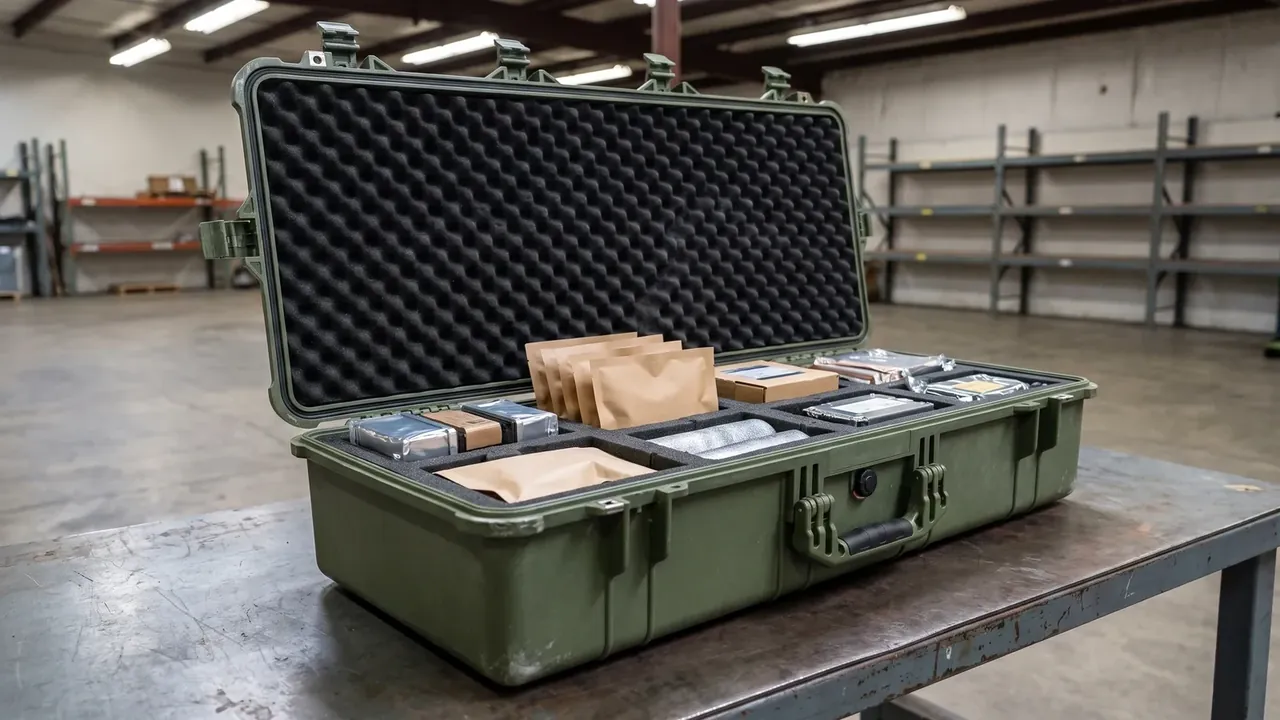
The lid stops at 100 degrees on a moulded rib, not a damper. That rib is brittle in the cold, three knocks break a corner, and the lid weight then pulls the hinge out of square. Sight along the seam after closing: a uniform 1 mm line is normal, a wedge is not.
Picking is the slow part. Twelve compartments, 22 kg, about 7 seconds per reach; if a wall stands 30 mm above the part, the hand changes angle and the time goes to 12 seconds. Across 120 picks a day that is forty minutes, one person's break.
Warm-cold cycling is the most underrated item here. A case moved from minus 18 C to a 4 C sorting area frosts inside within thirty seconds, and the egg-crate valleys hold that frost. On the next closure the frost melts, runs past the latch and sits in the gasket channel. Back in the freezer the water freezes, lifts the gasket, and humidity climbs from 35% to 60%. Two weeks of that takes foam compression set from 8% to 22%, and the lid stops sitting tight. One crew taped in a 0.5 mm PE film and paid six seconds per opening to peel it back. Another switched to closed-cell EVA at under 0.5% water uptake, and only that change had no side cost.
Closing is the step most often skipped. One latch of two gets fastened, the lid rides on the gasket, and someone later lifts the PP Plastic Case by the seam.
3. Two Liner Systems for Hardware and Medical Stock
A liner is part of the motion, not an accessory. The same shell with a different liner takes a pick from 7 seconds to 4, or up to 12.
- Hardware spares run twelve adjustable dividers of 4 mm PP hollow sheet on a 25 mm slot pitch, with 15 mm of headroom and the divider top 10 mm below the part top so fingers can grip a bolt box by its edge. Picks follow the work order, three to five parts per opening, one slot per order line.
- Medical consumables use a single 30 kg/m3 EVA block with routed pockets. Pocket walls carry 2 mm of interference, so the part is held by friction and not by a clip, and it still comes out with gloves on. No metal fittings sit inside, and pocket edges do not chalk after thirty wipes with 75% alcohol.
- The electronics line uses compartment trays and conductive foam. Loose parts never enter the case; each station owns one tray and the tray travels whole, so fingers never touch a component.
The egg-crate foam in the lid only preloads the gasket. Used as a locator, it marks part tops and drops collected dust onto them.
4. Static Control and Cycle Time on an Electronics Line
The line runs a ninety-second takt, so a PP Plastic Case closes ninety times a shift, over seven times the cold-chain figure. The first part to wear is not the shell but the latch hook.
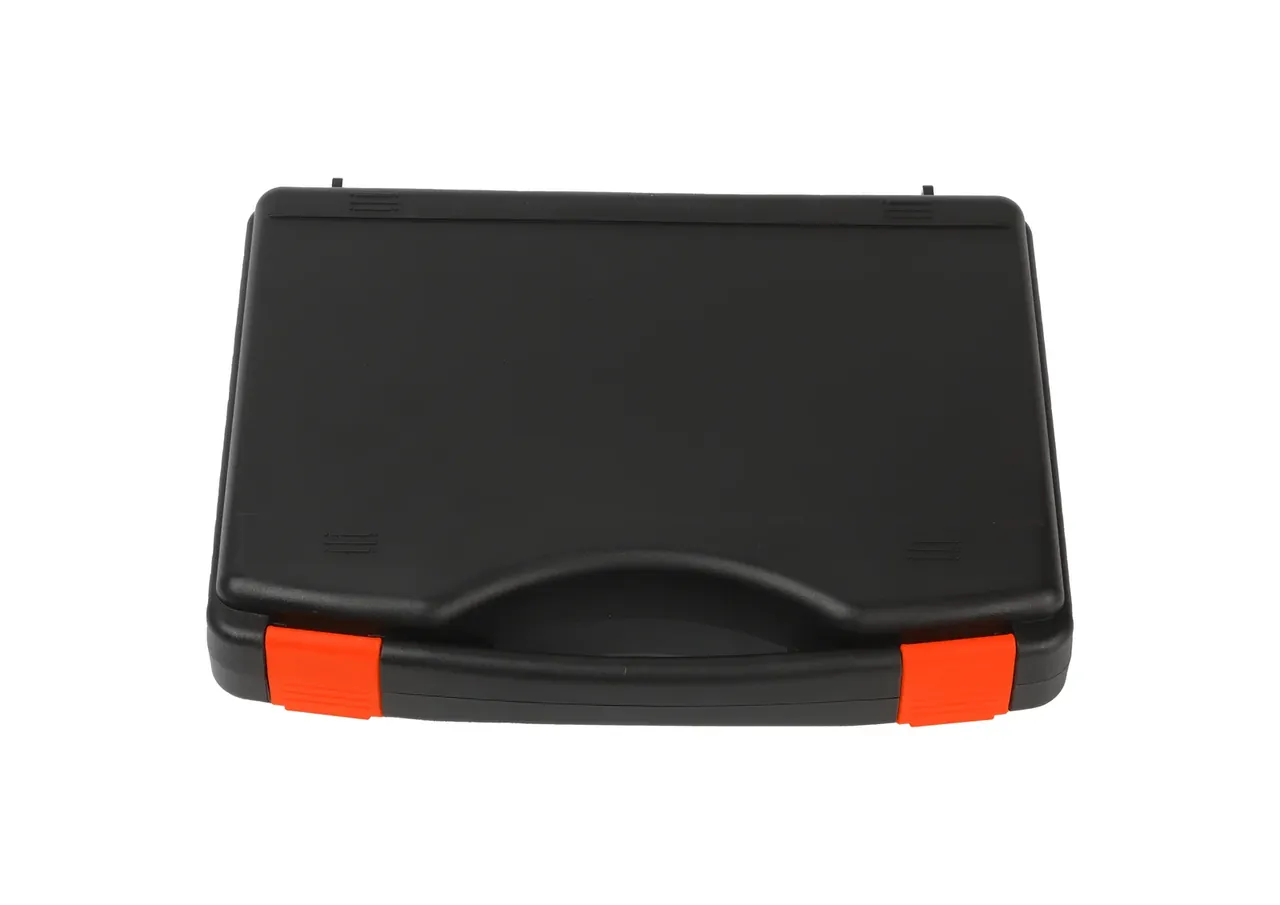
The hook is rated 10,000 cycles, which arrives in fifty-five working days at two shifts a day. Failure is not a break: force falls from 70 N to 45 N and the lid pops open on the conveyor. Two cases per station, used alternately, halve the cycles for the price of one more case.
Static is the other constraint. Plain PP sits near 10^16 ohm and a rub builds 3,000 V; conductive carbon black brings it to 10^4 to 10^6 ohm and darkens the resin, so light grey is off the table. Ordinary EVA also reaches four-figure voltages, so only conductive foam closes that path.
| Liner | Pick time | Errors per shift | Fits |
|---|---|---|---|
| Adjustable compartments | 6 s | 2 | Hardware, service tools |
| Routed EVA | 4 s | 1 | Medical, precision parts |
| Hanging pouches | 9 s | 5 | Small mixed batches |
| Trays with conductive foam | 5 s | 1 | Electronics line |
Errors combine wrong slot, missing part and dropped part. Pouches score badly because soft walls let parts shift in transit and every opening becomes a number check.
5. Five Mistakes That Repeat on Site
The first is using a latch as a handle. A hook carries lid preload only, and a sideways pull opens it.
The second is unsealed foam edges. A routed pocket exposes open cells, which take up moisture and eat the headroom until the lid will not close.
The third is a divider touching the wall. At 38 C a 590 mm divider grows about 1.2 mm, bows the side and leaves a bulge that shows in stacking.
The fourth is one layer too many. Five high is the freezer limit; the difference from six sits in the base ribs, not the walls.
The fifth is a label on a recessed panel, which the case above presses flat until the scanner misses and the pallet gets turned over.
None of the five is a material problem, and none costs money to correct.
Conclusion
The four lines differ less in the shell than in the mix of temperature, closure count and liner. Measure those three and gasket compound, latch count and divider height all follow. A PP Plastic Case earns its place by letting one motion repeat tens of thousands of times without losing shape.
This article discusses only the container (case body) side of specifications and design intent, and does not cover any handling, loading or use of the contents.
Related Reading
- Dock routing and case configuration in transfer hubs
- Cleanroom wiping and handling for medical consumables
- Matching line takt with equipment turnaround cases
- Stacking and restraint in road transport
Related Products
- 8 Series — Gun Cases; Military Equipment Cases; Camera Equipment Cases; Drone Cases; Watch Cases; Knife Cases; First Aid Cases; Electronics Equipment Cases
- WL8-2812 PP Gun Case — model WL8-2812
- All protective cases and toolboxes: 7 series, 158 models