

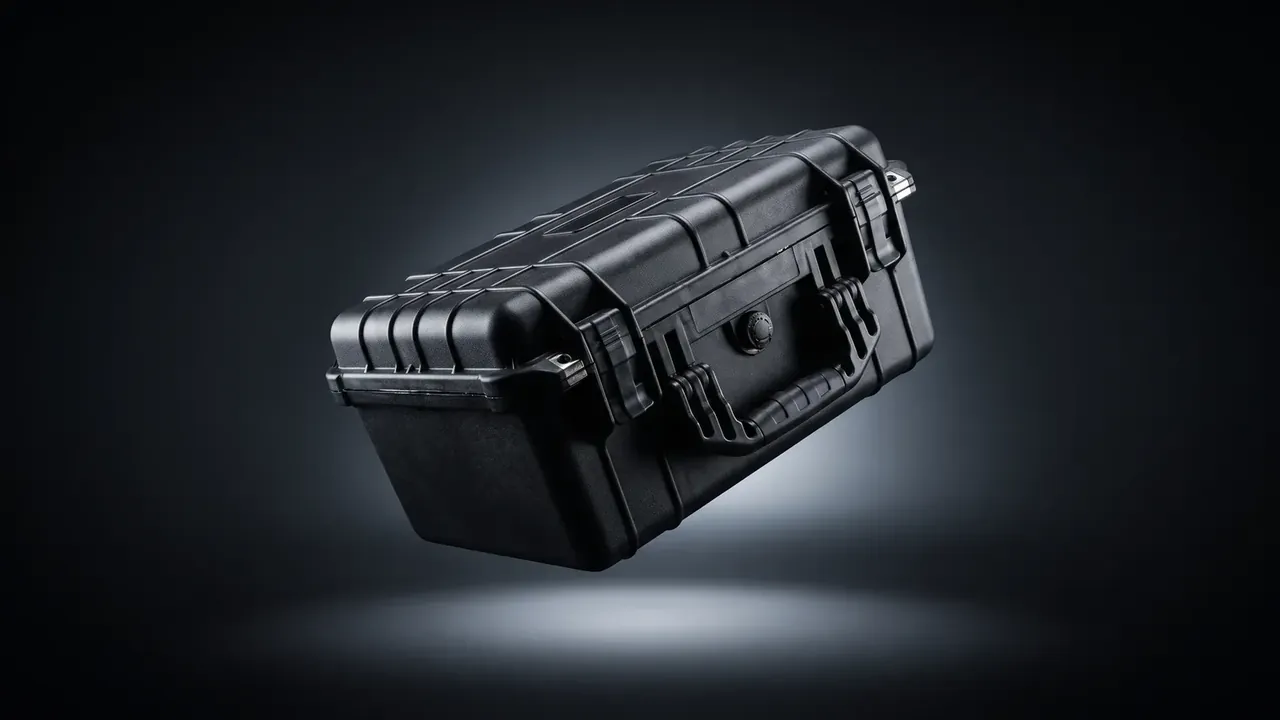
Quick answer: A Precision Instrument Case Supplier is judged by whether a 0.2 mm pocket tolerance returns at the same value on the third batch as on the first. Four metrics settle it: shell repeatability, foam consistency, a schedule readable four weeks ahead, and records that trace to a lot number. Verify with a coordinate machine and a plug gauge, three sections across twenty cases, three lots in a row. Dual sourcing buys continuity at the price of a 0.3 mm mismatch. Quotes usually omit the cutting die, the test report, packing, mould upkeep and freight.
Table of contents
- Four Hard Metrics for a Precision Case Supplier
- Verifying a 0.2 mm Pocket Tolerance
- On-Time Delivery and a 30-Day Rolling Schedule
- Single Source or Dual Source: The Risk Ledger
- Five Lines Quotes Usually Leave Out
- FAQ
1. Four Hard Metrics for a Precision Case Supplier
Precision case suppliers differ less in price than in whether a 0.2 mm pocket tolerance repeats batch after batch. A price column takes three minutes; repeatability takes three lots. Score four metrics first.
Repeatability comes first: across shot one, lot three and lot five, pocket position stays inside 0.2 mm and outline inside 0.5 mm. The figure that counts is the range between lots.
Foam consistency comes next: density near 45 kg/m³, the router kerf eating 1 to 2 mm, and a tray that still clears the wall by 1 mm in a second shell.
Schedule transparency is third for any Precision Instrument Case Supplier. A Precision Instrument Case Supplier worth shortlisting publishes a 30-day sheet on a fixed weekday, with machine number, cavities and weekly output.
Traceability is fourth: three cases held per lot, wall thickness logged at six points between 1.4 and 3.0 mm, and separate columns for ingress rating, latch effort and groove depth.
| Metric | Pass line | Sampling | If it fails |
|---|---|---|---|
| Shell and pockets | lot range ≤0.2 mm | 20 cases, 3 sections | rework the lot, inspect again |
| Wall thickness | 1.5–3.0 mm, no point <1.4 mm | 6 points per case | reinforce or scrap |
| Foam routing | clearance to wall ≤1 mm | 5 sets per lot | recut the die |
| Schedule lock | fixed 7 days ahead | one sheet weekly | written change note |
The first two are capability, the last two discipline; capability cannot be bought inside a quarter, discipline can be fixed by one planner. Ask that Precision Instrument Case Supplier for both in writing.
2. Verifying a 0.2 mm Pocket Tolerance
A caliper cannot settle 0.2 mm: resolution reads 0.02 mm, yet hand pressure shifts a reading 0.05 mm. A coordinate machine soaked two hours at 20 ± 2 °C repeats to 0.01 mm, and a plug gauge confirms it.
Placement matters more than the instrument: near the gate, mid-cavity, at the far end. Shrinkage is fed near the gate and drifts far away, so three sections expose tool balance. Twenty cases give 60 readings, and their range beats their mean.
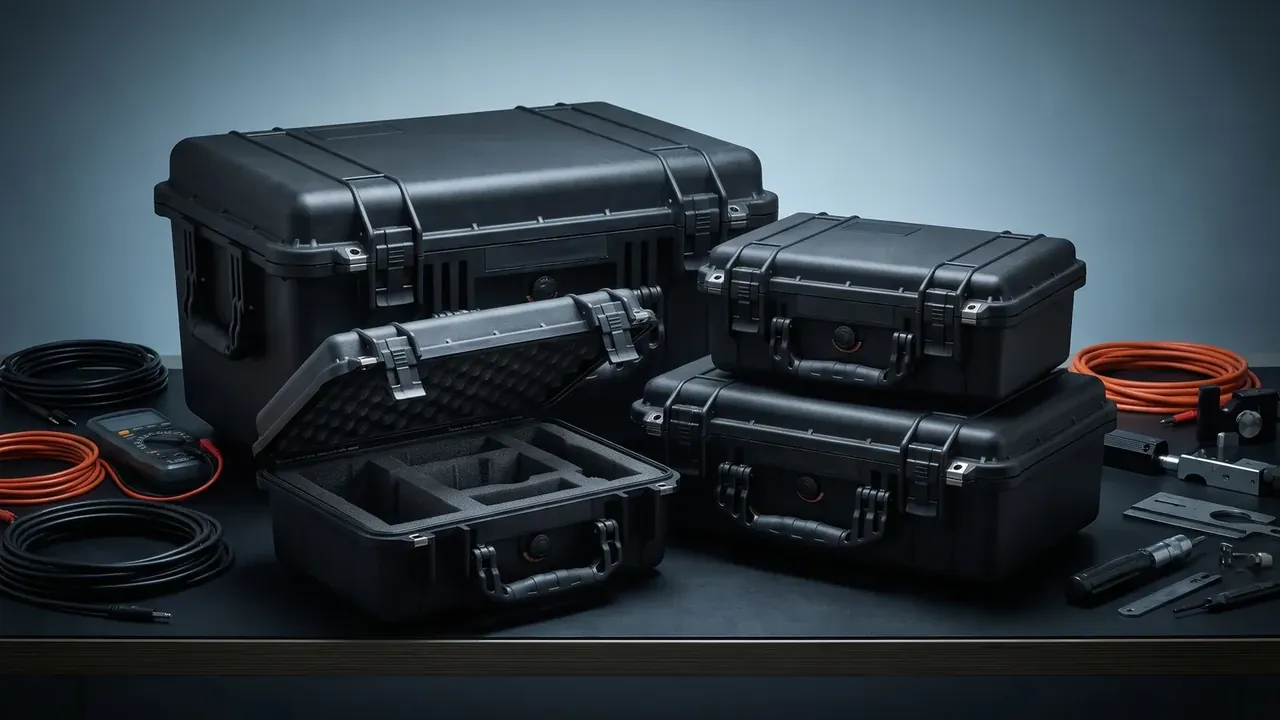
Foam needs its own gauge: a 0.1 mm plug that enters means the slot is already out, and a 0.5 mm shim shows the kerf as even or wandering. Leave 0.5 to 1 mm between insert and wall.
Repeatability is a three-lot question for any Precision Instrument Case Supplier: one lot passing proves the tool was dialled in that week, and one resin change pushes the spread past 0.3 mm. A 5 K drift in mould temperature moves a dimension 0.05 mm; a second less hold time thins the far wall by 0.08 mm.
3. On-Time Delivery and a 30-Day Rolling Schedule
Agree the definition before the number. Count a delivery on time within three days of the promised date: 38 of 40 lots is 95 percent, and 98 percent demands a sheet reconciled weekly.
That sheet is the evidence behind any date: machine, cavities, planned volume, locked orders, shell part number per line. A Precision Instrument Case Supplier offering a monthly guess promises nothing you can plan against.
Locking seven days ahead protects both sides: change eight days out and the plant absorbs it; later and four hours of tool change are wasted.
Capacity follows cycle time, not machine count. A 45-second cycle on two cavities gives 1,920 cases a day in theory and near 1,560 at 96 percent yield and 85 percent uptime, so 30,000 a month takes twenty days on one press.
4. Single Source or Dual Source: The Risk Ledger
Single sourcing is simple arithmetic: one tool, one die, one inspection file, spread inside 0.2 mm, shortest communication path. The exposure sits in one place; one press failure or resin shortage stops the line.
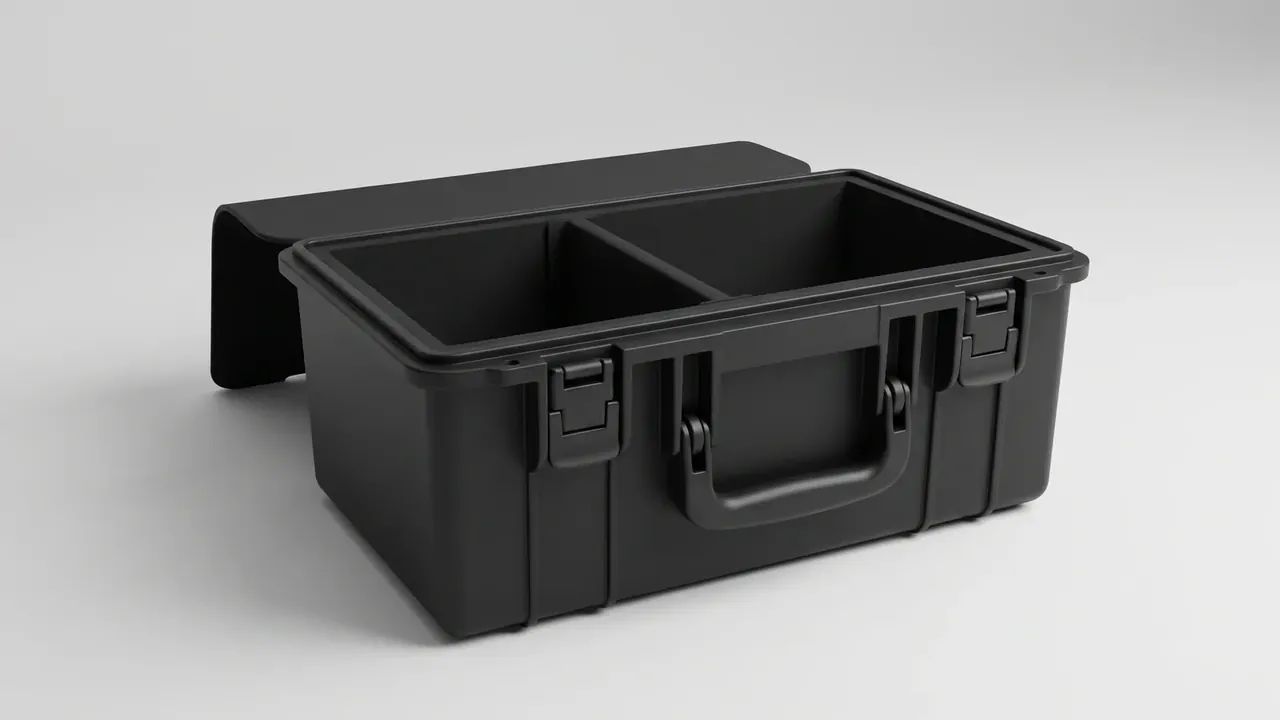
Dual sourcing is not a 50/50 split: two tools built separately carry a 0.3 mm datum difference, foam needs a second die, and shells from one plant cannot pair with inserts from the other.
| Structure | Consistency | Supply risk | Extra cost | Fits volume |
|---|---|---|---|---|
| Single | ≤0.2 mm lot range | high, one point of failure | none | under 20,000 a year |
| Dual 70/30 | 0.3 mm between plants | low, switchable | second die, double validation | over 50,000 a year |
| Dual 50/50 | 0.3 mm, spreads combined | lowest | doubled finished stock | over 100,000 a year |
Seventy-thirty is the usual split: main plant 70 percent, second plant 30 with two lots a year so validation stays fresh. Fifty-fifty pours both plants' variation onto one assembly line. Switching takes calendar time, so ask early whether that Precision Instrument Case Supplier shares a mould base.
5. Five Lines Quotes Usually Leave Out
The shorter the quote from a Precision Instrument Case Supplier, the more arrives later as a top-up. Dies and foam routing are treated as free, yet a die is billed and recut whenever a pocket moves.
Testing is second: retained samples, wall logs and latch-effort reports consume labour, and a 20-case check eats half a station.
Packing is third: liner bag, corner guard, five-ply carton and pallet add 3 to 8 CNY per case, and the dimensions belong in the contract, not behind "packing included".
Mould upkeep is fourth. A tool serviced at 50,000 shots needs polishing and flash removal, billed per visit, or the first repair returns as a separate invoice.
Freight and terms are fifth: ex-works against delivered differs by a leg of freight plus insurance, and 30-day against 60-day terms differ in working capital. Add all five, then compare.
Related Reading
- B2B protective case sourcing
- Instrument case specs and acceptance
- IP67 case standards
- Usable cavity and kerf allowance
JUNZHIJIA
Related Products
- 8 Series — Gun Cases; Military Equipment Cases; Camera Equipment Cases; Drone Cases; Watch Cases; Knife Cases; First Aid Cases; Electronics Equipment Cases
- WL8-2812 PP Gun Case — model WL8-2812
- All protective cases and toolboxes: 7 series, 158 models