

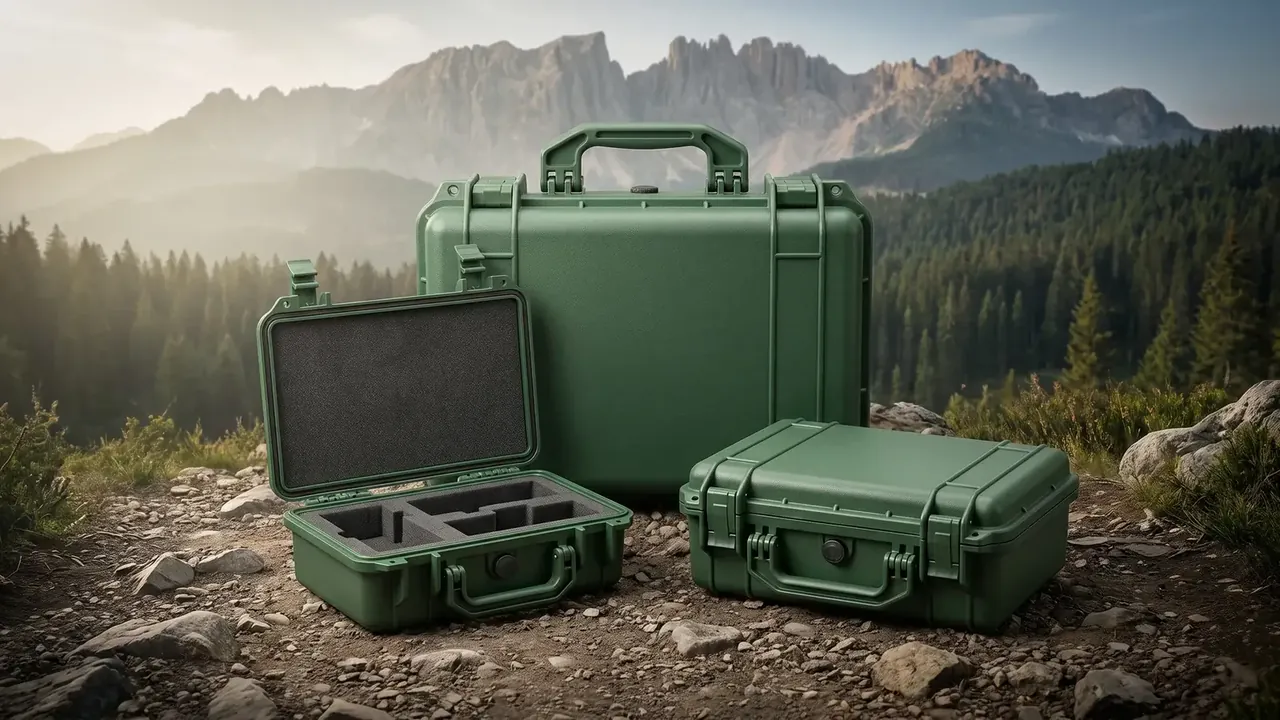
Quick answer: A B2B plastic protective case supplier should quote shell, hardware, foam and packing as four lines, bill tooling separately with ownership named, and start the 42 day clock at sample sign-back.
Table of contents
- Why the Lowest Bid Loses and What a Quote Should Itemise
- MOQ and Tool Ownership Across Three Quantity Steps
- Back-Scheduling 42 Days from Five Nodes and Three Bought-In Parts
- Payment Terms and a Factory Audit That Exposes Gaps
- FAQ
1. Why the Lowest Bid Loses and What a Quote Should Itemise
The cheapest of three quotes came in 4.2 CNY lower per case, saving 84,000 CNY over 20,000 units. The same supplier billed tooling at 128,000 CNY and the foam die at 18,000, leaving the buyer 62,000 CNY worse off.
The comparison was per unit; the invoice was landed cost. A B2B plastic protective case supplier that answers with one number leaves nothing to negotiate.
| Line | Basis | Typical share | What to state |
|---|---|---|---|
| Shell | weight × compound rate × loss factor | 40 to 48% | PP grade, melt index, resin pricing date |
| Hardware | latches, hinges, handle, valve per set | 22 to 30% | latch cycles, hinge pin, valve diaphragm |
| Foam | EVA or XPE by density and die area | 10 to 16% | 45 kg/m³ density, cavity count, die owner |
| Packing | pads, bag, carton per set | 5 to 9% | board grade, cases per carton, stack height |
| Tooling | one-off, priced by cavitation | separate | cavities, ownership, free corrections |
Shell cost is arithmetic. A 2.4 kg case at 9.6 CNY per kg with a 1.03 loss factor lands at 23.7 CNY, and each 1 CNY move in resin shifts it by 2.47.
Hardware hides in the phrase settled at cost. On one outline, a latch rated 8,000 cycles instead of 15,000 adds 3.5 CNY, and a filtered vent body adds 6.
A B2B plastic protective case supplier leaves four openings as a rule. Tooling described as inside the unit price locks the buyer to one source for years. A foam die that appears after sample approval becomes 1,800 CNY per set. Packing priced per case rather than per set hides 6,000 CNY on 2,000 units. A loss factor of 1.08 without explanation adds about a yuan each. Regrind promised at 20 percent arrives as grey streaks in the shells.
2. MOQ and Tool Ownership Across Three Quantity Steps
MOQ follows tonnage and cavitation. A 550 tonne press on a single cavity tool with a 68 second cycle makes about 1,100 cases in 21 hours.
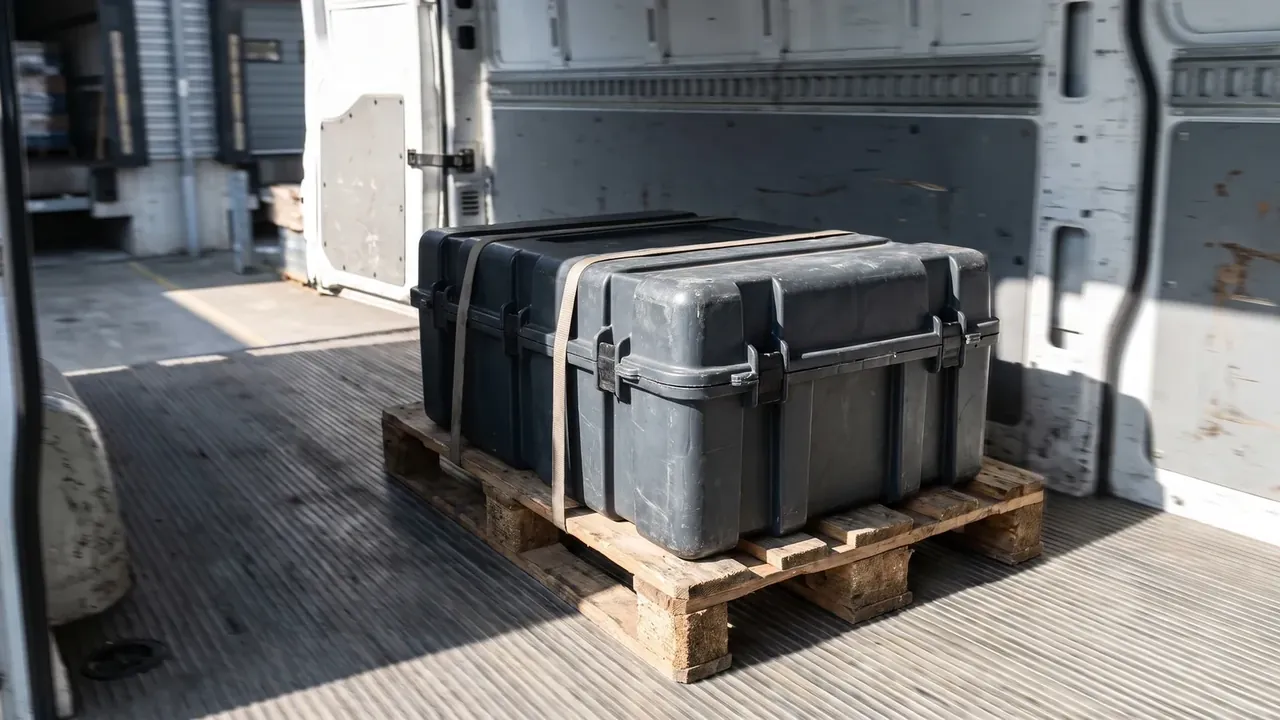
Three steps are common: 500, 2,000 and 5,000 units. The 500 step carries 40 minutes of purging and 3 percent first-run scrap; only the 5,000 step absorbs the 128,000 CNY tool, at 25.6 CNY per case.
| Quantity step | Price index | Tooling | Lead time |
|---|---|---|---|
| 500 units | 100 | billed in full | 38 days |
| 2,000 units | 94 | half absorbed | 42 days |
| 5,000 units | 87 | absorbed at 25.6 CNY | 48 days |
Tool ownership needs four clauses: buyer title, cavity count in the annex, no recharge on repeats, and a named party for maintenance after 300,000 shots.
A refundable tool is not an owned tool. One contract promised a full refund at 5,000 units, never mentioned title, and the mould moved to another customer's job.
3. Back-Scheduling 42 Days from Five Nodes and Three Bought-In Parts
Forty-two days is a sum: 22 of tooling, 4 of trials, 16 of production. What slips is bought-in parts. Masterbatch needs 7 days, hardware samples 10, the foam die 7.
Write the nodes as dates, since day counts never match the floor:
- Day 0, signed sample returns, clock starts
- Day 22, three T1 samples for outline and hardware fit
- Day 26, T2 approval fixing colour and latch feel
- Day 42, production complete and inspection
- Day 49, container loaded
Loading volume changes the rhythm: at 2.4 kg per case and two per carton, a 20 ft container takes 320, a 40 ft high cube 760.
4. Payment Terms and a Factory Audit That Exposes Gaps
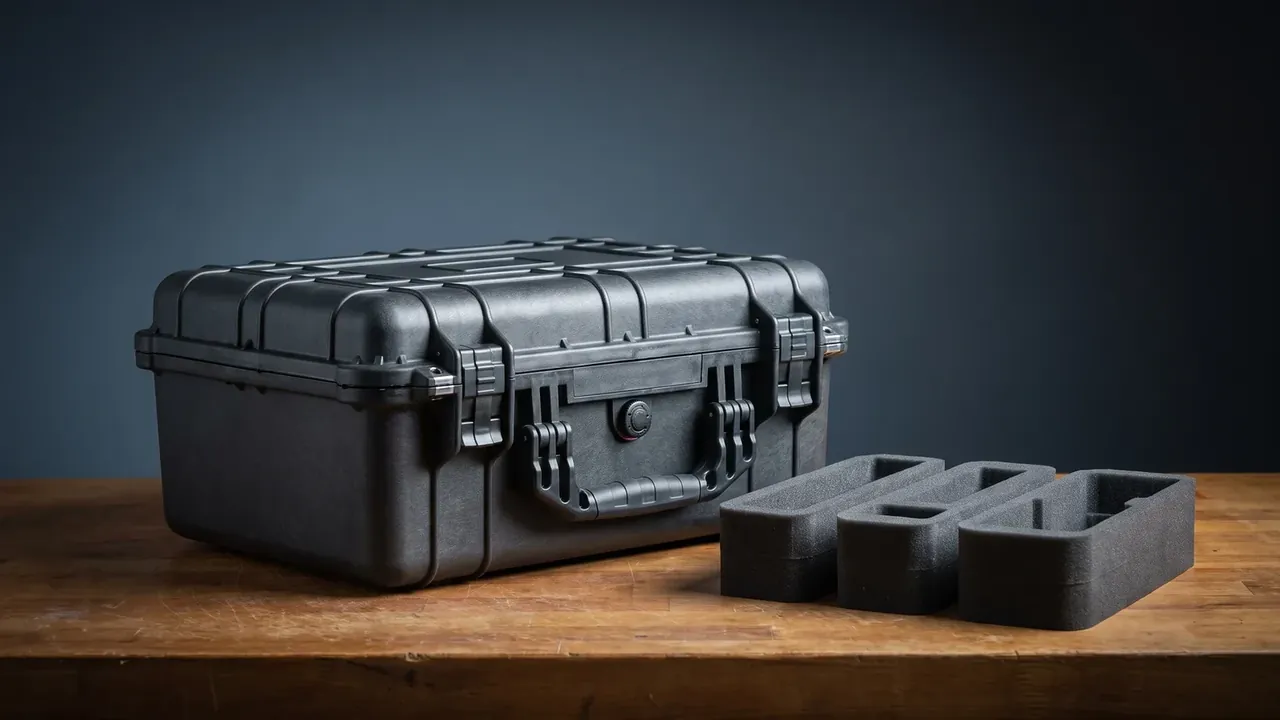
Payment terms move the unit price: the three conditions a B2B plastic protective case supplier offers differ by up to 5 percent, more than a week of haggling.
| Terms | Price effect | Buyer exposure |
|---|---|---|
| 30% deposit, 70% against B/L copy | base | about 49 days of tied cash |
| Net 30 | plus 1.5 to 2% | supplier funds it, less room to argue |
| 100% advance | minus 2 to 3% | all risk sits with the buyer |
Skip the showroom and go to the presses. Three questions settle an audit: which machine ran this model last week and at what shot count; which station holds the 128,000 CNY tool; how many pieces were drawn at AQL 1.0 last lot.
Quotes should hold 30 days with a two-way re-opener at 6 percent resin movement. A one-way clause hands the buyer all the resin risk.
Conclusion
Buying from a B2B plastic protective case supplier comes down to four sheets: quote, quantity ladder, backward schedule, terms. Ask for them before discussing price; the B2B plastic protective case supplier that hands them over unasked usually holds its dates.
This article discusses only the container (case body) side of specifications and design intent, and does not cover any handling, loading or use of the contents.
Related Reading
- Choosing an ABS protective case
- Five conditions to confirm before a bulk order
- From enquiry to approved sample
- How detailed a custom case drawing should be
- Matching case and packing for air freight
Related Products
- 8 Series — Gun Cases; Military Equipment Cases; Camera Equipment Cases; Drone Cases; Watch Cases; Knife Cases; First Aid Cases; Electronics Equipment Cases
- WL8-2812 PP Gun Case — model WL8-2812
- All protective cases and toolboxes: 7 series, 158 models