

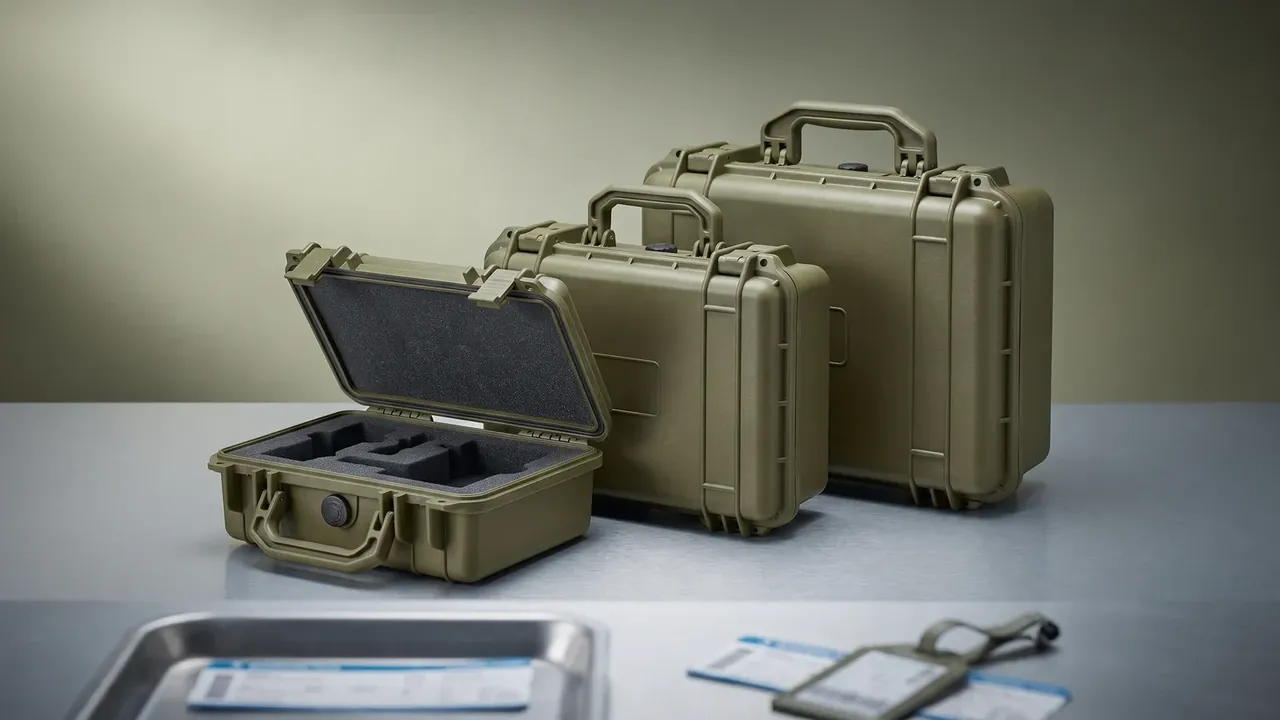
Quick answer: Choose a projectile pallet by duty cycle first. Indoor shuttling turns on base ribs and handle roots, road and rail on latches and corner drops, open storage on seal compression.
Table of contents
- Three Duty Cycles and the Clauses Behind Them
- Assembly: Dowel, Latch and Torque
- Four Moves on an In-House Line
- Field Use: Road, Air and Open Storage
- Three Assembly Mistakes That Keep Repeating
- FAQ
1. Three Duty Cycles and the Clauses Behind Them
Hand someone a drawing and the questions are latch count and handle height. Neither has a clause of its own.
An indoor projectile pallet is handled six or more times a day and wears at the four base corners. That is a MIL-STD-2073-1 unit pack question: Level B allows repeat use, Level A one arrival.
Road and rail transfer is a distribution problem, not a single drop. ASTM D4169 cycle DC-13 combines the shock after two dock transfers with a 1.2 m corner drop and vibration near 0.5 g²/Hz.
Open storage leaves one clause: IEC 60529 IP67, no ingress after 30 minutes at 1 m. Wall thickness plays no part; seal compression and latch travel match, or they do not.
| Duty cycle | Clause | One number to hold |
|---|---|---|
| Indoor shuttling | MIL-STD-2073-1 unit pack | Dynamic rating 3× own weight |
| Road and rail | ASTM D4169 DC-13 | Lid gap shut after a 1.2 m corner drop |
| Open storage | IEC 60529 IP67 | No water line after 30 min at 1 m |
| Air lift | MIL-STD-810H Method 516.8 | Hinge crack-free after 40 g |
2. Assembly: Dowel, Latch and Torque
Assembly fails more often than the clause, because it lives in muscle memory. Seating takes three things: dowel in its hole, base flat on the deck, latch past over-centre.
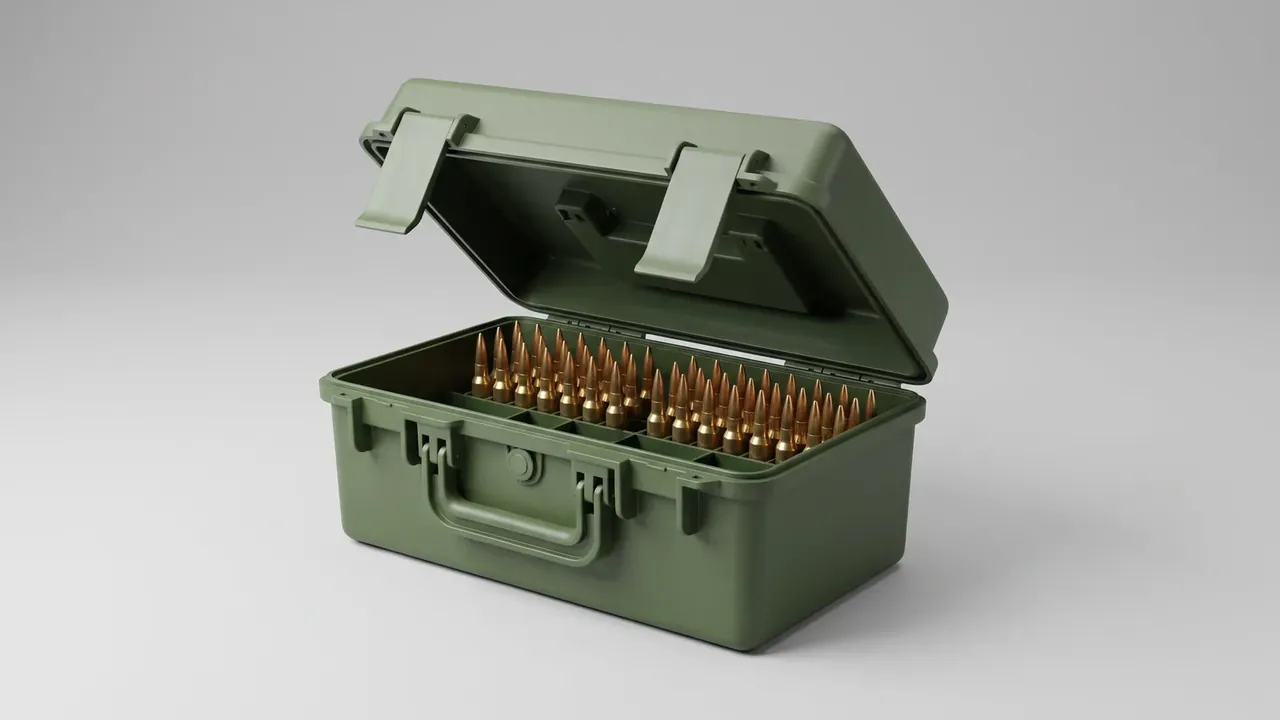
The dowel prevents a wrong fit, not off-centre seating. At 1.5 mm under the hole it will not seat on a 180-degree turn; too tight a dowel shrinks in at minus 20 °C.
Seal compression and latch travel are a matched pair. Compression is set at 25 to 30 per cent and the latch presses 2 mm past centre; both give IP67, only the first gives a lid that looks shut and leaks.
Bolted versions add M8 bolts at 8 N·m, tightened diagonally. Skip it and the lid crowns 2 mm after two thousand kilometres, unloading the seal.
3. Four Moves on an In-House Line
Beside a line, a projectile pallet makes four moves:
- Seat: forks in all the way, base within 3 mm of the roller bed.
- Latch: front pair, then sides, then push the lid edge with the back of a hand.
- Label: flat panel right of the lid, 20 mm clear of latch travel.
- Lift: sling legs at 45 degrees or wider; past 60, each leg doubles its load.
Labelling is the move that gets dropped, and the walk it adds at two hundred picks costs more than the label.
4. Field Use: Road, Air and Open Storage
The field brings three loads at once. A pallet sits four hours at minus 40 °C and is loaded within ten minutes, while polypropylene has not recovered its impact strength.
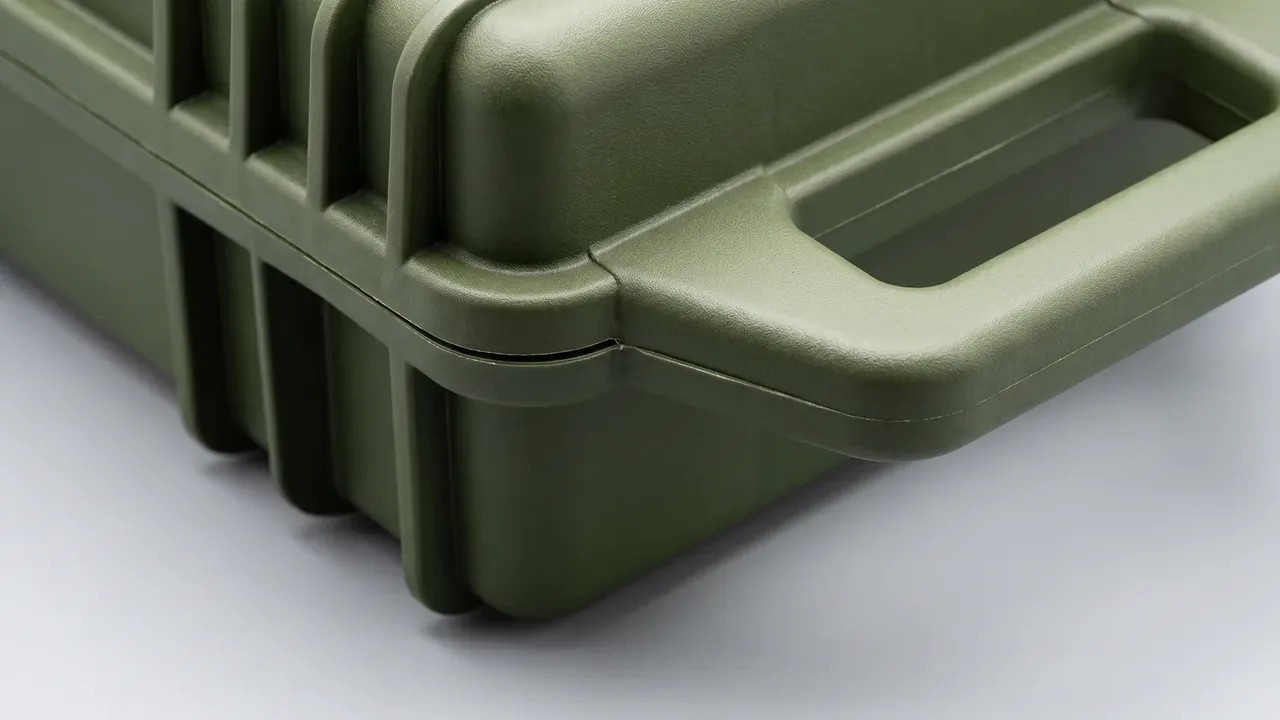
Salt fog comes second: after 96 hours the hinge pin and latch spring fail first, while a 304 stainless pin shows only discolouration.
Stacking is the third load and the most overrated. At four tiers the bottom unit carries 128 kg on one lid at 32 kg a tier. That lid is flat in the middle, so only the central rectangle bears load and pressure runs about 40 per cent above the full-area figure. Stack the heaviest pallet on top for easy reach and the bottom unit takes a permanent 2 mm dish no seal can compensate for. Stretch wrap removes no vertical load.
5. Three Assembly Mistakes That Keep Repeating
None reach an acceptance sheet; they surface after the third transfer.
| Mistake | Looks like | Follows |
|---|---|---|
| Latch as load bearer | Stacked latch-side down | Spring fatigue by transfer three |
| Foam at nominal diameter | Pocket 0.5 mm wide | Rounds shift, tips polish bright |
| Wrap, no corner pads | Film on four corners | Corners crush round, stack unstable |
The latch looks like the strongest part of the assembly, yet it only clamps the seal. Foam error belongs to sampling, where trial and production batches differ. Corner pads are a cost compromise: one costs less than half a latch.
Conclusion
Assembly is reverse-engineered from the duty cycle: shuttling reads the base ribs, transfer reads the latch and corner drop, open storage reads seal compression. Run one configuration across all three, and the weak point of a projectile pallet is usually the dowel nobody checked.
This article discusses only the container (case body) side of specifications and design intent, and does not cover any handling, loading or use of the contents.
Related Reading
- What a projectile pallet is: structure and purpose
- Projectile pallet specifications: load, stacking and forklift fit
- Marking requirements for pallet cases
- How road cases work on tour and at exhibitions
Related Products
- 8 Series — Gun Cases; Military Equipment Cases; Camera Equipment Cases; Drone Cases; Watch Cases; Knife Cases; First Aid Cases; Electronics Equipment Cases
- WL8-2812 PP Gun Case — model WL8-2812
- All protective cases and toolboxes: 7 series, 158 models