

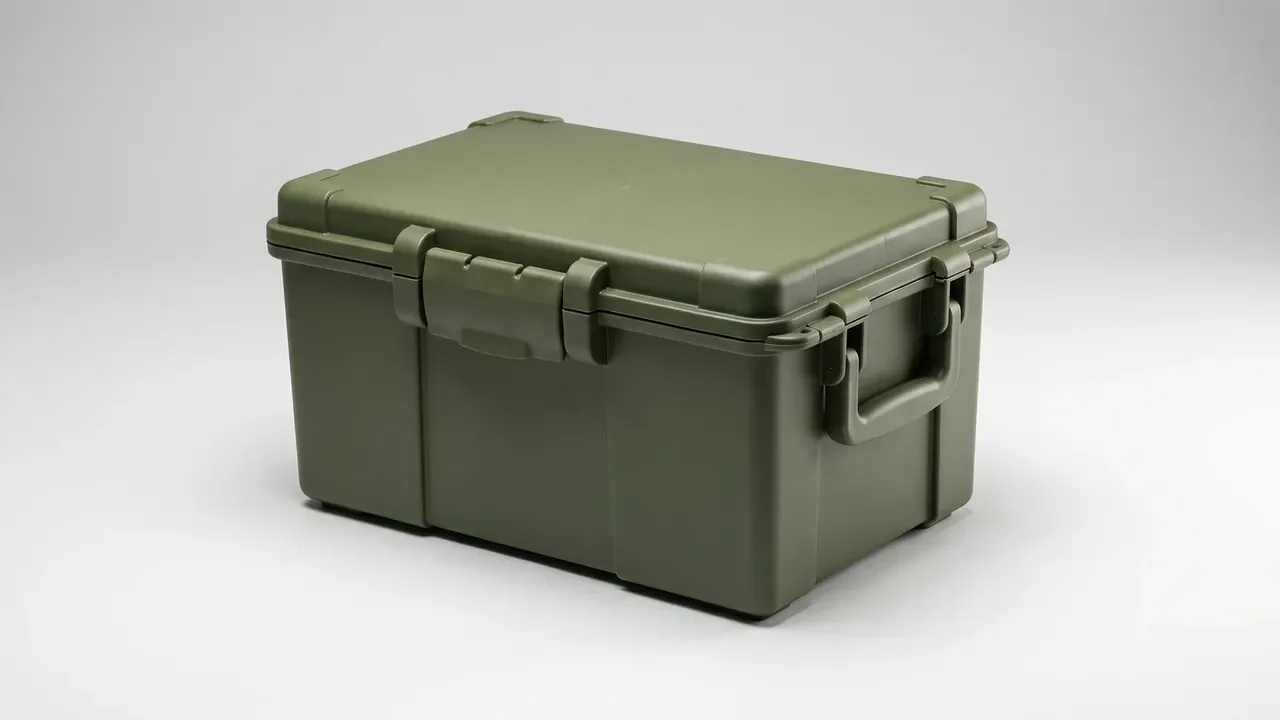
Quick answer: A projectile pallet is not the default answer. Under fifty trips a year, over forty kilos a lift, five tiers, or a one-way shipment, wood, steel racks or roto-moulded bins cost less.
Table of contents
- Four Numbers That Screen the Field
- Line One: Cycle Count and Weight per Lift
- Line Two: Tier Height and Rack Clearance
- Line Three: Open Storage and Thermal Cycling
- Line Four: Unit Price versus Whole-Life Cost
- When It Loses: What the Alternatives Win
- FAQ
1. Four Numbers That Screen the Field
The usual mistake in a selection meeting is treating one option as the only one. The window where a projectile pallet pays off is narrow enough to draw with four numbers.
| Number | Typical | Past the edge |
|---|---|---|
| Trips a year | 600 and up | Below 50, one-way timber is cheaper |
| Weight per lift | 25 kg | Past 40 kg, forks become mandatory |
| Usual stacking | 3 tiers | At 5 tiers, steel takes over |
| Empty weight | 11 kg | Above 15 kg, empty returns double |
All four must sit left before price matters.
2. Line One: Cycle Count and Weight per Lift
Cycle count decides whether tooling amortises. A pallet rated for 600 trips spreads mould cost to under two yuan a trip; on a 50-trip route the same money lands at twenty-odd yuan each.
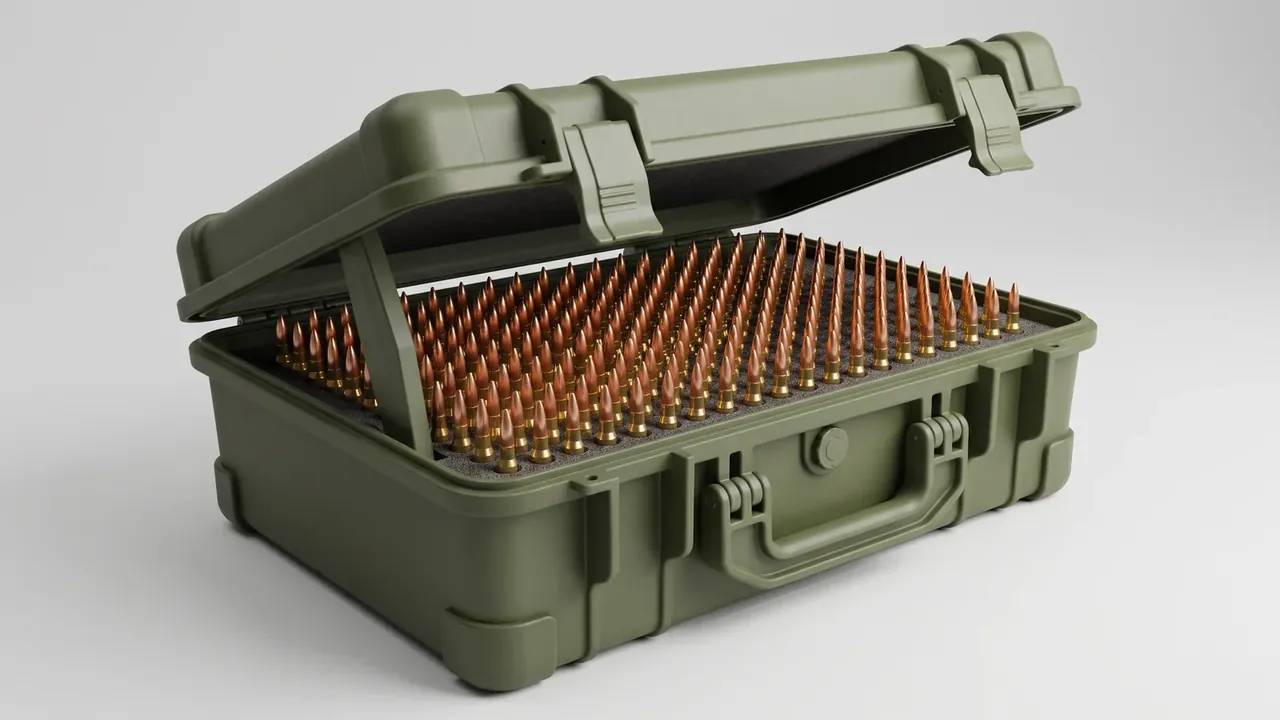
Weight per lift decides handling and structure together. Two people manage 25 kg, forks become mandatory past 40 kg, and by 300 kg plastic ribs give way to steel.
Timber carries a hard constraint: export falls under ISPM 15, so boards are fumigated, adding a day and a certificate to every batch. On a single sea shipment that is still worth paying.
3. Line Two: Tier Height and Rack Clearance
Three tiers is where plastics feel comfortable and five is steel territory. The split is creep rather than strength: under steady load, plastic keeps deforming after the third tier and can sag three millimetres in half a year. At 1.8 m clear, a 250 mm projectile pallet stacks seven high, so three tiers is about reaching, not space. A steel rack carries 800 kg and pays for it in tare: often over 60 kg empty, with rust within half a year of one broken zinc coat.
4. Line Three: Open Storage and Thermal Cycling
Open storage gets waved away with a claim about having a roof. Under one, the swing still runs from minus 30 °C to plus 60 °C twenty times a year, and the latches take all of it.
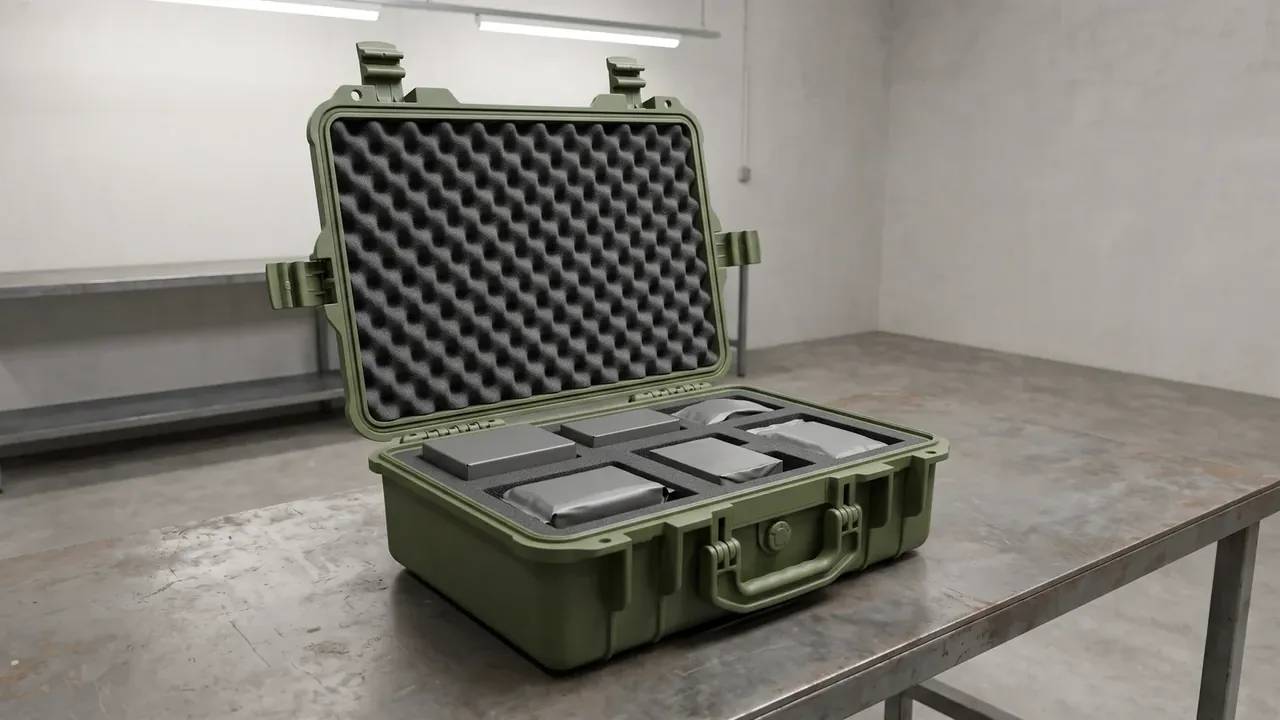
Timber loses outright. Boards stay under 18 per cent moisture to hold shape, and three months outdoors puts the water back: panels crown, nails surface.
A roto-moulded bin is the rival: a 6 mm seamless wall keeps water out for two years, at 30 per cent more weight for the same capacity.
5. Line Four: Unit Price versus Whole-Life Cost
Unit price alone always misleads. Split whole-life cost into five parts:
- Purchase price: four to six times timber, paid up front.
- Empty return: charged by volume, so nesting cuts it to sixty per cent.
- Repair: latches and handles are ten-yuan parts; timber has none.
- Scrap value: plastics recover eight per cent, timber almost nothing.
- Downtime: one broken loop costs more than the four items above.
Three can be calculated and two only estimated. Where estimation fails, multiply annual trips by cost per trip and keep the configuration while the gap stays under twenty per cent.
6. When It Loses: What the Alternatives Win
Each alternative owns a condition; none is a fallback.
| Option | Wins when | Loses on |
|---|---|---|
| One-way timber pallet | Under 50 trips, single leg | Warps outdoors, needs fumigation |
| Roto-moulded bin | Long outdoor storage | 30 per cent heavier |
| Foam-lined aluminium case | High-value items | Highest price, hard to repair |
| Steel rack | Five tiers, items past 100 kg | 60 kg tare, eats capacity |
The boundaries are sharp: high cycles go plastic, open yards go roto-moulded, few expensive items go aluminium, heavy and high go steel. A projectile pallet sits between the first two and can be displaced from either side.
Conclusion
The four lines are for elimination, not ranking. Cycle count removes one-way options, weight per lift removes manual handling, tier height removes plastics, outdoor years remove timber. Only among the survivors does a projectile pallet earn its price, and forcing it onto every route is the expensive mistake.
This article discusses only the container (case body) side of specifications and design intent, and does not cover any handling, loading or use of the contents.
Related Reading
- What a projectile pallet is: structure and purpose
- Projectile pallet specifications: load, stacking and forklift fit
- Cartridge box materials compared
- Case industry requirements compared
- Hard-shell suitcase materials compared
Related Products
- 8 Series — Gun Cases; Military Equipment Cases; Camera Equipment Cases; Drone Cases; Watch Cases; Knife Cases; First Aid Cases; Electronics Equipment Cases
- WL8-2812 PP Gun Case — model WL8-2812
- All protective cases and toolboxes: 7 series, 158 models