

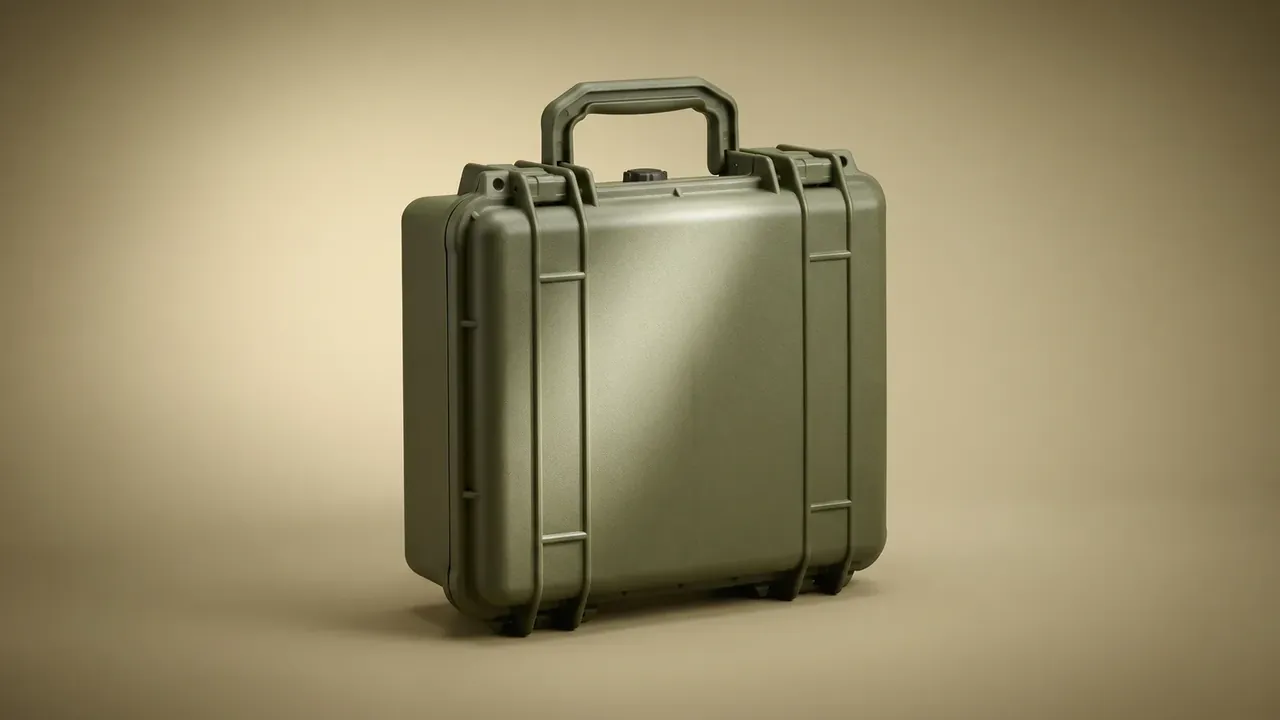
Quick answer: A Prop Charge Container works in three settings — static storage, vehicle transport, field position — which split into six duty cycles by humidity and opening frequency. Four numbers cover the fitting: four fixing points, 8 N·m of torque, straps at a quarter of the body length, and ninety seconds per open-load-close cycle.
Table of contents
- Three Sites, Six Duty Cycles: How the Uses Sort
- Fitting: Channels, Clamps and Four Fixing Points
- Opening and Loading: Ninety Seconds per Cycle
- Packing a Full Case: Rows, Pressure, Closure
- Reusing One Case Across Sites
- FAQ
1. Three Sites, Six Duty Cycles: How the Uses Sort
Sort uses by setting, not by model. Storage is shelves and floor stacks, opened maybe monthly. Transport is a van or trailer, shaken daily and seldom opened. A field position sits on the ground and opens twenty times a day in grit. The setting fixes the opening count, which fixes latch and gasket life.
| Duty cycle | Fixing | Opens per day | Common mistake |
|---|---|---|---|
| Store shelf | Three tiers on deck | Under one | No board under feet |
| Van transfer | Rails and straps, two high | One or two | Strap over a latch |
| Trailer run | Crossed straps, 10 mm gaps | None | Neighbours rubbing white |
| Field position | Flat on ground | Twenty plus | Lid twisted on one hinge |
| Cold store | Pallet, 100 mm up | Three to five | Forcing a stiff gasket |
| Damp dock | Pallet and stretch wrap | One or two | Wrap sealing the vent |
The right column earns its place: most failures of a Prop Charge Container are one wrong move, not a cracked body.
2. Fitting: Channels, Clamps and Four Fixing Points
Fitting starts with the four floor inserts meeting the shelf or rail. On M6 inserts, 8 N·m is the ceiling; past 10 N·m the plastic yields and the joint feels tight while already loose.
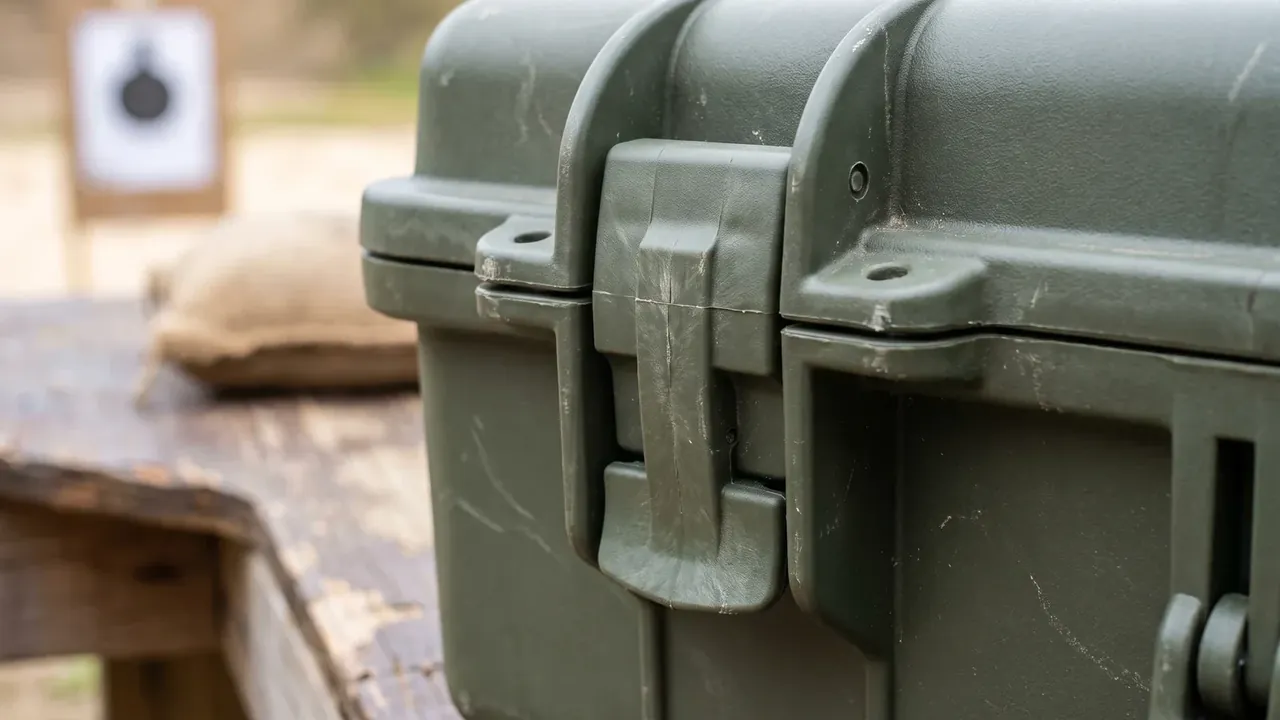
Straps sit at a quarter of the body length, never across a latch. Side load walks the over-centre linkage open half a turn and nothing shows outside. Stacked two high, upper feet land on the ribs below.
Clamp bars press the liner only; once one crosses the lid groove, gasket compression halves and an IP67 label means nothing.
3. Opening and Loading: Ninety Seconds per Cycle
A field position opens twenty times a day, so fix the sequence and hold four moves inside ninety seconds:
- Check the vent for tape or wrap
- Release both latches together
- Stop the lid at 100 degrees, let the hinge limit take the load
- Lift straight up, not at an angle
- Close hinge side first, then latches, and listen for the seat
The last step gets skipped. Close the latch side first and the lip shifts half a millimetre, then every latch loosens.
4. Packing a Full Case: Rows, Pressure, Closure
Fill the middle row of a Prop Charge Container first, then work outward in pairs. Channels are cut to the round diameter with a 3 mm rib between rows; an off-centre load twists a single latch.
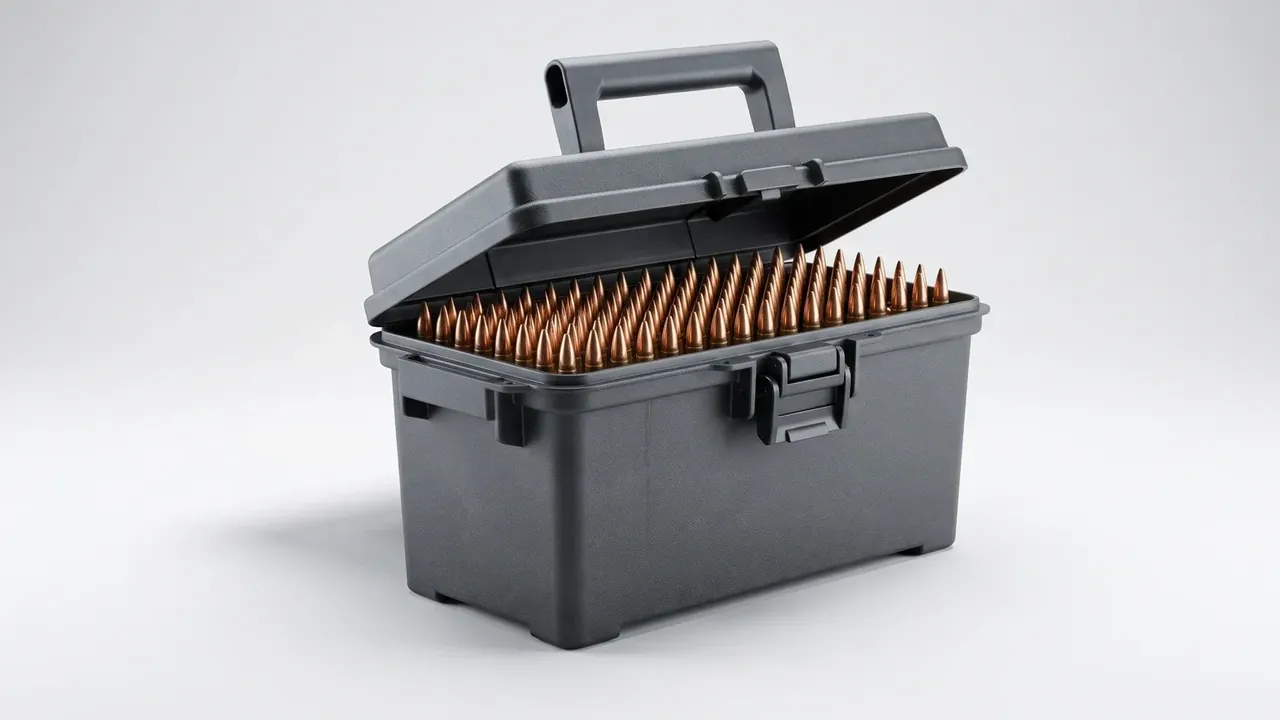
Depth sets the hold. At 0.6 times the diameter the liner meets only the top 3 mm; below half, the row lifts in transit and leaves a rub ring that was struck, not pressed.
5. Reusing One Case Across Sites
Moving a Prop Charge Container from a store to a trailer rarely needs a new body.
| Moving to | Straps | Liner | Hardware |
|---|---|---|---|
| Trailer run | Quarter length | Ribbed channels | Bonding strap on latches |
| Cold store | 50 mm wide | Low-temperature compound | Long-pin hinges |
| Damp dock | Stretch wrap | Closed cell | Stainless steel |
Cold needs planning. Four hours at minus 32 °C stiffens the gasket and can double opening force; warm the case rather than forcing it. At a damp dock, specify hardware against 96 hours of salt spray.
Conclusion
Read the setting for an opening count, size latches and gaskets for it, then place straps and clamps for the mounting surface. Only three details change across the six cycles, which is why one Prop Charge Container body often serves all of them.
This article discusses only the container (case body) side of specifications and design intent, and does not cover any handling, loading or use of the contents.
Related Reading
- What a prop charge container is
- Grenade storage cases in stores and vehicles
- Specialised transit and storage cases
- Road case use on tour and in transit
Related Products
- 8 Series — Gun Cases; Military Equipment Cases; Camera Equipment Cases; Drone Cases; Watch Cases; Knife Cases; First Aid Cases; Electronics Equipment Cases
- WL8-2812 PP Gun Case — model WL8-2812
- All protective cases and toolboxes: 7 series, 158 models