

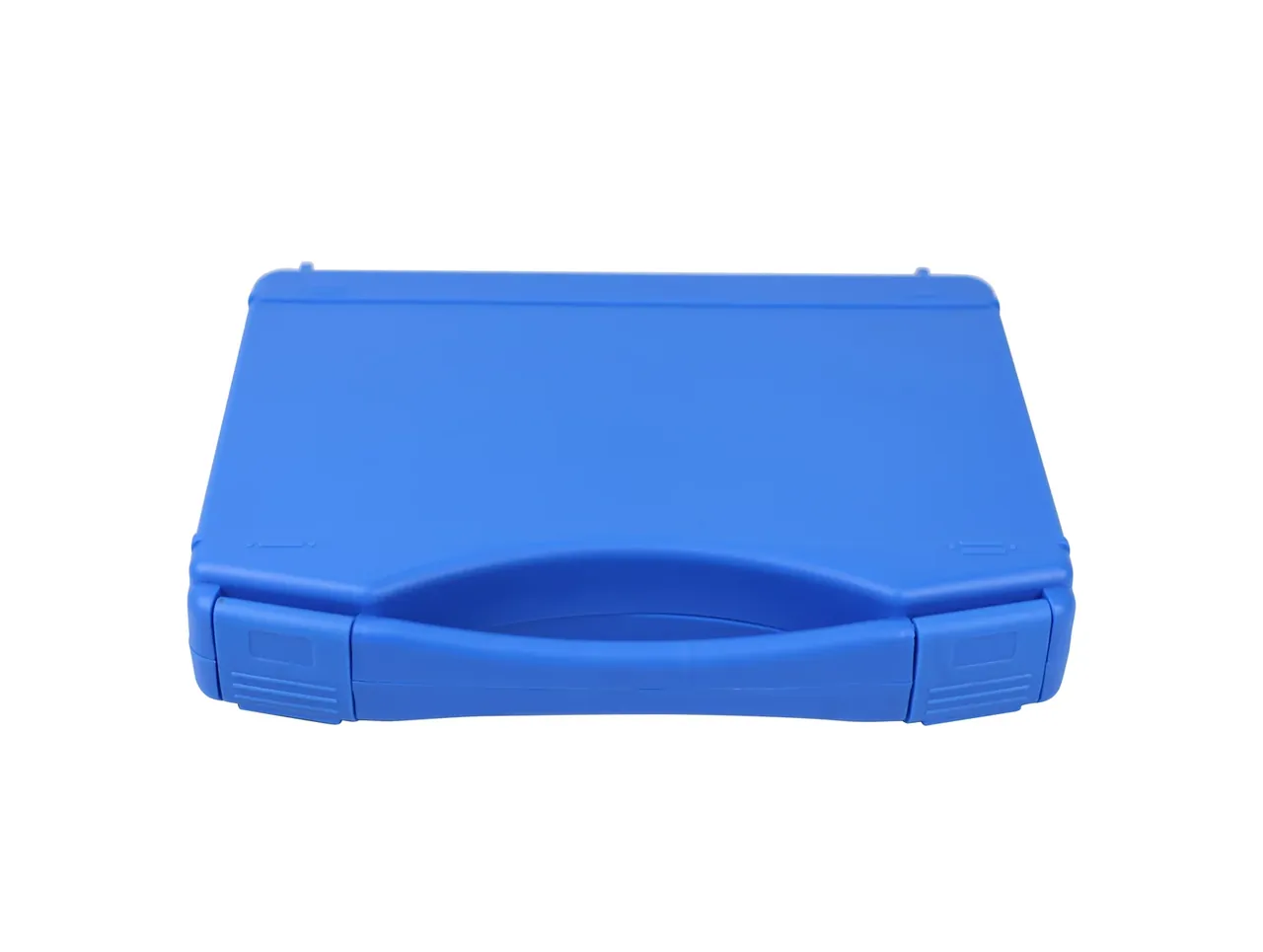
Quick answer: At 85% humidity a Protective Case Customization Process build loses gasket, latches and foam before the shell fails. Six numeric thresholds, checked by three actions that never open the lid, turn repair into a schedule.
Table of contents
- Failure Curve in the First Year
- Daily and Weekly Checks That Never Open the Lid
- Monthly Cleaning: Solvent Limits and Dosage
- Foam Replacement: Measuring Compression Set
- Torque Table for Latches, Hinges and Wheels
- Life Extension or Retirement
- FAQ
1. Failure Curve in the First Year
A Protective Case Customization Process clock starts at goods-in, not at mold sign-off. Coastal stores hold 85% humidity with a 12°C daily swing, so the shell barely moves while gasket, latch and foam move first.
| Part | First anomaly (months) | Threshold | Action |
|---|---|---|---|
| Gasket | 6 to 8 | Set over 30%, hardness 70A | Replace length |
| Latch | 9 to 12 | Holding force under 70% of new | Replace assembly |
| Foam | 10 to 14 | Over 10% height loss at 50% compression | Replace insert |
| Hinge pin | 18 to 24 | Radial play over 0.5 mm | Replace pin |
| Valve membrane | 24 to 30 | Over 2 kPa drop in 10 minutes | Replace membrane |
Sampling 200 units after 14 months: gasket set averaged 31%, latch force fell from 180 to 121 N, and 25 mm lid foam returned to 20.8 mm.
2. Daily and Weekly Checks That Never Open the Lid
A check is cheap only if the lid stays shut; every opening drops dust on the sealing face.
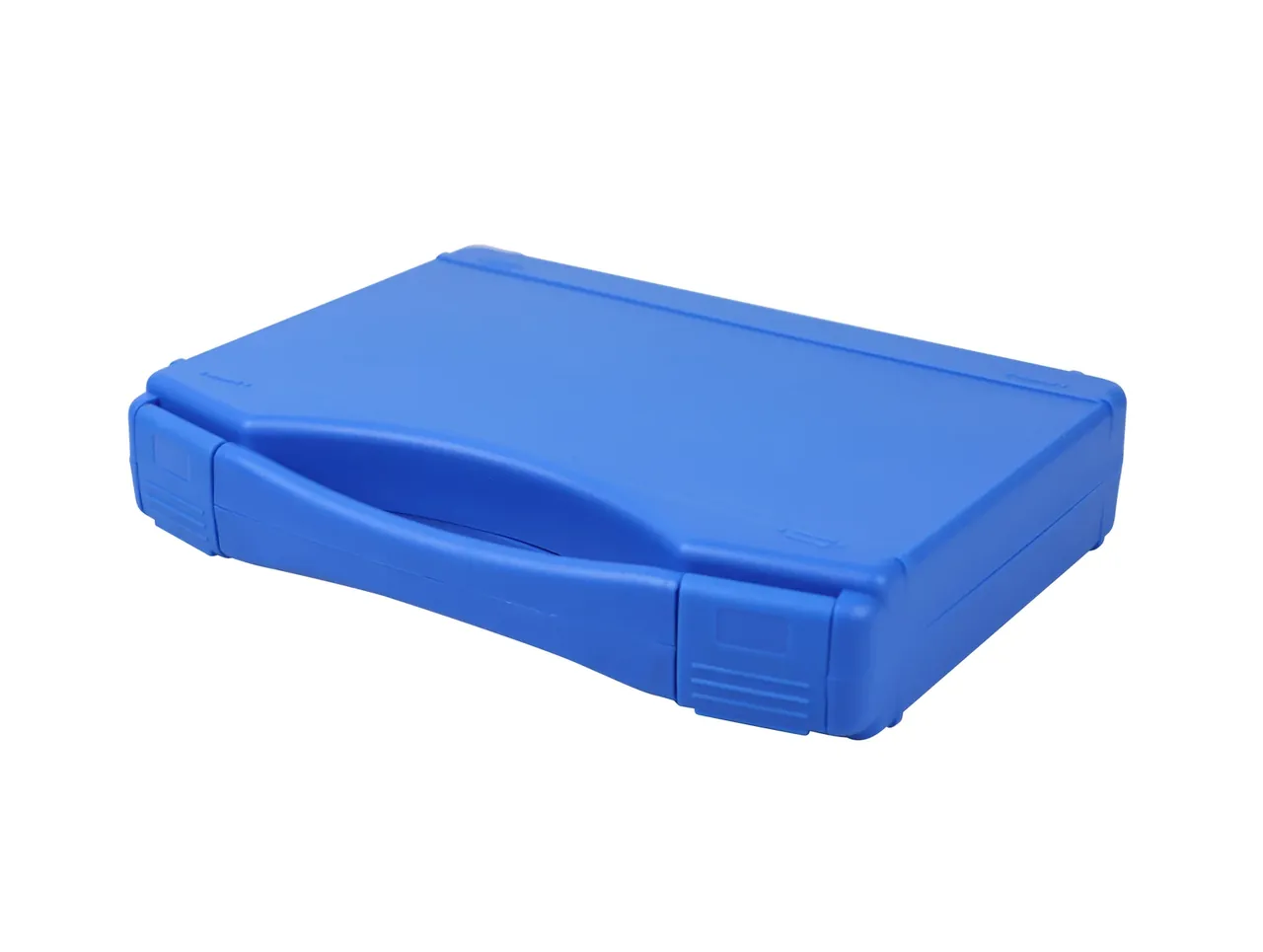
Press both latches and listen: two crisp clicks mean both tongues seated, one means the far tongue sits on grit. Drop the case from 200 mm; four corners landing together without rattle means a square frame. Walk the seal line with a thumb, where dark staining marks condensation that dried.
Weekly, open three cases and press the back of your hand to the inner wall; a chill means the desiccant is spent. With a valve, test the membrane too, the first spot such a unit leaks.
3. Monthly Cleaning: Solvent Limits and Dosage
Monthly work in a Protective Case Customization Process fleet fails on solvent choice more often than effort. ABS and polycarbonate react badly to ketones; one wrong wipe blooms the rim and starts cracks nothing closes.
- Neutral detergent at pH 7 ± 0.5, diluted to 1%
- Isopropyl alcohol under 30% by volume, rinsed within 30 seconds
- Water no hotter than 40°C, above which ABS loses gloss
- Silicone grease at 0.3 g per metre of gasket
- 30 minutes of drying before closing, 60 above 80% humidity
More grease is not better: a thick film traps dust, turns into lapping paste in two months and thins the gasket. A fingertip that slips without an oily print is right.
4. Foam Replacement: Measuring Compression Set
Foam in a Protective Case Customization Process build cannot be judged by its surface. An insert that looks perfect can already be collapsed inside, and divider walls sink before the base pad does.
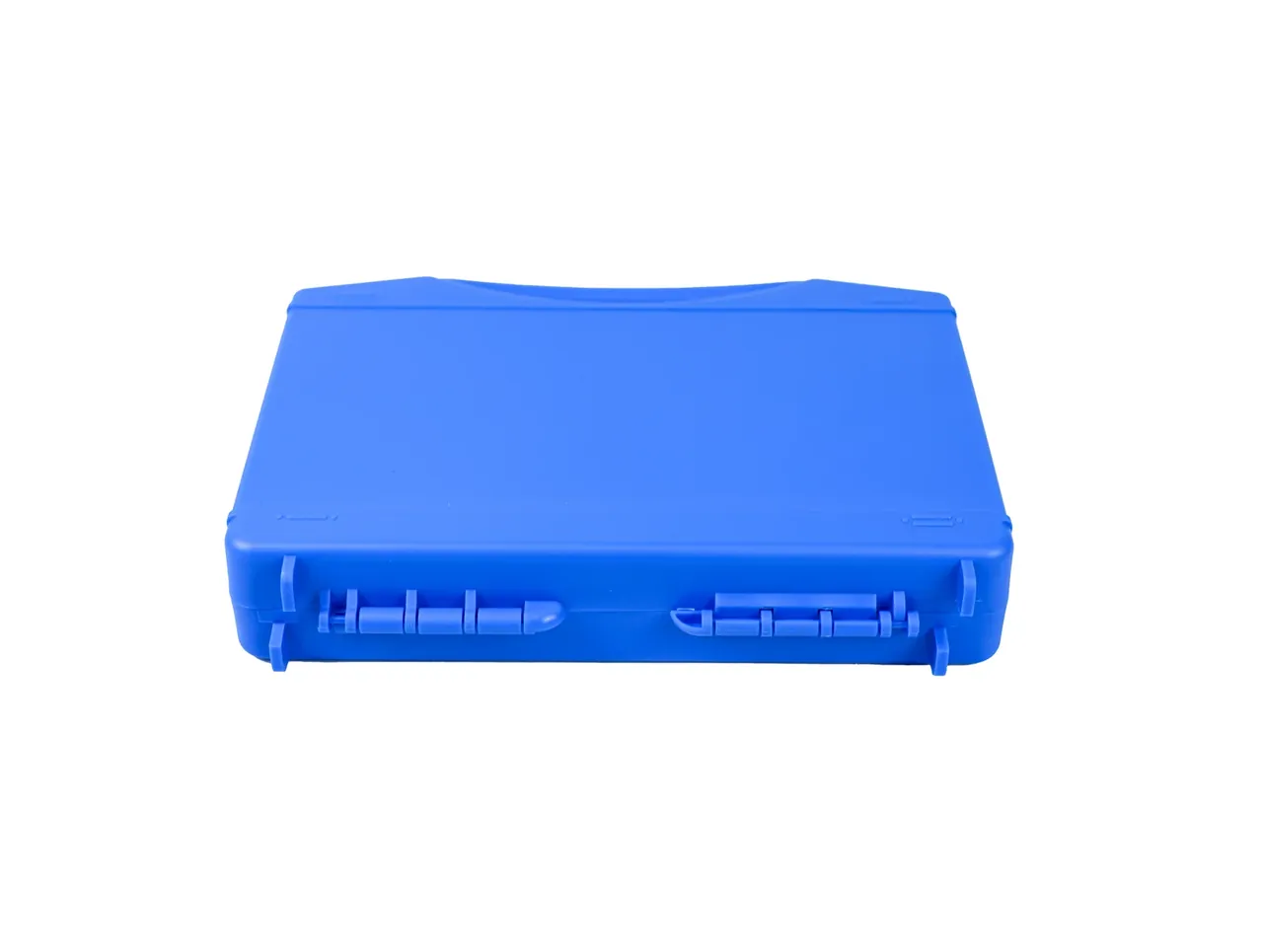
Cut a 50 × 50 mm piece from the most loaded area, compress to 50%, hold 24 hours, release, wait 30 minutes, measure. Over 10% loss means replacement; past 20%, change the whole insert.
When a divider sits 3 mm below the top of the item it holds, that item can slide and a pad is due even if rebound passed. Replacement lands at 12 to 14 months on the coast, 24 inland.
5. Torque Table for Latches, Hinges and Wheels
Re-tightening follows a table. Hand feel leaves one screw too tight and the next short of seat, tilting the seal line.
| Location | Fastener | Torque | Interval | Retirement limit |
|---|---|---|---|---|
| Latch base | M4 stainless | 1.2 N·m | 12 months | Thread stripped |
| Hinge | M5 stainless | 2.0 N·m | 12 months | Bore oval past 0.8 mm |
| Handle mount | M6 stainless | 3.5 N·m | 6 months | Crack at root |
| Wheel bracket | M6 stainless | 4.0 N·m | 6 months | Whitening at base |
| Valve | Fine thread | 0.6 N·m | Each opening | Nicked O-ring |
Below 20% of first torque, replace the screw instead of tightening again. Grade 304 pits from the thread root, and by the third pass the hex socket rounds off.
6. Life Extension or Retirement
Past a certain age the repair-or-replace line is a price question: gasket 18, latch set 45, insert 120, new case 460. Above 35% of that price, or three workshop visits a year, it retires and the shell becomes a spares box. The best modification on a Protective Case Customization Process unit is a desiccant pocket, a 60 × 40 mm mesh pouch bonded in the lid for 3, holding internal humidity under 50% and adding four to six months of gasket life.
In a Protective Case Customization Process program, guard against repairs that lower the seal class. A latch from another lot can shift closing stroke by 0.5 mm and leave the rim uncompressed. Any unit with structural parts touched gets a 10-minute pressure hold.
Conclusion
Every threshold here is a number rather than a feeling: set, holding force, torque loss, rebound, play, pressure drop. Three daily actions, one monthly clean and one annual re-torque turn repair into a schedule. Coastal cases are rarely worn out, only left too long, and the maintenance chapter of a Protective Case Customization Process is the order those numbers get read in.
This article discusses only the container (case body) side of specifications and design intent, and does not cover any handling, loading or use of the contents.
Related Reading
- Six gates of the protective case customization process
- Wheel and handle upkeep
- Seal checks for reserve cases
- Gasket care for hard-shell cases
- Drawings and acceptance documents
Related Products
- 8 Series — Gun Cases; Military Equipment Cases; Camera Equipment Cases; Drone Cases; Watch Cases; Knife Cases; First Aid Cases; Electronics Equipment Cases
- WL8-2812 PP Gun Case — model WL8-2812
- All protective cases and toolboxes: 7 series, 158 models