

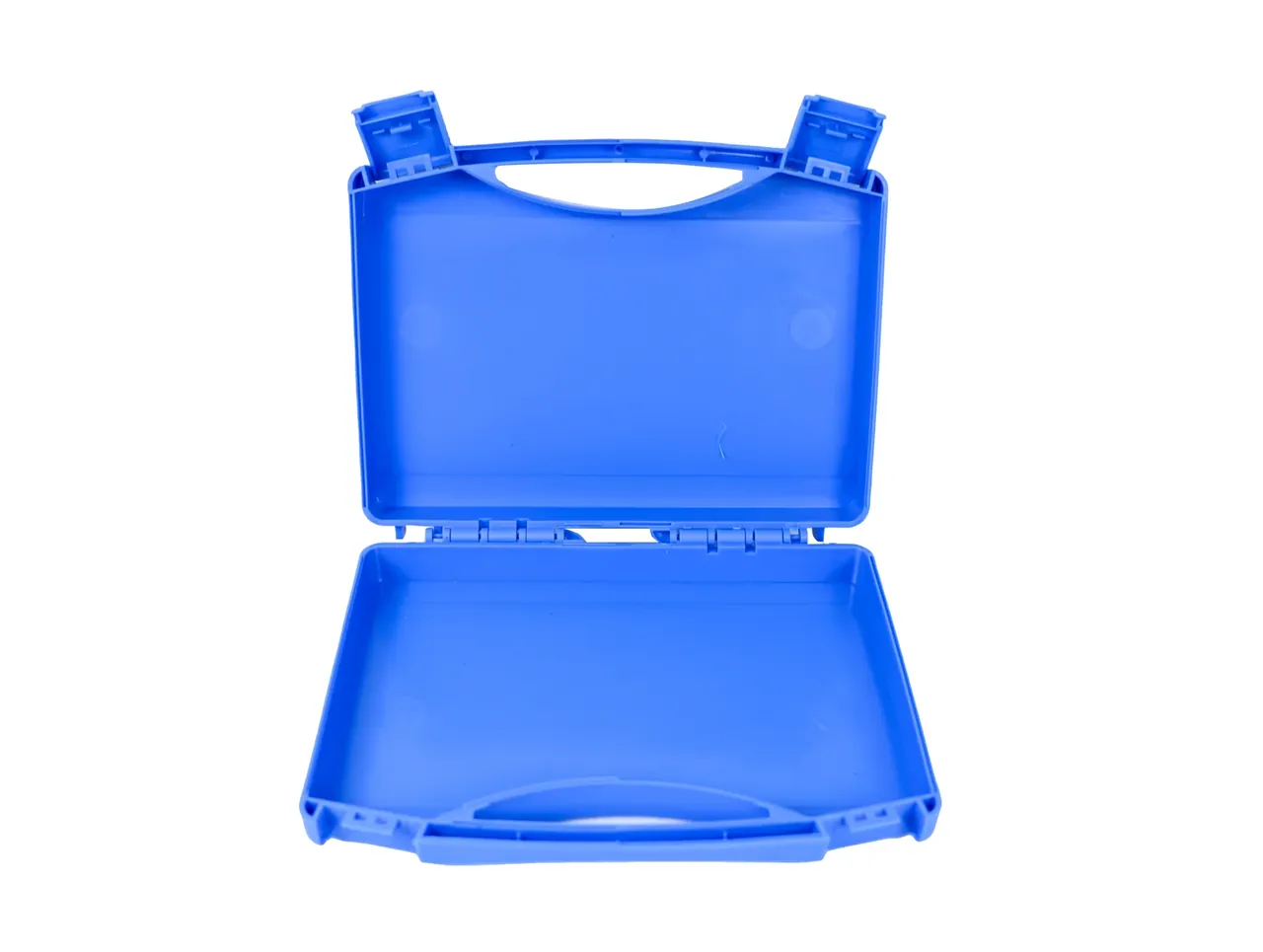
Quick answer: Dimensions in a Protective Case Customization Process are derived from payload and stacking, not chosen by eye. Every extra millimetre multiplies into mold cost, unit weight and rework days.
Table of contents
- Specs Come Down from Load
- The Internal Cavity Chain
- Wall Thickness and Ribs
- Structural Parts and Their Load Share
- What One Wrong Spec Step Costs
- FAQ
1. Specs Come Down from Load
A Protective Case Customization Process starts with three numbers, not with shape: payload per case, stacking tiers, and whether pallets double up in transit. Those fix lid load, which fixes wall thickness and press tonnage.
| Spec item | Driven by | Cost of one step off |
|---|---|---|
| Cavity size | Outline, foam, clearance | 5 mm short, 28,000 CNY recut |
| Wall | Stack height, case weight | 1 mm thin, lid sags 3 mm |
| Ribs | 0.6 × wall and span | Sink at root, rim past 0.5 mm |
| Latch count | Rim perimeter, pressure | One short, pressure lost in 3 minutes |
| Hinge pin | Lid weight, cycles | Play past limit at 2000 cycles |
Wall from 3.5 to 2.5 mm saves 0.7 kg, about 8.4 CNY per kilo, but stacking drops to two tiers and space doubles.
2. The Internal Cavity Chain
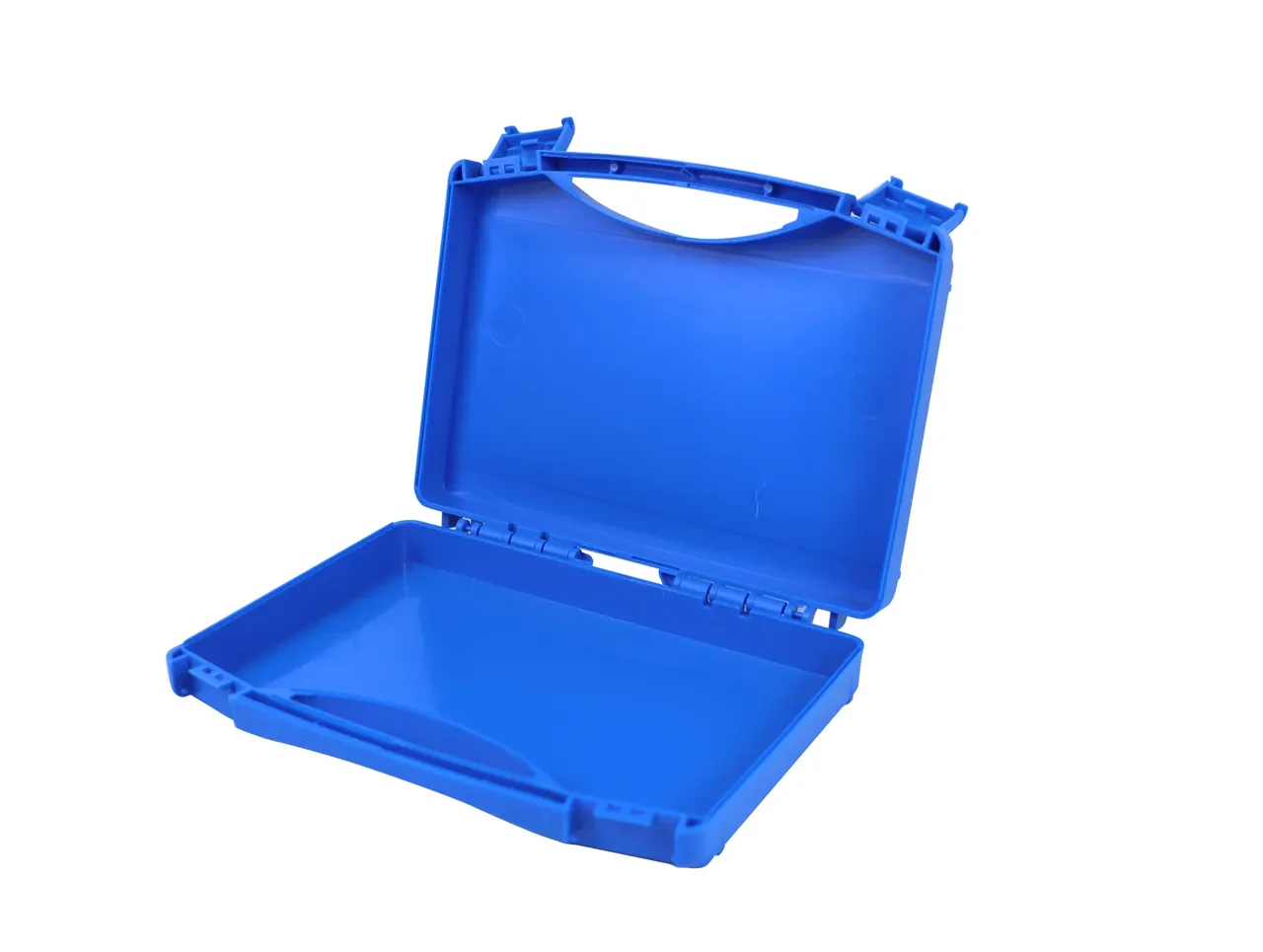
The chain only adds, but every addition needs a written basis; skip one and the trial mold runs again.
| Step | Calculation | Result (mm) |
|---|---|---|
| Item outline | Largest of three axes | 480 × 320 × 180 |
| Foam | 15 per face | 510 × 350 × 210 |
| Clearance | 1.5 per side | 513 × 353 × 213 |
| Wall | 3.5 per side | 520 × 360 × 220 |
| Corners | R8 at four corners | 497 × 337 |
The last row gets forgotten: a 513 mm cavity leaves 497 mm of flat once R8 corners are cut, and a square item jams in all four. Write tolerance as +1.5/−0, since ±1.5 reads as total and the cavity comes out 3 mm small.
3. Wall Thickness and Ribs
In a Protective Case Customization Process build at 26 kg per case and four tiers, the bottom lid carries 78 kg, plus a 1.2 eccentricity factor, so the design load is 94 kg.
| Wall | Unit weight | Stacking | Lid point load |
|---|---|---|---|
| 2.5 mm | 3.9 kg | 2 tiers | 45 kg |
| 3.5 mm | 4.6 kg | 4 tiers | 78 kg |
| 4.5 mm | 5.4 kg | 6 tiers | 110 kg |
Ribs do not improve with density: 0.6 × wall, so 2.1 mm beside 3.5 mm, at 60 to 80 mm pitch. Thicker sinks at the root, wider lets the lid creep at 60°C, and above 0.12 m² of projected area a 3.5 mm wall needs 800 tonnes.
4. Structural Parts and Their Load Share
In a Protective Case Customization Process, structural parts are cut first in a cost review and cost most to redo.
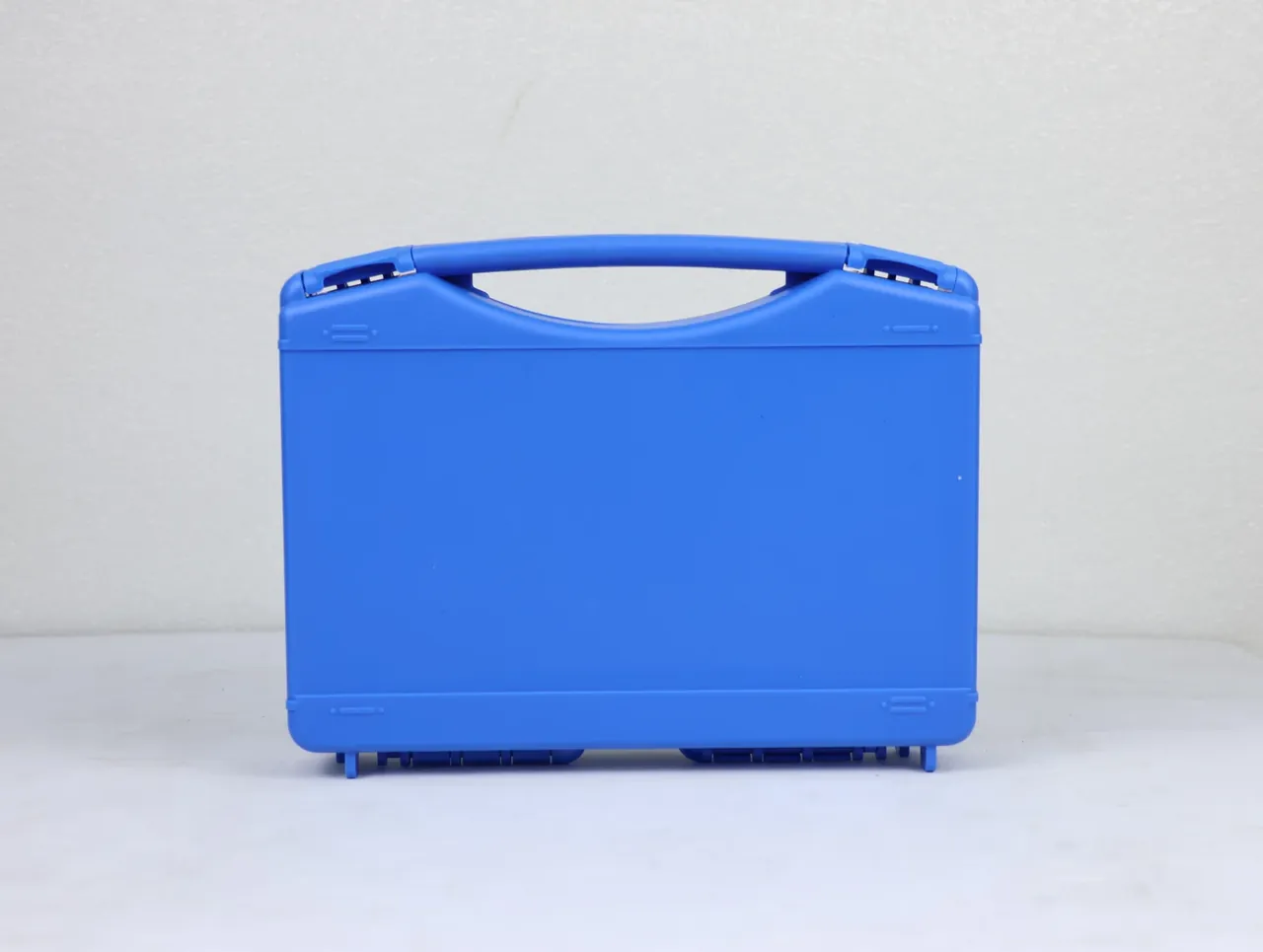
- Hinge: 5 mm pin, 1.5 × lid weight per side
- Latch: 320 N static holding force, one per 300 mm of rim
- Handle: 60 kg rated, tested at 120 kg
- Valve: 8 mm bore, under 2 kPa drop in 10 minutes
The handle is underrated. A 26 kg case lifted one-handed puts 1.8 × the static load into its root, and a root under 6 mm cracks. For 60 kg the mount needs 8 mm and two ribs, an insert worth 4000 CNY. Latch count follows perimeter: 1.5 m of rim takes four, since saving 12 CNY on one invites an 800 CNY leak repair.
5. What One Wrong Spec Step Costs
| Error | Rework | Cost | Lead time |
|---|---|---|---|
| Cavity 5 mm short | Recut cavity | 28,000 CNY | 25 days |
| Wall 1 mm thin | Resin and mold change | 6000 CNY | 12 days |
| Latch hole 2 mm off | Rework insert | 1800 CNY | 5 days |
Beyond the invoice, a 25-day cavity recut idles the line, shifts dates and forces new samples, so hidden cost runs at 1.5 × the invoice. The cheapest step in any Protective Case Customization Process is drawing sign-off, where three people read the chain and sign for two orders less than a mold change after trial. Some money should be spent: a two-cavity mold costs 40% more, 39,000 against 28,000 CNY, takes 12% off unit cost and returns within four months past 3000 units. What never pays is a cosmetic groove cut into a hinge boss, which shortens fatigue life by a third. Divide the premium by unit saving, check three-year volume, and the decision stops being taste.
Conclusion
The spec account turns payload, stacking and rim length into millimetres and yuan. A wall set by 78 kg of lid load, parts split by 320 N and 60 kg, and a rework table that explains four-digit figures. Unit price is set not by one millimetre of wall but by whether three people read the chain before signing, and that lever is the one a Protective Case Customization Process truly controls.
This article discusses only the container (case body) side of specifications and design intent, and does not cover any handling, loading or use of the contents.
Related Reading
- Six gates of the Protective Case Customization Process
- Drawings and acceptance documents
- Cavity and wall specs for cartridge boxes
- Load and stacking specs for heavy duty cases
Related Products
- 8 Series — Gun Cases; Military Equipment Cases; Camera Equipment Cases; Drone Cases; Watch Cases; Knife Cases; First Aid Cases; Electronics Equipment Cases
- WL8-2812 PP Gun Case — model WL8-2812
- All protective cases and toolboxes: 7 series, 158 models