

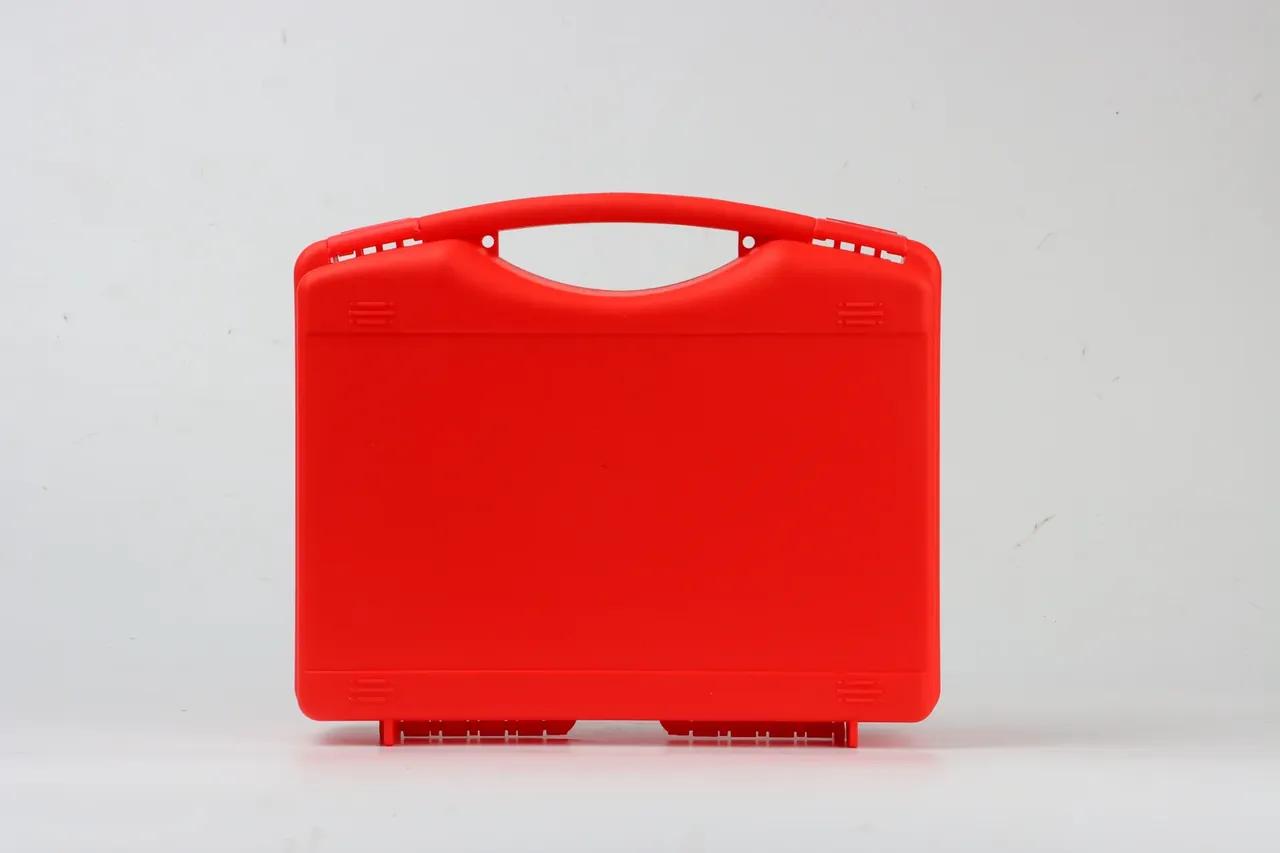
Quick answer: Thickness is an output, not an input. Take 38 kg, apply a 3× factor for 114 kg, run the 1240 mm span, and 3.4 mm at 160 mm rib pitch lands at 1.2 mm deflection. Rim flatness of 0.6 mm, ten latches and 7.5 N·m follow from the same chain.
Table of contents
- Load and cavity come first
- Back-calculating wall from bending
- Ribs and lid: three load paths
- Gasket, latches and hinges
- Five lines on the drawing
- FAQ
1. Load and cavity come first
The order cannot be reversed: payload and cavity first, wall second, ribs and latches last. Pick a sturdy-looking wall and the shell overshoots.
Protective Case Sales enquiries quote the nameplate weight; the dynamic figure bends the floor. A 38 kg instrument becomes 114 kg at 3× over 1240 × 480 mm; what tests it is a point load.
Cavity is the instrument plus 15 mm of foam: 1210 mm of gear gets 1240 mm, a 450 mm width 480 mm. Too much and the case grows heavy, too little and the foam bottoms out.
| Payload | Cavity | Target weight | Wall | Floor |
|---|---|---|---|---|
| 12 kg | 620 mm | 3.6 kg | 2.2 mm | Flat |
| 38 kg | 1240 mm | 6.4 kg | 3.4 mm | Grid ribs |
| 75 kg | 1600 mm | 12.8 kg | 4.2 mm | Double ribs, inserts |
Foam at 25 kg/m³ adds 1.8 kg: it carries nothing but it ships, and Protective Case Sales figures that skip it return as a weight complaint.
2. Back-calculating wall from bending
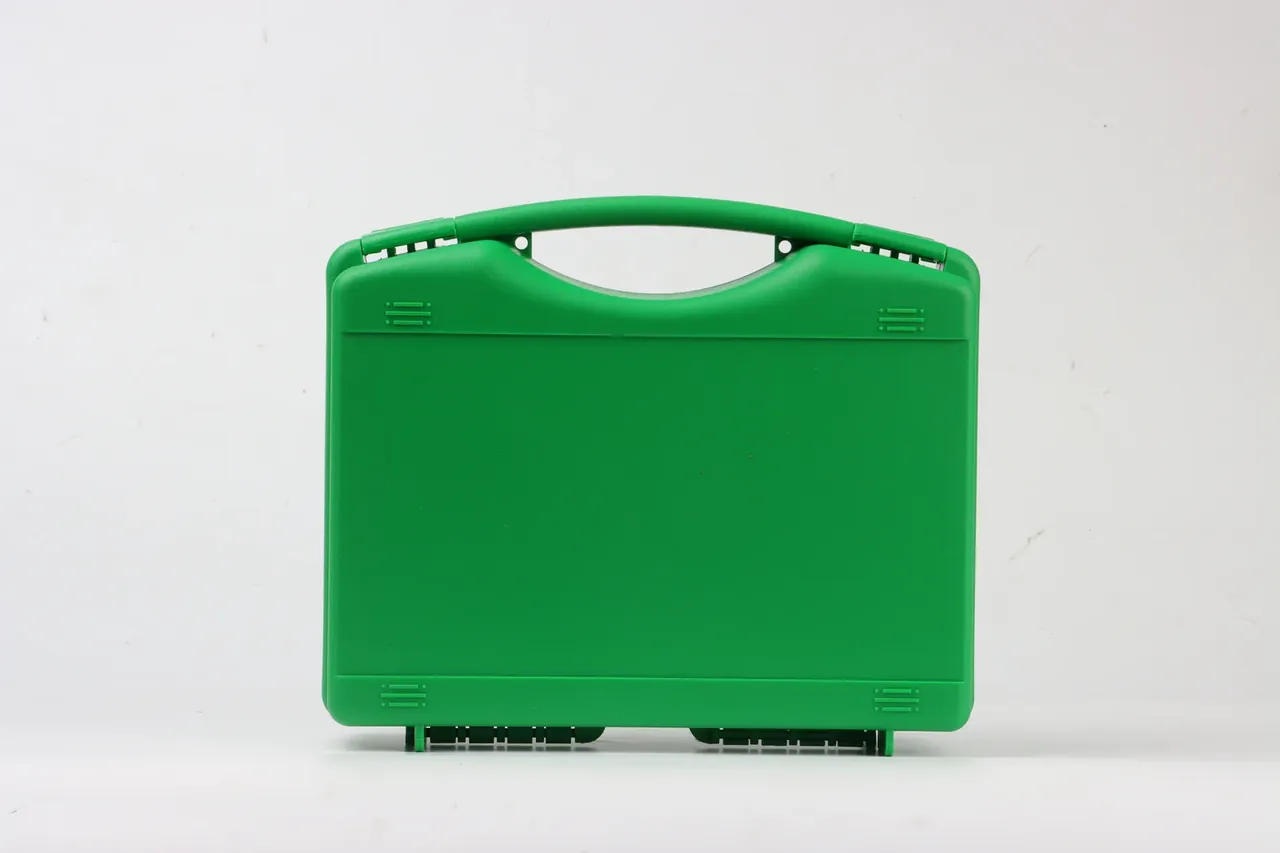
The floor is a simply supported beam: 1240 mm span, 114 kg uniform load, moment as load times span squared over 8. At 3.4 mm and 160 mm pitch, deflection is 1.2 mm — a thousandth of the span.
| Wall | Rib pitch | Weight | Deflection | Use |
|---|---|---|---|---|
| 2.6 mm | 200 mm | 5.1 kg | 2.4 mm | Light gear |
| 3.4 mm | 160 mm | 6.4 kg | 1.2 mm | General transport |
| 4.2 mm | 140 mm | 8.9 kg | 0.7 mm | Long haul |
The trade is weight and cost, not strength: 0.4 mm more costs 7% weight and 8% unit cost for 12% less deflection, while pitch from 200 mm to 160 mm costs 3% and removes 40%. Protective Case Sales buyers push for wall; the numbers say pitch first.
State tolerance separately: a 3.4 mm nominal moulds from 3.25 mm to 3.55 mm, so the sheet says ±0.15 mm and out-of-tolerance lots go back rather than being shimmed. PP at 1.6% shrinkage leaves a 1240 mm case 19.8 mm short, so the cavity is cut oversize.
3. Ribs and lid: three load paths
Ribs belong on load paths only: floor grid, corner posts, rim bead. Those three carry load from floor to wall to rim; ribs elsewhere are weight in every Protective Case Sales drawing.
| Position | Form | Size | Job |
|---|---|---|---|
| Floor | Grid | 10 mm high, 2.2 mm thick | Uniform load |
| Corners | Post | R2.5 root | Drop impact |
| Rim | Bead | 12 mm wide | Flatness |
The lid takes stack pressure and reverse impact, so its ribs run sparse and deep: 220 mm pitch at 12 mm.
Never delete the root radius, the first thing a Protective Case Sales sample review checks. R2.5 drops the stress factor from 2.6 to 1.4; without it a crack starts at the root. Draft at 1.5°, or ejection scuffs 0.1 mm off the wall where nobody looks.
4. Gasket, latches and hinges
Wall fixed, rim flatness fixed. Protective Case Sales drawings put a 1240 mm rim within 0.6 mm, or the gasket never seats.
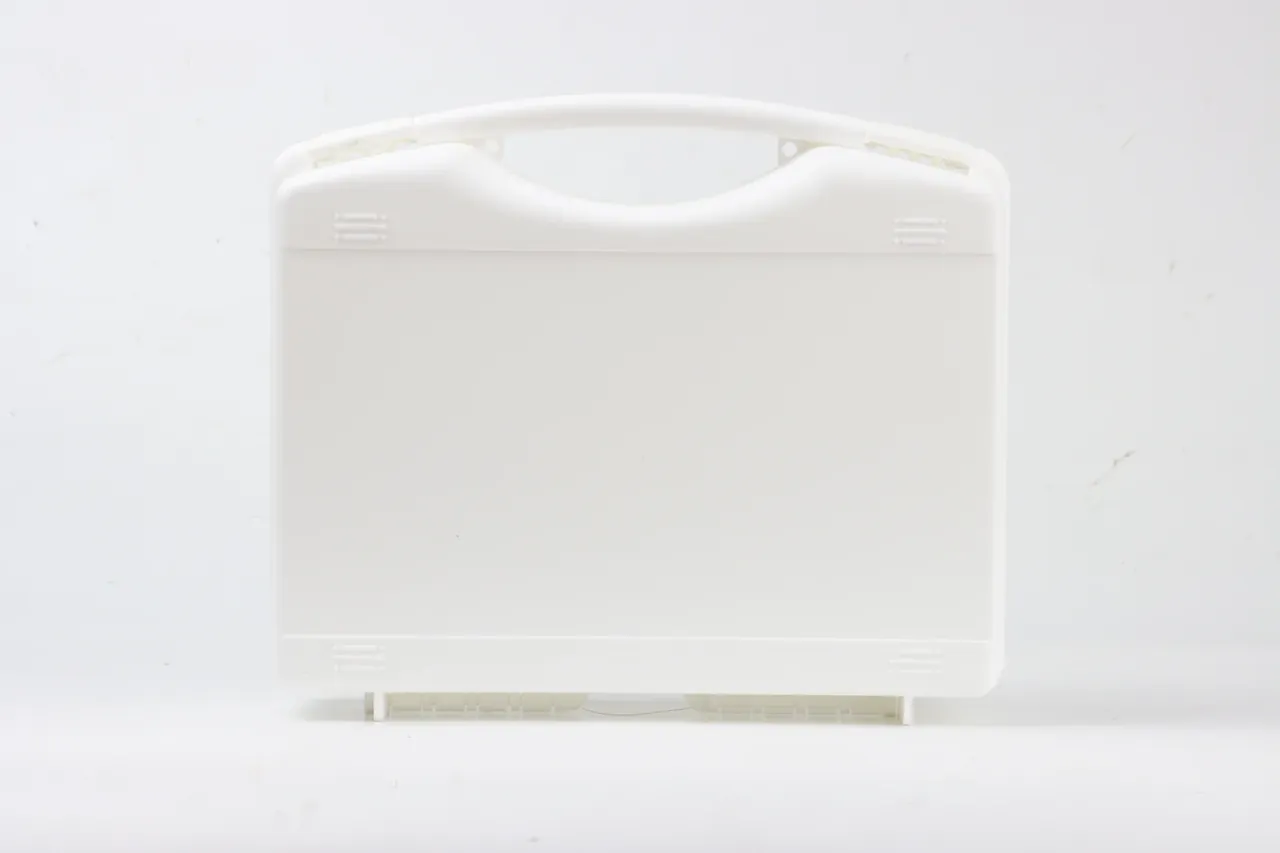
Set the gasket at 26% compression: 11 mm cord closing to 8.1 mm in a 4.5 mm deep, 6 mm wide groove. Under 20% it leaks at the first uneven rim; over 32% it takes a set.
One latch per 350 mm of perimeter — four on the long side, one at each end, ten total. Drop one and that side opens under vibration while compression falls below 15%.
Three hinges, 6 mm pin, 0.3 mm clearance, 5 mm of local wall at the boss to survive 500 cycles. Inserts take 7.5 N·m with 2 mm of plastic around them.
5. Five lines on the drawing
Five lines carry the whole specification:
| Line | Field | Example | Why it stands alone |
|---|---|---|---|
| 1 | Cavity | 1240 × 480 × 300 mm | Locates foam |
| 2 | Wall, tolerance | 3.4 ± 0.15 mm | Load path, weight |
| 3 | Rib pitch, height | 160 mm, 10 mm | Deflection |
| 4 | Rim flatness | 0.6 mm | Sealing |
| 5 | Latches, torque | 10 pcs, 7.5 N·m | Vibration |
Protective Case Sales quotations follow the same lines: mould USD 29,000 over 3 years, minimum 300 pcs, unit USD 40 with 8% scrap from the wall tolerance.
Conclusion
The chain leaves no room for adjectives: 38 kg becomes 114 kg, the 1240 mm span yields 3.4 mm at 160 mm pitch, and 0.6 mm of rim flatness carries 26% compression. Five lines and three tolerances make a specification measurable — the part of Protective Case Sales a competitor cannot copy.
This article discusses only the container (case body) side of specifications and design intent, and does not cover any handling, loading or use of the contents.
Related Reading
- Wall and insert practice on heavy-duty cases
- Drop criteria and cushion layers for shock cases
- Dividing and fixing an instrument cavity
- Load limits on deep-cavity cases
Related Products
- 8 Series — Gun Cases; Military Equipment Cases; Camera Equipment Cases; Drone Cases; Watch Cases; Knife Cases; First Aid Cases; Electronics Equipment Cases
- WL8-2812 PP Gun Case — model WL8-2812
- All protective cases and toolboxes: 7 series, 158 models