

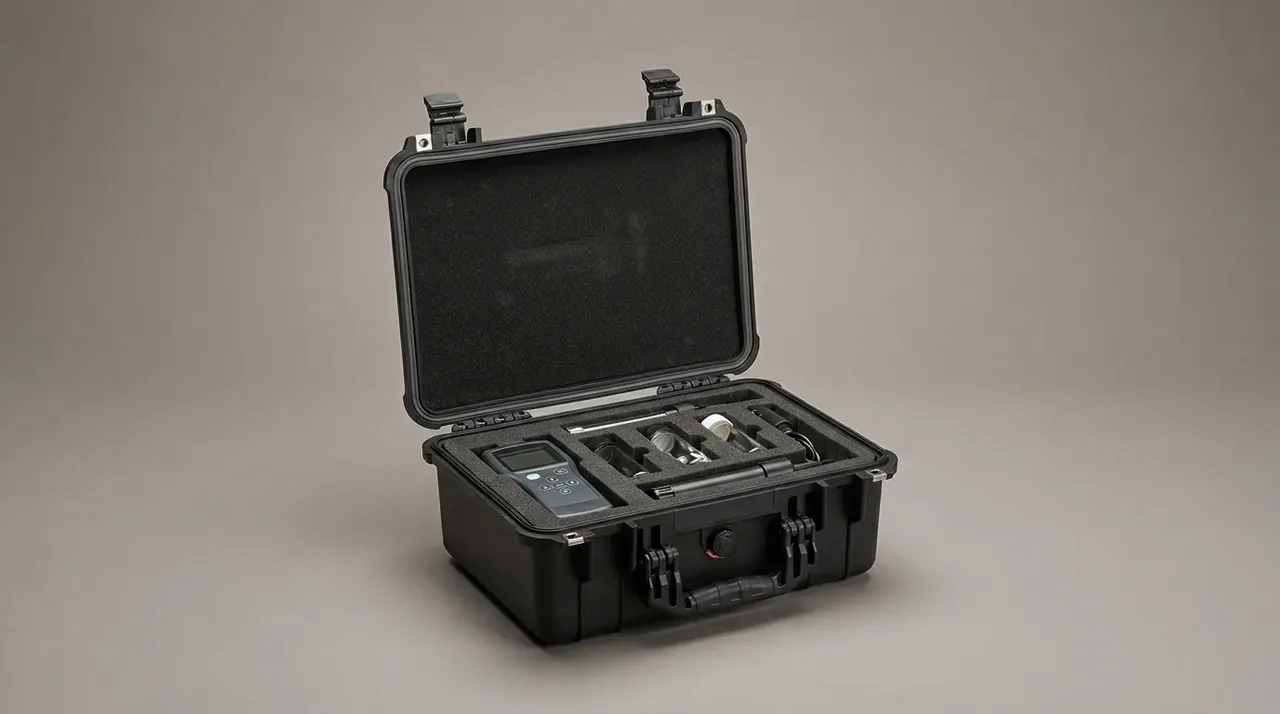
Quick answer: Radio comms test equipment hard case holds slot displacement to 0.55 mm after a 1.0 m drop by pairing slot-width tolerance with a 10 mm lid frame.
Table of contents
- Slot-width tolerance of the Radio comms test equipment hard case
- Hold-down frame height inside the lid
- Slot displacement readings after a drop
- Hinge torque decay on the cycle rig
- Slot-width rejection limit for comms batches
- FAQ
1. Slot-width tolerance of the Radio comms test equipment hard case
Radio comms test equipment hard case is milled with 5 locating slots, and a ±0.32 mm width tolerance starts the size chain. The slots carry no load; they bound the foam dividers laterally, so a width outside tolerance shifts where the press frame lands. The JUNZHIJIA log at Kexin New Materials (Guangdong) Co., Ltd. labels S1 to S5 and measures each at 23°C with a calliper to 0.01 mm. A 545×390×220 mm outer size, 480×330×155 mm cavity and 4.0 mm wall fix the shell first. The largest-minus-smallest width across the 5 slots must sit inside ±0.32 mm before fitting. What is measured is post-drop wandering, not a neat single unit.
Slot-width tolerance and frame height are used as a pair. A 10 mm frame height sets how deep the lid foam presses into the slot mouth; a tight slot jams the divider, a loose one leaves lateral play, and the two together decide slot displacement after a drop. Radio comms test equipment hard case does not release the two on separate sheets; they share one row in the log.
| Slot ID | Width deviation | Verdict |
|---|---|---|
| S1 | +0.08 mm | Pass |
| S2 | −0.12 mm | Pass |
| S3 | +0.15 mm | Pass |
If all 5 slots lean one way the dividers shift together, while alternating signs cancel part of the shift, so Radio comms test equipment hard case keeps that deviation table for recheck.
2. Hold-down frame height inside the lid
A 10 mm hold-down frame height is the closed gap from frame edge to rim plane, bounding how far foam enters the slot mouth. Too high passes impact into the dividers, too low leaves vertical play. Radio comms test equipment hard case gauges the gap at four corners with a feeler gauge and reads it beside the 5 slot deviations.
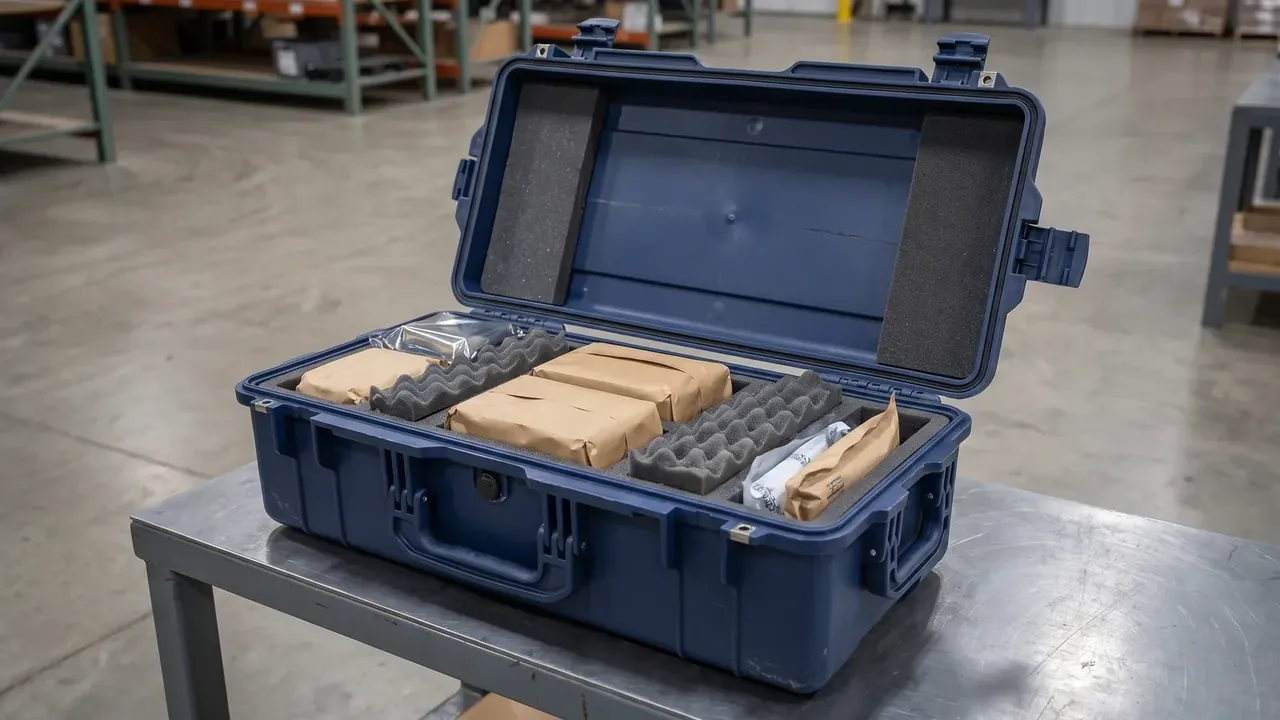
The fit between frame and base slots ends up in the ≤0.28 mm frame-sink recheck line. If the frame sinks past that after 4200 cycles, the original 10 mm travel is eaten and the ≤0.55 mm slot displacement cannot hold. An inspector measures frame height before and after the rig cycles and files the difference under that batch.
At 5.0 kg empty and 10 kg loaded the frame sees different rebound loads, so the limit height is rechecked in the loaded state rather than on an empty shell alone.
3. Slot displacement readings after a drop
A ≤0.55 mm displacement after a 1.0 m drop is the bluntest criterion for Radio comms test equipment hard case. The rig drops six faces, and an optical reader takes the 5 slot centre-line offsets against the pre-drop position; the largest offset is the unit displacement compared with ≤0.55 mm. The reading is the worst face, not an average.
An over-line reading usually starts at the loosest slots. If S2 carries a negative width deviation and the frame has worn low, lateral play opens all at once on impact. Radio comms test equipment hard case answers an over-line with a full-batch recheck, not by re-milling one slot on a single shell.
Frame sink and torque decay are reviewed in the same recheck pass, and all three readings share one batch code so a size fault and a life fault are not filed apart.
4. Hinge torque decay on the cycle rig
A 3.0 N·m hinge torque is the hold-open start for this Radio comms test equipment hard case, and ≤11% decay keeps the lid at its set angle after 4200 cycles. Static torque is read every 2100 cycles, and the initial-to-final gap over the start is the decay percentage. Two latches at 350 N each log force on the same rig.
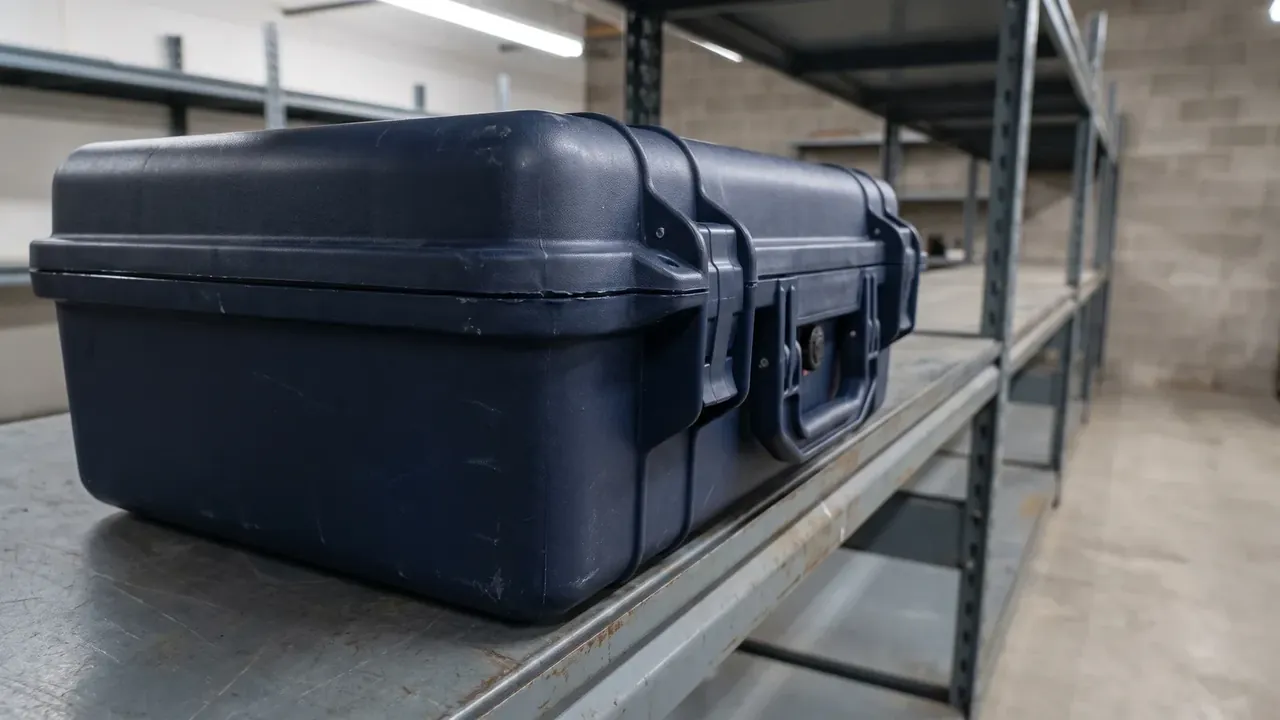
Torque decay and frame sink are two quantities read from the same cycle run. A loose hinge tips the closed lid, the frame then loads unevenly, and the sink reading rises before slot displacement does. Keeping both side by side in the record tells a recheck whether the degradation came from the hinge or the frame.
| Torque band | Recheck node | Decay |
|---|---|---|
| T1 | 0 cycles | 0% |
| T2 | 2100 cycles | 5% |
| T3 | 4200 cycles | 10% |
Staying inside ≤11% at 4200 cycles says hinge holding force did not pull the 10 mm frame travel off line. A decay near the ceiling sends the whole batch to recheck, back to its slot deviation table and frame-height record.
5. Slot-width rejection limit for comms batches
The comms-batch slot rejection still uses ±0.32 mm, but it governs a whole batch rather than one shell. Batches group by one tool and one foam lot, coded on a non-cosmetic base face with the 5 deviations, frame height, hinge start and seal result. A 1.0 m drop and IP66 recheck are finished-product checks that do not replace it.
When a batch crosses the width line, every shell under that batch is quarantined and the S1-to-S5 machining record is pulled, rather than only the loose slots being picked out. With the rejection at the end, the deviation table, frame height, displacement readings and torque decay in front of it form one traceable size chain.
| Displacement band | Drop face | Disposition |
|---|---|---|
| ≤0.30 mm | Base down | Release |
| 0.31 to 0.50 mm | Lid down | Release |
| 0.51 to 0.55 mm | Long side | Tag slot |
| Over 0.55 mm | Short side | Full recheck |
Displacement is filed under the worst face; a unit near the ceiling, though inside the line, is still checked back to slot deviation and torque band to rule out a continuous drift from one slot. Radio comms test equipment hard case signs no release sheet unless all three readings are present.
Conclusion
Radio comms test equipment hard case splits post-drop slot control into three measurable figures: ≤0.55 mm displacement after a 1.0 m drop, ≤0.28 mm frame sink after 4200 cycles, and ≤11% hinge torque decay. They map to the ±0.32 mm tolerance of 5 slots, a 10 mm frame height and a 3.0 N·m hinge start, and missing one leaves divider wandering unexplained. The deviation table and torque band in a recheck record tell more about a batch than a single finished shell, and JUNZHIJIA keeps that size chain auditable.
Related Reading
- Communication Equipment Cases: Application Scenes and Configuration
- Communication Electronics Protective Cases: Field Protection Requirements
- Leak Testing Protective Cases: Pressure Decay, Bubble and Tracer Methods
- Automotive Test Equipment Cases: Bench Sensor and Data Acquisition Protection
Related Products
- 8 Series — Gun Cases; Military Equipment Cases; Camera Equipment Cases; Drone Cases; Watch Cases; Knife Cases; First Aid Cases; Electronics Equipment Cases
- WL8-2812 PP Gun Case — model WL8-2812
- All protective cases and toolboxes: 7 series, 158 models