

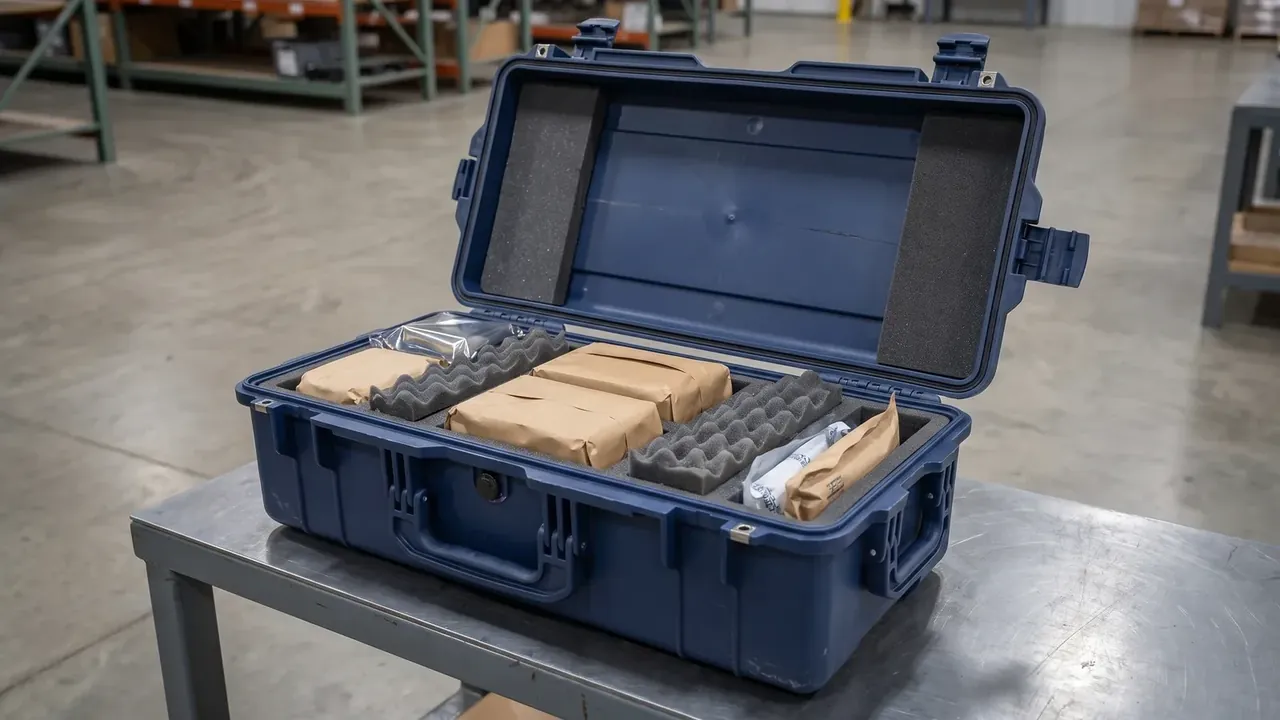
Quick answer: A six-item case rohs report covers six substances only, while the ten-item version adds four phthalates at 1000 ppm each, so it cannot replace it.
Table of contents
- Where the six-item and ten-item report differ
- How homogeneous materials get split
- Detection limits against decision limits
- Linking XRF screening to confirmation
- Report validity and lot traceability
- FAQ
1. Where the six-item and ten-item report differ
The six-item list dates from 2006: lead, mercury, cadmium, hexavalent chromium, PBB and PBDE. Directive (EU) 2015/863 added DEHP, BBP, DBP and DIBP in June 2015, enforced them from 22 July 2019 and extended them to medical devices on 22 July 2021. The substance count on page one decides the work that follows.
| Item | Six-item report | Ten-item report |
|---|---|---|
| Restricted substances | 6 | 10 |
| Phthalates | none | 4, at 1000 ppm each |
| Legal basis | 2011/65/EU | 2011/65/EU plus 2015/863 |
Four extra phthalates push the soft parts onto separate lines: gasket compound, screen-print ink and foam adhesive each need their own sample, so the material count rises by two.
Phthalates sit in predictable places: a PVC gasket needs plasticiser with DEHP at 20–40% of the compound, and inks and adhesives carry residues too. On a 42 L case the gasket read 1800 ppm DEHP, and 38 ppm after switching to TPE.
Six items still satisfy some buyers: EU-bound electronic enclosures have required ten since 2019, while mechanical tool boxes sometimes pass on six.
2. How homogeneous materials get split
A homogeneous material cannot be separated mechanically. A 520 mm by 420 mm by 210 mm moulded case yields 14 samples: lid and base are both PP but differ in colour, the latch is POM while the pin is 304 stainless, and the gasket and its adhesive film are separate submissions.
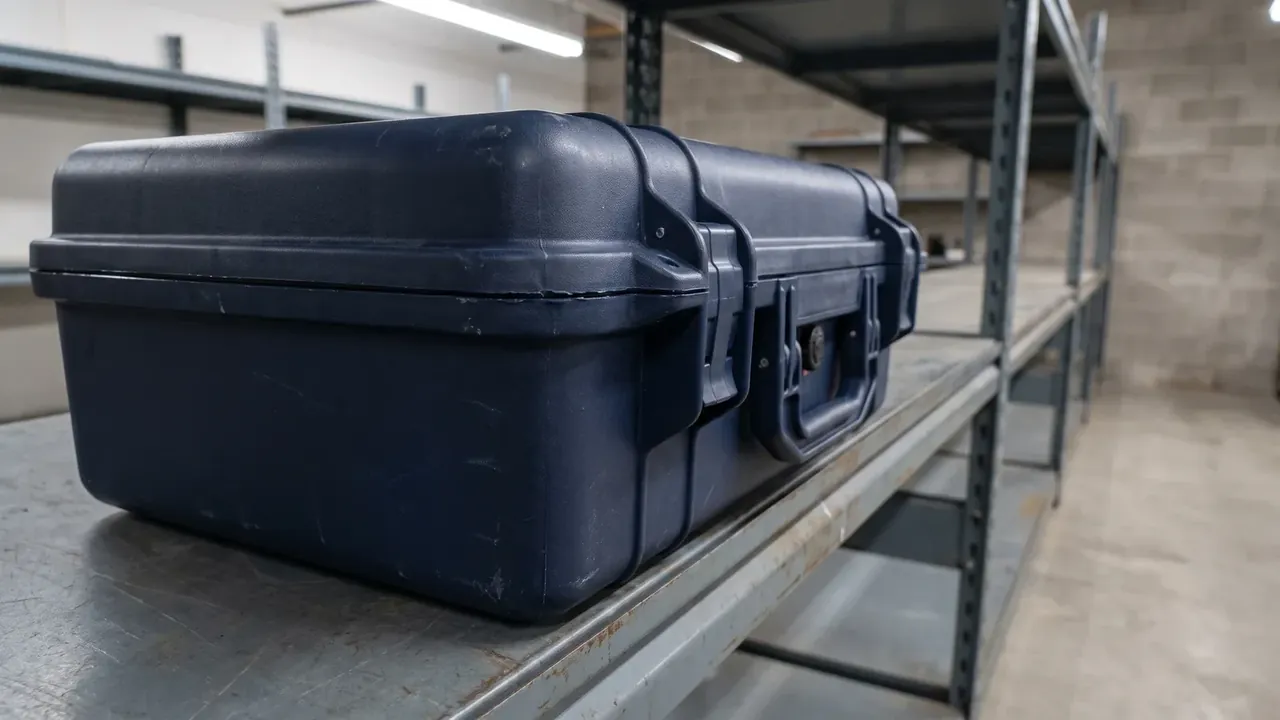
| Part | Material | Phthalate risk | Splitting rule |
|---|---|---|---|
| Lid, base | PP | low | one sample per colour |
| Gasket | EPDM or PVC | high | adhesive kept separate |
| Latch, pin | POM, 304 stainless | low | never merged |
| Screen-print ink | solvent based | medium | scraped separately |
Splitting errors outnumber failing readings. Merge latch and pin and the chromium from the pin is diluted by POM, giving a clean number; dissolve the gasket with its adhesive and 1800 ppm DEHP reads as 700 ppm. Each line needs an ID, material, colour, location and weight share.
No averaging applies. One of 14 samples above its limit fails the case, and rework touches that part alone.
3. Detection limits against decision limits
Ten items use two thresholds: cadmium at 0.01%, or 100 ppm, and the rest at 0.1%, or 1000 ppm. Figures may print as 0.1%, 1000 ppm or 1000 mg/kg, so normalise units first.
| Method | Substances | Detection limit | Role |
|---|---|---|---|
| XRF | Pb, Cd, total Cr, Br | 15–30 ppm | lot screening |
| ICP-OES | Pb, Cd, total Cr | 2 ppm | confirmation |
| ICP-MS | Pb, Cd | 0.1 ppm | near-limit dispute |
| Spectrophotometry | Cr(VI) | 1 ppm | plating, passivation |
| GC-MS | four phthalates | 10–20 ppm | soft parts, inks |
ND without a detection limit is unusable: below 10 ppm it leaves a 100-fold margin to the line, below 50 ppm only 20-fold.
Near-limit readings need a guard band. At 920 ppm against a 1000 ppm limit the 95% interval touches the line, so we re-run and confirm by a second method; a 15% spread between runs re-samples the lot.
Cadmium leaves the least room: a 5000 ppm cadmium red dosed at 2% lands the part at exactly 100 ppm, so red, yellow and orange parts get their own line.
4. Linking XRF screening to confirmation
A handheld XRF needs 30 s per spot and 3 spots per part, covering 400 parts in an 8-hour shift. It reads total elements, cannot see hexavalent chromium and cannot separate PBB from PBDE congeners, so it only screens.
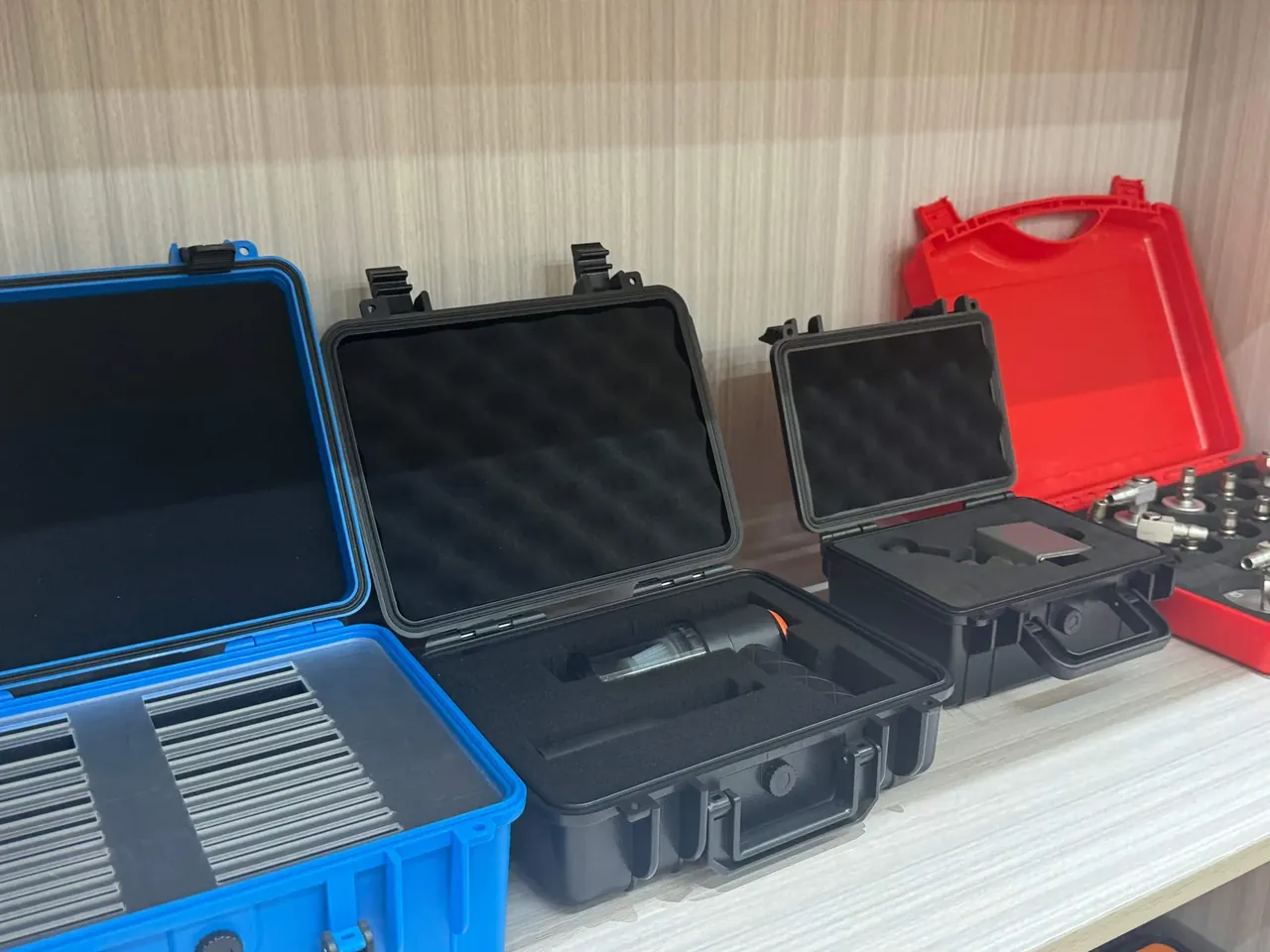
Set gates on the limit: below 30% release, 30–70% re-test two more spots, above 70% send out. Plastic under 2 mm reads 10–20% low, and plating under 5 μm lets the beam reach the substrate.
Confirmation is method-specific: ICP-OES for lead, cadmium and total chromium at 2 ppm, GC-MS for the four phthalates after extraction, alkaline extraction with spectrophotometry for Cr(VI) at 1 ppm. Three parts per lot go out, results in 5 working days.
The classic error is reading total chromium as Cr(VI): a zinc-plated part can show 800 ppm total with zero Cr(VI), while 60 ppm total can hide 40 ppm Cr(VI) in the passivation layer.
5. Report validity and lot traceability
No regulation sets an expiry date; the trade convention is 12 months, and large buyers write that age limit into contracts. A new resin grade, masterbatch supplier, plating process or EPDM-to-PVC swap triggers re-testing.
A new mould, wall thickness revision or different press leaves the composition intact, so the report carries over while the BOM needs a version line.
Three fields bind a report to a lot: part number, BOM revision and month of manufacture. Once the masterbatch supplier changes, an old file no longer covers new production, so we keep 3 parts per lot for 24 months.
Purchase order clauses save time: 10 substances, every homogeneous material with its ID and limit, ND qualified, issue date within 12 months, and 15 days notice before any change.
Conclusion
When a case rohs report arrives, check nine fields in order: report number and issue date inside 12 months; legal basis naming 2011/65/EU with 2015/863; 10 substances including the four phthalates; all 14 homogeneous materials with ID, material, colour and location; limits written as 0.01% for cadmium and 0.1% for the rest; methods separating XRF screening from ICP-OES and GC-MS confirmation; ND qualified by a detection limit; photos matching the model and BOM revision; signature and accreditation mark on the last page. One missing field is a reissue request. Then bind the file to the lot: the report covers the submitted sample only, and an old file dies with a material change. Substance count, detection limits, 12-month age and change notice belong in the purchase order.
This article discusses container-side specifications and design implications only, and does not cover any handling, loading or use of the contents.
Related Reading
- CE and RoHS certification route for cases
- Building batch traceability for case materials
- How AQL 2.5 sampling decides a lot
- Masterbatch, heat and colour difference control
Related Products
- 8 Series — Gun Cases; Military Equipment Cases; Camera Equipment Cases; Drone Cases; Watch Cases; Knife Cases; First Aid Cases; Electronics Equipment Cases
- WL8-2812 PP Gun Case — model WL8-2812
- All protective cases and toolboxes: 7 series, 158 models