


Quick answer: The colour of red cases depends less on masterbatch price than on holding a 2.5 percent ratio across a 500-unit batch. Fix ratio, melt temperature and sampling, and Delta E 2 starts to mean something.
Table of contents
- Mixing 2.5 Percent Masterbatch
- Delta E 2 or Delta E 5 as the Line
- A 1000 lux Booth Under D65
- Sampling a 500-Unit Batch
- Three Years of Fade at 210 C Melt
- FAQ
1. Mixing 2.5 Percent Masterbatch
The red in a red case comes from masterbatch diluted in the barrel, not from a coating. A 2.5 percent ratio means 2.5 kg of masterbatch to every 100 kg of base resin, and that number, not the price per kilo, sets the shade.
Shift the ratio and the red splits. At 2.3 percent the body reads dark and the lid stops matching it; at 2.7 percent the red turns bright and looks powdery in reflection. Two tenths of a point is 200 g in 100 kg, and the eye still catches it.
| Masterbatch | Per 100 kg resin | Shade seen | Hiding | Use |
|---|---|---|---|---|
| 2.0 percent | 2.0 kg | dark, lid splits from body | thin walls show through | dark internal parts |
| 2.5 percent | 2.5 kg | matches the standard plaque | opaque at 1.5 mm | regular export runs |
| 3.0 percent | 3.0 kg | bright, powdery in reflection | fully opaque | pale regrind |
| 2.5 percent plus 20 percent regrind | 2.5 kg | slightly dark, check the plaque | 1.5 mm faintly shows | internal frames |
Holding the ratio takes a loss-in-weight feeder, not a scoop, and red cases leave the line wrong when the feeder drifts unnoticed. Accuracy runs to plus or minus 0.1 percent with a scale check each shift; damp masterbatch cakes, the screw slips, and the real ratio falls to 2.2 percent.
2. Delta E 2 or Delta E 5 as the Line
Delta E is distance in colour space and carries no unit. Red cases are usually accepted at Delta E 2, a gap a trained eye can just separate and an ordinary buyer cannot see indoors. Delta E 5 is the other line, where anyone can point at two cases side by side.
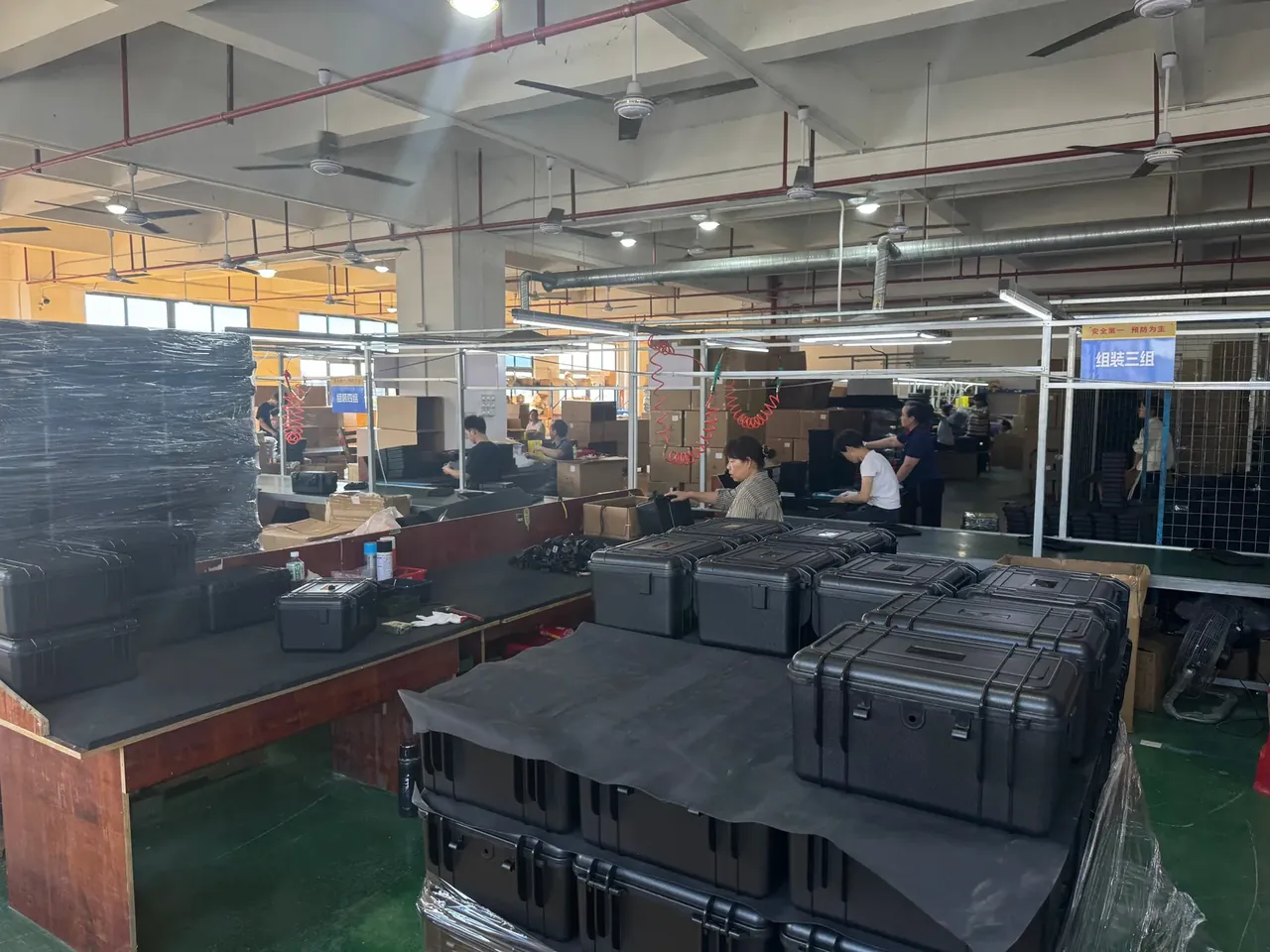
Delta E 2 governs inside a batch, Delta E 5 governs release between batches, and complaints begin near 5. Hold a batch to 5 and one pallet can carry two shades, so red cases from the same run look like two orders.
State the geometry: D65, 10 degree observer, 45/0, 8 mm aperture, on a flat face away from radii and ribs. Three readings on one case should sit within 0.4.
| Delta E | What the eye says | Action |
|---|---|---|
| under 1.0 | no difference visible | release |
| 1.0 to 2.0 | visible to a trained eye | release in batch, keep plaque |
| 2.0 to 5.0 | visible side by side | customer sign-off across batches |
| over 5.0 | obvious at a glance | reject, regrind the lot |
3. A 1000 lux Booth Under D65
Judge red cases in a booth, not under shop lighting. D65 matches noon daylight and 1000 lux is the usual viewing level; shop fluorescents run green, so one case can look dirty here and clean there.
The table is neutral grey at 18 percent reflectance, a step darker than the case, so the red does not swamp the eye. View at 500 mm with the line of sight at 45 degrees and give each case 10 s; look longer and the eye adapts until nothing looks wrong.
Age the lamps on a counter. A D65 tube drifts in colour temperature after 2000 h, so red cases get judged on a 1000 h calibration cycle, and dust on the booth wall costs 15 percent of the light, turning 1000 lux into 850.
| Viewing condition | Illuminance | What it resolves | Use |
|---|---|---|---|
| shop fluorescent | 300 to 500 lux | gross colour error only | quick first-piece look |
| D65 booth | 1000 lux | Delta E 2 readable | batch and cross-batch calls |
| overcast daylight | above 5000 lux | hue error amplified | customer site comparison |
| hard spotlight | above 1500 lux | glare hides the shift | never for colour |
4. Sampling a 500-Unit Batch
A 500-unit batch of red cases is sampled at one case per 50, so ten cases, plus the first and last off the press. The first fixes the colour, the last shows whether material sat in the barrel, and only then do the eight in between count.
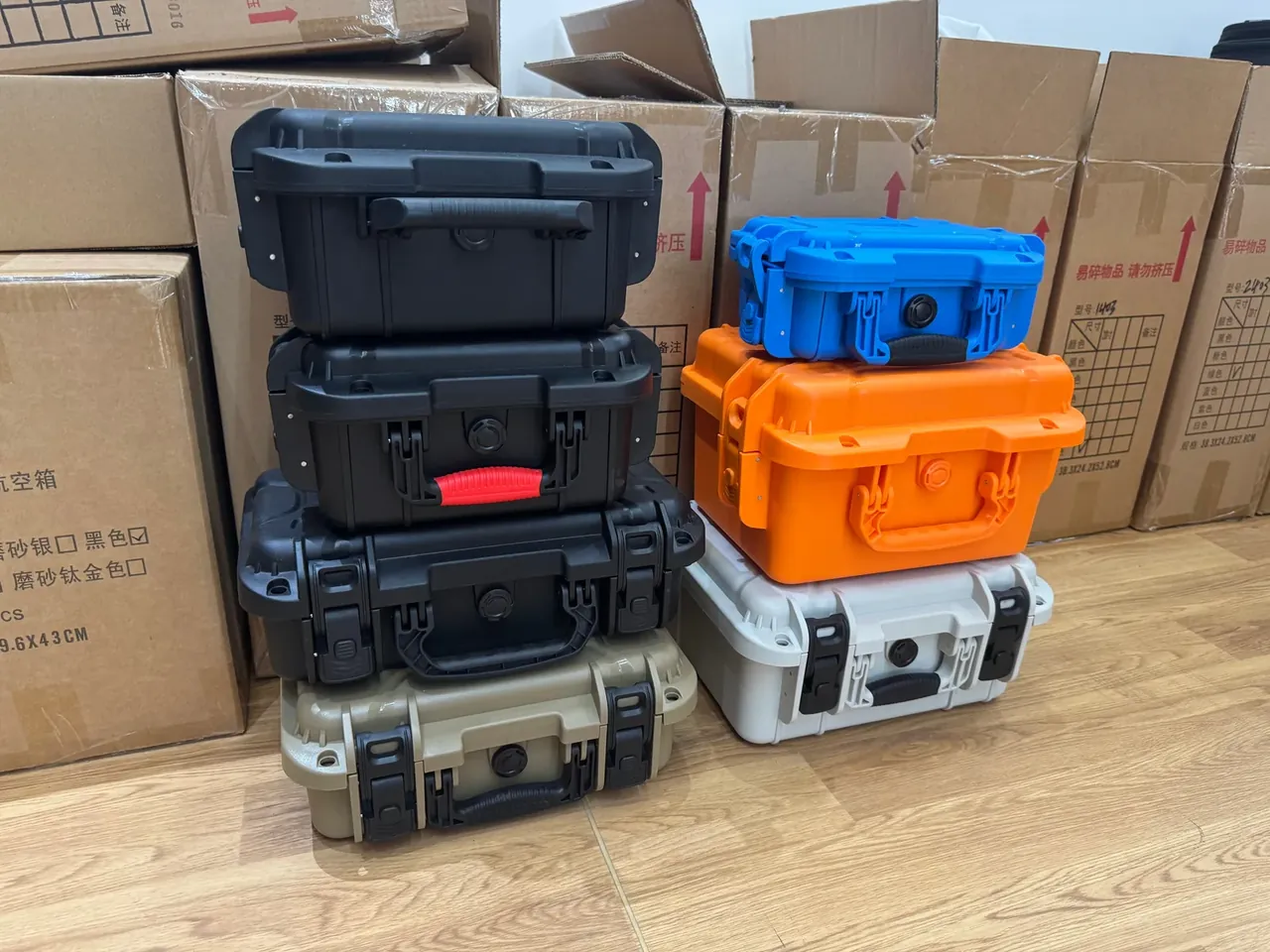
Retained plaques serve the next batch. Cut three 100 by 100 mm plaques per batch, mark batch, masterbatch lot and melt temperature, bag them away from light; comparing against a plaque beats a colour card because it came from the same resin and the same process.
The batch record for red cases needs four lines: masterbatch lot, ratio, melt temperature, Delta E reading. Drop one and a later problem cannot be traced, and an untraceable batch is reworked whole.
5. Three Years of Fade at 210 C Melt
Red fades faster than most colours, and three years outdoors is a common acceptance window. About 750 h of xenon arc stands in for three years at a subtropical site, judged at Delta E 5; red cases that drift pink at 500 h will not last.
Fade speed is largely set by melt temperature. 210 C is the usual window for red masterbatch; above 230 C the pigment starts to break down, the surface yellows before it darkens, and 8 min of residence does the same.
Three heater bands hold the profile: 180 C at the feed, 210 C in compression, 205 C at the nozzle. More than 15 C of spread between zones leaves the masterbatch streaked, and that clouding shows plainly in the booth.
Red cases end up with a record anyone can re-check: a 2.5 percent ratio, a 210 C melt, three plaques a batch, Delta E 2 inside a batch. Keep all four and a 500-unit run is one red; lose one and the next run is a guess.
Related Reading
- Masterbatch and batch control
- Colour difference at Delta E 2 and 5
- Batch consistency sampling
- Colour cards and light sources
JUNZHIJIA
Related Products
- 8 Series — Gun Cases; Military Equipment Cases; Camera Equipment Cases; Drone Cases; Watch Cases; Knife Cases; First Aid Cases; Electronics Equipment Cases
- WL8-2812 PP Gun Case — model WL8-2812
- All protective cases and toolboxes: 7 series, 158 models