

Quick answer: A repair loop runs intake, judgement and return: 8 intake fields, 3 working days to judge, cracks over 80 mm replaced, freight split 70:30.
Table of contents
- Intake Starts the Repair Loop
- Judgement Inside Three Working Days
- The 80 mm Line
- Return Shipping and the 70:30 Split
- Where Twelve Days Come From
- FAQ
1. Intake Starts the Repair Loop
Disputes about a repair loop rarely start on the shop floor; they start three months later, when nobody can prove what arrived. A thin intake record leaves judgement with nothing to stand on.
The intake sheet carries 8 fixed fields: case model, 10-digit serial, arrival date, exterior photos, accessories received, the fault as described, the customer order number, and the sender's contact. The 2 most skipped are accessories and photos, and those are the 2 that settle arguments.
The serial is not decorative. Its first 2 digits are the production year, the third is the line number, digits four to six are the mould number, and the last four are the batch sequence. Read all 10 and you can trace which mould ran the shell, which day the resin arrived, and which supplier shipped the latches. Half the evidence in a repair loop comes from that string, not from an email.
Three photos are enough: the whole case, the fault, and a close-up of the serial.
| Stage | Time limit | Document out |
|---|---|---|
| Intake | 1 working day after arrival | Repair ticket, arrival photos |
| Judgement | 3 working days | Verdict sheet: repair, replace or decline |
| Return | Shipped within 3 days | Return note, re-check record |
2. Judgement Inside Three Working Days
Judgement is not a look-and-see. It routes every case into one of 3 exits: repairable, converted to replacement, or declined with return. Each exit carries a different responsible party, quotation basis and shipping method. The 3 working days start when intake closes; time spent waiting for customer material does not count.
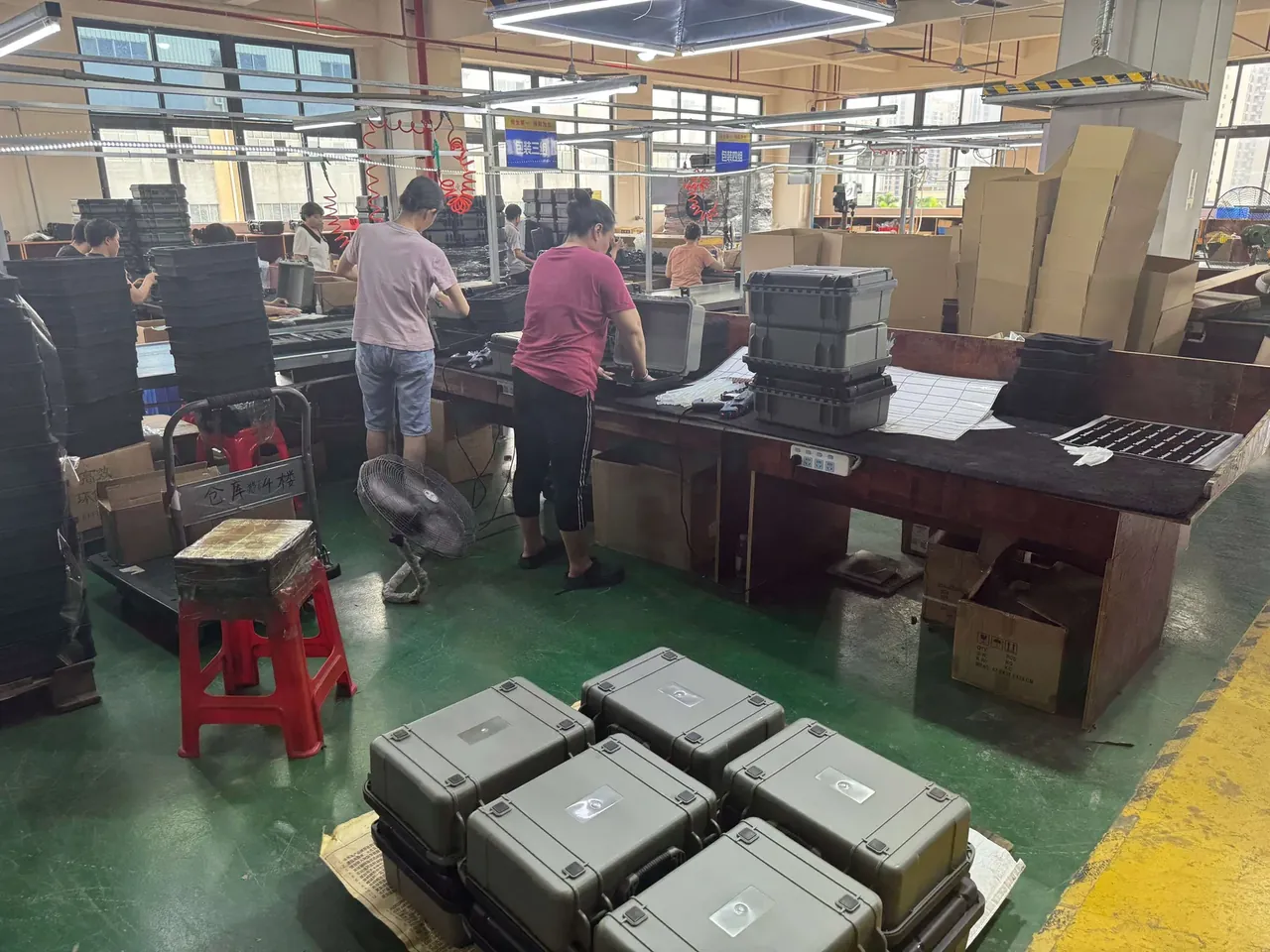
Four areas get checked: shell, sealing face, hardware and liner. The shell is read for cracks and distortion, the sealing face for an unbroken witness line, the hardware for latch effort and rivet looseness, the liner for crumbling foam. Every verdict sheet carries 3 items: conclusion, evidence, liability. Liability splits into manufacturing defect, user damage and transit damage. That call decides whether the job is chargeable, a separate question from how freight splits later.
| Time limit | Clock starts | If it runs over |
|---|---|---|
| 3 working days | Intake closed | Escalate to service lead, verdict same day |
| 24 hours | Verdict issued | No reply means repair is scheduled |
| 5 working days | Quotation issued | Held in storage, returned as-is after 30 days |
Most delay sits in missing material. Without one sharp photo, nobody signs off as repairable, because a repair that cracks again becomes that engineer's problem. Photo templates for common models cut the exchange from 5 days to 1. Judgement draws the most complaints in the whole repair loop, and the reason is speed rather than accuracy.
3. The 80 mm Line
Crack length is the hardest rule in the repair loop: up to 80 mm the case is repairable, beyond 80 mm it becomes a reshell. The reason is cost, not craft. A crack under 80 mm needs cleaning, patching and dressing, about 1.5 hours of labour and 45 CNY in parts, and freight still leaves the job worth doing. Past 80 mm the crack usually crosses 2 ribs, and repaired strength never returns.
Reshelling has its own arithmetic: 38 screws to strip, 118 CNY for the shell, 2.5 hours of labour. Add the three and the total passes the factory price of a new case. That cost line is where 80 mm comes from, and it has nothing to do with wall thickness.
Measurement has to be uniform: take the longest straight distance along the crack, and where it branches, measure each leg once and keep the longer.
Lay the case flat and close the lid first. An open lid lets the shell spring back and readings come out 3 to 5 mm short. Use a steel rule rather than a tape, because play in a tape hook is enough to flip the verdict at this scale. Write the number on the verdict sheet with a photo of the rule in place.
4. Return Shipping and the 70:30 Split
Return does not mean dropping the case into a carton. A repaired unit passes 5 re-checks: latch effort, sealing-face flatness, valve pressure hold, handle riveting and colour match. All 5 must pass before packing, which follows the new-case standard: foam corner guards, a 5-ply corrugated outer, and void fill until nothing shifts.
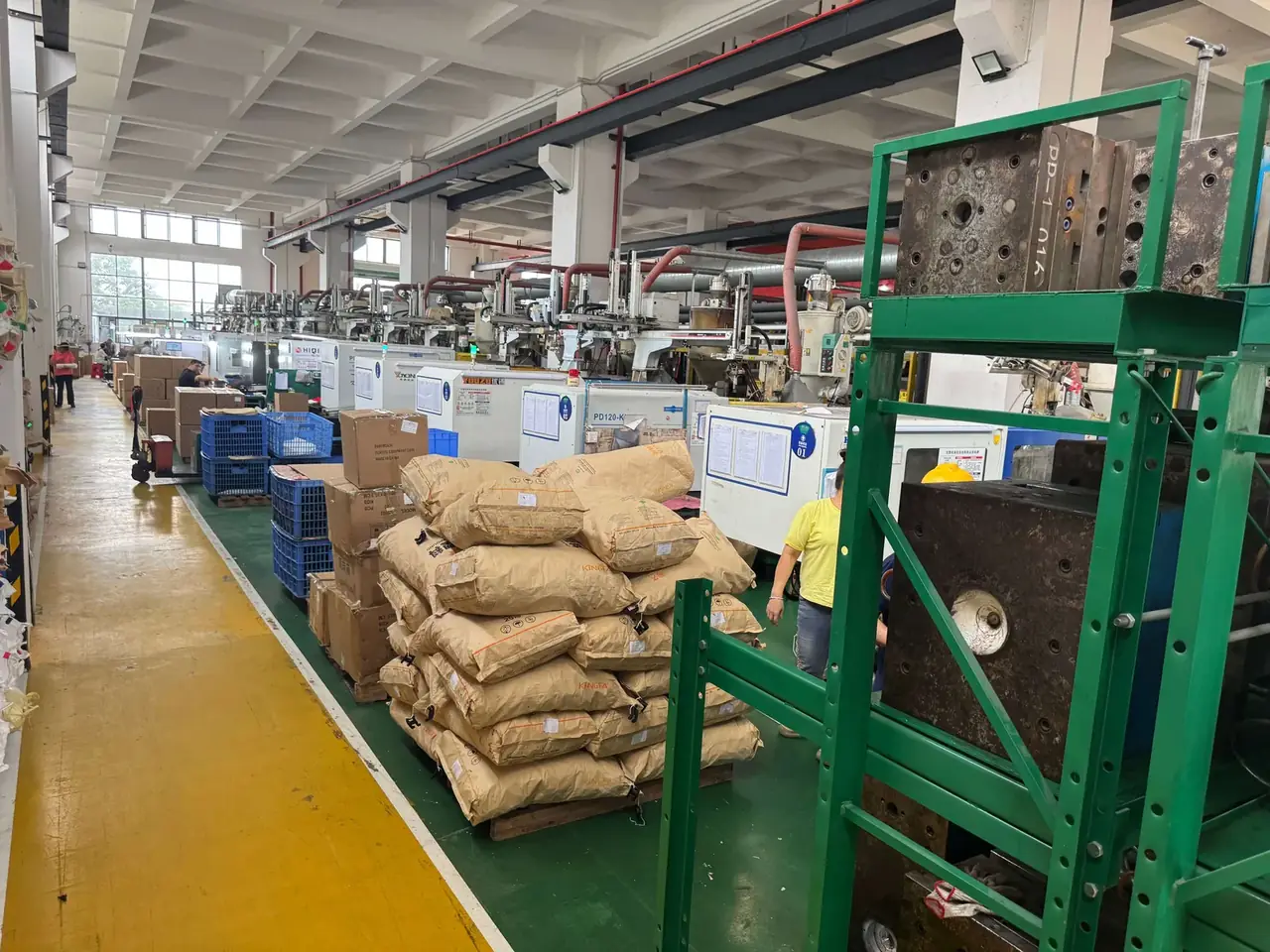
Freight splits 70:30. In-warranty repairs put 70 percent on us and 30 on the customer; out of warranty flips the ratio. Round-trip freight is costed at 96 CNY per case, a weighted average across 320 repairs a year including one outbound and one return leg. The point is not the money. Whoever pays everything under-claims, whoever pays nothing over-claims.
| Document | Signed by | Travels with the case |
|---|---|---|
| Repair ticket | Intake clerk | Stays in the system |
| Verdict sheet | Judgement engineer | One copy in the box |
| Re-check record | Re-check technician | Enclosed on return |
| Return note | Dispatch clerk | Returned signed |
Incomplete paperwork gets refused at the customer's warehouse. Receiving checks 3 things: note number, case count and exterior condition. When those do not match, the case waits in the bay for email, and that costs another 4 days.
5. Where Twelve Days Come From
Twelve days breaks down as 3 days outbound transit, 1 day intake, 3 days judgement, 1 day queueing, 1 day repair and 3 days return transit. The 6 blocks add up to exactly 12, and any slip pushes the loop back. Transit is the least controllable half of a repair loop, so the lever for cycle time sits in transport choice rather than on the shop floor.
Of 320 repairs a year, 18 percent are judged unrepairable, roughly 58 cases converted to replacement. That ratio reads as a maturity signal: a first-year product often runs above 25 percent, and a settled structure with stable tooling lands near 15.
Once the repair loop runs clean, verdict sheets get terse: one conclusion, one line of evidence, one signature.
Conclusion
A repair loop earns its value from records, not speed: 8 intake fields, 3 working days for judgement, 5 re-checks before return. The 80 mm line separates repair from replacement, and the 70:30 split pulls both sides toward an honest call. Fix those 4 points and the 12-day cycle means something. At 320 repairs a year with 18 percent unrepairable, the numbers drift down as the structure settles.
Related Reading
- Case repair: cracks, distortion and loose hardware
- Cross-border returns: judging and costing a case return
- Batch returns: liability split and repair scheduling
- Case warranty: two years versus five
Related Products
- 8 Series — Gun Cases; Military Equipment Cases; Camera Equipment Cases; Drone Cases; Watch Cases; Knife Cases; First Aid Cases; Electronics Equipment Cases
- WL8-2812 PP Gun Case — model WL8-2812
- All protective cases and toolboxes: 7 series, 158 models