

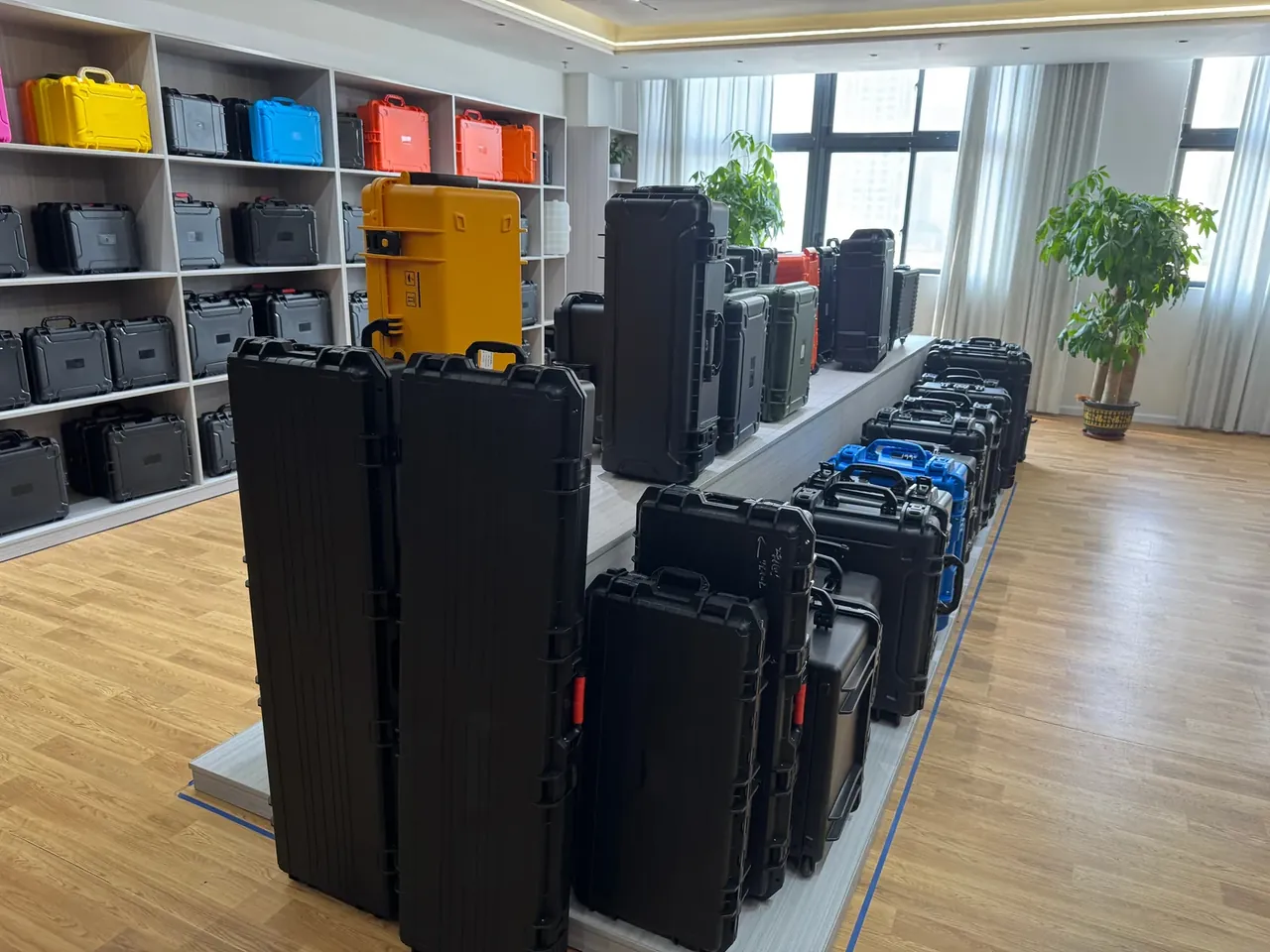
Quick answer: A Rescue team disaster emergency medical box with 108 mm rib spacing and 9.5 mm overlap holds lid flatness within 0.55 mm and mouth step under 0.28 mm.
Table of contents
- Lid rib spacing of the Rescue team disaster emergency medical box
- Width of the shell mouth overlap
- Lid flatness after twelve condensation rounds
- Mouth step after re-closing the lid
- Rib spacing setting for the emergency batch
- FAQ
1. Lid rib spacing of the Rescue team disaster emergency medical box
One temperature round follows another, the lid fogs and is wiped dry, and whether the ribs are too wide or the mouth steps out of line shows after twelve rounds. The Rescue team disaster emergency medical box measures 580×400×210 mm outside and 515×340×155 mm inside, with a 4.6 mm wall, the flat lid held up by ribs on its underside. Ribs sit 108 mm apart in both directions and, with gate position and rib-root radius, decide whether the panel bows under alternating cold and heat. Too close and the shell gains weight while four latches load unevenly; too wide and the unsupported middle arches first, condensation gathers low, wiping leaves a slope.
Within one tool a 6 mm change in rib spacing pulls the twelfth-round flatness apart, so the rib layout of the Rescue team disaster emergency medical box is fixed on the drawing before the mould is cut, with rivet points and padding set in the same pass. Inspectors run a straightedge in four directions and log the largest gaps on one sheet.
2. Width of the shell mouth overlap
Shell mouth overlap is the sideways margin by which the upper rim covers the lower rim once shut; here 9.5 mm, far smaller than the 108 mm rib spacing, and it governs something else: even a 0.55 mm bow stays hidden behind that rim coverage. A narrow overlap lets a slight bow bear on the shell mouth and the step shows at once, while a wide one makes the two shells expand out of step across condensation rounds, so the 380 N closing force of each latch must absorb the shift before it seats.
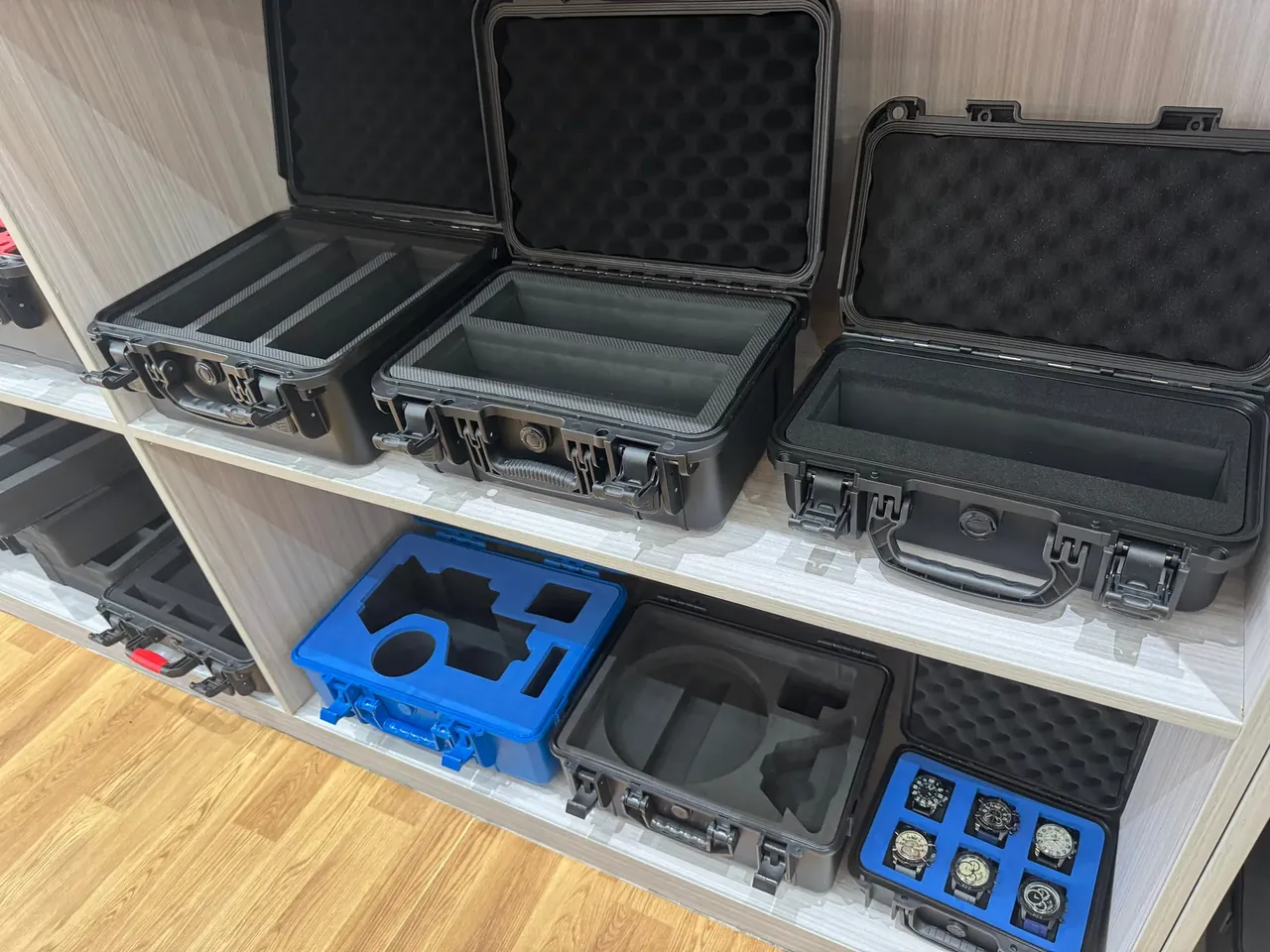
Read back from the condensation rig, the 9.5 mm overlap and 108 mm rib spacing answer to each other, one for the look after closing, one for lid flatness. The mouth of the Rescue team disaster emergency medical box is gauged for overlap and step with one feeler set, and the drawing locks the rivet points so padding is never shifted to disguise a step. Whether the two 19% gasket beads close into a full ring is noted here too.
3. Lid flatness after twelve condensation rounds
The condensation rig runs 12 rounds between 5 ℃ and 40 ℃, each fogging at the cold end, wiping dry, then climbing to warm, with the lid closed once per round; the reading is the largest gap between straightedge and lid, held at ≤0.55 mm. Past that the middle has arched and the four latches load unevenly. The flatness of the Rescue team disaster emergency medical box is not a one-round snapshot but residual deformation accumulated over twelve cold-warm cycles.
A sample with only the rib spacing shifted one band separates at round twelve, so the Rescue team disaster emergency medical box uses flatness as the primary gauge yet still waits for the mouth step to be signed off. The table lists three rib bands, narrowest to widest.
| Rib spacing band | Rib and overlap pair | Round-twelve flatness | Step verdict |
|---|---|---|---|
| Narrowest | 108 mm / 9.5 mm | ≤0.55 mm | under 0.28 mm, accept |
| Middle | spacing widened one band | just above 0.55 mm | on the line |
| Widest | spacing widened again | step at closing | off the batch |
4. Mouth step after re-closing the lid
After round twelve is wiped dry, the lid is closed again without disturbing the padding, and the height by which the two rims sit out of line is measured; the line is ≤0.28 mm. This reads assembled appearance, not the panel: flatness says whether the lid bowed, the step says whether the 9.5 mm overlap absorbed it.
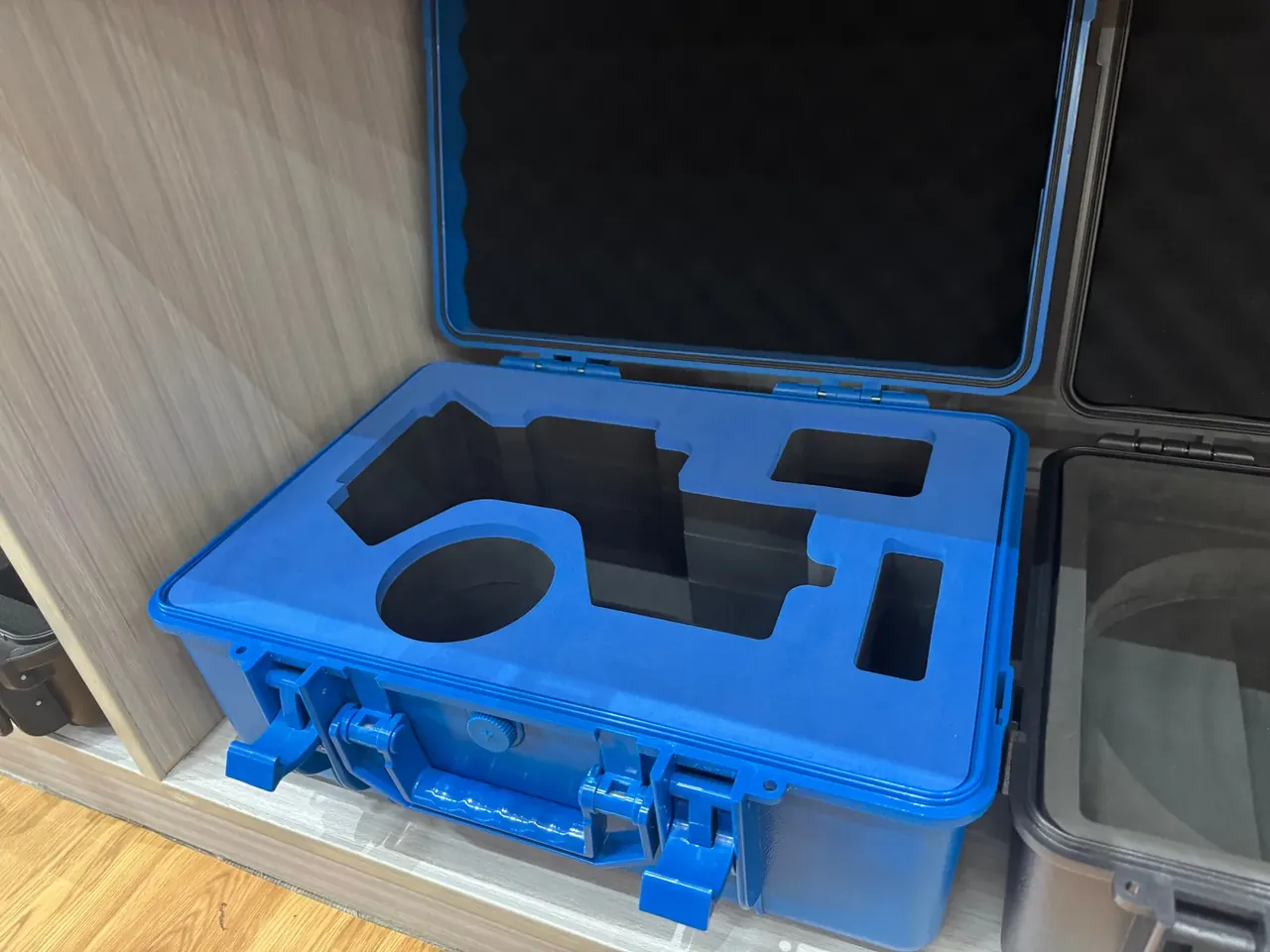
The Rescue team disaster emergency medical box writes flatness and step on one appearance sheet; if either crosses, that rib band is re-laid rather than passed on flat samples. The re-closing check also shows whether the four 380 N latches pull in together, since a bowed lid loads the corner latches first. For the Rescue team disaster emergency medical box both load states, 5.5 kg empty and 12.5 kg loaded, run a round each.
| Condensation round | Temperature span | Closing action | Cumulative step |
|---|---|---|---|
| Round 1 | 5 ℃ to 40 ℃ | one close per round | below 0.28 mm |
| Round 6 | 5 ℃ to 40 ℃ | one close per round | mid-run reading logged |
| Round 12 | 5 ℃ to 40 ℃ | wipe, re-close, re-measure | basis for the setting |
5. Rib spacing setting for the emergency batch
The load states 5.5 kg empty and 12.5 kg loaded go on the rig first, four latches tighten to 380 N, two gasket beads stay at 19% compression, the 4300-cycle log is kept as background, and the shell is benchmarked against IP66; none may move while the band is chosen. All three rib bands run the same 12 rounds.
The rib spacing setting takes the widest band whose round-twelve flatness stays within 0.55 mm, and any wider layout is reassigned to indoor reserve cases. A band whose step creeps to 0.28 mm stays as a sample record. The emergency batch of the Rescue team disaster emergency medical box recognises one matched pair only, with rib spacing, overlap, flatness and step signed together.
| Flatness reading | Matching rib band | Step re-check | Batch destination |
|---|---|---|---|
| ≤0.55 mm and steady | narrowest | below 0.28 mm | onto the emergency batch |
| near 0.55 mm | middle | on the line | kept as sample |
| over 0.55 mm | widest | step at closing | indoor reserve cases |
Conclusion
The Rescue team disaster emergency medical box reduces lid behaviour to one matched pair, 108 mm rib spacing and a 9.5 mm overlap, with the ≤0.55 mm flatness and ≤0.28 mm step after 12 rounds between 5 ℃ and 40 ℃ as the sole basis for a band. Empty at 5.5 kg, loaded at 12.5 kg, four latches at 380 N and two 19% gasket beads are fixed rig conditions. The emergency batch keeps only the widest band whose flatness stays within 0.55 mm; the rest become samples or go to indoor reserve cases.
Related Reading
- Carrying Cases: Portable Structure & Everyday Handling Protection
- ABS Waterproof Equipment Box Acceptance Standards
- Portable medical emergency equipment safety box
- Emergency Kit Cases: Disaster Supply Storage and Long-Term Readiness
Related Products
- 8 Series — Gun Cases; Military Equipment Cases; Camera Equipment Cases; Drone Cases; Watch Cases; Knife Cases; First Aid Cases; Electronics Equipment Cases
- WL8-2812 PP Gun Case — model WL8-2812
- All protective cases and toolboxes: 7 series, 158 models