

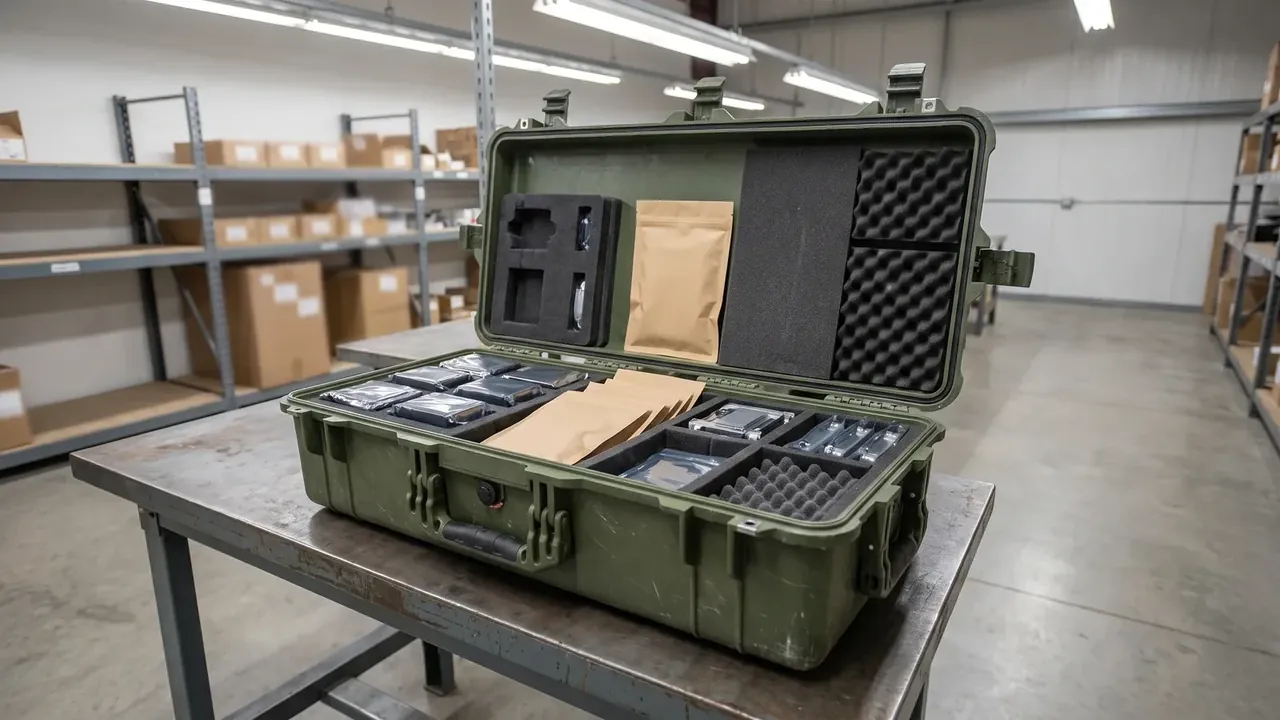
Quick answer: Case retail packaging and the shipping carton are two levels with separate numbers: a 350 g board box with 5-colour print and 15 μm matte film takes the shelf and the 0.8 m drop; a 5-ply carton at 4,200 N takes the 4-high stack.
Table of contents
- Two Packaging Levels, Two Sets of Numbers
- Deriving the Inner Size from the Case
- Board Weight, Five-Colour Print and Matte Film
- Four-Page Leaflet and Barcode Size
- Drop Test, Unit Price and MOQ
- FAQ
1. Two Packaging Levels, Two Sets of Numbers
A retail box printed beautifully still fails if the carton crushes it. The two levels carry different duties: the printed box handles display and single-unit protection, the carton handles stacking and the road.
The numbers separate them. A 500 mm × 350 mm × 210 mm case weighs 5.1 kg empty and 0.35 kg more with box and leaflet; four to a carton gives 22 kg gross, and a 4-high stack puts 66 kg on the bottom carton. The printed box tests at 180 N empty, the 5-ply carton at 4,200 N, a factor of 23.
| Item | Retail box | Shipping carton |
|---|---|---|
| Material | 350 g board | 5-ply AB flute |
| 5 colours | 1 colour | |
| Compression | 180 N | 4,200 N |
| Duty | Display, one unit | Stacking, transport |
| Test | 0.8 m drop | 4-high, 22 kg |
Upgrading to 400 g board lifts compression to 240 N, still 17 times short of 4,200 N. That route is closed, which is why the split exists: a box asked to carry stack load is a wooden crate with print on it.
The handover sits at the warehouse door: the printed box goes to the retail line and on shelf opened, the carton is cut away. Cutting is a spec too — one knife pass 15 mm in from the short edge, 20 mm deep, without touching the case.
2. Deriving the Inner Size from the Case
Inner size starts at the case outline plus 5 mm per side. A 500 mm × 350 mm × 210 mm case therefore gets 510 mm × 360 mm × 220 mm inside and 514 mm × 364 mm × 224 mm outside on 2 mm board.
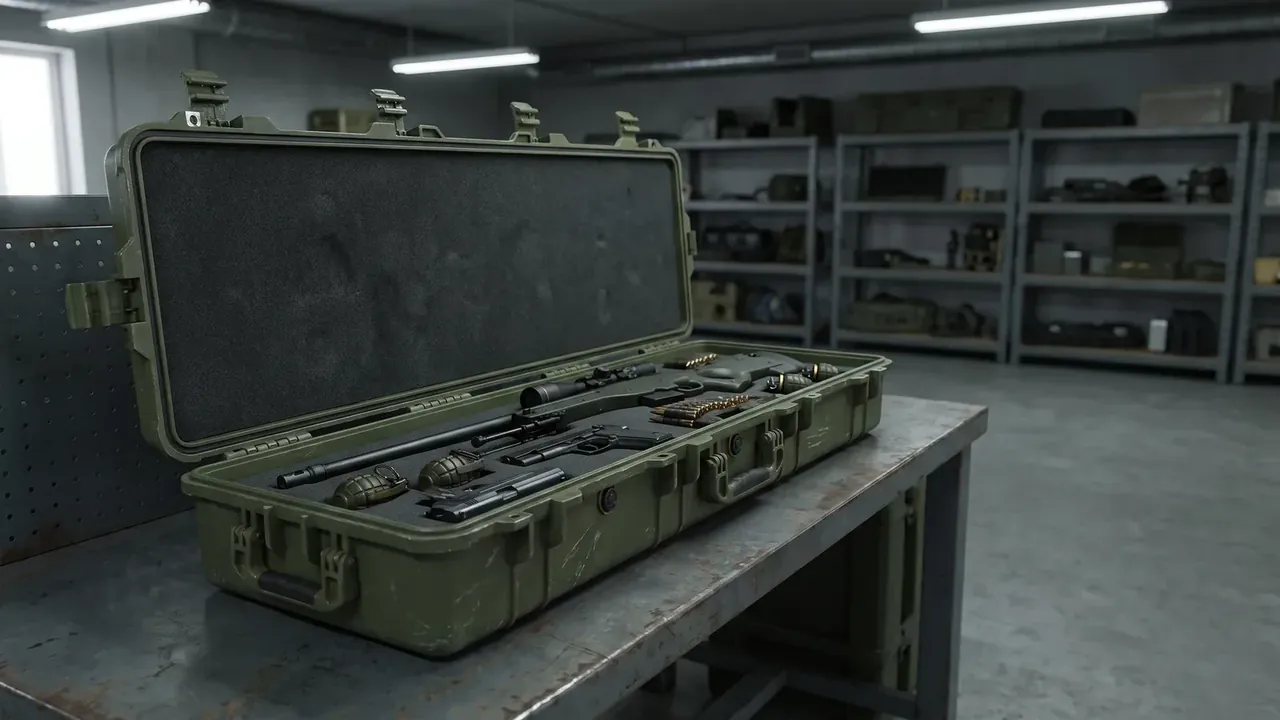
The folded handle is the first variable. It still stands 8 mm proud when closed, at the centre of the top face, so the box needs 10 mm of headroom or the lid bulges over it.
Four paper corner posts take 3 mm each and hold the case centred, so a drop lands on the post rather than the wall; without them the corners bear the impact and deform 4 mm at 0.8 m.
A board tray under the case, cut 6 mm smaller on each side, spreads 5.1 kg off the bottom fold line. Left unsupported, that fold sags 2 mm within two weeks of stacking.
Four boxes go into the carton 2 × 2 with a corrugated divider and 10 mm of clearance, which is compression travel rather than waste: the stack squeezes that gap before it reaches the box body.
3. Board Weight, Five-Colour Print and Matte Film
350 g board is the floor here. Below it, stiffness drops under 9 mN·m and the box leans forward on shelf; above 400 g the die-cut edge fuzzes and gluing yield falls from 98% to 94%.
Five colours exist for large solids. Four-colour process over a 200 mm × 150 mm dark panel bands at 0.05 mm, while a dedicated fifth colour lays it flat.
| Step | Setting | Criterion |
|---|---|---|
| Board | 350 g | Stiffness ≥11 mN·m |
| 5 colours | Register ≤0.15 mm | |
| Film | 15 μm matte | Gloss ≤8 GU |
| Rub | 100 cycles | No show-through |
| Die-cut | ±0.3 mm | No score cracking |
| Gluing | 8 mm line | Pull ≥12 N |
Matte film drops gloss from 45 GU to 8 GU and turns the touch from slick to dry, which keeps fingerprints off. It is also the wear layer: an unlaminated box handled 100 times whitens at the corners, a laminated one only shines along the scores.
The cost is climate. Matte film turns brittle below 5 ℃, so winter batches crack at the fold and need 5% more die pressure.
Two post-press steps get left off schedules: creasing and slotting. A crease 0.4 mm deep and 1.2 mm wide folds square, and slots hold within 0.3 mm. Laminated sheets also need 24 hours before die-cutting, since film and board differ by 0.3% in shrink and early cutting leaves the box arching 0.5 mm.
4. Four-Page Leaflet and Barcode Size
The leaflet is four pages at 105 mm × 148 mm on 80 g offset, one fold, 0.6 mm thick, laid on the case lid inside the 10 mm of headroom.
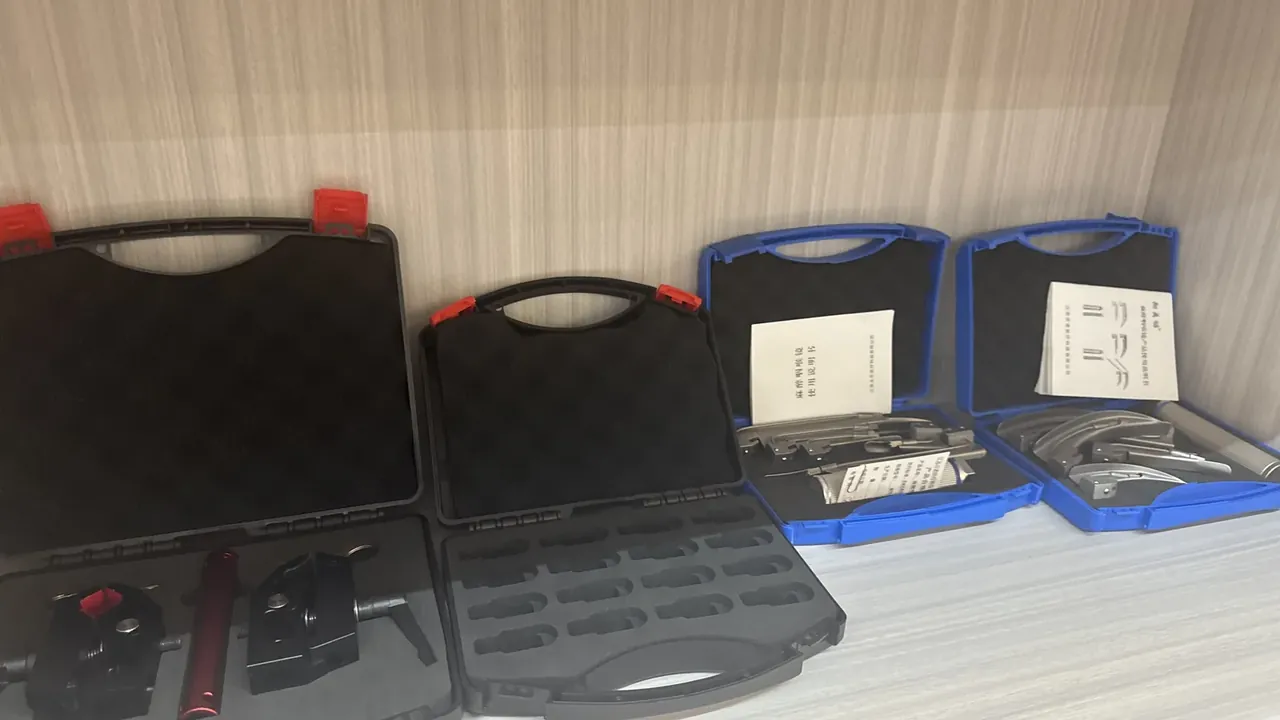
The skeleton is fixed: model and 6 packing items on page 1, 4 hardware diagrams on page 2, 5 sealing and care notes on page 3, warranty and barcode on page 4. Eight pages add a second fold and CNY 0.15 per set for content retail buyers rarely open.
The 40 mm × 30 mm barcode is what comes back most often. EAN-13 at 0.8 magnification needs a 2.5 mm quiet zone both sides, 23 mm bar height and at least 5 mm to the box edge; at 3 mm the 0.3 mm die tolerance clips a corner.
The criterion is first-read rate, not looks. Contrast under 70%, bars below 20 mm or gloss over the symbol drops first-read from 98% to 85%, and the till scans twice. Keeping that patch unlaminated is the one exception this configuration needs.
Version control follows the same logic: the barcode identifies the item, the leaflet the series, and they never share a number. Change the barcode first and the leaflet footer second.
5. Drop Test, Unit Price and MOQ
The drop runs at 0.8 m, 10 impacts: 6 faces, 3 edges, 1 corner. Three criteria decide it — no box split, set under 3 mm, case movement inside the box under 5 mm. That last one is skipped most often and decides whether the case sits square when opened.
Use 3 cartons: corner, edge and face on separate samples, since ten impacts on one box leaves it softened and flatters the design.
The CNY 6.8 per set runs 1.9 board, 1.8 five-colour print, 0.9 matte film, 1.6 die-cutting and gluing, 0.4 leaflet, or CNY 6.6 plus 3% waste.
MOQ 1000 comes from make-ready. One five-colour set-up wastes 60 sheets, CNY 114 in board, which is CNY 0.11 per unit at 1,000 but CNY 0.38 at 300 — a 4% jump that fixes the threshold.
Production takes 3 days printing, 2 days film curing, 1 day die-cutting and gluing, 6 working days plus 4 for material, 10 days order to stock. Delivery splits 400 and 600, 15 days apart, keeping stock under 6 months, since matte film yellows and damp board loses 8% stiffness.
Conclusion
Case retail packaging settles in four steps: board sets stiffness, print sets the solid colour, film sets wear, the barcode decides whether the box sells at all. Drop one and the failure surfaces at the shelf or the till, not in the plant.
Lock 350 g board and 5 colours, run 10 drops at 0.8 m, then check the 40 mm × 30 mm barcode against its 2.5 mm quiet zone. Once those pass, settle MOQ 1000 and split delivery.
| Item | Spec | Test | Criterion |
|---|---|---|---|
| Board | 350 g | Stiffness meter | ≥11 mN·m |
| 5 colours | Loupe | ≤0.15 mm | |
| Film | 15 μm matte | Gloss meter | ≤8 GU |
| Leaflet | 4 pages, 105 × 148 mm | Fold thickness | 0.6 mm |
| Barcode | 40 × 30 mm | First-read test | ≥98% |
| Drop | 0.8 m, 10 impacts | Full carton | ≤3 mm set |
This article discusses container-side specifications and design implications only, and does not cover any handling, loading or use of the contents.
Related Reading
- Flute profiles and carton compression strength
- Packaging label compliance essentials
- How carbon labels on packaging work
- Writing English labels for cases
Related Products
- 8 Series — Gun Cases; Military Equipment Cases; Camera Equipment Cases; Drone Cases; Watch Cases; Knife Cases; First Aid Cases; Electronics Equipment Cases
- WL8-2812 PP Gun Case — model WL8-2812
- All protective cases and toolboxes: 7 series, 158 models