

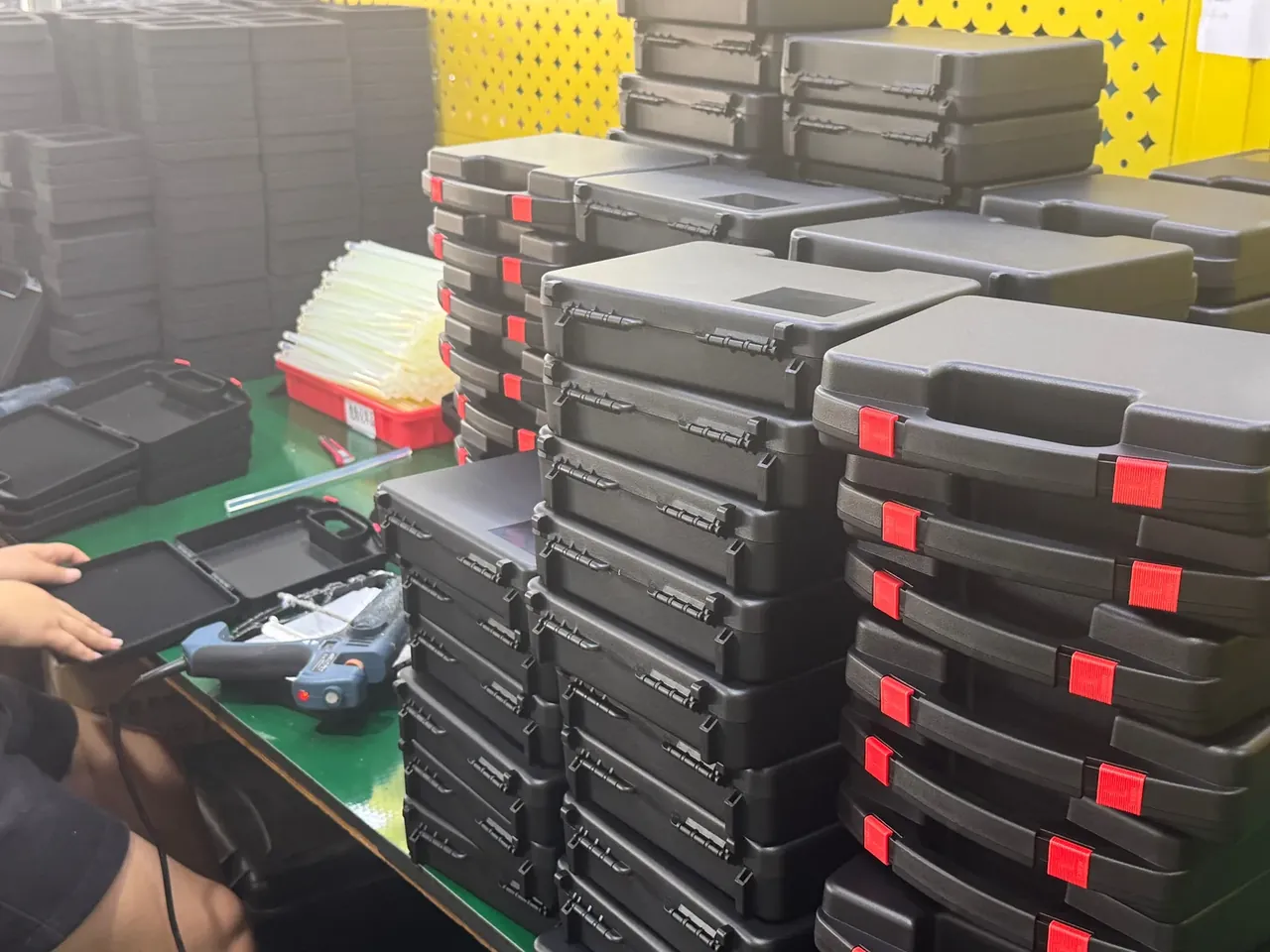
Quick answer: Returnable packaging works only if empty cases are back at the dock inside 14 days, so a 92% return rate on a 90-a-day lane needs a 1,260-case pool.
Table of contents
- The return rate sizes the pool, the price does not
- Three ways to run the reverse leg
- A fourteen-day loop sizes the asset pool
- Washing once per loop, sized to the peak
- Deposits, counts and one ledger line
- FAQ
1. The return rate sizes the pool, the price does not
One 300 km lane, 5 customers, 90 crates leaving the dock on an average day, and 96 crates missing from the ledger at month end. Nothing was stolen: at a 92% return rate, 8 of every 100 cases are simply not back when they should be.
Chasing 2 CNY off the price saves 12,000 CNY a year. Letting the rate slide to 85% costs 300 replacement cases and weekly shortages.
Return rate is an operating number, not an environmental slogan.
Eight points of loss split three ways: customer back rooms hold 4.5 points, transit damage takes 1.2, and 2.3 come back unidentifiable because the number wore off. Handled as one lump, the same work repeats every month.
Set 92% as a monthly gate: two months below 88% and the lane reverts to single-trip packaging.
Seventeen cycles is the floor. A lane that cannot turn a case 17 times a year should not run returnables at all; this one turns 26.
2. Three ways to run the reverse leg
Who owns the empty leg decides the ceiling on the return rate, not the shipment volume.
Customer returns are cheapest: the consignee sends empties back on its own vehicle or the next run and carries the responsibility, while the factory only deducts on the monthly statement. Rates sit near 92%, empties reappear in 3 to 5 days, and the model holds within 300 km.
Third-party collection shifts the duty to a carrier that sweeps empties within 48 h and bills per trip. Rates reach 96%, but a minimum applies: lanes shipping under 4 times a month cannot carry it.
Most factories settle on a hybrid: customer returns inside 300 km, a carrier beyond, one ledger for both.
| Reverse model | Who moves the empties | Trip return rate | Back at the dock | Entry threshold |
|---|---|---|---|---|
| Customer return | Consignee's own truck | 92% | 3–5 days | Within 300 km, own fleet |
| Third-party sweep | Carrier collection | 96% | Under 48 h | 4+ trips a month, 60+ cases |
| Hybrid | Split at 300 km | 94% | 2–5 days | 5+ customers, one ledger |
| Pooled service | Operator schedules | 98% | 2–4 days | 200+ cases a month |
3. A fourteen-day loop sizes the asset pool
A case spends 14 days away from the dock: 1 day loading, 6 days in the customer's store, 3 days returning, 2 days washing and drying, 2 days waiting for a run.
| Loop stage | Days | Owned by | Overrun signal |
|---|---|---|---|
| Loading bay | 1 day | Dispatch | 2+ pallet positions queued |
| Customer store | 6 days | Customer | No empty report after 9 days |
| Return leg | 3 days | Carrier | Signed later than 48 h |
| Wash and dry | 2 days | Wash bay | Not released 15 min after drying |
| Awaiting run | 2 days | Dispatch | Same ID missed twice |
Pool size is daily volume times loop length: 90 cases over 14 days gives 1,260. One short and a shipment has nothing to travel in; 200 over idles three pallet positions.
Nesting sets the return payload. At 1 to 3.2, a slot carrying 20 erected cases takes 64 empties, so a 6.5 m body hauls 320; at 90 empties a day, a sweep every 3 days is enough.
Past 9 days in a customer store, the chase note goes out the same day.
4. Washing once per loop, sized to the peak
Nothing goes back out unwashed. One wash per case per loop is a fixed step in the agreement.
Washing runs at 60 °C with neutral detergent, 40 s per case through the tunnel, then 8 min of drying. Water is checked every 2 h and changed below 55 °C; oil lifts at temperature and smears as the bath cools.
Capacity follows the peak, not the average. Returns of 90 a day reach 130 on the Monday batch, and a tunnel taking 20 cases per 3 min clears it in 2 h. Sized to the average, every Monday jams, and one jam leaves 40 cases off the run.
A poor wash is cosmetic; a wet case is a labelling failure, with labels lifting inside 24 h.
5. Deposits, counts and one ledger line
The deposit is 45 CNY per case, refunded at the dock. On a 1,260-case pool the customer holds 54,000 CNY: not revenue, but a reminder to return it.
A deposit is not a penalty: 45 CNY for a lost case, the invoice for a damaged one. Blur the two and the customer reads it as profit.
Counts run quarterly with a 1.5% variance as the trigger. Two quarters over, check the number first, the model second: a worn number means the marking failed, a variance on one customer means the lane moves to a carrier.
The ledger needs 5 columns: asset number, dispatch date, customer, return date, condition. Numbers run to 8 digits, 2 for the lane, 2 for the year, 4 for sequence, moulded in not labelled.
| Case status | Deposit sits with | Ledger entry | Count method |
|---|---|---|---|
| In transit | Customer | Dispatch date only | Reconcile signed notes |
| Customer store | Customer | Chase note after 9 days | Request empty count |
| Return leg | Carrier | Return date, 48 h clock | Check delivery receipt |
| Awaiting run | Factory | Condition, into available pool | Physical count plus cleanliness |
Conclusion
Returnable packaging lives or dies on the return rate, the loss rate and the ledger-to-floor gap. Split the reverse leg at 300 km, size the pool from a 14-day loop, wash to the peak, and hold variance under 1.5% at every count. Crates are the last purchase; the organisation comes first.
This article covers case-side specifications only and does not address any handling, loading or use of the contents.
Related Reading
- Single-trip versus returnable case economics
- Warehouse and transport cost per case
- How packaging cost share is calculated
- Case footprint against the pallet module
Related Products
- 8 Series — Gun Cases; Military Equipment Cases; Camera Equipment Cases; Drone Cases; Watch Cases; Knife Cases; First Aid Cases; Electronics Equipment Cases
- WL8-2812 PP Gun Case — model WL8-2812
- All protective cases and toolboxes: 7 series, 158 models