

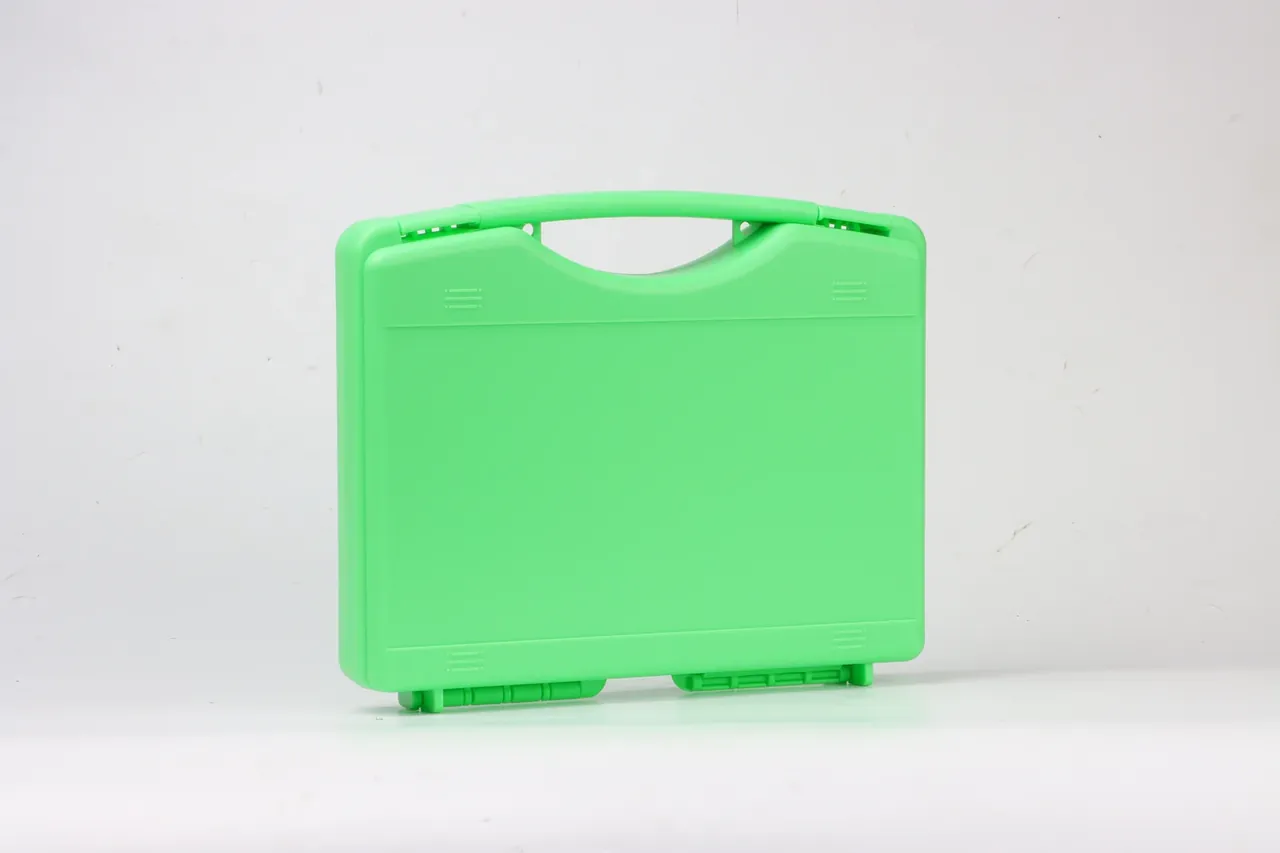
Quick answer: A one-way corrugated set costs 8.5 CNY and dies after one trip, while a returnable case at 180 CNY spreads over 60 trips to 3.0 CNY and then adds 0.9 for the return leg, 0.4 for washing and 0.3 for loss, so 4.6 CNY per trip breaks even in 14 to 22 months.
Table of contents
- Breaking down the per-trip cost of returnable cases
- Cycle count and loss rate: the maths has to reach 60
- Empty return legs: what a 1 to 3.5 nesting ratio pays
- Payback and loop turns: where 14 to 22 months comes from
- FAQ
1. Breaking down the per-trip cost of returnable cases
Fix the baseline: a 600 × 400 × 300 mm footprint, an 18 kg parts load, a 600 km one-way lane. One-way packaging is a five-wall AB-flute box with PE foam and tape at 8.5 CNY a set; returnable cases are injection-moulded PP at the same footprint, 4.2 kg empty, 180 CNY each. Corrugated still sells at 0.8 CNY per kilogram, so a 1.2 kg box returns 0.96 and one-way nets at 7.5.
Returnable cases carry four lines: 180 divided by 60 trips gives 3.0 CNY of depreciation, the return leg 0.9 on groupage rates, washing with labour 0.4, and a 4% loss rate with 12 CNY repair parts 0.3.
| Cost line | One-way | Returnable cases |
|---|---|---|
| Unit outlay | 8.5 CNY | 180 CNY |
| Trips available | 1 | 60 |
| Depreciation | 8.5 CNY/trip | 3.0 CNY/trip |
| Return freight | 0 | 0.9 CNY/trip |
| Washing | 0 | 0.4 CNY/trip |
| Loss and repair | 0 | 0.3 CNY/trip |
| Scrap value | 0.96 CNY | 12 CNY after 60 |
| Total per trip | 7.5 CNY | 4.6 CNY |
The four lines add to 4.6 CNY, or 2.9 below the one-way figure, and everything later turns on whether that gap holds.
Two costs never reach the unit price. Packing labour at 40 seconds a set makes 200 sets a day cost 2.2 hours, and flattened boxes at 0.008 m³ take 80 m³ of racking for ten thousand sets.
2. Cycle count and loss rate: the maths has to reach 60
Sixty is a field life for returnable cases, not a structural one. The shell is designed for 20,000 openings and 50 drops from 1.2 m, which covers several thousand trips at material level; what ends the run is scuffed appearance, worn labels and customer rejection.
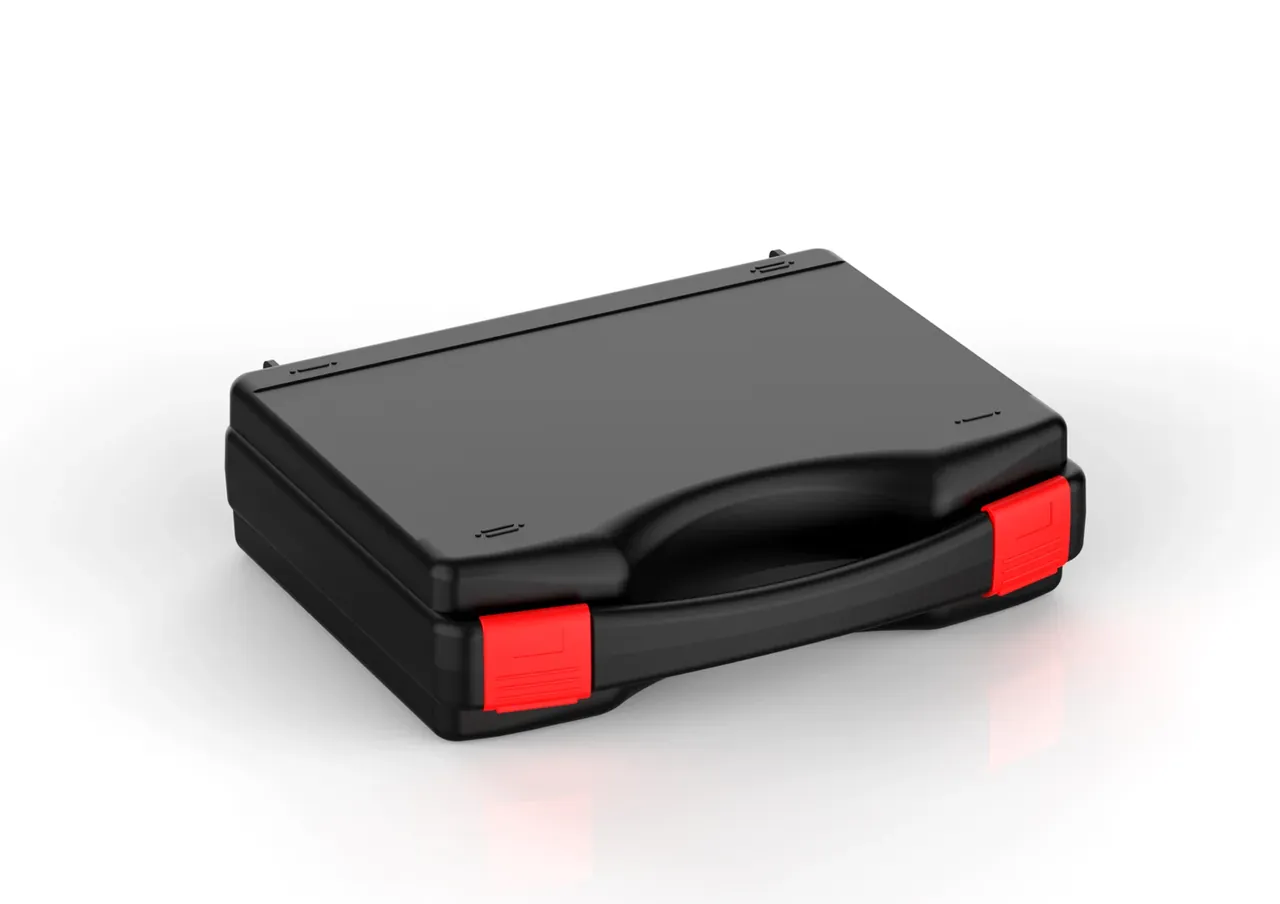
Loss is the second variable. A pool of 500 losing 4% a year sheds 20 units worth 3,600 CNY, spread over 24,000 trips to 0.15 each. At 8% the per-trip cost reaches 5.0 CNY and a third of the advantage disappears.
Damage is easier than loss. Latches at 8 CNY, hinge pins at 3 and gaskets at 15 are replaceable, and 1.2 repairs a year works out to 0.18 CNY a trip; a unique QR code scanned on dispatch and return counts trips and loss without a month-end stock take.
3. Empty return legs: what a 1 to 3.5 nesting ratio pays
Nesting earns its keep on the way back. A loaded case occupies 0.072 m³ and a nested one 0.0206 m³, a ratio of 1 to 3.5, so a 13 m trailer carrying 260 loaded cases takes 910 empty ones.
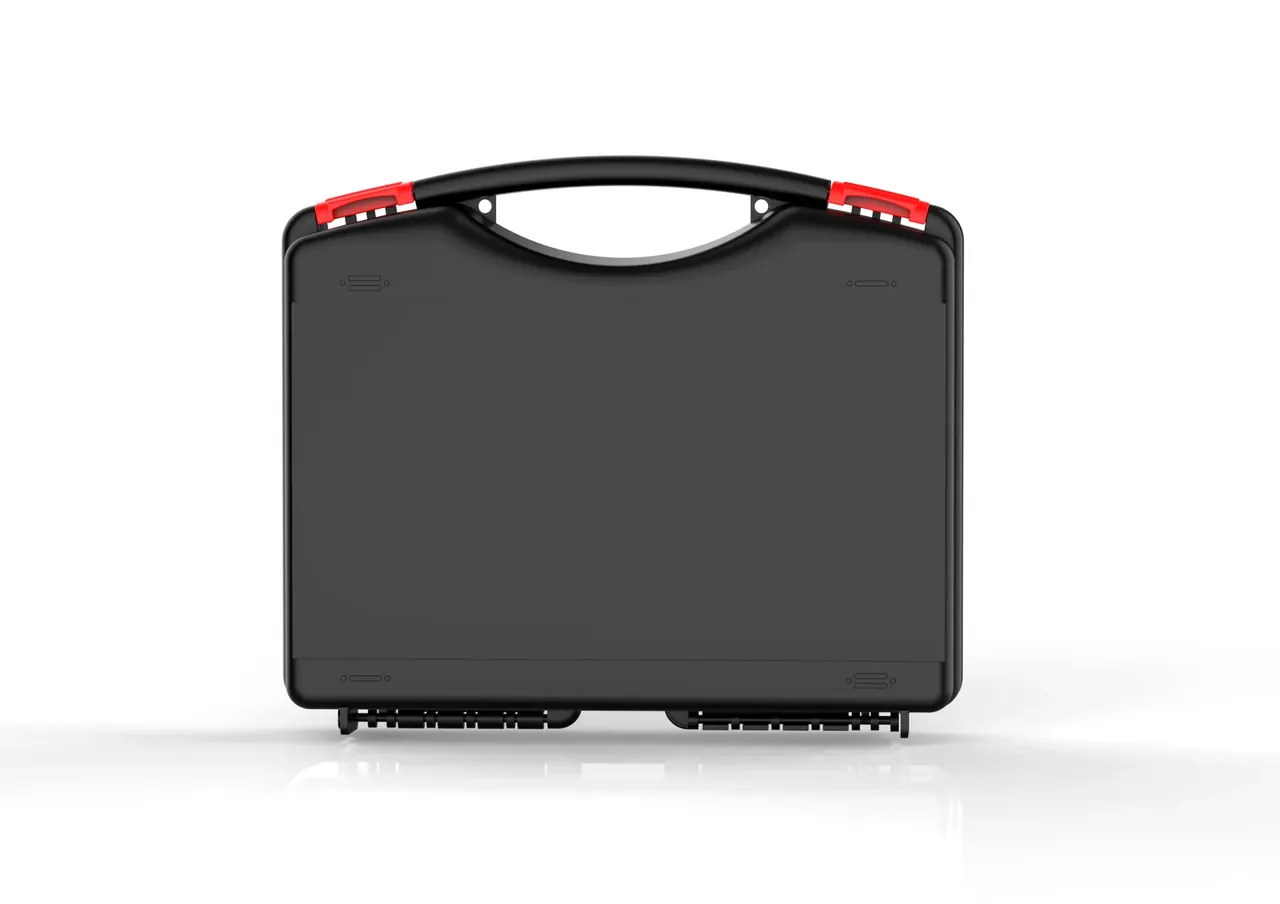
The trailer count falls with it. On one lane the return leg drops from 6 loads a month to 2 at 1,200 CNY a load, saving 4,800 CNY a month, which spreads over 24,000 trips as another 0.2 CNY and pulls 4.6 down to 4.4.
Nesting carries a price. Hinges are rated for 15,000 folds, and by 10,000 the latch gap grows from 0.8 mm to 2 mm; each case weighs 0.4 kg more than a rigid version, dynamic load falls from 30 kg to 25 kg and stack height from 5 layers to 4. Where the return leg runs under two loads a month, returnable cases lose their advantage and a rigid case avoids 25 CNY of extra tooling amortisation.
4. Payback and loop turns: where 14 to 22 months comes from
Net outlay divided by the saving per trip times annual trips is the whole formula. Net outlay is 180 minus 12 of scrap, so 168 CNY, against 2.9 CNY saved and annual trips equal to monthly turns times twelve.
At four turns a month, 48 trips save 139 CNY and pay back in 14.5 months; at three turns, 36 trips save 104 and pay back in 19.3; at 2.7 turns the payback reaches 21.6, right against the 22-month ceiling.
| Scenario | Turns per month | Cost per trip | Verdict |
|---|---|---|---|
| In-plant transfers | 8 or more | 4.6 CNY | Buy, payback under 10 months |
| Regional distribution loop | 4 | 4.6 CNY | Buy, payback 14.5 months |
| Inter-provincial one-way | 1 | 7.5 CNY | One-way packaging |
| Export, single leg | 0 | 7.5 CNY | One-way packaging |
Carbon is a second ledger: a 4.2 kg PP case at 2.0 kg CO2e per kilogram carries 8.4 kg in manufacture, or 0.14 kg a trip across 60 trips, against 1.1 kg for each corrugated box. EU packaging rules now write reuse ratios for transport packaging into law.
Renting and buying differ over who funds the pool. Rental at 12 CNY per case per month, washing included, is 3.0 a trip at four turns plus 0.9, or 3.9 against 4.6 for ownership, though ownership wins long term as depreciation ends at 60 trips and marginal cost falls to 1.6.
Turning up the count is a routing job: cutting the lane from 600 km to 300 km shortens a loop from 10 days to 7, lifting turns from three to four and moving payback from 19.3 to 14.5 months. Pilot with 30 returnable cases on one lane for 4 weeks, record only turns, loss and damage, then run the formula; above 22 months, go back to one-way packaging.
Conclusion
One-way packaging versus returnable cases comes down to three numbers: a 2.9 CNY gap per trip, a 14 to 22 month payback and a floor of three turns a month. The advantage rests on a closed loop with dense turns, controlled loss and empty cases that nest into the return trailer. Measure those three before choosing rent or buy; where they cannot be measured, run 30 cases for 4 weeks.
This article discusses only the container (case body) side of specifications and design intent, and does not cover any handling, loading or use of the contents.
Related Reading
- Case and stacking standards for export packaging
- How to specify stackable plastic boxes
- Comparing case bodies for warehouse work
- Cases and transfer conditions in cross-border logistics
Related Products
- 8 Series — Gun Cases; Military Equipment Cases; Camera Equipment Cases; Drone Cases; Watch Cases; Knife Cases; First Aid Cases; Electronics Equipment Cases
- WL8-2812 PP Gun Case — model WL8-2812
- All protective cases and toolboxes: 7 series, 158 models