

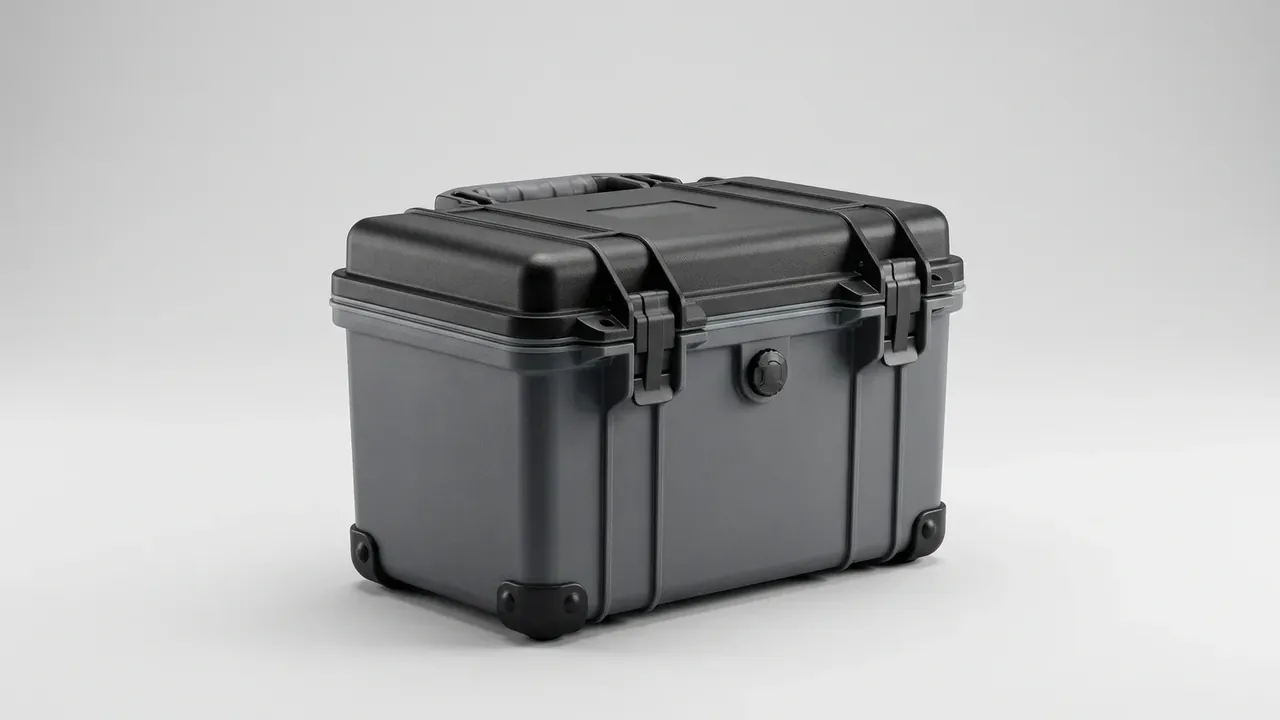
Quick answer: A Reusable Shipping and Storage Container spec is not a size table but four linked layers: envelope by pallet module, cavity and tolerances by lid-to-base fit, wall and tare back-calculated from rated load and stacking height, then seal conditions and cycle counts a lab can repeat. Skip one layer and the later numbers collapse.
Table of contents
- Spec Layers of a Reusable Shipping and Storage Container
- Outer and Inner Dimensions With Tolerances
- Wall Thickness, Tare Weight and Rated Load
- Stacking, Seal Rating and Cycle Life
- Interfaces and Marking
- FAQ
1. Spec Layers of a Reusable Shipping and Storage Container
Spec sheets usually list line items: outer length, width, height, wall, tare, rated load, ingress rating. The list looks complete and hides causality. A buyer gets seven numbers without learning which one moves the other six.
A Reusable Shipping and Storage Container is easier to specify in four layers: envelope, fit, load path, interface. Without a fixed envelope, cavity tolerances have no datum; without allocated tolerances, a thicker wall eats the clear opening.
2. Outer and Inner Dimensions With Tolerances
Three numbers settle the envelope; the cavity needs a relationship. The cavity of a Reusable Shipping and Storage Container is not the envelope minus two walls. Radii, draft and base ribs take 2–3 mm per side, so fix the clear opening and push outward.
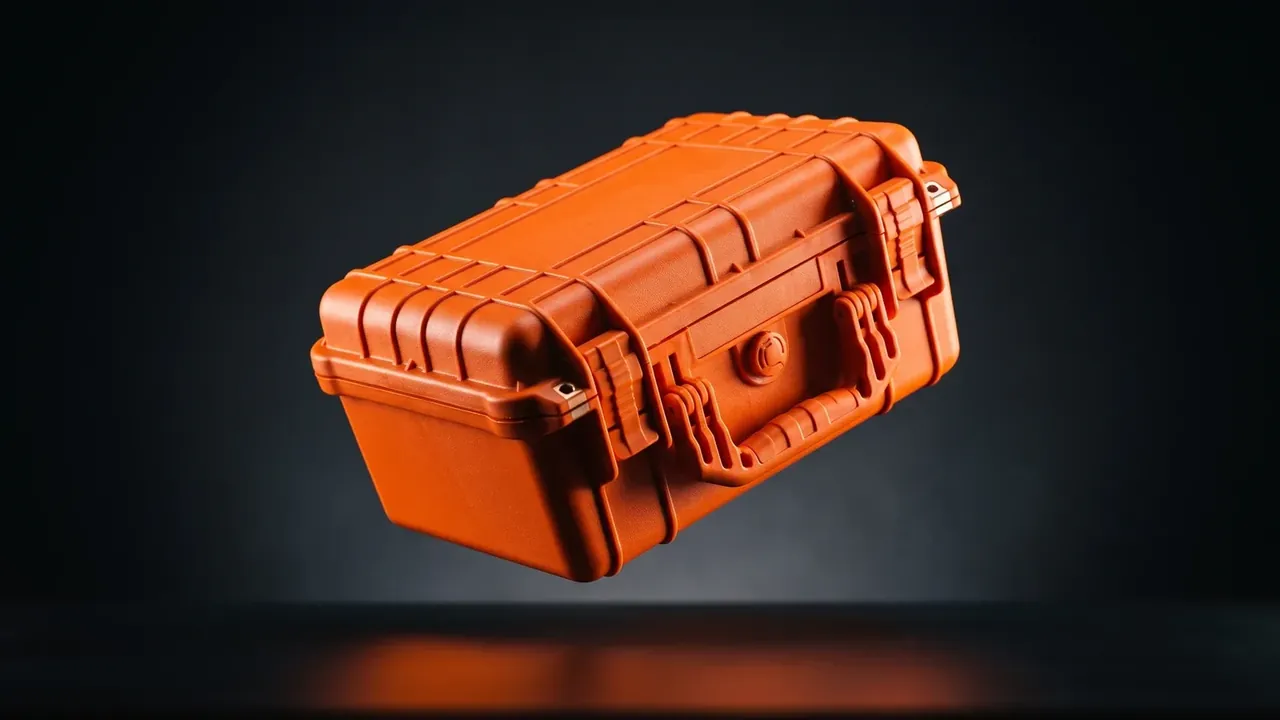
Tolerance follows the fit, not the machine. A lid-to-base gap of 1.5–2.5 mm works: below it the gasket is crushed and the case needs two hands at −20 °C; above it the latches run out of travel. Diagonals stay within 4 mm.
| Item | Nominal | Tolerance | Where measured |
|---|---|---|---|
| Outer length and width | 1180 × 780 mm | ±3 mm | narrowest point, tape and square |
| Outer height | lid included | ±4 mm | four corners, largest spread |
| Cavity length and width | clear opening | ±2 mm | 50 mm above base, calipers |
| Diagonal difference | cavity mouth | 4 mm max | between the two diagonals |
| Lid-to-base gap | latches closed | 1.5–2.5 mm | feeler gauge, three points |
3. Wall Thickness, Tare Weight and Rated Load
Wall thickness follows rated load, stacked layers and affordable tare. Rated load is the lower of base and handle root, times 1.5 static. Stacking is full case weight times layers above, times 1.5 for creep.
The wall is uneven. The base carries 1.5–2 mm more than the side. At 6.0 mm nominal the base reads 6.5–7.5 mm, sides 5.5–6.5 mm, and no point below 85 percent, that is 5.1 mm. Five points per face, corners included.
Tare is the input most often dropped. A 1200 × 800 × 800 mm unit weighs 14.2 kg with lid, bumpers and latches. Omit it and the fourth layer under-counts the base by 42.6 kg.
| Envelope mm | Wall mm | Tare kg | Rated load kg | Layers |
|---|---|---|---|---|
| 600 × 400 × 320 | 3.5 | 3.6 | 25 | 6 |
| 800 × 600 × 500 | 4.5 | 7.8 | 45 | 5 |
| 1200 × 800 × 800 | 6.0 | 14.2 | 60 | 4 |
4. Stacking, Seal Rating and Cycle Life
Stacking is written twice, full and empty. One number and the floor uses the larger. Six empty against four full, marked only six, gives a sagging lid by month three; 2 mm is invisible, yet the gasket has left the rim.
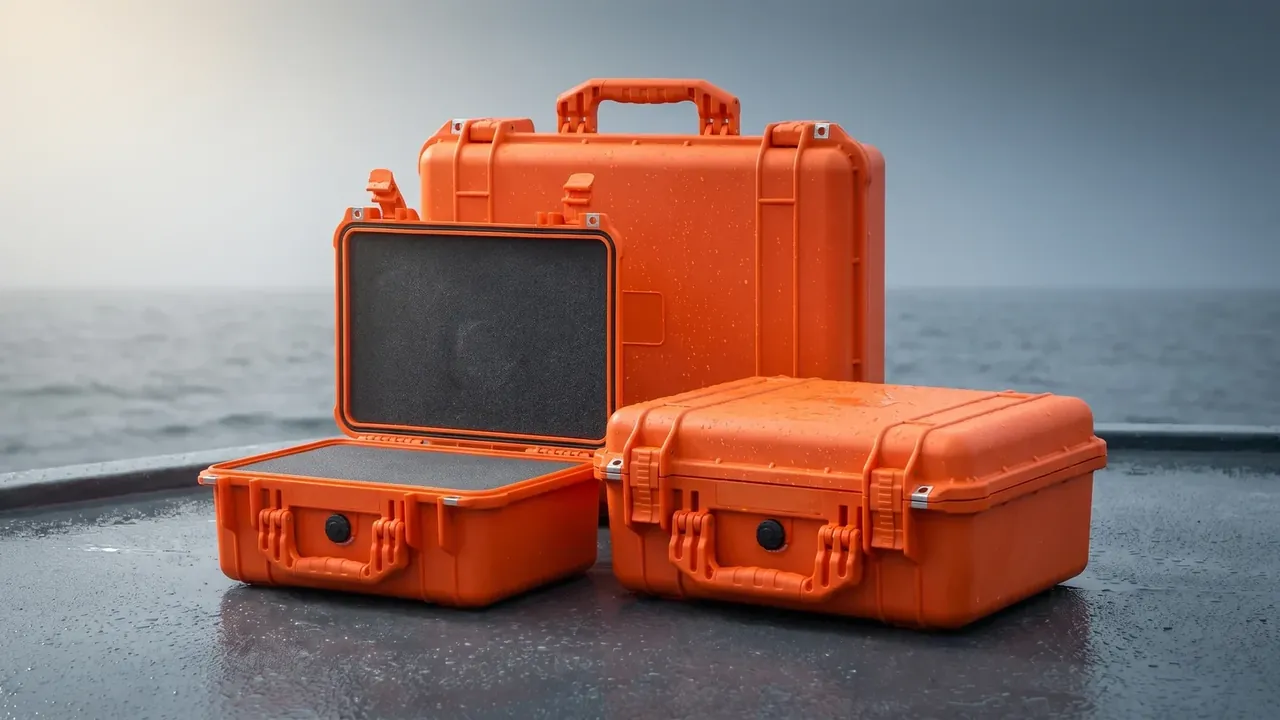
A seal rating needs conditions. IP67 is a conclusion; 1 m of water for 30 min with no visible ingress is repeatable. A Reusable Shipping and Storage Container also needs a retest after 500 latch cycles, because gasket rebound decays.
Cycle life is openings, drops and retest interval. After 500 openings and three 1.2 m corner drops, the lid gap still closes to 1.5 mm. Condition at −20 °C for 4 h, then open and close once.
5. Interfaces and Marking
The interface layer decides whether the case enters the existing line. Fork entries of 100 mm clear height and 200 mm clear width are the minimum; 10 mm less stops the pallet truck.
Marking belongs in the mould: 8 mm characters raised 0.8–1.2 mm in the same material, batch codes in a 0.5–0.8 mm recess. Keep clear of latch travel, handle roots and the seal line.
Conclusion
The specification collapses into one line: envelope by module, cavity by clear opening, tolerance by fit, wall by two load cases, then seal and cycle counts to lock it. Values come from the technical agreement and the third-party report, but the logic is fixed, and that is what makes a Reusable Shipping and Storage Container spec usable.
This article discusses only the container (case body) side of specifications and design intent, and does not cover any handling, loading or use of the contents.
Related Reading
- Cleaning, inspection and retirement
- Rotomoulding and wall thickness
- Case and pallet marking rules
- Stacking design for stackable cases
Related Products
- 8 Series — Gun Cases; Military Equipment Cases; Camera Equipment Cases; Drone Cases; Watch Cases; Knife Cases; First Aid Cases; Electronics Equipment Cases
- WL8-2812 PP Gun Case — model WL8-2812
- All protective cases and toolboxes: 7 series, 158 models