

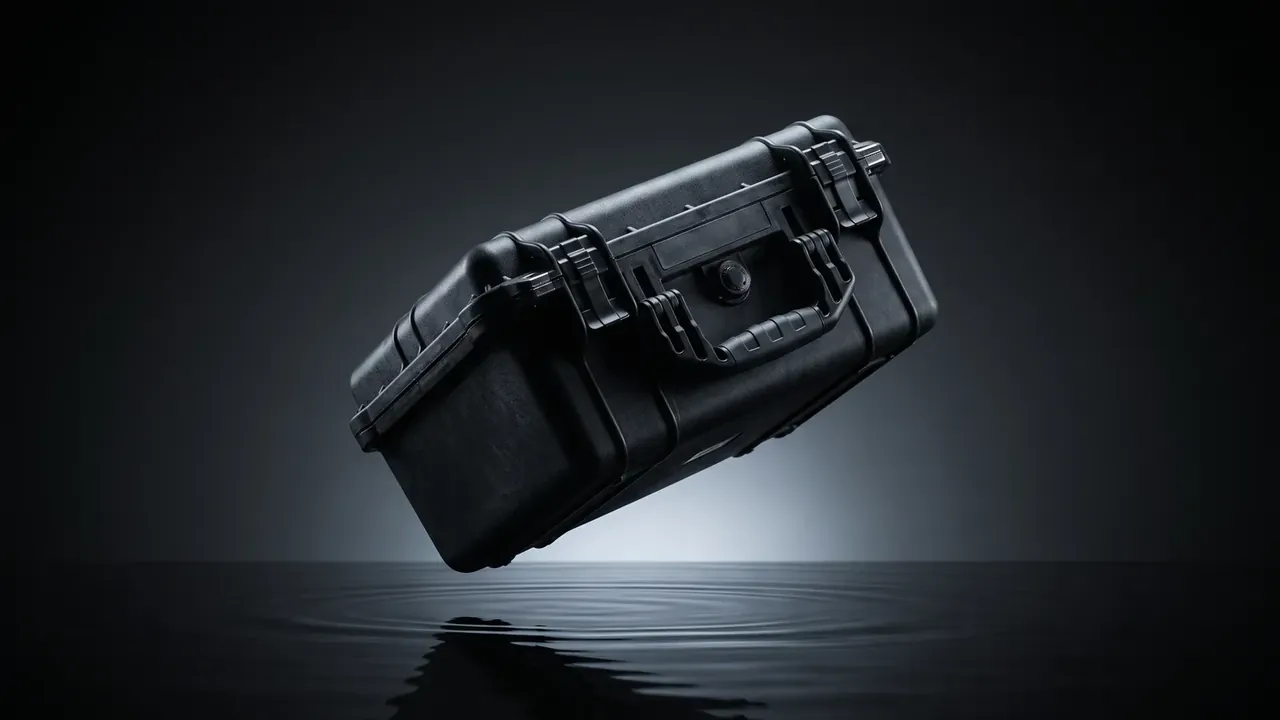
Quick answer: A rifle case quote looks like one price line, but four numbers sit under it: cavity length picks the mould, wall thickness sets unit cost, order quantity decides how tooling is amortised, and payment terms decide whether the factory answers at all. Fill those four rows first.
Table of contents
- Four Numbers Before You Ask for a Price
- Three Lines That Decide Who Pays for Tooling
- Five Costs That Move Inside a Quote
- Six Milestones Between Mould and Loading
- Payment, Audits and Samples
- FAQ
1. Four Numbers Before You Ask for a Price
The usual mistake is a one-line enquiry: twelve hundred millimetres, black, with wheels. Three factories answer with three prices and three products, and the comparison then measures guesswork.
| Number | Typical value | Why it sets the price | If it stays vague |
|---|---|---|---|
| Cavity length | 1180 mm | stock mould or new tool | quoted on stock, moulded on new |
| Wall thickness | 3.5 mm, ±0.3 | converts into kilos of resin | quoted at 3.5, arrives at 2.8 |
| Unit weight | 4.8 kg | drives freight and stack height | one freight band higher |
| Outline tolerance | ±0.5 mm | sets gauges and scrap rate | lids that will not close |
Cavity length is where vagueness hides. A case quoted at 1180 mm may offer 1155 mm inside once wall and foam take their share, and you find out when a long gun will not sit down. Specify the internal cavity, not the outside envelope.
One number on the quote, four agreements behind it.
2. Three Lines That Decide Who Pays for Tooling
Order quantity is not one figure. It is three thresholds, and the payer changes at each.
- 300 units: stock mould, colour and print only, lowest unit price, no tooling cost;
- 500 units: new liner geometry or hardware pockets, core change at 10,000 to 20,000 RMB, absorbed in the order;
- 1000 units: new steel tool at 80,000 to 120,000 RMB, rated near 50,000 shots, or 80 to 120 RMB per case.
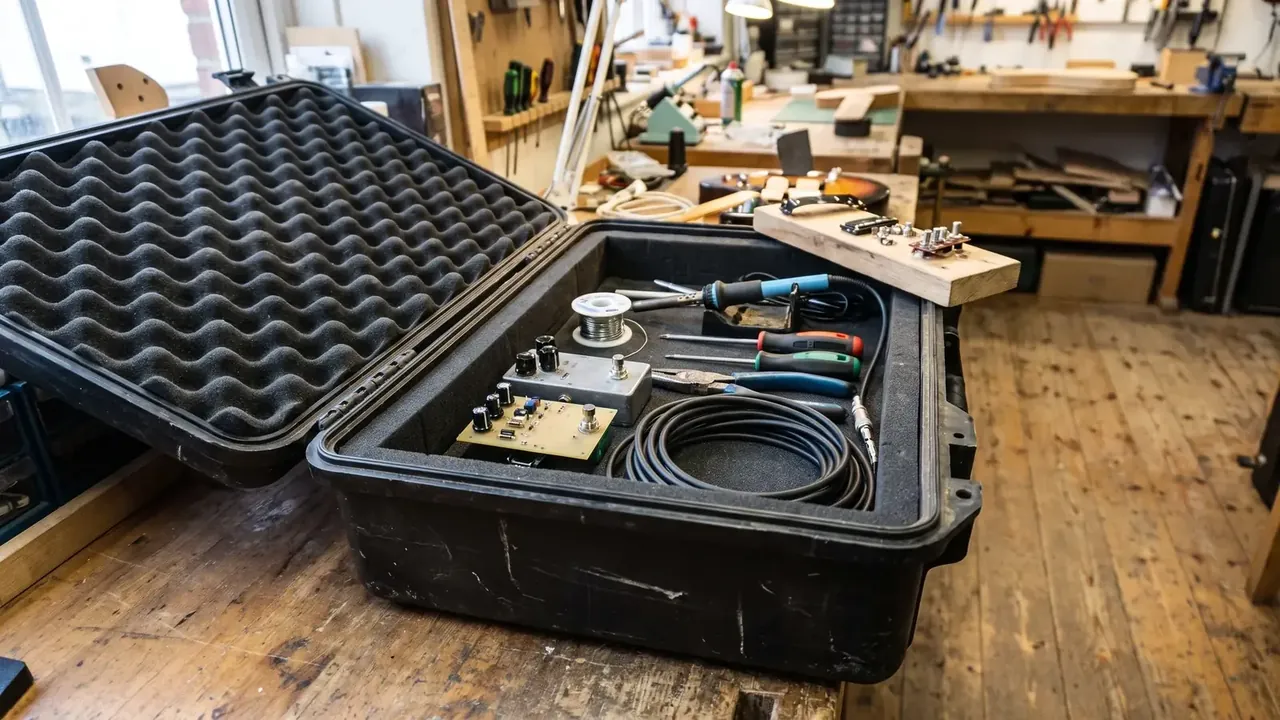
Ownership matters more than the tool price. Either the buyer pays and owns it, or the cost is amortised into the unit price and the tool stays with the factory, or the two sides split the cost and share ownership. The third is cheap until the day you change supplier.
Four items belong in the clause: tool number and drawing revision, storage location, transfer trigger, maintenance interval. A trigger beats a promise to negotiate, for example two late shipments beyond fifteen days. Acceptance runs through first-article inspection on dimensions, wall thickness and assembly.
A mould is an asset. Assets carry serial numbers.
3. Five Costs That Move Inside a Quote
Two quotes on one drawing can differ by eighteen per cent, and the gap rarely sits in profit.
- Wall and shot weight: 3.5 mm down to 2.8 mm saves 0.6 kg of resin per case, six hundred tonnes across a hundred thousand units.
- Liner: EVA against PE runs about thirty per cent apart, and die-cutting prices separately from CNC slotting.
- Hardware: stainless hinges against zinc-plated differ threefold in price and far more in salt fog.
- Packaging: paper sleeve against five-ply carton is six yuan against fourteen, per case.
- Tooling and gauges: some quotes list them, others bury them, so restore every offer to one basis.
Put the five lines on a single sheet and make each supplier fill every row. Total-price shopping usually pays the gap back at goods-in.
4. Six Milestones Between Mould and Loading
A delivery date is not a promise, it is six dates in sequence.
| Milestone | Usual days | Where it slips |
|---|---|---|
| Sample | 7 | drawing sign-off drags |
| Tool build | 25 | steel and heat treatment |
| Trial shots | 5 | shrinkage and wall tuned twice |
| Production | 20 | 4.8 kg per case caps output |
| Inspection | 2 | sampling plus repeat drop |
| Sea freight | 30 | volume weight at 1:6000 |
Trial shots are the milestone buyers underestimate. Rotomoulding and injection shrink differently, the first shots come out thin, the core is cut again, and five days become twelve. Control the calendar with a dated photograph at each milestone rather than with reminders.
Dates are scheduled, not chased.
5. Payment, Audits and Samples
Thirty per cent deposit against seventy on the bill of lading copy is the norm, and sixty-day terms on a first order are rare. A factory offering them has either worked with you for two years or priced the financing in.
A visit settles three questions: press tonnage and count, how moulds are numbered and stored, and whether gauges sit inside their calibration cycle. The mould store tells you most.
A sample charge is fair for appearance. For structural proof, ask for trial-shot records and a drop report alongside, and take the charge as a credit against the first order.
Conclusion
Sourcing a rifle case means fixing four numbers, three thresholds, five cost rows and six dates before money moves. Price then becomes a trade-off instead of a dispute, and the purchase starts to look like a cost model anyone can recompute.
This article discusses only the container (case body) side of specifications and design intent, and does not cover any handling, loading or use of the contents.
Related Reading
- Building a supplier scorecard that holds up
- What a case factory audit should check
- Rotomoulded cases: process and cost structure
- Six stations to walk on a factory tour
Related Products
- 8 Series — Gun Cases; Military Equipment Cases; Camera Equipment Cases; Drone Cases; Watch Cases; Knife Cases; First Aid Cases; Electronics Equipment Cases
- WL8-2812 PP Gun Case — model WL8-2812
- All protective cases and toolboxes: 7 series, 158 models