

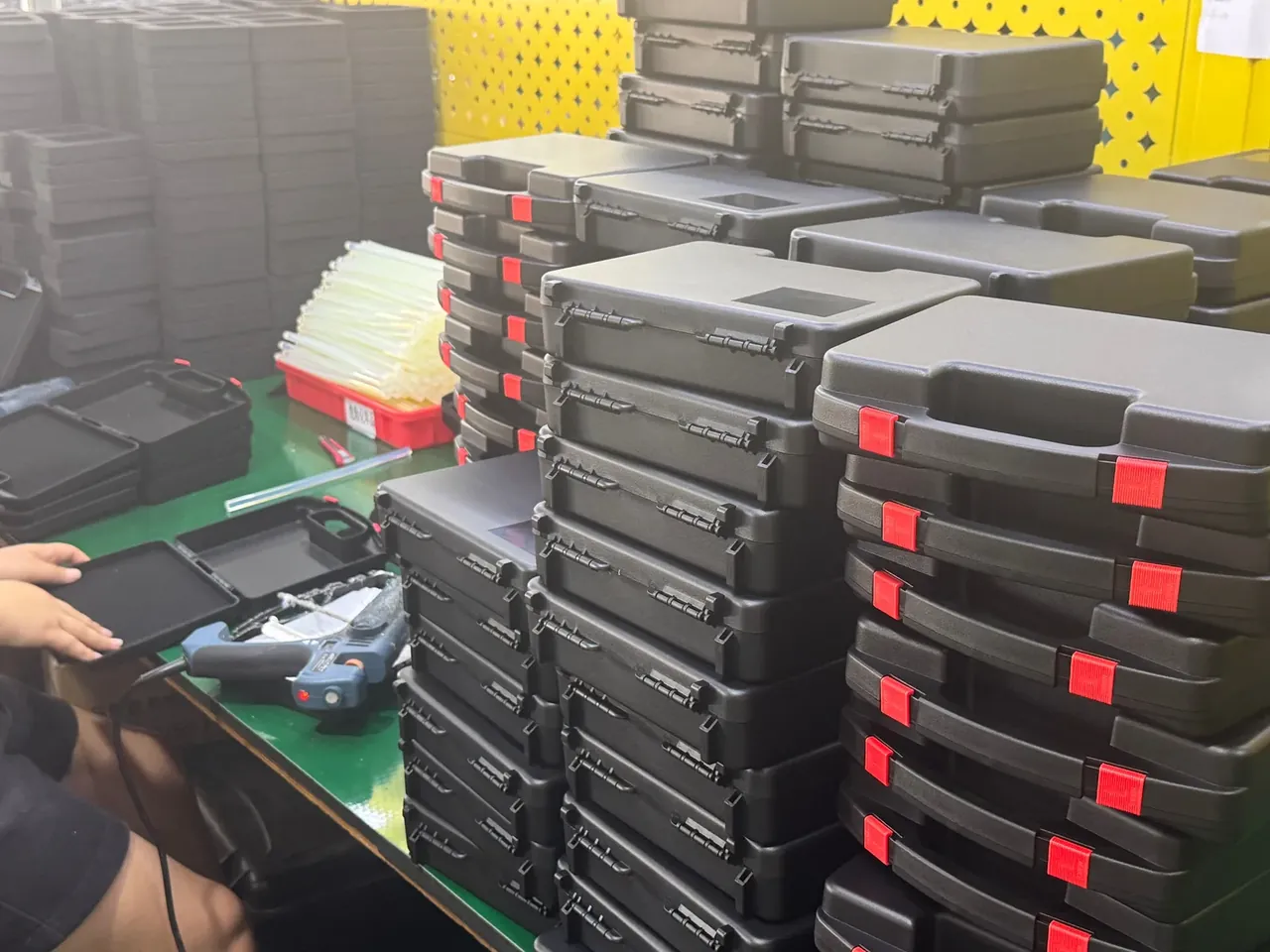
Quick answer: Robot controller portable shockproof hard box sets insert torque at 4.6 N.m; 2 h at 32 Hz keeps torque loss under 7% and divider play under 0.38 mm.
Table of contents
- Robot controller portable shockproof hard box insert torque
- Grid divider thickness
- Torque decay after two hours at one fixed frequency
- Divider play after retorque and reinspection
- Torque setting for the portable batch
- FAQ
1. Robot controller portable shockproof hard box insert torque
One frequency on the shaker; whether inserts shed preload, how far the divider drifts, and the gauge after a retorque settle it. The Robot controller portable shockproof hard box measures 495 x 345 x 175 mm outside, 430 x 290 x 125 mm inside, with a 4.2 mm wall and a ring of metal inserts in the base that carry the grid dividers. Heat-set and tapped rather than self-tapped into plastic, they are tightened to 4.6 N.m and the wrench logs each unit.
The empty 4.1 kg case is ballasted to 10.5 kg across inner cells so one side cannot loosen first. Insert holes are reamed to tolerance; a burr makes the same 4.6 N.m read as false preload, and that unit is pulled before the line starts. JUNZHIJIA books this torque as the first ledger line, and the next 2 h of decay are subtracted from it.
| Torque tier | Tightening setting | Retorque after 2 h |
|---|---|---|
| Low | 3.8 N.m | 3.5 N.m |
| Middle | 4.6 N.m | 4.3 N.m |
| High | 5.4 N.m | 5.1 N.m |
2. Grid divider thickness
The 7.0 mm divider is set alongside insert spacing. Too thin a panel on the Robot controller portable shockproof hard box chatters at mid-span under 32 Hz, and the play reading cannot separate insert loosening from panel resonance; the 7.0 mm step deflects least between two inserts and seats flat on the shoulders.
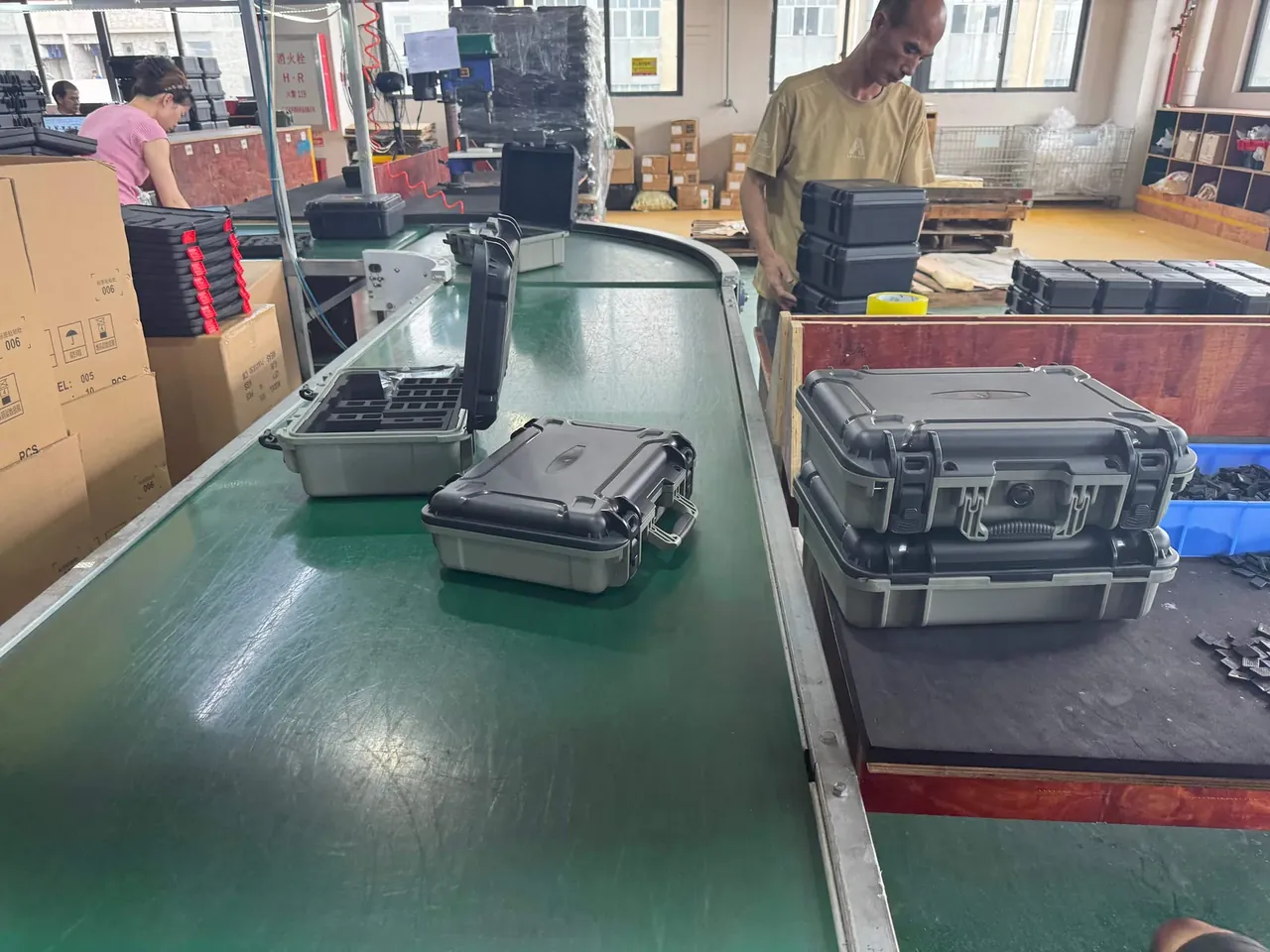
Each divider is gauged after cutting, with a deviation past 0.2 mm pulled from assembly. Trial fit floats the panel untightened, notes the initial gap, then retorques to 4.6 N.m; both readings go onto the sheet. Thickness and torque are separate accounts, one for panel stiffness and one for thread preload, never traded at reinspection. Records stay until the lot closes so a later material change reuses the same mid-span points.
3. Torque decay after two hours at one fixed frequency
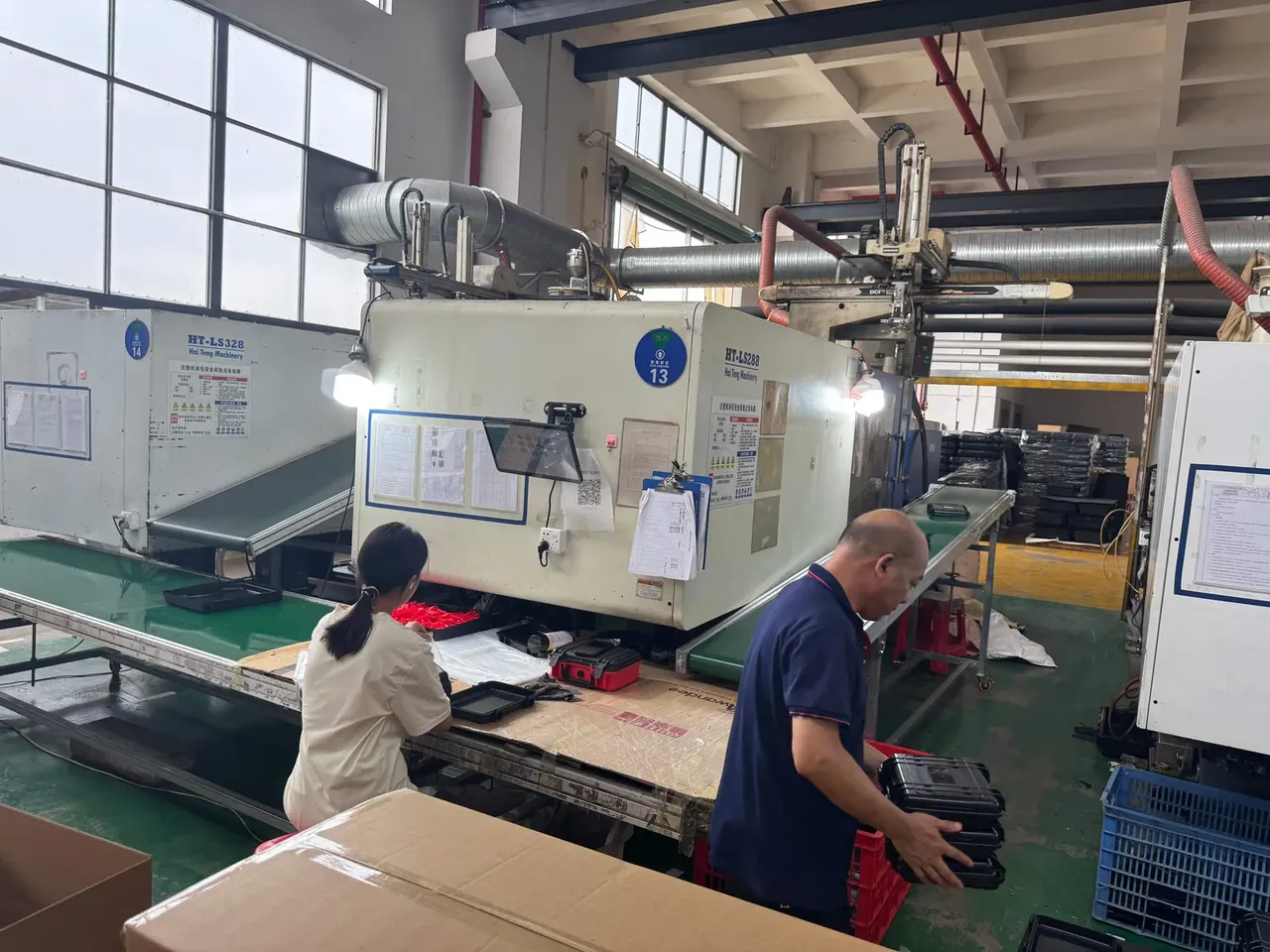
The shaker feeds one 32 Hz sine for a continuous 2 h, with no stop. The Robot controller portable shockproof hard box pauses the clock every 30 min, retorques with the same wrench, and turns backing-off into a decay percentage. Fixture clamps press the four base corners, with no load on the divider, so the jig cannot carry vibration for the inserts.
| Fixed-frequency span | Torque at span end | Cumulative decay |
|---|---|---|
| 0-30 min | 4.6 N.m | 1% |
| 30-60 min | 4.5 N.m | 3% |
| 60-90 min | 4.4 N.m | 5% |
| 90-120 min | 4.3 N.m | 7% |
At the second hour the decay must sit under 7%. A sudden jump in one span sends the check first to the fixture, then to that insert's thread, before any case is scrapped. The Robot controller portable shockproof hard box binds its four readings in span order, which shows which minute loosening began. One wrench runs the whole programme; its drift is logged apart, never mixed into the decay figures. A flat curve means preload held, while a mid-span hump usually means a loose fixture bolt, so the clamp is tightened and one round rerun. Three more cases run the same programme and their curves must line up; the Robot controller portable shockproof hard box files the odd one for a thread check.
4. Divider play after retorque and reinspection
After retorquing to 4.6 N.m and resting, a feeler gauge measures play at the divider mid-span, and a reading inside 0.38 mm is required. What the Robot controller portable shockproof hard box measures here is slack between divider and insert, separate from torque decay: decay tells how far the thread backed off, play tells whether the panel sits firm.
Gauge points sit at mid-span clear of insert holes, three spots per panel, and even the largest must stay inside 0.38 mm. A panel over the limit is rejected even with clean torque, since preload failed to seat the face.
| Decay reading | Retorqued torque | Divider play |
|---|---|---|
| 3% | 4.5 N.m | 0.18 mm |
| 5% | 4.4 N.m | 0.28 mm |
| 7% | 4.3 N.m | 0.38 mm |
Decay and play share one reinspection sheet yet keep separate limits; only when both columns pass does the case join the pending lot.
5. Torque setting for the portable batch
Folding the three tiers, the four spans and the retorque play into one line puts the torque setting of the Robot controller portable shockproof hard box on a fixed reject phrase: the setting is the smallest tier whose decay stays under 7% in the second hour, and any smaller tightening torque is barred from the controller case assembly list.
Written onto the process card, the lot is no longer run tier by tier; a sampling ratio rechecks insert torque only. Cases rated for 4500 cycles and two latches each holding 340 N carry one lid seal at 18 percent compression, all booked alongside insert torque. The IP66 target is not carried by the inserts, so the two are recorded apart. JUNZHIJIA schedules the next run against this setting when divider stock changes.
Conclusion
Selecting the inserts of the Robot controller portable shockproof hard box aligns tightening torque, fixed-frequency span and retorque play: 4.6 N.m with a 7.0 mm divider, 2 h at 32 Hz with decay under 7% and play inside 0.38 mm. The setting takes the smallest passing tier, so preload is neither pushed high enough to waste thread nor left low enough for the divider to drift. Writing this curve into the process card gives the Robot controller portable shockproof hard box a reference whenever stock or inserts change later.
Related Reading
- Cobot Teach Pendant Cases: Pendant & Controller Protection
- Collaborative Robot Transport Cases: Protection for Arms & Teaching Pendants
- Servo Drive & Motion Controller Cases: Precision Electronics Protection
- Electronic Equipment Case: Vibration and ESD Protection
Related Products
- 8 Series — Gun Cases; Military Equipment Cases; Camera Equipment Cases; Drone Cases; Watch Cases; Knife Cases; First Aid Cases; Electronics Equipment Cases
- WL8-2812 PP Gun Case — model WL8-2812
- All protective cases and toolboxes: 7 series, 158 models